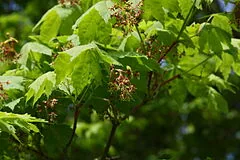
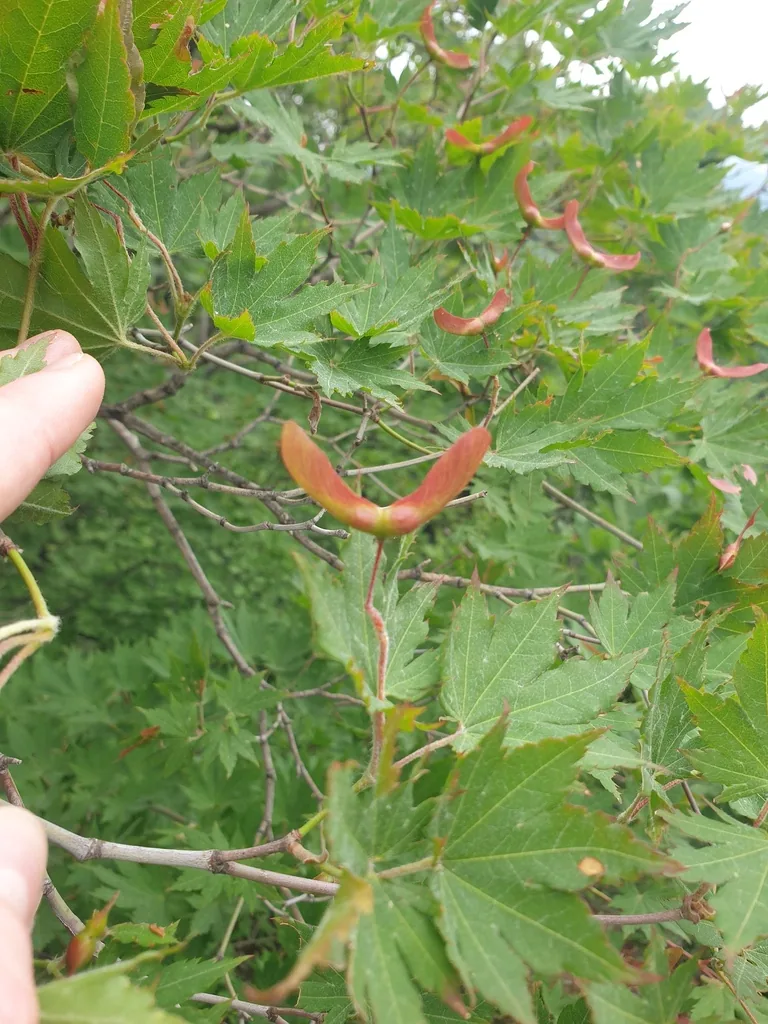

Cómo cultivar y cuidar Arce de flor púrpura
Acer pseudosieboldianum
Escrito por Emilio Marruso · última revisión
De un vistazo
Este arce forma un pequeño árbol de 4,6 a 7,6 m de alto y otros tantos de ancho, y vive feliz a pleno sol o en sombra moteada. Dale un suelo húmedo, rico en materia orgánica y bien drenado, y riégalo cada semana durante la temporada de crecimiento, más en épocas secas. Plántalo al abrigo de vientos fuertes y lejos de zonas bajas y abiertas con heladas tardías.
- Sol
De sol pleno a sombra moteada
Qué dicen las fuentes (2)
Luz: Pleno sol a sombra moteada por el sol
Easily grown in moist, organically, well-drained soils. Performs well in full sun or bright, sun-dappled locations. Avoid hot and dry sites.
— KOREAN MAPLE - ACER PSEUDOSIEBOLDIANUM | The UFOR Nursery & Lab [1] You can plant these beauties in a full sun area or a spot with sun-dappled shade. Don’t pick a site that is hot and dry.
— Korean Maple Information: Caring For Korean Maples In The Landscape | Gardening Know How [5] - Riego
Riega cada semana en la temporada de crecimiento, más en épocas secas; nunca lo dejes encharcado
Qué dicen las fuentes (4)
Riego: Riega cada semana durante la temporada de crecimiento, con agua adicional en los períodos secos
These are quite thirsty trees and require regular irrigation . Provide Korean maple trees with water every week throughout the growing season but offer extra water during dry periods.
— Korean Maple Information: Caring For Korean Maples In The Landscape | Gardening Know How [5] Notas sobre el riego: Suelo húmedo, rico en materia orgánica y bien drenado; no tolera el pie mojado; evita sitios calurosos y secos; el exceso de humedad invernal puede ser un problema
If you want to grow a Korean maple, find a site with moist, organically rich soil and excellent drainage. Korean maple trees will not be happy with wet feet.
— Korean Maple Information: Caring For Korean Maples In The Landscape | Gardening Know How [5] Easily grown in moist, organically, well-drained soils. Performs well in full sun or bright, sun-dappled locations. Avoid hot and dry sites.
— KOREAN MAPLE - ACER PSEUDOSIEBOLDIANUM | The UFOR Nursery & Lab [1] On mountain slopes it can also be troubled by excessive wetness in winter.
— Acer pseudosieboldianum - Korean maple | Arboretum Mustila [4] - Frío
Aguanta inviernos de hasta −34,4 °C (−30 °F)
Muy rústica · USDA 4 · RHS H7 · Z4
Qué dicen las fuentes (7)
Rusticidad, zona más fría: 4 [mínima invernal de −34,4 a −28,9 °C (de −30 a −20 °F)]
Species: A. pseudosieboldianum Hardiness Zone: 4 to 8 Height: 15 to 25 ft
— KOREAN MAPLE - ACER PSEUDOSIEBOLDIANUM | The UFOR Nursery & Lab [1] The trees thrive in USDA plant hardiness zones 4 through 8. The tree is native to China and Korea, where it grows in forested areas.
— Korean Maple Information: Caring For Korean Maples In The Landscape | Gardening Know How [5] Habitat Forests between 700 and 900 m asl. USDA Hardiness Zone 4–5. Conservation status Not evaluated.
— Acer pseudosieboldianum - Trees and Shrubs Online [2] Rusticidad, zona más cálida:
Según University of Minnesota UFOR Nursery & Lab: Species: A. pseudosieboldianum Hardiness Zone: 4 to 8 Height: 15 to 25 ft
— KOREAN MAPLE - ACER PSEUDOSIEBOLDIANUM | The UFOR Nursery & Lab [1] Según Gardening Know How: The trees thrive in USDA plant hardiness zones 4 through 8. The tree is native to China and Korea, where it grows in forested areas.
— Korean Maple Information: Caring For Korean Maples In The Landscape | Gardening Know How [5] Según Boone County Arboretum: ## Culture and Care Zones 4-7. ## Strengths, Weaknesses, Other Facts Very cold hardy.
— Species Records | Boone County Arboretum [3] Según Trees and Shrubs Online: Habitat Forests between 700 and 900 m asl. USDA Hardiness Zone 4–5. Conservation status Not evaluated.
— Acer pseudosieboldianum - Trees and Shrubs Online [2] - Suelo
Suelo húmedo, rico en materia orgánica y bien drenado; evita los sitios cálidos y secos
Qué dicen las fuentes (3)
Notas sobre el riego: Suelo húmedo, rico en materia orgánica y bien drenado; no tolera el pie mojado; evita sitios calurosos y secos; el exceso de humedad invernal puede ser un problema
If you want to grow a Korean maple, find a site with moist, organically rich soil and excellent drainage. Korean maple trees will not be happy with wet feet.
— Korean Maple Information: Caring For Korean Maples In The Landscape | Gardening Know How [5] Easily grown in moist, organically, well-drained soils. Performs well in full sun or bright, sun-dappled locations. Avoid hot and dry sites.
— KOREAN MAPLE - ACER PSEUDOSIEBOLDIANUM | The UFOR Nursery & Lab [1] On mountain slopes it can also be troubled by excessive wetness in winter.
— Acer pseudosieboldianum - Korean maple | Arboretum Mustila [4] - Plagas
Vigila pulgones, barrenadores, cochinillas y ácaros; pueden aparecer manchas foliares y chancro
Qué dicen las fuentes (2)
Plagas: pulgones, barrenadores, cochinillas, cicadélidos, orugas, ácaros
Chances that verticillium wilt may occur. Watch for aphids, borers, scale, leafhoppers, caterpillars, and mites.
— KOREAN MAPLE - ACER PSEUDOSIEBOLDIANUM | The UFOR Nursery & Lab [1] Enfermedades: cancro del tallo, manchas foliares, mancha de alquitrán, antracnosis, marchitez por verticillium
It is susceptible to stem canker, leaf spots, tar spot, and anthracnose. Chances that verticillium wilt may occur.
— KOREAN MAPLE - ACER PSEUDOSIEBOLDIANUM | The UFOR Nursery & Lab [1] - Atención
Protégelo de los vientos fuertes; las heladas tardías dañan las hojas en zonas bajas y abiertas
- Tamaño
De 4,6 a 7,6 m de alto y otros tantos de ancho
Qué dicen las fuentes (2)
Altura adulta: 457-762 cm (15 a 25 pies)
Hardiness Zone: 4 to 8 Height: 15 to 25 ft Width: 15 to 25 ft
— KOREAN MAPLE - ACER PSEUDOSIEBOLDIANUM | The UFOR Nursery & Lab [1] Anchura adulta: 457-762 cm (15 a 25 pies)
Hardiness Zone: 4 to 8 Height: 15 to 25 ft Width: 15 to 25 ft
— KOREAN MAPLE - ACER PSEUDOSIEBOLDIANUM | The UFOR Nursery & Lab [1]
Resumen
El Acer pseudosieboldianum (arce coreano) es un árbol pequeño caducifolio o arbusto grande nativo de Corea, el noreste de China y el Lejano Oriente ruso. [1][4] Se cultiva por su color otoñal en amarillo, naranja y rojo, y como sustituto más resistente del arce japonés en climas fríos. [1] Como brota temprano en primavera, las heladas tardías pueden dañarlo en lugares abiertos y en zonas bajas. [4]
Citado en inglés, como en la fuente.
Esta ficha está incompleta: las fuentes consultadas aún no cubren todos los campos.
Aún no cubierto por nuestras fuentes: Poda, Propagación
Cuidados
Riego
Riego
Riega cada semana durante la temporada de crecimiento, con agua adicional en los períodos secos
Qué dicen las fuentes (1)
These are quite thirsty trees and require regular irrigation . Provide Korean maple trees with water every week throughout the growing season but offer extra water during dry periods.Notas sobre el riego
Suelo húmedo, rico en materia orgánica y bien drenado; no tolera el pie mojado; evita sitios calurosos y secos; el exceso de humedad invernal puede ser un problema
Qué dicen las fuentes (3)
If you want to grow a Korean maple, find a site with moist, organically rich soil and excellent drainage. Korean maple trees will not be happy with wet feet.Easily grown in moist, organically, well-drained soils. Performs well in full sun or bright, sun-dappled locations. Avoid hot and dry sites.On mountain slopes it can also be troubled by excessive wetness in winter.Luz
Pleno sol a sombra moteada por el sol
Qué dicen las fuentes (2)
Easily grown in moist, organically, well-drained soils. Performs well in full sun or bright, sun-dappled locations. Avoid hot and dry sites.You can plant these beauties in a full sun area or a spot with sun-dappled shade. Don’t pick a site that is hot and dry.Clima y frío
Rusticidad, zona más fría
4 [mínima invernal de −34,4 a −28,9 °C (de −30 a −20 °F)]
Qué dicen las fuentes (3)
Species: A. pseudosieboldianum
Hardiness Zone: 4 to 8
Height: 15 to 25 ftThe trees thrive in USDA plant hardiness zones 4 through 8. The tree is native to China and Korea, where it grows in forested areas.Habitat Forests between 700 and 900 m asl. USDA Hardiness Zone 4–5. Conservation status Not evaluated.Rusticidad, zona más cálida
Las fuentes dan valores distintos según la región, la zona o las condiciones de cultivo.
Lo que dice cada fuente
Según University of Minnesota UFOR Nursery & Lab: 4-8 [mínima invernal de −34,4 a −6,7 °C (de −30 a 20 °F)]
Según Gardening Know How: 4-8 [mínima invernal de −34,4 a −6,7 °C (de −30 a 20 °F)]
Según Boone County Arboretum: 4-7 [mínima invernal de −34,4 a −12,2 °C (de −30 a 10 °F)]
Según Trees and Shrubs Online: 4-5 [mínima invernal de −34,4 a −23,3 °C (de −30 a −10 °F)]
Qué dicen las fuentes (4)
Según University of Minnesota UFOR Nursery & Lab: Species: A. pseudosieboldianum
Hardiness Zone: 4 to 8
Height: 15 to 25 ftSegún Gardening Know How: The trees thrive in USDA plant hardiness zones 4 through 8. The tree is native to China and Korea, where it grows in forested areas.Según Boone County Arboretum: ## Culture and Care
Zones 4-7.
## Strengths, Weaknesses, Other Facts
Very cold hardy.Según Trees and Shrubs Online: Habitat Forests between 700 and 900 m asl. USDA Hardiness Zone 4–5. Conservation status Not evaluated.Propagación
No figura en las fuentes consultadas.
Cultivo
La planta
Familia
Sapindaceae
Qué dicen las fuentes (1)
Common Name: Korean Maple, purebloom maple Scientific Name: Family: Sapindaceae Genus: AcerAltura adulta
457-762 cm (15 a 25 pies)
Qué dicen las fuentes (1)
Hardiness Zone: 4 to 8 Height: 15 to 25 ft Width: 15 to 25 ftAnchura adulta
457-762 cm (15 a 25 pies)
Qué dicen las fuentes (1)
Hardiness Zone: 4 to 8 Height: 15 to 25 ft Width: 15 to 25 ftPlagas y enfermedades
Plagas
pulgones, barrenadores, cochinillas, cicadélidos, orugas, ácaros
Qué dicen las fuentes (1)
Chances that verticillium wilt may occur. Watch for aphids, borers, scale, leafhoppers, caterpillars, and mites.Enfermedades
cancro del tallo, manchas foliares, mancha de alquitrán, antracnosis, marchitez por verticillium
Qué dicen las fuentes (1)
It is susceptible to stem canker, leaf spots, tar spot, and anthracnose. Chances that verticillium wilt may occur.Problemas
Cancro del tallo, manchas foliares, mancha de alquitrán, antracnosis
Síntoma: Enfermedades fúngicas de tallos y hojas; posible marchitez por verticillium
Qué dicen las fuentes (1)
There are no serious known insect or disease problems. It is susceptible to stem canker, leaf spots, tar spot, and anthracnose. Chances that verticillium wilt may occur.
— KOREAN MAPLE - ACER PSEUDOSIEBOLDIANUM | The UFOR Nursery & Lab [1] Insectos plaga
Síntoma: Áfidos, barrenadores, cochinillas, saltahojas, orugas y ácaros
Qué hacer: Vigílalos
Qué dicen las fuentes (1)
Chances that verticillium wilt may occur. Watch for aphids, borers, scale, leafhoppers, caterpillars, and mites.
— KOREAN MAPLE - ACER PSEUDOSIEBOLDIANUM | The UFOR Nursery & Lab [1] Heladas tardías
Síntoma: Daño a las hojas tempranas de primavera en áreas abiertas y bajas
Qué hacer: Ten en cuenta la ubicación
Qué dicen las fuentes (1)
Korean maple breaks into leaf early in spring, so in open and low-lying areas late frosts can cause problems.
— Acer pseudosieboldianum - Korean maple | Arboretum Mustila [4] Vientos fuertes
Síntoma: Exposición a vientos fuertes
Qué hacer: Planta en lugares protegidos de vientos fuertes
Qué dicen las fuentes (1)
Performs well in full sun or bright, sun-dappled locations. Avoid hot and dry sites. Plant in locations protected from strong winds.
— KOREAN MAPLE - ACER PSEUDOSIEBOLDIANUM | The UFOR Nursery & Lab [1]
Remedios
Las fuentes consultadas no dan remedios para esta planta.
Calendario
Poda
No figura en las fuentes consultadas.
Meses tal como los dan las fuentes, en su mayoría de Estados Unidos (hemisferio norte). En el hemisferio sur se desplazan unos seis meses.
Valores orientativos
Valores de una fuente secundaria, no comprobados palabra por palabra como el resto de esta página. Úselos como punto de partida.
- Ciclo de vida
- PerenneValor orientativo, adáptalo a tu clima · Fuente secundaria
- Horas de sol
- 3-4 horasValor orientativo, adáptalo a tu clima · Fuente secundaria
- pH del suelo
- 5.5-6.5Valor orientativo, adáptalo a tu clima · Fuente secundaria
- Nivel de cuidado
- MedioValor orientativo, adáptalo a tu clima · Fuente secundaria
- Crecimiento
- BajoValor orientativo, adáptalo a tu clima · Fuente secundaria
- Poda
- Febrero, marzo, abrilValor orientativo, adáptalo a tu clima · Fuente secundaria
- Propagación
- Propagación por injerto, esqueje, acodo, acodo aéreo, división, propagación por semillaValor orientativo, adáptalo a tu clima · Fuente secundaria
Plantas similares
- Arce de Tartaria Acer tataricum
- Arce de Oregón Acer macrophyllum
- Black Maple Acer nigrum
- Arce negundo Acer negundo
- Chalk Maple Acer leucoderme
- Arce de Capadocia Acer cappadocicum
- Devil Maple Acer diabolicum
- Emerald Jade Maple Acer fabri
Fuentes
Cada valor anterior se cita de estos documentos. Los enlaces llevan al editor original.
- KOREAN MAPLE - ACER PSEUDOSIEBOLDIANUM | The UFOR Nursery & Lab · trees.umn.edu, consultado
- Acer pseudosieboldianum - Trees and Shrubs Online · treesandshrubsonline.org, consultado
- Species Records | Boone County Arboretum · bcarboretum.org, consultado
- Acer pseudosieboldianum - Korean maple | Arboretum Mustila · mustila.fi, consultado
- Korean Maple Information: Caring For Korean Maples In The Landscape | Gardening Know How · gardeningknowhow.com, consultado
Escrito por Emilio Marruso · última revisión