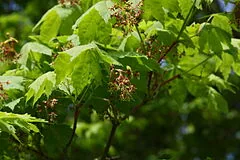
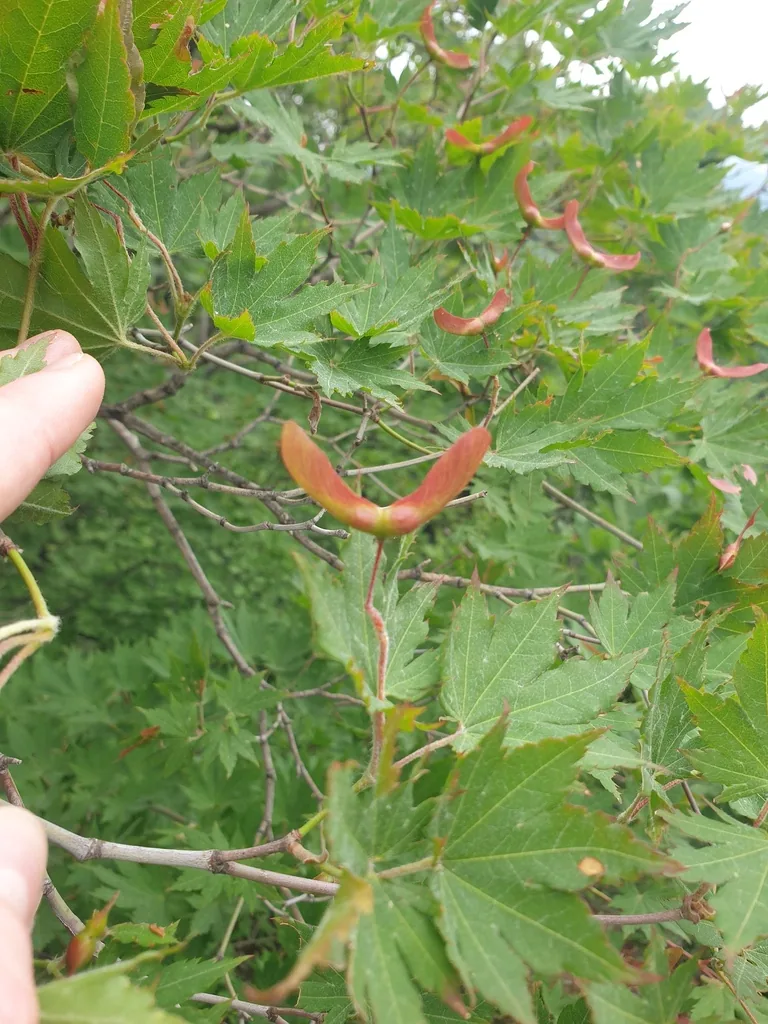

How to Grow and Care for Keijo Maple
Acer pseudosieboldianum
Written by Emilio Marruso · last checked
At a glance
This maple grows into a small tree 15 to 25 feet tall and just as wide, happy in full sun or dappled shade. Give it moist, rich soil that drains well and a weekly drink through the growing season, with extra water in dry spells. Plant it out of strong winds and away from low, open spots where late frosts settle.
- Sun
Full sun to dappled shade
What the sources say (2)
Light: Full sun to sun-dappled shade
Easily grown in moist, organically, well-drained soils. Performs well in full sun or bright, sun-dappled locations. Avoid hot and dry sites.
— KOREAN MAPLE - ACER PSEUDOSIEBOLDIANUM | The UFOR Nursery & Lab [1] You can plant these beauties in a full sun area or a spot with sun-dappled shade. Don’t pick a site that is hot and dry.
— Korean Maple Information: Caring For Korean Maples In The Landscape | Gardening Know How [5] - Water
Water every week in the growing season, more in dry spells; never leave it soggy
What the sources say (4)
Watering: Water every week through the growing season, with extra water during dry periods
These are quite thirsty trees and require regular irrigation . Provide Korean maple trees with water every week throughout the growing season but offer extra water during dry periods.
— Korean Maple Information: Caring For Korean Maples In The Landscape | Gardening Know How [5] Watering notes: Moist, organically rich, well-drained soil; does not tolerate wet feet; avoid hot and dry sites; excessive winter wetness can be a problem
If you want to grow a Korean maple, find a site with moist, organically rich soil and excellent drainage. Korean maple trees will not be happy with wet feet.
— Korean Maple Information: Caring For Korean Maples In The Landscape | Gardening Know How [5] Easily grown in moist, organically, well-drained soils. Performs well in full sun or bright, sun-dappled locations. Avoid hot and dry sites.
— KOREAN MAPLE - ACER PSEUDOSIEBOLDIANUM | The UFOR Nursery & Lab [1] On mountain slopes it can also be troubled by excessive wetness in winter.
— Acer pseudosieboldianum - Korean maple | Arboretum Mustila [4] - Cold
Survives winters down to −30 °F (−34.4 °C)
Very hardy · USDA 4 · RHS H7 · Z4
What the sources say (7)
Hardiness, coldest zone: 4 [winter low −34.4 to −28.9 °C (−30 to −20 °F)]
Species: A. pseudosieboldianum Hardiness Zone: 4 to 8 Height: 15 to 25 ft
— KOREAN MAPLE - ACER PSEUDOSIEBOLDIANUM | The UFOR Nursery & Lab [1] The trees thrive in USDA plant hardiness zones 4 through 8. The tree is native to China and Korea, where it grows in forested areas.
— Korean Maple Information: Caring For Korean Maples In The Landscape | Gardening Know How [5] Habitat Forests between 700 and 900 m asl. USDA Hardiness Zone 4–5. Conservation status Not evaluated.
— Acer pseudosieboldianum - Trees and Shrubs Online [2] Hardiness, warmest zone:
According to University of Minnesota UFOR Nursery & Lab: Species: A. pseudosieboldianum Hardiness Zone: 4 to 8 Height: 15 to 25 ft
— KOREAN MAPLE - ACER PSEUDOSIEBOLDIANUM | The UFOR Nursery & Lab [1] According to Gardening Know How: The trees thrive in USDA plant hardiness zones 4 through 8. The tree is native to China and Korea, where it grows in forested areas.
— Korean Maple Information: Caring For Korean Maples In The Landscape | Gardening Know How [5] According to Boone County Arboretum: ## Culture and Care Zones 4-7. ## Strengths, Weaknesses, Other Facts Very cold hardy.
— Species Records | Boone County Arboretum [3] According to Trees and Shrubs Online: Habitat Forests between 700 and 900 m asl. USDA Hardiness Zone 4–5. Conservation status Not evaluated.
— Acer pseudosieboldianum - Trees and Shrubs Online [2] - Soil
Moist, rich soil that drains well; avoid hot, dry spots
What the sources say (3)
Watering notes: Moist, organically rich, well-drained soil; does not tolerate wet feet; avoid hot and dry sites; excessive winter wetness can be a problem
If you want to grow a Korean maple, find a site with moist, organically rich soil and excellent drainage. Korean maple trees will not be happy with wet feet.
— Korean Maple Information: Caring For Korean Maples In The Landscape | Gardening Know How [5] Easily grown in moist, organically, well-drained soils. Performs well in full sun or bright, sun-dappled locations. Avoid hot and dry sites.
— KOREAN MAPLE - ACER PSEUDOSIEBOLDIANUM | The UFOR Nursery & Lab [1] On mountain slopes it can also be troubled by excessive wetness in winter.
— Acer pseudosieboldianum - Korean maple | Arboretum Mustila [4] - Pests
Watch for aphids, borers, scale and mites; leaf spots and stem canker can appear
What the sources say (2)
Pests: aphids, borers, scale, leafhoppers, caterpillars, mites
Chances that verticillium wilt may occur. Watch for aphids, borers, scale, leafhoppers, caterpillars, and mites.
— KOREAN MAPLE - ACER PSEUDOSIEBOLDIANUM | The UFOR Nursery & Lab [1] Diseases: stem canker, leaf spots, tar spot, anthracnose, verticillium wilt
It is susceptible to stem canker, leaf spots, tar spot, and anthracnose. Chances that verticillium wilt may occur.
— KOREAN MAPLE - ACER PSEUDOSIEBOLDIANUM | The UFOR Nursery & Lab [1] - Watch out
Shelter it from strong winds; late frosts hurt spring leaves in open, low spots
- Size
15 to 25 ft tall and just as wide
What the sources say (2)
Mature height: 457-762 cm (15 to 25 ft)
Hardiness Zone: 4 to 8 Height: 15 to 25 ft Width: 15 to 25 ft
— KOREAN MAPLE - ACER PSEUDOSIEBOLDIANUM | The UFOR Nursery & Lab [1] Mature width: 457-762 cm (15 to 25 ft)
Hardiness Zone: 4 to 8 Height: 15 to 25 ft Width: 15 to 25 ft
— KOREAN MAPLE - ACER PSEUDOSIEBOLDIANUM | The UFOR Nursery & Lab [1]
Overview
Acer pseudosieboldianum (Korean maple) is a deciduous small tree or large shrub native to Korea, northeastern China and the Russian Far East. [1][4] It is grown for its autumn colour in yellow, orange and red and as a hardier substitute for Japanese maple in cold climates. [1] Because it leafs out early in spring, late frosts can damage it in open and low-lying sites. [4]
This record is incomplete: the sources we read do not cover every field yet.
Not yet covered by our sources: Pruning, Propagation
Keijo Maple care
How to water Keijo Maple
Watering
Water every week through the growing season, with extra water during dry periods
What the sources say (1)
These are quite thirsty trees and require regular irrigation . Provide Korean maple trees with water every week throughout the growing season but offer extra water during dry periods.Watering notes
Moist, organically rich, well-drained soil; does not tolerate wet feet; avoid hot and dry sites; excessive winter wetness can be a problem
What the sources say (3)
If you want to grow a Korean maple, find a site with moist, organically rich soil and excellent drainage. Korean maple trees will not be happy with wet feet.Easily grown in moist, organically, well-drained soils. Performs well in full sun or bright, sun-dappled locations. Avoid hot and dry sites.On mountain slopes it can also be troubled by excessive wetness in winter.How much light Keijo Maple needs
Full sun to sun-dappled shade
What the sources say (2)
Easily grown in moist, organically, well-drained soils. Performs well in full sun or bright, sun-dappled locations. Avoid hot and dry sites.You can plant these beauties in a full sun area or a spot with sun-dappled shade. Don’t pick a site that is hot and dry.How much cold Keijo Maple can take
Hardiness, coldest zone
4 [winter low −34.4 to −28.9 °C (−30 to −20 °F)]
What the sources say (3)
Species: A. pseudosieboldianum
Hardiness Zone: 4 to 8
Height: 15 to 25 ftThe trees thrive in USDA plant hardiness zones 4 through 8. The tree is native to China and Korea, where it grows in forested areas.Habitat Forests between 700 and 900 m asl. USDA Hardiness Zone 4–5. Conservation status Not evaluated.Hardiness, warmest zone
The sources give different values depending on region, zone or growing conditions.
What each source says
According to University of Minnesota UFOR Nursery & Lab: 4-8 [winter low −34.4 to −6.7 °C (−30 to 20 °F)]
According to Gardening Know How: 4-8 [winter low −34.4 to −6.7 °C (−30 to 20 °F)]
According to Boone County Arboretum: 4-7 [winter low −34.4 to −12.2 °C (−30 to 10 °F)]
According to Trees and Shrubs Online: 4-5 [winter low −34.4 to −23.3 °C (−30 to −10 °F)]
What the sources say (4)
According to University of Minnesota UFOR Nursery & Lab: Species: A. pseudosieboldianum
Hardiness Zone: 4 to 8
Height: 15 to 25 ftAccording to Gardening Know How: The trees thrive in USDA plant hardiness zones 4 through 8. The tree is native to China and Korea, where it grows in forested areas.According to Boone County Arboretum: ## Culture and Care
Zones 4-7.
## Strengths, Weaknesses, Other Facts
Very cold hardy.According to Trees and Shrubs Online: Habitat Forests between 700 and 900 m asl. USDA Hardiness Zone 4–5. Conservation status Not evaluated.How to propagate Keijo Maple
Not stated in the sources we read.
How to grow Keijo Maple
The plant
Family
Sapindaceae
What the sources say (1)
Common Name: Korean Maple, purebloom maple Scientific Name: Family: Sapindaceae Genus: AcerMature height
457-762 cm (15 to 25 ft)
What the sources say (1)
Hardiness Zone: 4 to 8 Height: 15 to 25 ft Width: 15 to 25 ftMature width
457-762 cm (15 to 25 ft)
What the sources say (1)
Hardiness Zone: 4 to 8 Height: 15 to 25 ft Width: 15 to 25 ftPests and diseases
Pests
aphids, borers, scale, leafhoppers, caterpillars, mites
What the sources say (1)
Chances that verticillium wilt may occur. Watch for aphids, borers, scale, leafhoppers, caterpillars, and mites.Diseases
stem canker, leaf spots, tar spot, anthracnose, verticillium wilt
What the sources say (1)
It is susceptible to stem canker, leaf spots, tar spot, and anthracnose. Chances that verticillium wilt may occur.Keijo Maple pests and problems
Stem canker, leaf spots, tar spot, anthracnose
Symptom: Fungal diseases of stems and leaves; verticillium wilt possible
What the sources say (1)
There are no serious known insect or disease problems. It is susceptible to stem canker, leaf spots, tar spot, and anthracnose. Chances that verticillium wilt may occur.
— KOREAN MAPLE - ACER PSEUDOSIEBOLDIANUM | The UFOR Nursery & Lab [1] Insect pests
Symptom: Aphids, borers, scale, leafhoppers, caterpillars and mites
What to do: Watch for them
What the sources say (1)
Chances that verticillium wilt may occur. Watch for aphids, borers, scale, leafhoppers, caterpillars, and mites.
— KOREAN MAPLE - ACER PSEUDOSIEBOLDIANUM | The UFOR Nursery & Lab [1] Late frosts
Symptom: Damage to early spring leaves in open and low-lying areas
What to do: Take siting into account
What the sources say (1)
Korean maple breaks into leaf early in spring, so in open and low-lying areas late frosts can cause problems.
— Acer pseudosieboldianum - Korean maple | Arboretum Mustila [4] Strong winds
Symptom: Exposure to strong winds
What to do: Plant in locations protected from strong winds
What the sources say (1)
Performs well in full sun or bright, sun-dappled locations. Avoid hot and dry sites. Plant in locations protected from strong winds.
— KOREAN MAPLE - ACER PSEUDOSIEBOLDIANUM | The UFOR Nursery & Lab [1]
Remedies
The sources we checked give no remedies for this plant.
Calendar
Pruning
Not stated in the sources we read.
Months as given by the sources, which are mostly from the United States (northern hemisphere). In the southern hemisphere they shift by about six months.
Indicative values
Values from a secondary source, not checked word for word like the rest of this page. Use them as a starting point.
- Life cycle
- PerennialIndicative value, adapt it to your climate · Secondary source
- Hours of sun
- 3-4 hoursIndicative value, adapt it to your climate · Secondary source
- Soil pH
- 5.5-6.5Indicative value, adapt it to your climate · Secondary source
- Care level
- MediumIndicative value, adapt it to your climate · Secondary source
- Growth rate
- LowIndicative value, adapt it to your climate · Secondary source
- Pruning
- February, March, AprilIndicative value, adapt it to your climate · Secondary source
- Propagation
- Grafting Propagation, Cutting, Layering Propagation, Air Layering Propagation, Division, Seed PropagationIndicative value, adapt it to your climate · Secondary source
Similar plants
- Amur Maple Acer tataricum
- Big Leaf Maple Acer macrophyllum
- Black Maple Acer nigrum
- Boxelder Acer negundo
- Chalk Maple Acer leucoderme
- Coliseum Maple Acer cappadocicum
- Devil Maple Acer diabolicum
- Emerald Jade Maple Acer fabri
Sources
Every value above is quoted from these documents. Links lead to the original publisher.
- KOREAN MAPLE - ACER PSEUDOSIEBOLDIANUM | The UFOR Nursery & Lab · trees.umn.edu, consulted
- Acer pseudosieboldianum - Trees and Shrubs Online · treesandshrubsonline.org, consulted
- Species Records | Boone County Arboretum · bcarboretum.org, consulted
- Acer pseudosieboldianum - Korean maple | Arboretum Mustila · mustila.fi, consulted
- Korean Maple Information: Caring For Korean Maples In The Landscape | Gardening Know How · gardeningknowhow.com, consulted
Written by Emilio Marruso · last checked