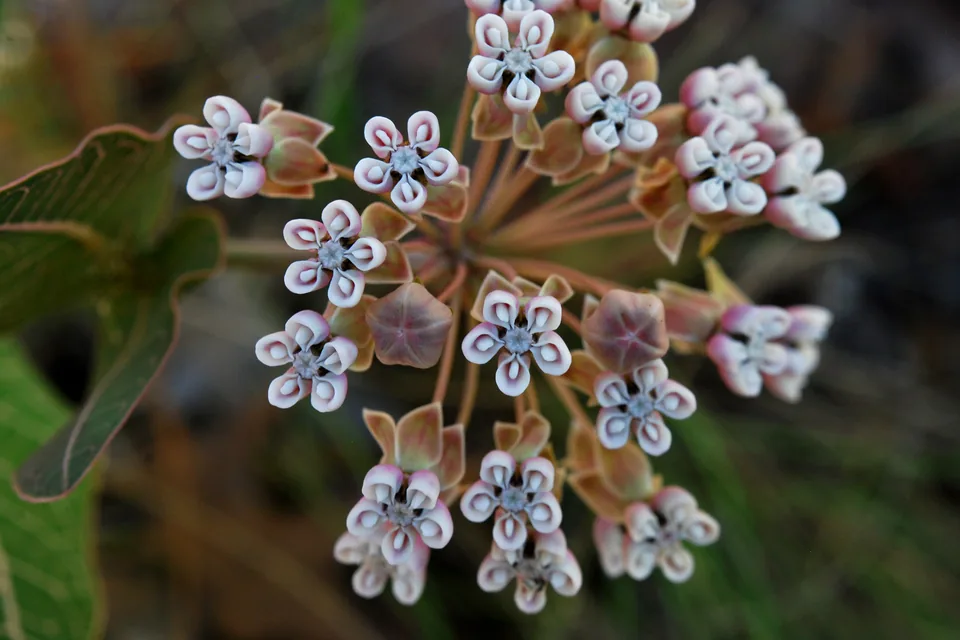


Cómo cultivar y cuidar Sandhill Milkweed
Asclepias humistrata
Escrito por Emilio Marruso · última revisión
Tóxica para: Gatos, Perros, Caballos, Personas · Por qué
De un vistazo
Esta asclepia perenne pide muy poco: dale sol pleno, al menos 6 horas al día, y aguantará sin problema las épocas secas. Alcanza 30–90 cm de alto y 60–90 cm de ancho, y durante la temporada pueden aparecer orugas de mariposa monarca. Multiplícala por semillas o esquejes de raíz en primavera u otoño y disfruta de una planta sin problemas importantes.
- Sol
Sol pleno: al menos 6 horas al día
Qué dicen las fuentes (2)
Luz: Pleno sol (6 o más horas de luz solar directa al día)
Light: Full sun (6 or more hours of direct sunlight a day) Soil Texture:
— Asclepias humistrata (Fleshy Milkweed, Pinewoods Milkweed, Pink-Veined Milkweed, Sandhill Milkweed) | North Carolina Extension Gardener Plant Toolbox [1] Grow in sun in sandy, well-drained soil with acid to neutral pH.
— Asclepias humistrata (Fleshy Milkweed, Pinewoods Milkweed, Pink-Veined Milkweed, Sandhill Milkweed) | North Carolina Extension Gardener Plant Toolbox [1] - Riego
Resiste la sequía: necesita poco riego
Qué dicen las fuentes (2)
Riego: Tolerante a la sequía.
consider planting pinewood milkweed in drought tolerant, native gardens, but as a specimen plant
— Asclepias humistrata (Fleshy Milkweed, Pinewoods Milkweed, Pink-Veined Milkweed, Sandhill Milkweed) | North Carolina Extension Gardener Plant Toolbox [1] It also thrives in gardens located in hardiness zones 8a through 9b, with the added benefit of being drought tolerant.
— Native Milkweeds – Gardening Solutions [5] - Frío
Aguanta inviernos de hasta −12,2 °C (10 °F)
Rústica en inviernos fríos · USDA 8a · RHS H5 · Z8
Qué dicen las fuentes (4)
Rusticidad, zona más fría: 8a [mínima invernal de −12,2 a −9,4 °C (de 10 a 15 °F)]
USDA Plant Hardiness Zone: 8a, 8b, 9a, 9b
— Asclepias humistrata (Fleshy Milkweed, Pinewoods Milkweed, Pink-Veined Milkweed, Sandhill Milkweed) | North Carolina Extension Gardener Plant Toolbox [1] It also thrives in gardens located in hardiness zones 8a through 9b, with the added benefit of being drought tolerant.
— Native Milkweeds – Gardening Solutions [5] Rusticidad, zona más cálida: 9b [mínima invernal de −3,9 a −1,1 °C (de 25 a 30 °F)]
USDA Plant Hardiness Zone: 8a, 8b, 9a, 9b
— Asclepias humistrata (Fleshy Milkweed, Pinewoods Milkweed, Pink-Veined Milkweed, Sandhill Milkweed) | North Carolina Extension Gardener Plant Toolbox [1] It also thrives in gardens located in hardiness zones 8a through 9b, with the added benefit of being drought tolerant.
— Native Milkweeds – Gardening Solutions [5] - Plagas
Pueden aparecer pulgones, chinches, escarabajos y orugas de monarca; sin problemas graves
Qué dicen las fuentes (1)
Plagas: pulgones, escarabajos del algodoncillo, chinches del algodoncillo, orugas de la monarca, orugas de la polilla tussock del algodoncillo
Common milkweed pests (aphids, milkweed beetles, milkweed bugs. Monarch larvae, and milkweed tussock moth larvae may appear on the plants across the growing season.
— Asclepias humistrata (Fleshy Milkweed, Pinewoods Milkweed, Pink-Veined Milkweed, Sandhill Milkweed) | North Carolina Extension Gardener Plant Toolbox [1] - Tamaño
30–90 cm de alto y 60–90 cm de ancho
Qué dicen las fuentes (2)
Altura adulta: 30.48-91.44 cm (1-3 pies)
Dimensions: Height: 1 ft. 0 in. - 3 ft. 0 in. Width: 2 ft. 0 in. - 3 ft. 0 in.
— Asclepias humistrata (Fleshy Milkweed, Pinewoods Milkweed, Pink-Veined Milkweed, Sandhill Milkweed) | North Carolina Extension Gardener Plant Toolbox [1] Anchura adulta: 60.96-91.44 cm (2-3 pies)
Dimensions: Height: 1 ft. 0 in. - 3 ft. 0 in. Width: 2 ft. 0 in. - 3 ft. 0 in.
— Asclepias humistrata (Fleshy Milkweed, Pinewoods Milkweed, Pink-Veined Milkweed, Sandhill Milkweed) | North Carolina Extension Gardener Plant Toolbox [1] - Multiplicación
Por semillas o esquejes de raíz, en primavera u otoño
Qué dicen las fuentes (1)
Propagación: Esquejes de raíz o semillas, en primavera u otoño
Will not tolerate salt spray or brackish water. Propagate from root cuttings or seeds, spring or fall.
— Asclepias humistrata (Fleshy Milkweed, Pinewoods Milkweed, Pink-Veined Milkweed, Sandhill Milkweed) | North Carolina Extension Gardener Plant Toolbox [1] - Seguridad
Tóxica si se ingiere; su savia lechosa irrita piel y ojos. Mantenla lejos de gatos, perros y caballos
Resumen
Asclepias humistrata es una perenne nativa del sureste de los EE. UU. con llamativas flores rosadas y blancas y nervaduras de las hojas de color rosa a púrpura. [1] Se cultiva a pleno sol en suelo arenoso y bien drenado y es tolerante a la sequía. [1][5] La planta tiene características de toxicidad de baja severidad. [1]
Citado en inglés, como en la fuente.
Esta ficha está incompleta: las fuentes consultadas aún no cubren todos los campos.
Aún no cubierto por nuestras fuentes: Poda
Cuidados
Riego
Tolerante a la sequía.
Qué dicen las fuentes (2)
consider planting pinewood milkweed in drought tolerant, native gardens, but as a specimen plantIt also thrives in gardens located in hardiness zones 8a through 9b, with the added benefit of being drought tolerant.Luz
Pleno sol (6 o más horas de luz solar directa al día)
Qué dicen las fuentes (2)
Light:
Full sun (6 or more hours of direct sunlight a day)
Soil Texture:Grow in sun in sandy, well-drained soil with acid to neutral pH.Clima y frío
Rusticidad, zona más fría
8a [mínima invernal de −12,2 a −9,4 °C (de 10 a 15 °F)]
Qué dicen las fuentes (2)
USDA Plant Hardiness Zone:
8a, 8b, 9a, 9bIt also thrives in gardens located in hardiness zones 8a through 9b, with the added benefit of being drought tolerant.Rusticidad, zona más cálida
9b [mínima invernal de −3,9 a −1,1 °C (de 25 a 30 °F)]
Qué dicen las fuentes (2)
USDA Plant Hardiness Zone:
8a, 8b, 9a, 9bIt also thrives in gardens located in hardiness zones 8a through 9b, with the added benefit of being drought tolerant.Propagación
Esquejes de raíz o semillas, en primavera u otoño
Qué dicen las fuentes (1)
Will not tolerate salt spray or brackish water. Propagate from root cuttings or seeds, spring or fall.Cultivo
La planta
Ciclo de vida
perenne
Qué dicen las fuentes (1)
Genus: Asclepias Species: humistrata Family: Apocynaceae Life Cycle: PerennialFamilia
Apocynaceae
Qué dicen las fuentes (1)
Genus: Asclepias Species: humistrata Family: Apocynaceae Life Cycle: PerennialAltura adulta
30.48-91.44 cm (1-3 pies)
Qué dicen las fuentes (1)
Dimensions: Height: 1 ft. 0 in. - 3 ft. 0 in. Width: 2 ft. 0 in. - 3 ft. 0 in.Anchura adulta
60.96-91.44 cm (2-3 pies)
Qué dicen las fuentes (1)
Dimensions: Height: 1 ft. 0 in. - 3 ft. 0 in. Width: 2 ft. 0 in. - 3 ft. 0 in.Plagas y enfermedades
Plagas
pulgones, escarabajos del algodoncillo, chinches del algodoncillo, orugas de la monarca, orugas de la polilla tussock del algodoncillo
Qué dicen las fuentes (1)
Common milkweed pests (aphids, milkweed beetles, milkweed bugs. Monarch larvae, and milkweed tussock moth larvae may appear on the plants across the growing season.Problemas
Plagas comunes del algodoncillo
Síntoma: Pueden aparecer pulgones, escarabajos del algodoncillo, chinches del algodoncillo, larvas de monarca y larvas de la polilla del algodoncillo durante la temporada de crecimiento
Qué hacer: No se reportan problemas significativos de insectos o enfermedades
Qué dicen las fuentes (1)
No significant insect or disease problems. Common milkweed pests (aphids, milkweed beetles, milkweed bugs. Monarch larvae, and milkweed tussock moth larvae may appear on the plants across the growing season.
— Asclepias humistrata (Fleshy Milkweed, Pinewoods Milkweed, Pink-Veined Milkweed, Sandhill Milkweed) | North Carolina Extension Gardener Plant Toolbox [1]
Remedios
Cada remedio indica qué dicen las fuentes oficiales; los remedios tradicionales sin fuente oficial aparecen marcados. Los perjudiciales están para que sepas evitarlos.
Primeros auxilios
Primeros auxilios: no sustituyen al médico
savia de algodoncillo en la piel
Lava la piel con agua y jabón. Fuente oficial, sin prueba independiente
If there is any persistent skin or eye pain, seek medical examination and treatment.
— poison.org [7] Cómo: Lava inmediatamente el área afectada a fondo con jabón y agua.
If your skin comes into contact with milkweed sap, you should immediately wash the affected area thoroughly with soap and water.
— poison.org [7]
savia de algodoncillo en los ojos
Enjuaga el ojo con agua. Fuente oficial, sin prueba independiente
If there is any persistent skin or eye pain, seek medical examination and treatment.
— poison.org [7] Cómo: Enjuaga suavemente el ojo con agua a temperatura ambiente durante 10 a 15 minutos.
If someone experiences eye irritation after getting sap in their eye, gently rinse the eye with room-temperature water for 10–15 minutes.
— poison.org [7]
Cuidar la planta
pulgones
Corta las puntas infestadas. Fuente oficial, sin prueba independiente
Cómo: Corta las puntas infestadas; la planta generalmente vuelve a brotar en un par de semanas con crecimiento nuevo.
If you notice aphids on your milkweed, just cut the infested tips off! The plant will generally sprout back in a couple of weeks with fresh, new growth.
— lee.ces.ncsu.edu [8] spray de jabón insecticida Funciona
Spraying the aphids directly with insecticidal soap — while avoiding monarch caterpillars and butterflies — is an effective way to keep oleander aphids down and help tropical milkweed stay in better shape
— blogs.ifas.ufl.edu [9] Mixing your own concoction of dish soap and salts is not recommended ever.
— lee.ces.ncsu.edu [8] Cómo: Rocía los pulgones directamente con jabón insecticida, evitando las orugas de la mariposa monarca y las mariposas.
For home gardeners, the researchers recommend a simple but effective way to control oleander aphids: insecticidal soap.
— blogs.ifas.ufl.edu [9] Qué dicen las pruebas Spraying the aphids directly with insecticidal soap — while avoiding monarch caterpillars and butterflies — is an effective way to keep oleander aphids down and help tropical milkweed stay in better shape
— blogs.ifas.ufl.edu [9] spray de aceite hortícola Fuente oficial, sin prueba independiente
Cómo: El aceite hortícola generalmente se considera aceptable en sistemas de manejo orgánico; las opciones químicas son el último recurso.
Aphids are mostly controlled using horticultural oil and insecticidal soap, which are usually considered acceptable in organically-managed systems.
— lee.ces.ncsu.edu [8] chorro de agua de la manguera Fuente oficial, sin prueba independiente
Cómo: Mantén a raya los pulgones con un chorro de agua de la manguera en lugar de aplicar pesticidas.
Aphids can also cause damage. Keep these in check with a blast of water from the hose instead of applying pesticides.
— Milkweed Selection and Care – Gardening Solutions [6]
Venenosa para los animales
Según la fuente, citada textualmente. No es un consejo médico ni veterinario: si una persona o un animal pudo haber ingerido esta planta, contacta con un centro de toxicología o con un veterinario.
Animales
Contact Dermatitis Poisonous to Humans Problem for Cats Problem for Dogs Problem for Horses
[1]La fuente señala el riesgo para este animal pero no explica por qué.
Personas
Can cause stomach upset, nausea, vomiting, abdominal pain, diarrhea, weakness, lethargy, and confusion if eaten in quantity. Milky sap can cause contact dermatitis and eye irritation.
[1]- Principio tóxico
Poison Toxic Principle: Cardiac glycoside Causes Contact Dermatitis: Yes
[1]- Síntomas
Can cause stomach upset, nausea, vomiting, abdominal pain, diarrhea, weakness, lethargy, and confusion if eaten in quantity. Milky sap can cause contact dermatitis and eye irritation.
[1]- Gravedad
Poison Severity: Low Poison Symptoms: Can cause stomach upset
[1]
Calendario
Poda
No figura en las fuentes consultadas.
Meses tal como los dan las fuentes, en su mayoría de Estados Unidos (hemisferio norte). En el hemisferio sur se desplazan unos seis meses.
Plantas similares
- Butterfly Weed Asclepias tuberosa
- Clasping Milkweed Asclepias amplexicaulis
- Few-flower Milkweed Asclepias lanceolata
- Green Antelopehorn Asclepias viridis
- Green Comet Milkweed Asclepias viridiflora
- Poke Milkweed Asclepias exaltata
- Purple Milkweed Asclepias purpurascens
- Red Milkweed Asclepias rubra
Fuentes
Cada valor anterior se cita de estos documentos. Los enlaces llevan al editor original.
- Asclepias humistrata (Fleshy Milkweed, Pinewoods Milkweed, Pink-Veined Milkweed, Sandhill Milkweed) | North Carolina Extension Gardener Plant Toolbox · plants.ces.ncsu.edu, consultado
- Ask IFAS: Topic - Asclepiadaceae · ask.ifas.ufl.edu, consultado
- | Center for Aquatic and Invasive Plants | University of Florida, IFAS · plant-directory.ifas.ufl.edu, consultado
- Find a Plant | North Carolina Extension Gardener Plant Toolbox · plants.ces.ncsu.edu, consultado
- Native Milkweeds – Gardening Solutions · gardeningsolutions.ifas.ufl.edu, consultado
- Milkweed Selection and Care – Gardening Solutions · gardeningsolutions.ifas.ufl.edu, consultado
- poison.org · poison.org
- lee.ces.ncsu.edu · lee.ces.ncsu.edu
- blogs.ifas.ufl.edu · blogs.ifas.ufl.edu
Escrito por Emilio Marruso · última revisión