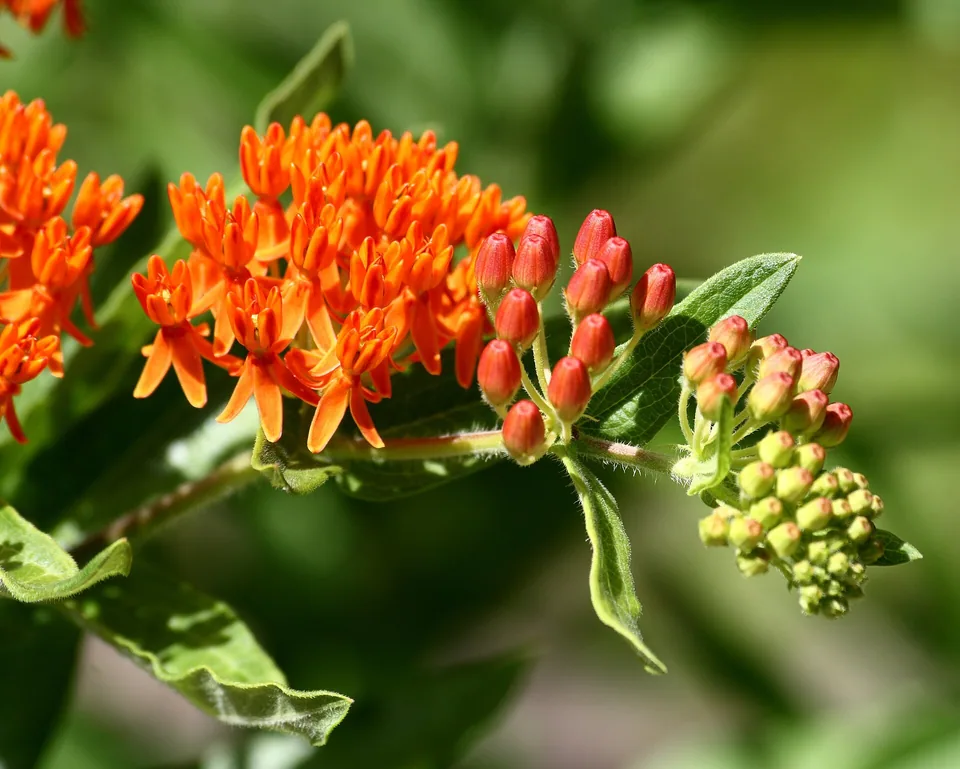


Cómo cultivar y cuidar Butterfly Weed
Asclepias tuberosa
Escrito por Emilio Marruso · última revisión
Tóxica para: Gatos, Perros, Caballos, Personas · Por qué
De un vistazo
La asclepia tuberosa es una vivaz agradecida que crece tanto a pleno sol como en semisombra. Pide muy poco: un suelo que drene bien, un solo abonado cuando las plántulas empiezan a crecer y un recorte en primavera. Siembra las semillas directamente en el jardín en otoño o cultívala en una maceta en tu terraza.
- Sol
De pleno sol a semisombra
Qué dicen las fuentes (2)
Luz: Pleno sol a semisombra
Full sun (6 or more hours of direct sunlight a day) Partial Shade (Direct sunlight only part of the day, 2-6 hours)
— Asclepias tuberosa (Butterfly Milkweed, Butterfly Weed, Chiggerflower, Common Butterfly-weed, Indian Paintbrush, Milkweed, Pleurisy Root) | North Carolina Extension Gardener Plant Toolbox [1] Butterfly milkweed will tolerant light or partial shade but produces fewer flowers in low light conditions.
— Rain Garden Plants: Butterfly Milkweed (Asclepias tuberosa) | Home & Garden Information Center [6] - Riego
No dejes nunca la tierra encharcada: la raíz principal se pudre con facilidad
Qué dicen las fuentes (1)
Notas sobre el riego: Evita suelos con mal drenaje o empapados; la raíz principal central es propensa a pudrirse
Avoid planting butterfly milkweed in poorly drained or soggy soils since the central taproot is prone to rot.
— Rain Garden Plants: Butterfly Milkweed (Asclepias tuberosa) | Home & Garden Information Center [6] - Suelo
Suelo con buen drenaje; evita en invierno un acolchado grueso y húmedo
Qué dicen las fuentes (1)
Notas sobre el riego: Evita suelos con mal drenaje o empapados; la raíz principal central es propensa a pudrirse
Avoid planting butterfly milkweed in poorly drained or soggy soils since the central taproot is prone to rot.
— Rain Garden Plants: Butterfly Milkweed (Asclepias tuberosa) | Home & Garden Information Center [6] - Distancia
45–60 cm entre plantas
Qué dicen las fuentes (1)
Distancia de plantación: 45.7-61.0 cm (1.5-2 pies)
Height & Width: 1.5 – 2’ h x 2 – 3’ w Spacing: 1.5 – 2’
— Rain Garden Plants: Butterfly Milkweed (Asclepias tuberosa) | Home & Garden Information Center [6] - Abonado
Abona una vez cuando las plántulas empiecen a crecer; después no suele necesitar nada
Qué dicen las fuentes (2)
Cuándo: Cuando las plántulas empiecen a crecer, para darles un impulso inicial
A fertilizer can be used when the seedlings start to grow to give them a jump start, but after that, fertilizer is generally not needed,
— [9] Frecuencia: Una vez en la etapa de plántula; generalmente no es necesario después
A fertilizer can be used when the seedlings start to grow to give them a jump start, but after that, fertilizer is generally not needed,
— [9] - Poda
Recórtala en primavera, no en otoño
Qué dicen las fuentes (2)
Poda: Primavera (poda en primavera, no en otoño)
Cut back in the spring and not in the fall.
— Butterfly Weed (Asclepias tuberosa)-Hort Answers - University of Illinois Extension [4] Leaves turn a dull yellow in fall before stems die back to the ground for the winter. It is best to wait until spring to cut foliage.
— Butterfly Weed, Asclepias tuberosa – Wisconsin Horticulture [3] - Plagas
Pulgón: quítalo con un chorro fuerte de agua; también puede sufrir roya y manchas en las hojas
Qué dicen las fuentes (3)
Plagas: pulgones (con mayor frecuencia el pulgón de la adelfa)
Aphids may cluster at the top of the plant.
— Asclepias tuberosa (Butterfly Milkweed, Butterfly Weed, Chiggerflower, Common Butterfly-weed, Indian Paintbrush, Milkweed, Pleurisy Root) | North Carolina Extension Gardener Plant Toolbox [1] Aphids are the biggest problem, most often bright yellow oleander aphids with black legs
— Butterfly Weed, Asclepias tuberosa – Wisconsin Horticulture [3] Enfermedades: pudrición de la corona, roya, mancha foliar
Crown rot can occur in wet, poorly drained soils. It is also susceptible to rust and leaf spot.
— Asclepias tuberosa (Butterfly Milkweed, Butterfly Weed, Chiggerflower, Common Butterfly-weed, Indian Paintbrush, Milkweed, Pleurisy Root) | North Carolina Extension Gardener Plant Toolbox [1] - Multiplicación
Por semilla o con trozos de 5 cm de la raíz principal cortados en otoño
Qué dicen las fuentes (1)
Propagación: Semilla; esquejes de raíz (raíz principal cortada en secciones de 2 pulgadas [5,1 cm] en otoño)
easy to grow from seed and can also be propagated from root cuttings . Cut the taproot into 2 inch sections in fall and plant in a vertical orientation.
— Butterfly Weed, Asclepias tuberosa – Wisconsin Horticulture [3] - Siembra
Siembra en exterior en otoño, o en interior a finales de invierno, 8–10 semanas antes de la última helada
Qué dicen las fuentes (6)
Siembra: Al aire libre en el lugar en otoño; en un marco frío a principios de primavera; o en interiores a fines del invierno, 8 a 10 semanas antes de la última helada promedio
al aire libre en el lugar: Sow outdoors in place after frost in the fall
— Butterfly Weed, Asclepias tuberosa – Wisconsin Horticulture [3] marco frío: in a cold frame in early spring
— Butterfly Weed, Asclepias tuberosa – Wisconsin Horticulture [3] en interiores con calor de fondo: start indoors with bottom heat in late winter (8 to 10 weeks before average last frost)
— Butterfly Weed, Asclepias tuberosa – Wisconsin Horticulture [3] Según Clemson HGIC (butterfly weed): It is best to direct seed into the landscape during the fall
— Butterfly Weed | Home & Garden Information Center [8] Sow outdoors in place after frost in the fall, in a cold frame in early spring, or start indoors with bottom heat in late winter (8 to 10 weeks before average last frost)
— Butterfly Weed, Asclepias tuberosa – Wisconsin Horticulture [3] It is best to direct seed into the landscape during the fall, as the seeds need to go through a cold treatment, and then the seedlings will emerge in the spring.
— Butterfly Weed | Home & Garden Information Center [8] - Maceta
Crece también en maceta
Qué dicen las fuentes (1)
En maceta: Sí
It is well suited for pollinator gardens, containers, mass plantings, for naturalizing landscapes, or utilized as cut flowers in arrangements.
— Ask IFAS: Topic - Asclepiadaceae [5] - Seguridad
Dañina para personas, perros, gatos y caballos si se come; la savia irrita la piel y los ojos
Resumen
El algodoncillo mariposa es una herbácea perenne erecta con racimos de flores anaranjadas a amarillas, utilizada en jardines de pradera, nativos y de polinizadores. [1] Su raíz principal profunda la hace difícil de trasplantar, y su savia puede causar dermatitis por contacto. [6][1]
Citado en inglés, como en la fuente.
Cuidados
Las medidas entre corchetes son nuestra conversión al otro sistema de unidades; el texto citado no cambia.
Riego
Riego
Las fuentes dan valores distintos según la región, la zona o las condiciones de cultivo.
Lo que dice cada fuente
Según Clemson HGIC (rain garden factsheet): Muy tolerante a la sequía; el riego ocasional prolonga la floración
Según University of Maryland Extension: Suelo bien drenado, pobre, seco, generalmente rocoso o arenoso
Según University of Illinois Extension: Suelo húmedo y bien drenado
Qué dicen las fuentes (5)
Según Clemson HGIC (rain garden factsheet): While very drought tolerant, occasional irrigation will prolong flowering.Según University of Maryland Extension: Soil: Well-drained, poor, dry, usually rocky or sandy soilSegún University of Illinois Extension: Soil Conditions Moist, Well-DrainedButterfly weed needs full sun to bloom and prefers sandy soil but grows in almost any type of well-drained soil , including gravel or clay. Plants are very drought tolerant once established.Plant butterfly milkweed in poor, dry soils in full sun. While very drought tolerant, occasional irrigation will prolong flowering.Notas sobre el riego
Evita suelos con mal drenaje o empapados; la raíz principal central es propensa a pudrirse
Qué dicen las fuentes (1)
Avoid planting butterfly milkweed in poorly drained or soggy soils since the central taproot is prone to rot.Luz
Pleno sol a semisombra
Qué dicen las fuentes (2)
Full sun (6 or more hours of direct sunlight a day)
Partial Shade (Direct sunlight only part of the day, 2-6 hours)Butterfly milkweed will tolerant light or partial shade but produces fewer flowers in low light conditions.Clima y frío
Rusticidad, zona más fría
Las fuentes dan valores distintos según la región, la zona o las condiciones de cultivo.
Lo que dice cada fuente
Según NC State Extension: 3a [mínima invernal de −40 a −37,2 °C (de −40 a −35 °F)]
Según University of Wisconsin Extension: 3a [mínima invernal de −40 a −37,2 °C (de −40 a −35 °F)]
Según University of Illinois Extension: 4 [mínima invernal de −34,4 a −28,9 °C (de −30 a −20 °F)]
Qué dicen las fuentes (5)
Según NC State Extension: USDA Plant Hardiness Zone: 3a, 3b, 4a, 4b, 5a, 5b, 6a, 6b, 7a, 7b, 8a, 8b, 9a, 9bSegún University of Wisconsin Extension: hardy in zones 3a to 9bSegún University of Illinois Extension: USDA Hardiness Zone 4 - 9USDA Plant Hardiness Zone:
3a, 3b, 4a, 4b, 5a, 5b, 6a, 6b, 7a, 7b, 8a, 8b, 9a, 9bAsclepias tuberosa , hardy in zones 3a to 9b , may be found in prairies and meadows, open woods, along roads and other open areas.Rusticidad, zona más cálida
Las fuentes dan valores distintos según la región, la zona o las condiciones de cultivo.
Lo que dice cada fuente
Según NC State Extension: 9b [mínima invernal de −3,9 a −1,1 °C (de 25 a 30 °F)]
Según University of Wisconsin Extension: 9b [mínima invernal de −3,9 a −1,1 °C (de 25 a 30 °F)]
Según University of Illinois Extension: 9 [mínima invernal de −6,7 a −1,1 °C (de 20 a 30 °F)]
Qué dicen las fuentes (5)
Según NC State Extension: USDA Plant Hardiness Zone: 3a, 3b, 4a, 4b, 5a, 5b, 6a, 6b, 7a, 7b, 8a, 8b, 9a, 9bSegún University of Wisconsin Extension: hardy in zones 3a to 9bSegún University of Illinois Extension: USDA Hardiness Zone 4 - 9USDA Plant Hardiness Zone:
3a, 3b, 4a, 4b, 5a, 5b, 6a, 6b, 7a, 7b, 8a, 8b, 9a, 9bAsclepias tuberosa , hardy in zones 3a to 9b , may be found in prairies and meadows, open woods, along roads and other open areas.Dónde cultivarla
En maceta
Sí
Qué dicen las fuentes (1)
It is well suited for pollinator gardens, containers, mass plantings, for naturalizing landscapes, or utilized as cut flowers in arrangements.Distancia de plantación
45.7-61.0 cm (1.5-2 pies)
Qué dicen las fuentes (1)
Height & Width: 1.5 – 2’ h x 2 – 3’ w
Spacing: 1.5 – 2’Propagación
Semilla; esquejes de raíz (raíz principal cortada en secciones de 2 pulgadas [5,1 cm] en otoño)
Qué dicen las fuentes (1)
easy to grow from seed and can also be propagated from root cuttings . Cut the taproot into 2 inch sections in fall and plant in a vertical orientation.Cultivo
La planta
Ciclo de vida
perenne
Qué dicen las fuentes (2)
Life Cycle: PerennialButterfly weed is a long-lived herbaceous perennial in the milkweed familyFamilia
Apocynaceae
Qué dicen las fuentes (1)
Family: ApocynaceaeAltura adulta
Plagas y enfermedades
Plagas
pulgones (con mayor frecuencia el pulgón de la adelfa)
Qué dicen las fuentes (2)
Aphids may cluster at the top of the plant.Aphids are the biggest problem, most often bright yellow oleander aphids with black legsEnfermedades
pudrición de la corona, roya, mancha foliar
Qué dicen las fuentes (1)
Crown rot can occur in wet, poorly drained soils. It is also susceptible to rust and leaf spot.Abonado
Cuándo
Cuando las plántulas empiecen a crecer, para darles un impulso inicial
Qué dicen las fuentes (1)
A fertilizer can be used when the seedlings start to grow to give them a jump start, but after that, fertilizer is generally not needed,Frecuencia
Una vez en la etapa de plántula; generalmente no es necesario después
Qué dicen las fuentes (1)
A fertilizer can be used when the seedlings start to grow to give them a jump start, but after that, fertilizer is generally not needed,Problemas
Pulgones
Síntoma: Los pulgones se agrupan en la parte superior de la planta; los pulgones de la adelfa atacan a las asclepias.
Qué hacer: Desalójalos con un fuerte chorro de agua cada dos o tres días durante una semana; el aceite hortícola o los insectos benéficos son otras opciones.
Qué dicen las fuentes (2)
Aphids may cluster at the top of the plant. To remedy this problem, knock them off with a strong spray of water every two or three days for a week.
— Asclepias tuberosa (Butterfly Milkweed, Butterfly Weed, Chiggerflower, Common Butterfly-weed, Indian Paintbrush, Milkweed, Pleurisy Root) | North Carolina Extension Gardener Plant Toolbox [1] it is susceptible to attack by the invasive alien oleander aphids. Your maintenance options include waiting for beneficial insects or (carefully!) spraying with horticultural oil.
— Butterfly Weed | University of Maryland Extension [2] Pudrición de la corona y de la raíz
Síntoma: Pudrición de la corona o de la raíz principal en suelos húmedos y con mal drenaje.
Qué hacer: Planta en un área con buen drenaje y evita un mantillo invernal profundo y húmedo.
Qué dicen las fuentes (2)
Crown rot can occur in wet, poorly drained soils. It is also susceptible to rust and leaf spot.
— Asclepias tuberosa (Butterfly Milkweed, Butterfly Weed, Chiggerflower, Common Butterfly-weed, Indian Paintbrush, Milkweed, Pleurisy Root) | North Carolina Extension Gardener Plant Toolbox [1] Be sure to plant in a well-drained area, as root rot will become an issue if the soil is kept too wet.
— Butterfly Weed | Home & Garden Information Center [8] Roya y mancha foliar
Síntoma: Susceptible a la roya y a la mancha foliar.
Qué hacer: No se da ningún manejo en las fuentes.
Qué dicen las fuentes (1)
Crown rot can occur in wet, poorly drained soils. It is also susceptible to rust and leaf spot.
— Asclepias tuberosa (Butterfly Milkweed, Butterfly Weed, Chiggerflower, Common Butterfly-weed, Indian Paintbrush, Milkweed, Pleurisy Root) | North Carolina Extension Gardener Plant Toolbox [1]
Remedios
Cada remedio indica qué dicen las fuentes oficiales; los remedios tradicionales sin fuente oficial aparecen marcados. Los perjudiciales están para que sepas evitarlos.
Cuidar la planta
pulgones
chorro fuerte de agua Funciona
Small numbers of these insects will not harm plants and often are eaten by lady beetles, lacewings and other predators.
— Butterfly Weed, Asclepias tuberosa – Wisconsin Horticulture [3] Cómo: Usa un chorro fuerte de agua de una manguera de jardín para lavar los pulgones de las plantas.
Therefore, use a strong stream of water from a garden hose to wash them off the plants.
— Butterfly Weed | Home & Garden Information Center [8] Qué dicen las pruebas To remedy this problem, knock them off with a strong spray of water every two or three days for a week.
— Asclepias tuberosa (Butterfly Milkweed, Butterfly Weed, Chiggerflower, Common Butterfly-weed, Indian Paintbrush, Milkweed, Pleurisy Root) | North Carolina Extension Gardener Plant Toolbox [1] spray de agua con jabón para platos Perjudicial
Small numbers of these insects will not harm plants and often are eaten by lady beetles, lacewings and other predators.
— Butterfly Weed, Asclepias tuberosa – Wisconsin Horticulture [3] All of these products will kill plants if applied at a high enough concentration and with repeated applications
— extension.usu.edu [12] Cómo: Rocía los pulgones con una mezcla de agua jabonosa.
Spray them off with a soapy water mix
— growitbuildit.com [10] Qué dicen las pruebas spraying home remedies that contain dish detergent on plants on a sunny day can injure the plant, essentially burning it.
— extension.psu.edu [11]
mancha foliar
eliminación de las hojas afectadas No verificado
Remedio tradicional, no verificado por una fuente oficial.
Cómo: Elimina las hojas afectadas y mejora la circulación de aire alrededor de las plantas.
roya
eliminación del follaje infectado No verificado
Remedio tradicional, no verificado por una fuente oficial.
Cómo: Elimina el follaje infectado y evita el riego por aspersión en las horas de la tarde.
pudrición de la corona
suelo con buen drenaje Funciona
Cómo: Mejora el drenaje de inmediato y evita regar en exceso las plantas establecidas.
Improve drainage immediately; avoid overwatering established plants
— gardenandplants.com [13] Qué dicen las pruebas Be sure to plant in a well-drained area, as root rot will become an issue if the soil is kept too wet.
— Butterfly Weed | Home & Garden Information Center [8]
Cómo eliminarla
autosiembra
eliminando las vainas de semillas antes de que se abran Funciona
Cómo: Retira las vainas antes de que se abran si no quieres que se siembren solas.
Remove the pods before they split open if self-seeding is not wanted.
— Butterfly Weed, Asclepias tuberosa – Wisconsin Horticulture [3] Qué dicen las pruebas Mature plants may freely self-seed in the landscape if seed pods (follicles) are not removed before they split open.
— Asclepias tuberosa (Butterfly Milkweed, Butterfly Weed, Chiggerflower, Common Butterfly-weed, Indian Paintbrush, Milkweed, Pleurisy Root) | North Carolina Extension Gardener Plant Toolbox [1] arrancando las plántulas a mano Funciona
Be sure to wear gloves when handling butterfly weed, as the clear sap may cause contact dermatitis.
— Asclepias tuberosa (Butterfly Milkweed, Butterfly Weed, Chiggerflower, Common Butterfly-weed, Indian Paintbrush, Milkweed, Pleurisy Root) | North Carolina Extension Gardener Plant Toolbox [1] Cómo: Algunas plantas pequeñas son fáciles de arrancar a mano; usa guantes porque pueden irritar la piel.
If you just have a few small plants, they're pretty easy to pull up by hand, but you'll want to wear gloves because they can irritate the skin.
— housedigest.com [14] Qué dicen las pruebas To control weeds without using manufactured herbicides, the best option is to pull, remove or interfere with weed growth. Regularly pulling, hoeing or mowing weeds and encouraging grass to grow and out-compete the weeds is an excellent solution.
— extension.usu.edu [12] cortando las plántulas con cortacésped Funciona
Cómo: Cuando un grupo de plántulas haya invadido un área, córtalas con cortacésped o desbrozadora.
When a bunch of seedlings have taken over an area, you can mow or use a weed whacker on them, and that should take care of the problem.
— housedigest.com [14] Qué dicen las pruebas To control weeds without using manufactured herbicides, the best option is to pull, remove or interfere with weed growth. Regularly pulling, hoeing or mowing weeds and encouraging grass to grow and out-compete the weeds is an excellent solution.
— extension.usu.edu [12] acolchado en capas con cartón y periódico Funciona
Cómo: Coloca una capa gruesa de cartón, periódico o bolsas de papel sobre toda el área y cubre con mantillo, hojas o paja para sofocar las plántulas.
place a thick layer of cardboard, newspaper, or paper bags over the whole area and cover with mulch, leaves, or straw — anything to keep the paper in place long enough to suffocate the seedlings.
— housedigest.com [14] Qué dicen las pruebas A variety of household items, such as newspapers, can be used as weed barriers. Lay the material down to prevent sunlight from reaching the unwanted plants, and cover with mulch or other plant-resistant material.
— extension.usu.edu [12]
Venenosa para los animales
Según la fuente, citada textualmente. No es un consejo médico ni veterinario: si una persona o un animal pudo haber ingerido esta planta, contacta con un centro de toxicología o con un veterinario.
Animales
#problem for dogs #problem for horses #problem for cats
[1]La fuente señala el riesgo para este animal pero no explica por qué.
Personas
Can cause stomach upset, nausea, vomiting, abdominal pain, diarrhea, weakness, lethargy, and confusion if eaten in quantity. Sap can cause contact dermatitis and eye irritation.
[1]- Partes venenosas
Poison Part: Flowers Fruits Leaves Roots Sap/Juice Stems
[1]- Principio tóxico
Poison Toxic Principle: Cardiac glycosides and resinoids
[1]- Síntomas
Poison Symptoms: Can cause stomach upset, nausea, vomiting, abdominal pain, diarrhea, weakness, lethargy, and confusion if eaten in quantity. Sap can cause contact dermatitis and eye irritation.
[1]- Gravedad
Poison Severity: Low
[1]
Most milkweed species contain milky sap that is toxic to humans and animals when ingested in excessive quantities. The sap of A. tuberosa contains lower levels of the toxic compounds found in other Asclepias species.
[6]
Calendario
Siembra
Al aire libre en el lugar en otoño; en un marco frío a principios de primavera; o en interiores a fines del invierno, 8 a 10 semanas antes de la última helada promedio
Lo que dice cada fuente
al aire libre en el lugar: Después de las heladas en otoño
marco frío: Principios de primavera
en interiores con calor de fondo: Fines del invierno (8 a 10 semanas antes de la última helada promedio)
Según Clemson HGIC (butterfly weed): Siembra directamente en el paisaje durante el otoño
Qué dicen las fuentes (6)
al aire libre en el lugar: Sow outdoors in place after frost in the fallmarco frío: in a cold frame in early springen interiores con calor de fondo: start indoors with bottom heat in late winter (8 to 10 weeks before average last frost)Según Clemson HGIC (butterfly weed): It is best to direct seed into the landscape during the fallSow outdoors in place after frost in the fall, in a cold frame in early spring, or start indoors with bottom heat in late winter (8 to 10 weeks before average last frost)It is best to direct seed into the landscape during the fall, as the seeds need to go through a cold treatment, and then the seedlings will emerge in the spring.Poda
Primavera (poda en primavera, no en otoño)
Qué dicen las fuentes (2)
Cut back in the spring and not in the fall.Leaves turn a dull yellow in fall before stems die back to the ground for the winter. It is best to wait until spring to cut foliage.Meses tal como los dan las fuentes, en su mayoría de Estados Unidos (hemisferio norte). En el hemisferio sur se desplazan unos seis meses.
Respecto a las heladas
Estimación menos precisa: no hay ninguna estación meteorológica a menos de 300 km.
Busca las fechas de heladas por código postal o ciudad
Siembra en interior: de 8 a 10 semanas antes de la última helada
start indoors with bottom heat in late winter (8 to 10 weeks before average last frost)
— Butterfly Weed, Asclepias tuberosa – Wisconsin Horticulture [3]
Cuenta desde las fechas medias de las heladas de tu zona.
Valores orientativos
Valores de una fuente secundaria, no comprobados palabra por palabra como el resto de esta página. Úselos como punto de partida.
- Horas de sol
- 5-6 horasValor orientativo, adáptalo a tu clima · Fuente secundaria
- Suelo
- Arenoso, Franco, RocosoValor orientativo, adáptalo a tu clima · Fuente secundaria
- pH del suelo
- 6-7Valor orientativo, adáptalo a tu clima · Fuente secundaria
- Nivel de cuidado
- MedioValor orientativo, adáptalo a tu clima · Fuente secundaria
- Crecimiento
- BajoValor orientativo, adáptalo a tu clima · Fuente secundaria
Plantas similares
- Clasping Milkweed Asclepias amplexicaulis
- Few-flower Milkweed Asclepias lanceolata
- Green Antelopehorn Asclepias viridis
- Green Comet Milkweed Asclepias viridiflora
- Poke Milkweed Asclepias exaltata
- Purple Milkweed Asclepias purpurascens
- Red Milkweed Asclepias rubra
- Sandhill Milkweed Asclepias humistrata
Fuentes
Cada valor anterior se cita de estos documentos. Los enlaces llevan al editor original.
- Asclepias tuberosa (Butterfly Milkweed, Butterfly Weed, Chiggerflower, Common Butterfly-weed, Indian Paintbrush, Milkweed, Pleurisy Root) | North Carolina Extension Gardener Plant Toolbox · plants.ces.ncsu.edu, consultado
- Butterfly Weed | University of Maryland Extension · extension.umd.edu, consultado
- Butterfly Weed, Asclepias tuberosa – Wisconsin Horticulture · hort.extension.wisc.edu, consultado
- Butterfly Weed (Asclepias tuberosa)-Hort Answers - University of Illinois Extension · web.extension.illinois.edu, consultado
- Ask IFAS: Topic - Asclepiadaceae · ask.ifas.ufl.edu, consultado
- Rain Garden Plants: Butterfly Milkweed (Asclepias tuberosa) | Home & Garden Information Center · hgic.clemson.edu, consultado
- Rain Garden Plants: Butterfly Weed · extension.psu.edu, consultado
- Butterfly Weed | Home & Garden Information Center · hgic.clemson.edu, consultado
- extension.illinois.edu · extension.illinois.edu
- growitbuildit.com · growitbuildit.com
- extension.psu.edu · extension.psu.edu
- extension.usu.edu · extension.usu.edu
- gardenandplants.com · gardenandplants.com
- housedigest.com · housedigest.com
Escrito por Emilio Marruso · última revisión