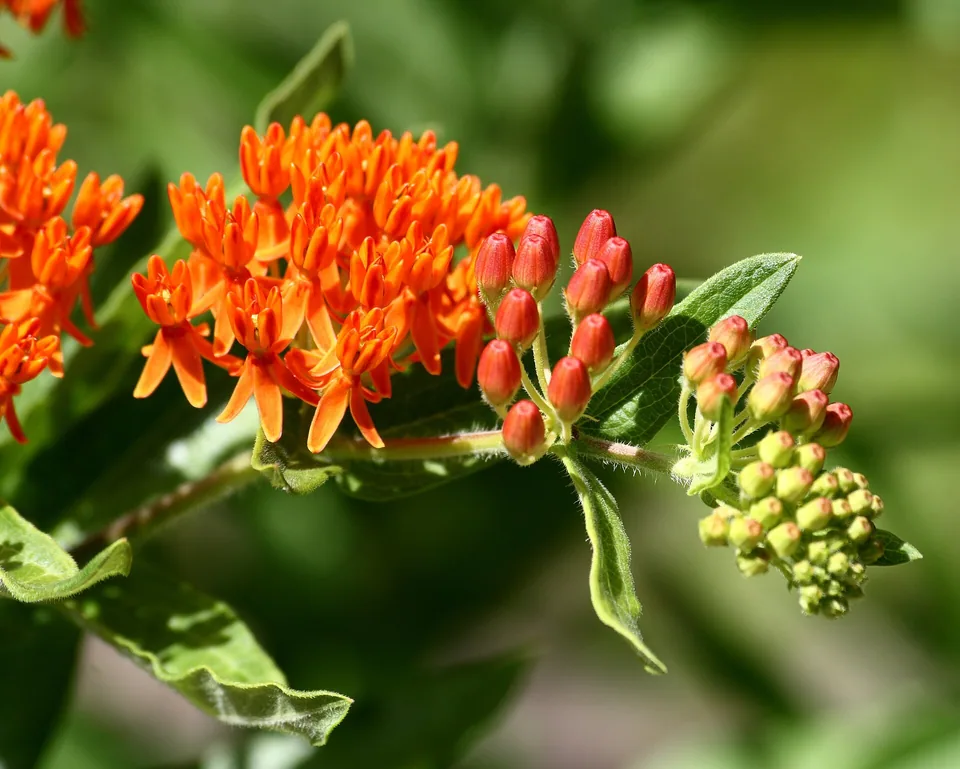


How to Grow and Care for Butterfly Weed
Asclepias tuberosa
Written by Emilio Marruso · last checked
Toxic to: Cats, Dogs, Horses, People · Why
At a glance
Butterfly weed is an easygoing perennial that grows anywhere from full sun to partial shade. It asks for very little: well-drained soil, a single feeding when the seedlings start to grow, and a trim in spring. Sow the seeds right in the garden in fall, or grow it in a container on your patio.
- Sun
Full sun to partial shade
What the sources say (2)
Light: Full sun to partial shade
Full sun (6 or more hours of direct sunlight a day) Partial Shade (Direct sunlight only part of the day, 2-6 hours)
— Asclepias tuberosa (Butterfly Milkweed, Butterfly Weed, Chiggerflower, Common Butterfly-weed, Indian Paintbrush, Milkweed, Pleurisy Root) | North Carolina Extension Gardener Plant Toolbox [1] Butterfly milkweed will tolerant light or partial shade but produces fewer flowers in low light conditions.
— Rain Garden Plants: Butterfly Milkweed (Asclepias tuberosa) | Home & Garden Information Center [6] - Water
Never let the soil stay soggy: the main root rots easily
What the sources say (1)
Watering notes: Avoid poorly drained or soggy soils; the central taproot is prone to rot
Avoid planting butterfly milkweed in poorly drained or soggy soils since the central taproot is prone to rot.
— Rain Garden Plants: Butterfly Milkweed (Asclepias tuberosa) | Home & Garden Information Center [6] - Soil
Well-drained soil; skip thick, wet mulch in winter
What the sources say (1)
Watering notes: Avoid poorly drained or soggy soils; the central taproot is prone to rot
Avoid planting butterfly milkweed in poorly drained or soggy soils since the central taproot is prone to rot.
— Rain Garden Plants: Butterfly Milkweed (Asclepias tuberosa) | Home & Garden Information Center [6] - Spacing
18–24 in between plants
What the sources say (1)
Spacing: 45.7-61.0 cm (1.5-2 ft)
Height & Width: 1.5 – 2’ h x 2 – 3’ w Spacing: 1.5 – 2’
— Rain Garden Plants: Butterfly Milkweed (Asclepias tuberosa) | Home & Garden Information Center [6] - Feeding
Feed once when seedlings start to grow; after that it usually needs nothing
What the sources say (2)
When: When seedlings start to grow, to give them a jump start
A fertilizer can be used when the seedlings start to grow to give them a jump start, but after that, fertilizer is generally not needed,
— [9] How often: Once at the seedling stage; generally not needed afterwards
A fertilizer can be used when the seedlings start to grow to give them a jump start, but after that, fertilizer is generally not needed,
— [9] - Pruning
Cut it back in spring, not in fall
What the sources say (2)
Pruning: Spring (cut back in spring, not in fall)
Cut back in the spring and not in the fall.
— Butterfly Weed (Asclepias tuberosa)-Hort Answers - University of Illinois Extension [4] Leaves turn a dull yellow in fall before stems die back to the ground for the winter. It is best to wait until spring to cut foliage.
— Butterfly Weed, Asclepias tuberosa – Wisconsin Horticulture [3] - Pests
Aphids: knock them off with a strong spray of water; it can also get rust and leaf spot
What the sources say (3)
Pests: aphids (most often the oleander aphid)
Aphids may cluster at the top of the plant.
— Asclepias tuberosa (Butterfly Milkweed, Butterfly Weed, Chiggerflower, Common Butterfly-weed, Indian Paintbrush, Milkweed, Pleurisy Root) | North Carolina Extension Gardener Plant Toolbox [1] Aphids are the biggest problem, most often bright yellow oleander aphids with black legs
— Butterfly Weed, Asclepias tuberosa – Wisconsin Horticulture [3] Diseases: crown rot, rust, leaf spot
Crown rot can occur in wet, poorly drained soils. It is also susceptible to rust and leaf spot.
— Asclepias tuberosa (Butterfly Milkweed, Butterfly Weed, Chiggerflower, Common Butterfly-weed, Indian Paintbrush, Milkweed, Pleurisy Root) | North Carolina Extension Gardener Plant Toolbox [1] - Propagation
From seed, or from 2-inch pieces of the main root cut in fall
What the sources say (1)
Propagation: Seed; root cuttings (taproot cut into 2 inch [5.1 cm] sections in fall)
easy to grow from seed and can also be propagated from root cuttings . Cut the taproot into 2 inch sections in fall and plant in a vertical orientation.
— Butterfly Weed, Asclepias tuberosa – Wisconsin Horticulture [3] - Sowing
Sow outdoors in fall, or indoors in late winter, 8–10 weeks before the last frost
What the sources say (6)
Sowing: Outdoors in place in the fall; in a cold frame in early spring; or indoors in late winter, 8 to 10 weeks before average last frost
outdoors in place: Sow outdoors in place after frost in the fall
— Butterfly Weed, Asclepias tuberosa – Wisconsin Horticulture [3] cold frame: in a cold frame in early spring
— Butterfly Weed, Asclepias tuberosa – Wisconsin Horticulture [3] indoors with bottom heat: start indoors with bottom heat in late winter (8 to 10 weeks before average last frost)
— Butterfly Weed, Asclepias tuberosa – Wisconsin Horticulture [3] According to Clemson HGIC (butterfly weed): It is best to direct seed into the landscape during the fall
— Butterfly Weed | Home & Garden Information Center [8] Sow outdoors in place after frost in the fall, in a cold frame in early spring, or start indoors with bottom heat in late winter (8 to 10 weeks before average last frost)
— Butterfly Weed, Asclepias tuberosa – Wisconsin Horticulture [3] It is best to direct seed into the landscape during the fall, as the seeds need to go through a cold treatment, and then the seedlings will emerge in the spring.
— Butterfly Weed | Home & Garden Information Center [8] - Containers
Grows in containers too
What the sources say (1)
In containers: Yes
It is well suited for pollinator gardens, containers, mass plantings, for naturalizing landscapes, or utilized as cut flowers in arrangements.
— Ask IFAS: Topic - Asclepiadaceae [5] - Safety
Harmful to people, dogs, cats and horses if eaten; the sap irritates skin and eyes
Overview
Butterfly weed is an upright herbaceous perennial with orange to yellow flower clusters, used in meadow, native and pollinator gardens. [1] Its deep taproot makes it hard to transplant, and its sap can cause contact dermatitis. [6][1]
Butterfly Weed care
Measurements in square brackets are our conversion into the other unit system; the quoted text is unchanged.
How to water Butterfly Weed
Watering
The sources give different values depending on region, zone or growing conditions.
What each source says
According to Clemson HGIC (rain garden factsheet): Very drought tolerant; occasional irrigation prolongs flowering
According to University of Maryland Extension: Well-drained, poor, dry, usually rocky or sandy soil
According to University of Illinois Extension: Moist, well-drained soil
What the sources say (5)
According to Clemson HGIC (rain garden factsheet): While very drought tolerant, occasional irrigation will prolong flowering.According to University of Maryland Extension: Soil: Well-drained, poor, dry, usually rocky or sandy soilAccording to University of Illinois Extension: Soil Conditions Moist, Well-DrainedButterfly weed needs full sun to bloom and prefers sandy soil but grows in almost any type of well-drained soil , including gravel or clay. Plants are very drought tolerant once established.Plant butterfly milkweed in poor, dry soils in full sun. While very drought tolerant, occasional irrigation will prolong flowering.Watering notes
Avoid poorly drained or soggy soils; the central taproot is prone to rot
What the sources say (1)
Avoid planting butterfly milkweed in poorly drained or soggy soils since the central taproot is prone to rot.How much light Butterfly Weed needs
Full sun to partial shade
What the sources say (2)
Full sun (6 or more hours of direct sunlight a day)
Partial Shade (Direct sunlight only part of the day, 2-6 hours)Butterfly milkweed will tolerant light or partial shade but produces fewer flowers in low light conditions.How much cold Butterfly Weed can take
Hardiness, coldest zone
The sources give different values depending on region, zone or growing conditions.
What each source says
According to NC State Extension: 3a [winter low −40 to −37.2 °C (−40 to −35 °F)]
According to University of Wisconsin Extension: 3a [winter low −40 to −37.2 °C (−40 to −35 °F)]
According to University of Illinois Extension: 4 [winter low −34.4 to −28.9 °C (−30 to −20 °F)]
What the sources say (5)
According to NC State Extension: USDA Plant Hardiness Zone: 3a, 3b, 4a, 4b, 5a, 5b, 6a, 6b, 7a, 7b, 8a, 8b, 9a, 9bAccording to University of Wisconsin Extension: hardy in zones 3a to 9bAccording to University of Illinois Extension: USDA Hardiness Zone 4 - 9USDA Plant Hardiness Zone:
3a, 3b, 4a, 4b, 5a, 5b, 6a, 6b, 7a, 7b, 8a, 8b, 9a, 9bAsclepias tuberosa , hardy in zones 3a to 9b , may be found in prairies and meadows, open woods, along roads and other open areas.Hardiness, warmest zone
The sources give different values depending on region, zone or growing conditions.
What each source says
According to NC State Extension: 9b [winter low −3.9 to −1.1 °C (25 to 30 °F)]
According to University of Wisconsin Extension: 9b [winter low −3.9 to −1.1 °C (25 to 30 °F)]
According to University of Illinois Extension: 9 [winter low −6.7 to −1.1 °C (20 to 30 °F)]
What the sources say (5)
According to NC State Extension: USDA Plant Hardiness Zone: 3a, 3b, 4a, 4b, 5a, 5b, 6a, 6b, 7a, 7b, 8a, 8b, 9a, 9bAccording to University of Wisconsin Extension: hardy in zones 3a to 9bAccording to University of Illinois Extension: USDA Hardiness Zone 4 - 9USDA Plant Hardiness Zone:
3a, 3b, 4a, 4b, 5a, 5b, 6a, 6b, 7a, 7b, 8a, 8b, 9a, 9bAsclepias tuberosa , hardy in zones 3a to 9b , may be found in prairies and meadows, open woods, along roads and other open areas.Where to grow Butterfly Weed
In containers
Yes
What the sources say (1)
It is well suited for pollinator gardens, containers, mass plantings, for naturalizing landscapes, or utilized as cut flowers in arrangements.Spacing
45.7-61.0 cm (1.5-2 ft)
What the sources say (1)
Height & Width: 1.5 – 2’ h x 2 – 3’ w
Spacing: 1.5 – 2’How to propagate Butterfly Weed
Seed; root cuttings (taproot cut into 2 inch [5.1 cm] sections in fall)
What the sources say (1)
easy to grow from seed and can also be propagated from root cuttings . Cut the taproot into 2 inch sections in fall and plant in a vertical orientation.How to grow Butterfly Weed
The plant
Life cycle
perennial
What the sources say (2)
Life Cycle: PerennialButterfly weed is a long-lived herbaceous perennial in the milkweed familyFamily
Apocynaceae
What the sources say (1)
Family: ApocynaceaeMature height
Pests and diseases
Pests
aphids (most often the oleander aphid)
What the sources say (2)
Aphids may cluster at the top of the plant.Aphids are the biggest problem, most often bright yellow oleander aphids with black legsDiseases
crown rot, rust, leaf spot
What the sources say (1)
Crown rot can occur in wet, poorly drained soils. It is also susceptible to rust and leaf spot.Fertilizing
When
When seedlings start to grow, to give them a jump start
What the sources say (1)
A fertilizer can be used when the seedlings start to grow to give them a jump start, but after that, fertilizer is generally not needed,How often
Once at the seedling stage; generally not needed afterwards
What the sources say (1)
A fertilizer can be used when the seedlings start to grow to give them a jump start, but after that, fertilizer is generally not needed,Butterfly Weed pests and problems
Aphids
Symptom: Aphids cluster at the top of the plant; oleander aphids attack milkweeds.
What to do: Knock them off with a strong spray of water every two or three days for a week; horticultural oil or beneficial insects are other options.
What the sources say (2)
Aphids may cluster at the top of the plant. To remedy this problem, knock them off with a strong spray of water every two or three days for a week.
— Asclepias tuberosa (Butterfly Milkweed, Butterfly Weed, Chiggerflower, Common Butterfly-weed, Indian Paintbrush, Milkweed, Pleurisy Root) | North Carolina Extension Gardener Plant Toolbox [1] it is susceptible to attack by the invasive alien oleander aphids. Your maintenance options include waiting for beneficial insects or (carefully!) spraying with horticultural oil.
— Butterfly Weed | University of Maryland Extension [2] Crown and root rot
Symptom: Rot of the crown or taproot in wet, poorly drained soils.
What to do: Plant in a well-drained area and avoid deep, wet winter mulch.
What the sources say (2)
Crown rot can occur in wet, poorly drained soils. It is also susceptible to rust and leaf spot.
— Asclepias tuberosa (Butterfly Milkweed, Butterfly Weed, Chiggerflower, Common Butterfly-weed, Indian Paintbrush, Milkweed, Pleurisy Root) | North Carolina Extension Gardener Plant Toolbox [1] Be sure to plant in a well-drained area, as root rot will become an issue if the soil is kept too wet.
— Butterfly Weed | Home & Garden Information Center [8] Rust and leaf spot
Symptom: Susceptible to rust and leaf spot.
What to do: No management given in the sources.
What the sources say (1)
Crown rot can occur in wet, poorly drained soils. It is also susceptible to rust and leaf spot.
— Asclepias tuberosa (Butterfly Milkweed, Butterfly Weed, Chiggerflower, Common Butterfly-weed, Indian Paintbrush, Milkweed, Pleurisy Root) | North Carolina Extension Gardener Plant Toolbox [1]
Remedies
Each remedy shows what official sources say about it; traditional remedies without an official source are marked as such. Harmful ones are listed so you know to avoid them.
Treating the plant
aphids
strong stream of water Works
Small numbers of these insects will not harm plants and often are eaten by lady beetles, lacewings and other predators.
— Butterfly Weed, Asclepias tuberosa – Wisconsin Horticulture [3] How: Use a strong stream of water from a garden hose to wash the aphids off the plants.
Therefore, use a strong stream of water from a garden hose to wash them off the plants.
— Butterfly Weed | Home & Garden Information Center [8] What the evidence says To remedy this problem, knock them off with a strong spray of water every two or three days for a week.
— Asclepias tuberosa (Butterfly Milkweed, Butterfly Weed, Chiggerflower, Common Butterfly-weed, Indian Paintbrush, Milkweed, Pleurisy Root) | North Carolina Extension Gardener Plant Toolbox [1] dish soap and water spray Harmful
Small numbers of these insects will not harm plants and often are eaten by lady beetles, lacewings and other predators.
— Butterfly Weed, Asclepias tuberosa – Wisconsin Horticulture [3] All of these products will kill plants if applied at a high enough concentration and with repeated applications
— extension.usu.edu [12] How: Spray the aphids off with a soapy water mix.
Spray them off with a soapy water mix
— growitbuildit.com [10] What the evidence says spraying home remedies that contain dish detergent on plants on a sunny day can injure the plant, essentially burning it.
— extension.psu.edu [11]
leaf spot
removing affected leaves Not verified
Traditional remedy, not verified by an official source.
How: Remove affected leaves and improve air circulation around plants.
rust
removing infected foliage Not verified
Traditional remedy, not verified by an official source.
How: Remove infected foliage and avoid overhead watering in evening hours.
crown rot
well-drained soil Works
How: Improve drainage immediately and avoid overwatering established plants.
Improve drainage immediately; avoid overwatering established plants
— gardenandplants.com [13] What the evidence says Be sure to plant in a well-drained area, as root rot will become an issue if the soil is kept too wet.
— Butterfly Weed | Home & Garden Information Center [8]
Getting rid of it
self-seeding
removing seed pods before they split Works
How: Remove the pods before they split open if self-seeding is not wanted.
Remove the pods before they split open if self-seeding is not wanted.
— Butterfly Weed, Asclepias tuberosa – Wisconsin Horticulture [3] What the evidence says Mature plants may freely self-seed in the landscape if seed pods (follicles) are not removed before they split open.
— Asclepias tuberosa (Butterfly Milkweed, Butterfly Weed, Chiggerflower, Common Butterfly-weed, Indian Paintbrush, Milkweed, Pleurisy Root) | North Carolina Extension Gardener Plant Toolbox [1] pulling seedlings by hand Works
Be sure to wear gloves when handling butterfly weed, as the clear sap may cause contact dermatitis.
— Asclepias tuberosa (Butterfly Milkweed, Butterfly Weed, Chiggerflower, Common Butterfly-weed, Indian Paintbrush, Milkweed, Pleurisy Root) | North Carolina Extension Gardener Plant Toolbox [1] How: A few small plants are easy to pull up by hand; wear gloves because they can irritate the skin.
If you just have a few small plants, they're pretty easy to pull up by hand, but you'll want to wear gloves because they can irritate the skin.
— housedigest.com [14] What the evidence says To control weeds without using manufactured herbicides, the best option is to pull, remove or interfere with weed growth. Regularly pulling, hoeing or mowing weeds and encouraging grass to grow and out-compete the weeds is an excellent solution.
— extension.usu.edu [12] mowing seedlings Works
How: When a bunch of seedlings have taken over an area, mow or use a weed whacker on them.
When a bunch of seedlings have taken over an area, you can mow or use a weed whacker on them, and that should take care of the problem.
— housedigest.com [14] What the evidence says To control weeds without using manufactured herbicides, the best option is to pull, remove or interfere with weed growth. Regularly pulling, hoeing or mowing weeds and encouraging grass to grow and out-compete the weeds is an excellent solution.
— extension.usu.edu [12] sheet mulching with cardboard and newspaper Works
How: Place a thick layer of cardboard, newspaper, or paper bags over the whole area and cover with mulch, leaves, or straw to suffocate the seedlings.
place a thick layer of cardboard, newspaper, or paper bags over the whole area and cover with mulch, leaves, or straw — anything to keep the paper in place long enough to suffocate the seedlings.
— housedigest.com [14] What the evidence says A variety of household items, such as newspapers, can be used as weed barriers. Lay the material down to prevent sunlight from reaching the unwanted plants, and cover with mulch or other plant-resistant material.
— extension.usu.edu [12]
Is Butterfly Weed toxic to pets?
Reported by the source, quoted verbatim. This is not medical or veterinary advice: if a person or an animal may have eaten this plant, contact a poison control centre or a veterinarian.
Animals
#problem for dogs #problem for horses #problem for cats
[1]The source flags the risk for this animal but does not explain why.
People
Can cause stomach upset, nausea, vomiting, abdominal pain, diarrhea, weakness, lethargy, and confusion if eaten in quantity. Sap can cause contact dermatitis and eye irritation.
[1]- Poisonous parts
Poison Part: Flowers Fruits Leaves Roots Sap/Juice Stems
[1]- Toxic principle
Poison Toxic Principle: Cardiac glycosides and resinoids
[1]- Symptoms
Poison Symptoms: Can cause stomach upset, nausea, vomiting, abdominal pain, diarrhea, weakness, lethargy, and confusion if eaten in quantity. Sap can cause contact dermatitis and eye irritation.
[1]- Severity
Poison Severity: Low
[1]
Most milkweed species contain milky sap that is toxic to humans and animals when ingested in excessive quantities. The sap of A. tuberosa contains lower levels of the toxic compounds found in other Asclepias species.
[6]
Calendar
Sowing
Outdoors in place in the fall; in a cold frame in early spring; or indoors in late winter, 8 to 10 weeks before average last frost
What each source says
outdoors in place: After frost in the fall
cold frame: Early spring
indoors with bottom heat: Late winter (8 to 10 weeks before average last frost)
According to Clemson HGIC (butterfly weed): Direct seed into the landscape during the fall
What the sources say (6)
outdoors in place: Sow outdoors in place after frost in the fallcold frame: in a cold frame in early springindoors with bottom heat: start indoors with bottom heat in late winter (8 to 10 weeks before average last frost)According to Clemson HGIC (butterfly weed): It is best to direct seed into the landscape during the fallSow outdoors in place after frost in the fall, in a cold frame in early spring, or start indoors with bottom heat in late winter (8 to 10 weeks before average last frost)It is best to direct seed into the landscape during the fall, as the seeds need to go through a cold treatment, and then the seedlings will emerge in the spring.Pruning
Spring (cut back in spring, not in fall)
What the sources say (2)
Cut back in the spring and not in the fall.Leaves turn a dull yellow in fall before stems die back to the ground for the winter. It is best to wait until spring to cut foliage.Months as given by the sources, which are mostly from the United States (northern hemisphere). In the southern hemisphere they shift by about six months.
Relative to frost
Less precise estimate: there is no weather station within 300 km.
Find frost dates by ZIP code or city
Sow indoors: 8 to 10 weeks before the last frost
start indoors with bottom heat in late winter (8 to 10 weeks before average last frost)
— Butterfly Weed, Asclepias tuberosa – Wisconsin Horticulture [3]
Count from the average frost dates where you live.
Indicative values
Values from a secondary source, not checked word for word like the rest of this page. Use them as a starting point.
- Hours of sun
- 5-6 hoursIndicative value, adapt it to your climate · Secondary source
- Soil
- Sandy Loamy RockyIndicative value, adapt it to your climate · Secondary source
- Soil pH
- 6-7Indicative value, adapt it to your climate · Secondary source
- Care level
- MediumIndicative value, adapt it to your climate · Secondary source
- Growth rate
- LowIndicative value, adapt it to your climate · Secondary source
Similar plants
- Clasping Milkweed Asclepias amplexicaulis
- Few-flower Milkweed Asclepias lanceolata
- Green Antelopehorn Asclepias viridis
- Green Comet Milkweed Asclepias viridiflora
- Poke Milkweed Asclepias exaltata
- Purple Milkweed Asclepias purpurascens
- Red Milkweed Asclepias rubra
- Sandhill Milkweed Asclepias humistrata
Sources
Every value above is quoted from these documents. Links lead to the original publisher.
- Asclepias tuberosa (Butterfly Milkweed, Butterfly Weed, Chiggerflower, Common Butterfly-weed, Indian Paintbrush, Milkweed, Pleurisy Root) | North Carolina Extension Gardener Plant Toolbox · plants.ces.ncsu.edu, consulted
- Butterfly Weed | University of Maryland Extension · extension.umd.edu, consulted
- Butterfly Weed, Asclepias tuberosa – Wisconsin Horticulture · hort.extension.wisc.edu, consulted
- Butterfly Weed (Asclepias tuberosa)-Hort Answers - University of Illinois Extension · web.extension.illinois.edu, consulted
- Ask IFAS: Topic - Asclepiadaceae · ask.ifas.ufl.edu, consulted
- Rain Garden Plants: Butterfly Milkweed (Asclepias tuberosa) | Home & Garden Information Center · hgic.clemson.edu, consulted
- Rain Garden Plants: Butterfly Weed · extension.psu.edu, consulted
- Butterfly Weed | Home & Garden Information Center · hgic.clemson.edu, consulted
- extension.illinois.edu · extension.illinois.edu
- growitbuildit.com · growitbuildit.com
- extension.psu.edu · extension.psu.edu
- extension.usu.edu · extension.usu.edu
- gardenandplants.com · gardenandplants.com
- housedigest.com · housedigest.com
Written by Emilio Marruso · last checked