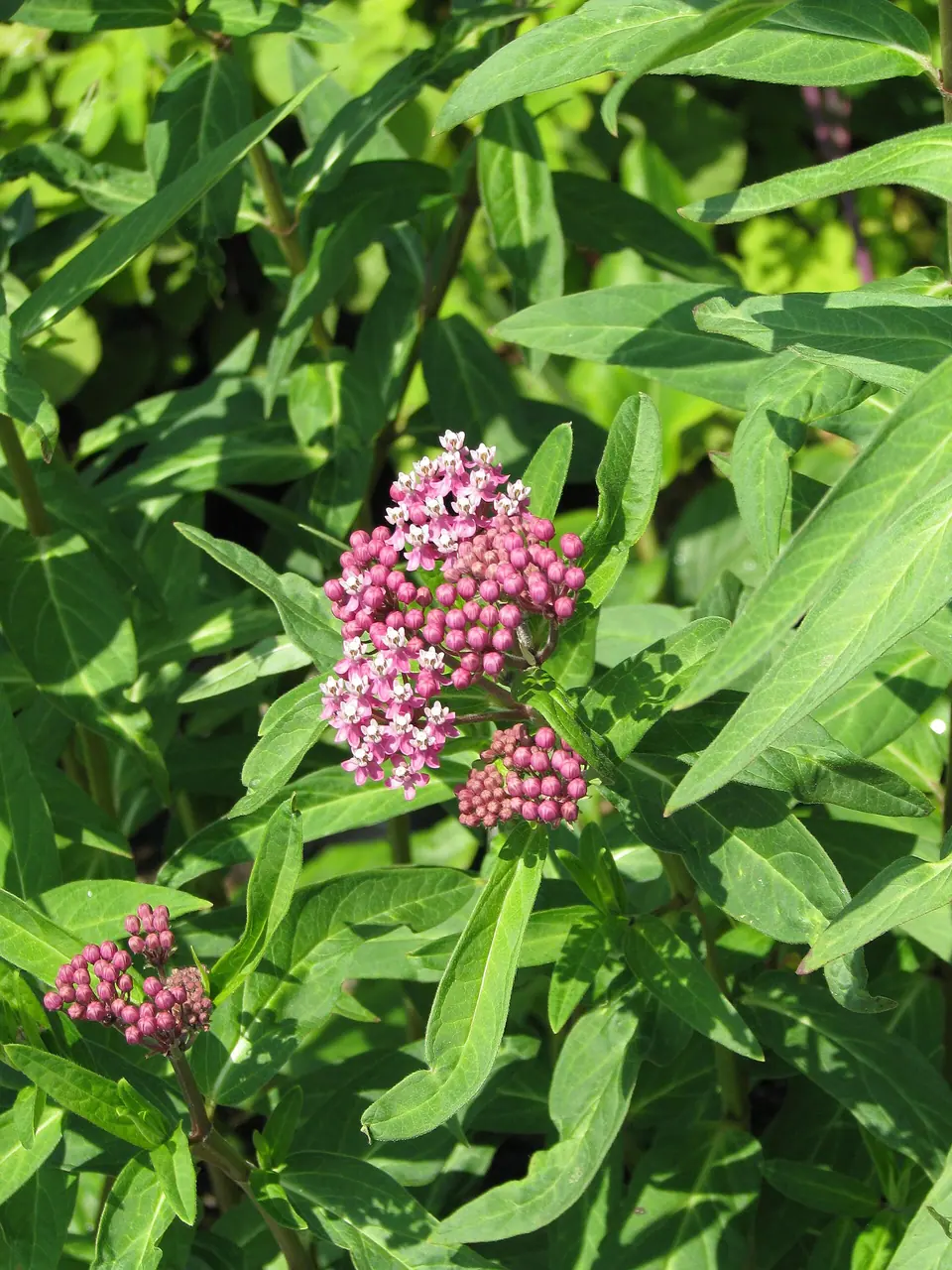


How to Grow and Care for Red Milkweed
Asclepias rubra
Written by Emilio Marruso · last checked
Toxic to: Cats, Dogs, Horses, People · Why
At a glance
Red milkweed is a perennial that loves consistently moist to wet soil, so it is perfect for damp spots in full sun or partial shade. It stays compact, 1.5–3 ft tall and up to 1 ft wide, and grows happily in containers too. Start it from seed, and collect the pods before they split so the seeds don't blow away.
- Sun
Full sun to partial shade
What the sources say (1)
Light: Full sun to partial shade
The plant will grow 2 to 3 feet tall in full sun to partial shade in consistently moist to wet acidic soil.
— Asclepias rubra (Red Milkweed, Tall Pink Bog Milkweed) | North Carolina Extension Gardener Plant Toolbox [1] - Water
Keep the soil always moist, even wet
What the sources say (1)
Watering: Consistently moist to wet soil
The plant will grow 2 to 3 feet tall in full sun to partial shade in consistently moist to wet acidic soil.
— Asclepias rubra (Red Milkweed, Tall Pink Bog Milkweed) | North Carolina Extension Gardener Plant Toolbox [1] - Cold
Survives winters down to −10 °F (−23.3 °C)
Very hardy · USDA 6a · RHS H7 · Z6
What the sources say (2)
Hardiness, coldest zone: 6a [winter low −23.3 to −20.6 °C (−10 to −5 °F)]
USDA Plant Hardiness Zone: 6a, 6b, 7a, 7b, 8a, 8b, 9a, 9b
— Asclepias rubra (Red Milkweed, Tall Pink Bog Milkweed) | North Carolina Extension Gardener Plant Toolbox [1] Hardiness, warmest zone: 9b [winter low −3.9 to −1.1 °C (25 to 30 °F)]
USDA Plant Hardiness Zone: 6a, 6b, 7a, 7b, 8a, 8b, 9a, 9b
— Asclepias rubra (Red Milkweed, Tall Pink Bog Milkweed) | North Carolina Extension Gardener Plant Toolbox [1] - Soil
Acidic soil, pH 6.0 or lower
What the sources say (1)
Soil pH, maximum: 6.0
Soil pH: Acid (<6.0) Soil Drainage: Moist
— Asclepias rubra (Red Milkweed, Tall Pink Bog Milkweed) | North Carolina Extension Gardener Plant Toolbox [1] - Pests
Large and small milkweed bugs can badly damage the seed pods
What the sources say (1)
Pests: large milkweed bugs, small milkweed bugs
both large and small milkweed bugs can be very damaging to seed pods.
— Asclepias rubra (Red Milkweed, Tall Pink Bog Milkweed) | North Carolina Extension Gardener Plant Toolbox [1] - Size
1.5–3 ft tall and 10 in to 1 ft wide
What the sources say (2)
Mature height: 45.72-91.44 cm (1.5-3 ft)
Dimensions: Height: 1 ft. 6 in. - 3 ft. 0 in. Width: 0 ft. 10 in. - 1 ft. 0 in.
— Asclepias rubra (Red Milkweed, Tall Pink Bog Milkweed) | North Carolina Extension Gardener Plant Toolbox [1] Mature width: 25.4-30.48 cm (10 in-1 ft)
Dimensions: Height: 1 ft. 6 in. - 3 ft. 0 in. Width: 0 ft. 10 in. - 1 ft. 0 in.
— Asclepias rubra (Red Milkweed, Tall Pink Bog Milkweed) | North Carolina Extension Gardener Plant Toolbox [1] - Propagation
Grows from seed; collect the pods before they split, or the seeds blow away
What the sources say (2)
Propagation: Seed
Propagation is by seeds. To save seed, be sure to collect the pod before it splits
— Asclepias rubra (Red Milkweed, Tall Pink Bog Milkweed) | North Carolina Extension Gardener Plant Toolbox [1] Saving seeds: collect the pod before it splits, as the seeds can blow away
To save seed, be sure to collect the pod before it splits, as the seeds can blow away.
— Asclepias rubra (Red Milkweed, Tall Pink Bog Milkweed) | North Carolina Extension Gardener Plant Toolbox [1] - Containers
Grows in containers too
What the sources say (1)
In containers: Yes
Landscape Location: Container Naturalized Area Patio Pond Riparian Small Space
— Asclepias rubra (Red Milkweed, Tall Pink Bog Milkweed) | North Carolina Extension Gardener Plant Toolbox [1] - Safety
Mildly poisonous to people and harmful to dogs, cats and horses
Overview
Red milkweed is a native herbaceous perennial wildflower of sandhills, swampy areas and wet pine savannas. [1] It grows in full sun to partial shade in consistently moist to wet acidic soil and is propagated by seed. [1] The plant is listed with low poison severity, and its milky sap can cause contact dermatitis. [1]
This record is incomplete: the sources we read do not cover every field yet.
Not yet covered by our sources: Pruning
Red Milkweed care
How to water Red Milkweed
Consistently moist to wet soil
What the sources say (1)
The plant will grow 2 to 3 feet tall in full sun to partial shade in consistently moist to wet acidic soil.How much light Red Milkweed needs
Full sun to partial shade
What the sources say (1)
The plant will grow 2 to 3 feet tall in full sun to partial shade in consistently moist to wet acidic soil.How much cold Red Milkweed can take
Hardiness, coldest zone
6a [winter low −23.3 to −20.6 °C (−10 to −5 °F)]
What the sources say (1)
USDA Plant Hardiness Zone:
6a, 6b, 7a, 7b, 8a, 8b, 9a, 9bHardiness, warmest zone
9b [winter low −3.9 to −1.1 °C (25 to 30 °F)]
What the sources say (1)
USDA Plant Hardiness Zone:
6a, 6b, 7a, 7b, 8a, 8b, 9a, 9bBest soil for Red Milkweed
6.0
What the sources say (1)
Soil pH:
Acid (<6.0)
Soil Drainage:
MoistWhere to grow Red Milkweed
Yes
What the sources say (1)
Landscape Location:
Container
Naturalized Area
Patio
Pond
Riparian
Small SpaceHow to propagate Red Milkweed
Seed
What the sources say (1)
Propagation is by seeds. To save seed, be sure to collect the pod before it splitsHow to grow Red Milkweed
The plant
Life cycle
perennial
What the sources say (1)
Red Milkweed is a native herbaceous perennial wildflower found in the sandhills,Family
Apocynaceae
What the sources say (1)
Genus:
Asclepias
Species:
rubra
Family:
Apocynaceae
Life Cycle:
PerennialMature height
45.72-91.44 cm (1.5-3 ft)
What the sources say (1)
Dimensions:
Height: 1 ft. 6 in. - 3 ft. 0 in.
Width: 0 ft. 10 in. - 1 ft. 0 in.Mature width
25.4-30.48 cm (10 in-1 ft)
What the sources say (1)
Dimensions:
Height: 1 ft. 6 in. - 3 ft. 0 in.
Width: 0 ft. 10 in. - 1 ft. 0 in.Harvest and storage
Saving seeds
collect the pod before it splits, as the seeds can blow away
What the sources say (1)
To save seed, be sure to collect the pod before it splits, as the seeds can blow away.Pests and diseases
Pests
large milkweed bugs, small milkweed bugs
What the sources say (1)
both large and small milkweed bugs can be very damaging to seed pods.Red Milkweed pests and problems
Milkweed bugs
Symptom: Large and small milkweed bugs can be very damaging to seed pods.
What to do: No management given.
What the sources say (1)
but both large and small milkweed bugs can be very damaging to seed pods.
— Asclepias rubra (Red Milkweed, Tall Pink Bog Milkweed) | North Carolina Extension Gardener Plant Toolbox [1]
Remedies
Each remedy shows what official sources say about it; traditional remedies without an official source are marked as such. Harmful ones are listed so you know to avoid them.
First aid
First aid: not a substitute for a doctor
sap on skin
wash with soap and water Official source, not independently tested
If there is any persistent skin or eye pain, seek medical examination and treatment.
— poison.org [4] How: Immediately wash the affected area thoroughly with soap and water.
If your skin comes into contact with milkweed sap, you should immediately wash the affected area thoroughly with soap and water.
— poison.org [4]
sap in eye
rinse eye with room-temperature water Official source, not independently tested
If there is any persistent skin or eye pain, seek medical examination and treatment.
— poison.org [4] How: Gently rinse the eye with room-temperature water for 10-15 minutes.
If someone experiences eye irritation after getting sap in their eye, gently rinse the eye with room-temperature water for 10–15 minutes.
— poison.org [4]
Treating the plant
milkweed bugs
pick off into soapy water Official source, not independently tested
It is important to remember that any insecticide that you use will also affect the wonderful pollinators that you work hard to conserve.
— fieldreport.caes.uga.edu [5] How: Pick the bugs off the plant and drop them into a cup of soapy water (useful if producing viable seed is important).
you can remove these insects simply by picking them off the plant and dropping them into a cup of soapy water.
— fieldreport.caes.uga.edu [5]
milkweed aphids
wipe off with a wet paper towel Official source, not independently tested
How: Wipe the insects off the plant with a wet paper towel and smash them inside it; sticky tape can also pull them off.
simply use a wet paper towel to remove them. Wipe the insects off the plant and smash them inside the paper towel.
— fieldreport.caes.uga.edu [5] stream of water Official source, not independently tested
How: Wash off the aphids with a stream of water, making sure there are no monarch caterpillars on the plant, or squish the masses; give the milkweed adequate water but do not fertilize.
Next, you can wash off the aphids with a stream of water (ensuring there are no desirable insects like monarch caterpillars), or even squish the masses.
— extension.colostate.edu [6] insecticidal soap Official source, not independently tested
Mixing your own concoction of dish soap and salts is not recommended ever.
— lee.ces.ncsu.edu [7] How: Apply insecticidal soap to the aphids, checking first for desirable insects; repeat a few times during the growing season.
You could also use an insecticidal soap on the aphids, but be very careful to check for desirable insects.
— extension.colostate.edu [6] cut off infested tips Official source, not independently tested
How: Cut the infested tips off; the plant will generally sprout back in a couple of weeks with fresh new growth.
If you notice aphids on your milkweed, just cut the infested tips off! The plant will generally sprout back in a couple of weeks with fresh, new growth.
— lee.ces.ncsu.edu [7]
Is Red Milkweed toxic to pets?
Reported by the source, quoted verbatim. This is not medical or veterinary advice: if a person or an animal may have eaten this plant, contact a poison control centre or a veterinarian.
Animals
#problem for dogs #problem for horses #problem for cats
[1]The source flags the risk for this animal but does not explain why.
People
Poisonous to Humans: Poison Severity: Low Poison Symptoms:
[1]- Poisonous parts
Milky sap can cause contact dermatitis and eye irritation.
[1]- Toxic principle
Poison Toxic Principle: Cardiac glycoside Causes Contact Dermatitis:
[1]- Symptoms
Poison Symptoms: Can cause stomach upset, nausea, vomiting, abdominal pain, diarrhea, weakness, lethargy, and confusion if eaten in quantity.
[1]- Severity
Poisonous to Humans: Poison Severity: Low Poison Symptoms:
[1]
Calendar
Pruning
Not stated in the sources we read.
Months as given by the sources, which are mostly from the United States (northern hemisphere). In the southern hemisphere they shift by about six months.
Similar plants
- Butterfly Weed Asclepias tuberosa
- Clasping Milkweed Asclepias amplexicaulis
- Few-flower Milkweed Asclepias lanceolata
- Green Antelopehorn Asclepias viridis
- Green Comet Milkweed Asclepias viridiflora
- Poke Milkweed Asclepias exaltata
- Purple Milkweed Asclepias purpurascens
- Sandhill Milkweed Asclepias humistrata
Sources
Every value above is quoted from these documents. Links lead to the original publisher.
- Asclepias rubra (Red Milkweed, Tall Pink Bog Milkweed) | North Carolina Extension Gardener Plant Toolbox · plants.ces.ncsu.edu, consulted
- Find a Plant | North Carolina Extension Gardener Plant Toolbox · plants.ces.ncsu.edu, consulted
- Milkweed Selection and Care – Gardening Solutions · gardeningsolutions.ifas.ufl.edu, consulted
- poison.org · poison.org
- fieldreport.caes.uga.edu · fieldreport.caes.uga.edu
- extension.colostate.edu · extension.colostate.edu
- lee.ces.ncsu.edu · lee.ces.ncsu.edu
Written by Emilio Marruso · last checked