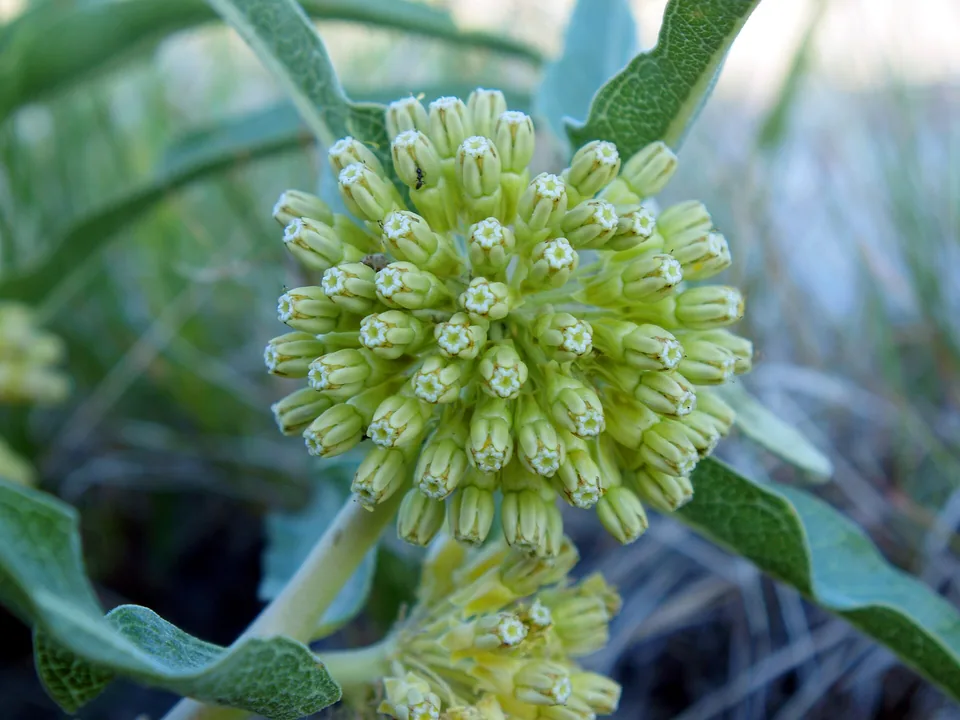


How to Grow and Care for Green Comet Milkweed
Asclepias viridiflora
Written by Emilio Marruso · last checked
Toxic to: Cats, Dogs, Horses, People · Why
At a glance
Green milkweed is a tough perennial that asks for very little: full sun to partial shade, soil that drains well, and it handles dry soil just fine. It stays compact at 1–2 feet tall and wide, so it fits almost anywhere. Bonus: monarch caterpillars feed on its leaves, so your garden fills with life.
- Sun
Full sun to partial shade
What the sources say (1)
Light: Full sun to partial shade
Light: Full sun (6 or more hours of direct sunlight a day) Partial Shade (Direct sunlight only part of the day, 2-6 hours)
— Asclepias viridiflora (Green Comet Milkweed, Green-flowered Milkweed, Green Milkweed, Wand Milkweed) | North Carolina Extension Gardener Plant Toolbox [1] - Water
Handles dry soil well; never let water sit around the roots
What the sources say (2)
Watering notes: Tolerates dry soil; needs good drainage
Soil Drainage: Good Drainage Occasionally Dry Very Dry
— Asclepias viridiflora (Green Comet Milkweed, Green-flowered Milkweed, Green Milkweed, Wand Milkweed) | North Carolina Extension Gardener Plant Toolbox [1] Plant in the full sun in dry sandy, loamy or rocky soils. This milkweed will tolerate partial shade and poor soils and even rich soils as long as they are well-drained.
— Asclepias viridiflora (Green Comet Milkweed, Green-flowered Milkweed, Green Milkweed, Wand Milkweed) | North Carolina Extension Gardener Plant Toolbox [1] - Soil
Needs soil that drains well
What the sources say (2)
Watering notes: Tolerates dry soil; needs good drainage
Soil Drainage: Good Drainage Occasionally Dry Very Dry
— Asclepias viridiflora (Green Comet Milkweed, Green-flowered Milkweed, Green Milkweed, Wand Milkweed) | North Carolina Extension Gardener Plant Toolbox [1] Plant in the full sun in dry sandy, loamy or rocky soils. This milkweed will tolerate partial shade and poor soils and even rich soils as long as they are well-drained.
— Asclepias viridiflora (Green Comet Milkweed, Green-flowered Milkweed, Green Milkweed, Wand Milkweed) | North Carolina Extension Gardener Plant Toolbox [1] - Pests
Aphids, milkweed beetles and milkweed bugs; monarch caterpillars eat the leaves too
What the sources say (1)
Pests: aphids, milkweed beetles, Monarch larvae, milkweed tussock moth larvae, large milkweed bugs, small milkweed bugs
Most common milkweed pests (aphids, milkweed beetles, Monarch larvae, and milkweed tussock moth larvae) are not problematic, but both large and small milkweed bugs can be very damaging to seed pods.
— Asclepias viridiflora (Green Comet Milkweed, Green-flowered Milkweed, Green Milkweed, Wand Milkweed) | North Carolina Extension Gardener Plant Toolbox [1] - Size
1–2 ft tall and 1–2 ft wide
What the sources say (2)
Mature height: 30.5-61 cm (1-2 ft)
Dimensions: Height: 1 ft. 0 in. - 2 ft. 0 in. Width: 1 ft. 0 in. - 2 ft. 0 in.
— Asclepias viridiflora (Green Comet Milkweed, Green-flowered Milkweed, Green Milkweed, Wand Milkweed) | North Carolina Extension Gardener Plant Toolbox [1] Mature width: 30.5-61 cm (1-2 ft)
Dimensions: Height: 1 ft. 0 in. - 2 ft. 0 in. Width: 1 ft. 0 in. - 2 ft. 0 in.
— Asclepias viridiflora (Green Comet Milkweed, Green-flowered Milkweed, Green Milkweed, Wand Milkweed) | North Carolina Extension Gardener Plant Toolbox [1] - Safety
Upsets the stomach if eaten and can irritate skin; harmful to cats, dogs and horses
Overview
Asclepias viridiflora is a native perennial wildflower that supports pollinators. [1] It grows in full sun to partial shade and tolerates dry, sandy, rocky or poor soils if they are well-drained. [1] The plant has low poison severity, and its milky sap can cause contact dermatitis. [1]
This record is incomplete: the sources we read do not cover every field yet.
Not yet covered by our sources: Watering, Hardiness, coldest zone, Hardiness, warmest zone, Pruning, Propagation
Green Comet Milkweed care
How to water Green Comet Milkweed
Watering
Not stated in the sources we read.
Watering notes
Tolerates dry soil; needs good drainage
What the sources say (2)
Soil Drainage:
Good Drainage
Occasionally Dry
Very DryPlant in the full sun in dry sandy, loamy or rocky soils. This milkweed will tolerate partial shade and poor soils and even rich soils as long as they are well-drained.How much light Green Comet Milkweed needs
Full sun to partial shade
What the sources say (1)
Light:
Full sun (6 or more hours of direct sunlight a day)
Partial Shade (Direct sunlight only part of the day, 2-6 hours)How much cold Green Comet Milkweed can take
Hardiness, coldest zone
Not stated in the sources we read.
Hardiness, warmest zone
Not stated in the sources we read.
How to propagate Green Comet Milkweed
Not stated in the sources we read.
How to grow Green Comet Milkweed
The plant
Life cycle
perennial
What the sources say (1)
Genus:
Asclepias
Species:
viridiflora
Family:
Apocynaceae
Life Cycle:
PerennialFamily
Apocynaceae
What the sources say (1)
Genus:
Asclepias
Species:
viridiflora
Family:
Apocynaceae
Life Cycle:
PerennialMature height
30.5-61 cm (1-2 ft)
What the sources say (1)
Dimensions:
Height: 1 ft. 0 in. - 2 ft. 0 in.
Width: 1 ft. 0 in. - 2 ft. 0 in.Mature width
30.5-61 cm (1-2 ft)
What the sources say (1)
Dimensions:
Height: 1 ft. 0 in. - 2 ft. 0 in.
Width: 1 ft. 0 in. - 2 ft. 0 in.Pests and diseases
Pests
aphids, milkweed beetles, Monarch larvae, milkweed tussock moth larvae, large milkweed bugs, small milkweed bugs
What the sources say (1)
Most common milkweed pests (aphids, milkweed beetles, Monarch larvae, and milkweed tussock moth larvae) are not problematic, but both large and small milkweed bugs can be very damaging to seed pods.Remedies
Each remedy shows what official sources say about it; traditional remedies without an official source are marked as such. Harmful ones are listed so you know to avoid them.
First aid
First aid: not a substitute for a doctor
sap on skin
wash with soap and water Official source, not independently tested
If there is any persistent skin or eye pain, seek medical examination and treatment.
— poison.org [6] How: Immediately wash the affected area thoroughly with soap and water.
If your skin comes into contact with milkweed sap, you should immediately wash the affected area thoroughly with soap and water.
— poison.org [6]
sap in eyes
rinse eye with room-temperature water Official source, not independently tested
If there is any persistent skin or eye pain, seek medical examination and treatment.
— poison.org [6] How: Gently rinse the eye with room-temperature water for 10-15 minutes.
If someone experiences eye irritation after getting sap in their eye, gently rinse the eye with room-temperature water for 10–15 minutes
— poison.org [6]
Treating the plant
milkweed bugs
insecticidal soap Works
If the milkweeds infested with milkweed bugs are grown as food plants for monarch butterflies it may be better to live with the damage to the seeds rather than apply an insecticide.
— content.ces.ncsu.edu [7] How: Use an insecticidal soap to kill the bugs when no monarch butterfly caterpillars are present.
If the presence of the bugs is repulsive and no monarch butterfly caterpillars are present, use an insecticidal soap to kill the bugs
— content.ces.ncsu.edu [7] What the evidence says If the presence of the bugs is repulsive and no monarch butterfly caterpillars are present, use an insecticidal soap to kill the bugs
— content.ces.ncsu.edu [7] removing leaf litter and spent stalks Official source, not independently tested
How: Remove leaf litter and spent stalks in the fall to eliminate overwintering sites.
Remove leaf litter and spent stalks in the fall to eliminate overwintering sites.
— content.ces.ncsu.edu [7]
aphids
cutting off infested tips Official source, not independently tested
How: Cut the infested tips off; the plant will generally sprout back in a couple of weeks.
If you notice aphids on your milkweed, just cut the infested tips off! The plant will generally sprout back in a couple of weeks with fresh, new growth.
— lee.ces.ncsu.edu [8] insecticidal soap Works
Mixing your own concoction of dish soap and salts is not recommended ever.
— lee.ces.ncsu.edu [8] How: Chemical options are a last resort; horticultural oil and insecticidal soap are the usual choices.
Aphids are mostly controlled using horticultural oil and insecticidal soap, which are usually considered acceptable in organically-managed systems.
— lee.ces.ncsu.edu [8] What the evidence says Aphids are mostly controlled using horticultural oil and insecticidal soap, which are usually considered acceptable in organically-managed systems.
— lee.ces.ncsu.edu [8] horticultural oil Works
Mixing your own concoction of dish soap and salts is not recommended ever.
— lee.ces.ncsu.edu [8] How: Chemical options are a last resort; horticultural oil and insecticidal soap are the usual choices.
Aphids are mostly controlled using horticultural oil and insecticidal soap, which are usually considered acceptable in organically-managed systems.
— lee.ces.ncsu.edu [8] What the evidence says Aphids are mostly controlled using horticultural oil and insecticidal soap, which are usually considered acceptable in organically-managed systems.
— lee.ces.ncsu.edu [8]
Is Green Comet Milkweed toxic to pets?
Reported by the source, quoted verbatim. This is not medical or veterinary advice: if a person or an animal may have eaten this plant, contact a poison control centre or a veterinarian.
Animals
Problems: Contact Dermatitis Problem for Cats Problem for Dogs Problem for Horses
[1]
People
Poison Severity: Low Poison Symptoms: Can cause stomach upset, nausea, vomiting, abdominal pain, diarrhea, weakness, lethargy, and confusion if eaten in quantity.
[1]- Poisonous parts
Causes Contact Dermatitis: Yes Poison Part: Flowers Fruits Leaves Sap/Juice Stems
[1]- Toxic principle
Poison Toxic Principle: Cardiac glycoside Causes Contact Dermatitis: Yes
[1]- Symptoms
Can cause stomach upset, nausea, vomiting, abdominal pain, diarrhea, weakness, lethargy, and confusion if eaten in quantity. Milky sap can cause contact dermatitis and eye irritation.
[1]- Severity
Poison Severity: Low Poison Symptoms: Can cause stomach upset
[1]
Calendar
Pruning
Not stated in the sources we read.
Months as given by the sources, which are mostly from the United States (northern hemisphere). In the southern hemisphere they shift by about six months.
Indicative values
Values from a secondary source, not checked word for word like the rest of this page. Use them as a starting point.
- Watering
- FrequentIndicative value, adapt it to your climate · Secondary source
- Soil
- SandIndicative value, adapt it to your climate · Secondary source
- Soil pH
- 6-7.5Indicative value, adapt it to your climate · Secondary source
- Growth rate
- LowIndicative value, adapt it to your climate · Secondary source
- Pruning
- February, February, MarchIndicative value, adapt it to your climate · Secondary source
- Propagation
- Seed Propagation, Root Cutting, Division, Layering PropagationIndicative value, adapt it to your climate · Secondary source
Similar plants
- Butterfly Weed Asclepias tuberosa
- Clasping Milkweed Asclepias amplexicaulis
- Few-flower Milkweed Asclepias lanceolata
- Green Antelopehorn Asclepias viridis
- Poke Milkweed Asclepias exaltata
- Purple Milkweed Asclepias purpurascens
- Red Milkweed Asclepias rubra
- Sandhill Milkweed Asclepias humistrata
Sources
Every value above is quoted from these documents. Links lead to the original publisher.
- Asclepias viridiflora (Green Comet Milkweed, Green-flowered Milkweed, Green Milkweed, Wand Milkweed) | North Carolina Extension Gardener Plant Toolbox · plants.ces.ncsu.edu, consulted
- Green-flowered Milkweed - Asclepias viridiflora | North Carolina Extension Gardener Plant Toolbox · plants.ces.ncsu.edu, consulted
- Green Comet Milkweed - Asclepias viridiflora | North Carolina Extension Gardener Plant Toolbox · plants.ces.ncsu.edu, consulted
- Find a Plant | North Carolina Extension Gardener Plant Toolbox · plants.ces.ncsu.edu, consulted
- PED · plantsearch.extension.umn.edu, consulted
- poison.org · poison.org
- content.ces.ncsu.edu · content.ces.ncsu.edu
- lee.ces.ncsu.edu · lee.ces.ncsu.edu
Written by Emilio Marruso · last checked