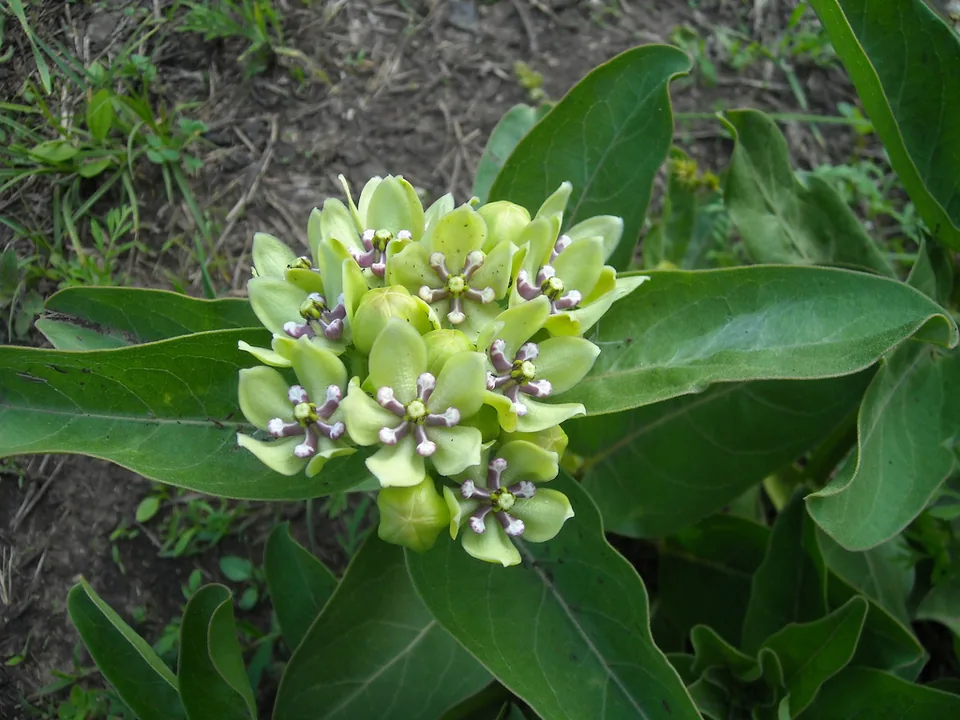


How to Grow and Care for Green Antelopehorn
Asclepias viridis
Written by Emilio Marruso · last checked
Toxic to: Cats, Dogs, Horses, People · Why
At a glance
Green milkweed is a tough perennial that loves full sun and shrugs off dry spells, as long as it has a well-drained spot. It stays compact, 18–30 inches tall, so it fits easily into a sunny bed. You can start it from seed, and it is happy in soil that ranges from slightly acidic to alkaline.
- Sun
Full sun
What the sources say (1)
Light: Full sun
Light: Full sun (6 or more hours of direct sunlight a day)
— Asclepias viridis (Green Antelopehorn, Green Milkweed, Spider Milkweed) | North Carolina Extension Gardener Plant Toolbox [1] - Water
Handles drought well; plant it where water drains away easily
What the sources say (2)
Watering: Drought tolerant
Best in naturalized areas, meadow, prairie or drought-tolerant plantings;
— Asclepias viridis (Green Antelopehorn, Green Milkweed, Spider Milkweed) | North Carolina Extension Gardener Plant Toolbox [1] Watering notes: Needs a well-drained spot
Requires a sunny, well-drained spot and prefers soil with a neutral pH.
— Asclepias viridis (Green Antelopehorn, Green Milkweed, Spider Milkweed) | North Carolina Extension Gardener Plant Toolbox [1] - Cold
Survives winters down to −30 °F (−34.4 °C)
Very hardy · USDA 4a · RHS H7 · Z4
What the sources say (2)
Hardiness, coldest zone: 4a [winter low −34.4 to −31.7 °C (−30 to −25 °F)]
USDA Plant Hardiness Zone: 4a, 4b, 5a, 5b, 6a, 6b, 7a, 7b, 8a, 8b, 9a, 9b
— Asclepias viridis (Green Antelopehorn, Green Milkweed, Spider Milkweed) | North Carolina Extension Gardener Plant Toolbox [1] Hardiness, warmest zone: 9b [winter low −3.9 to −1.1 °C (25 to 30 °F)]
USDA Plant Hardiness Zone: 4a, 4b, 5a, 5b, 6a, 6b, 7a, 7b, 8a, 8b, 9a, 9b
— Asclepias viridis (Green Antelopehorn, Green Milkweed, Spider Milkweed) | North Carolina Extension Gardener Plant Toolbox [1] - Soil
Well-drained soil, pH 6.0–8.0
What the sources say (3)
Soil pH, minimum: 6.0
Soil pH: Neutral (6.0-8.0)
— Asclepias viridis (Green Antelopehorn, Green Milkweed, Spider Milkweed) | North Carolina Extension Gardener Plant Toolbox [1] Soil pH, maximum: 8.0
Soil pH: Neutral (6.0-8.0)
— Asclepias viridis (Green Antelopehorn, Green Milkweed, Spider Milkweed) | North Carolina Extension Gardener Plant Toolbox [1] Watering notes: Needs a well-drained spot
Requires a sunny, well-drained spot and prefers soil with a neutral pH.
— Asclepias viridis (Green Antelopehorn, Green Milkweed, Spider Milkweed) | North Carolina Extension Gardener Plant Toolbox [1] - Pests
Large and small milkweed bugs can damage the seed pods
What the sources say (1)
Pests: large milkweed bugs, small milkweed bugs
Most common milkweed pests (aphids, milkweed beetles, Monarch larvae, and milkweed tussock moth larvae) are not problematic, but both large and small milkweed bugs can be very damaging to seed pods.
— Asclepias viridis (Green Antelopehorn, Green Milkweed, Spider Milkweed) | North Carolina Extension Gardener Plant Toolbox [1] - Size
18–30 in tall and 1–2 ft wide
What the sources say (2)
Mature height: 46-76 cm (1 ft 6 in - 2 ft 6 in)
Dimensions: Height: 1 ft. 6 in. - 2 ft. 6 in. Width: 1 ft. 0 in. - 2 ft. 0 in.
— Asclepias viridis (Green Antelopehorn, Green Milkweed, Spider Milkweed) | North Carolina Extension Gardener Plant Toolbox [1] Mature width: 30-61 cm (1 ft - 2 ft)
Dimensions: Height: 1 ft. 6 in. - 2 ft. 6 in. Width: 1 ft. 0 in. - 2 ft. 0 in.
— Asclepias viridis (Green Antelopehorn, Green Milkweed, Spider Milkweed) | North Carolina Extension Gardener Plant Toolbox [1] - Propagation
Grows from seed
What the sources say (1)
Propagation: Seed
Recommended Propagation Strategy: Seed
— Asclepias viridis (Green Antelopehorn, Green Milkweed, Spider Milkweed) | North Carolina Extension Gardener Plant Toolbox [1] - Safety
Mildly poisonous to people and harmful to cats, dogs and horses
Overview
Green antelopehorn is an herbaceous perennial milkweed grown in naturalized areas, meadows, pollinator gardens and borders. [1] It requires a sunny, well-drained spot and is propagated from seed. [1] The plant has low severity poison characteristics. [1]
This record is incomplete: the sources we read do not cover every field yet.
Not yet covered by our sources: Pruning
Green Antelopehorn care
How to water Green Antelopehorn
Watering
Drought tolerant
What the sources say (1)
Best in naturalized areas, meadow, prairie or drought-tolerant plantings;Watering notes
Needs a well-drained spot
What the sources say (1)
Requires a sunny, well-drained spot and prefers soil with a neutral pH.How much light Green Antelopehorn needs
Full sun
What the sources say (1)
Light:
Full sun (6 or more hours of direct sunlight a day)How much cold Green Antelopehorn can take
Hardiness, coldest zone
4a [winter low −34.4 to −31.7 °C (−30 to −25 °F)]
What the sources say (1)
USDA Plant Hardiness Zone:
4a, 4b, 5a, 5b, 6a, 6b, 7a, 7b, 8a, 8b, 9a, 9bHardiness, warmest zone
9b [winter low −3.9 to −1.1 °C (25 to 30 °F)]
What the sources say (1)
USDA Plant Hardiness Zone:
4a, 4b, 5a, 5b, 6a, 6b, 7a, 7b, 8a, 8b, 9a, 9bBest soil for Green Antelopehorn
Soil pH, minimum
6.0
What the sources say (1)
Soil pH:
Neutral (6.0-8.0)Soil pH, maximum
8.0
What the sources say (1)
Soil pH:
Neutral (6.0-8.0)How to propagate Green Antelopehorn
Seed
What the sources say (1)
Recommended Propagation Strategy:
SeedHow to grow Green Antelopehorn
The plant
Life cycle
perennial
What the sources say (1)
Green antelopehorn is an herbaceous perennial in the dogbane (Apocynaceae) family that is native to the central and east central United States.Family
Apocynaceae
What the sources say (1)
Green antelopehorn is an herbaceous perennial in the dogbane (Apocynaceae) family that is native to the central and east central United States.Mature height
46-76 cm (1 ft 6 in - 2 ft 6 in)
What the sources say (1)
Dimensions:
Height: 1 ft. 6 in. - 2 ft. 6 in.
Width: 1 ft. 0 in. - 2 ft. 0 in.Mature width
30-61 cm (1 ft - 2 ft)
What the sources say (1)
Dimensions:
Height: 1 ft. 6 in. - 2 ft. 6 in.
Width: 1 ft. 0 in. - 2 ft. 0 in.Pests and diseases
Pests
large milkweed bugs, small milkweed bugs
What the sources say (1)
Most common milkweed pests (aphids, milkweed beetles, Monarch larvae, and milkweed tussock moth larvae) are not problematic, but both large and small milkweed bugs can be very damaging to seed pods.Green Antelopehorn pests and problems
Milkweed bugs
Symptom: Damage to seed pods from large and small milkweed bugs
What to do: No management given
What the sources say (1)
but both large and small milkweed bugs can be very damaging to seed pods.
— Asclepias viridis (Green Antelopehorn, Green Milkweed, Spider Milkweed) | North Carolina Extension Gardener Plant Toolbox [1]
Remedies
Each remedy shows what official sources say about it; traditional remedies without an official source are marked as such. Harmful ones are listed so you know to avoid them.
First aid
First aid: not a substitute for a doctor
milkweed sap on skin
wash with soap and water Official source, not independently tested
If there is any persistent skin or eye pain, seek medical examination and treatment.
— poison.org [3] How: Wash the affected area thoroughly with soap and water immediately.
If your skin comes into contact with milkweed sap, you should immediately wash the affected area thoroughly with soap and water.
— poison.org [3]
milkweed sap in eye
rinse eye with room-temperature water Official source, not independently tested
If there is any persistent skin or eye pain, seek medical examination and treatment.
— poison.org [3] How: Gently rinse the eye with room-temperature water for 10-15 minutes.
If someone experiences eye irritation after getting sap in their eye, gently rinse the eye with room-temperature water for 10–15 minutes.
— poison.org [3]
Treating the plant
milkweed bugs
hand-picking into soapy water Official source, not independently tested
It is important to remember that any insecticide that you use will also affect the wonderful pollinators that you work hard to conserve.
— fieldreport.caes.uga.edu [4] How: Pick the insects off the plant and drop them into a cup of soapy water.
you can remove these insects simply by picking them off the plant and dropping them into a cup of soapy water.
— fieldreport.caes.uga.edu [4]
Is Green Antelopehorn toxic to pets?
Reported by the source, quoted verbatim. This is not medical or veterinary advice: if a person or an animal may have eaten this plant, contact a poison control centre or a veterinarian.
Animals
Problems: Poisonous to Humans Problem for Cats Problem for Dogs Problem for Horses
[1]The source flags the risk for this animal but does not explain why.
People
This plant has low severity poison characteristics.
[1]
Calendar
Pruning
Not stated in the sources we read.
Months as given by the sources, which are mostly from the United States (northern hemisphere). In the southern hemisphere they shift by about six months.
Indicative values
Values from a secondary source, not checked word for word like the rest of this page. Use them as a starting point.
- Hours of sun
- 6-8 hoursIndicative value, adapt it to your climate · Secondary source
- Drought tolerant
- yesIndicative value, adapt it to your climate · Secondary source
- Care level
- MediumIndicative value, adapt it to your climate · Secondary source
- Growth rate
- LowIndicative value, adapt it to your climate · Secondary source
- Pruning
- August, May, May, March, April, May, June, July, August, SeptemberIndicative value, adapt it to your climate · Secondary source
Similar plants
- Butterfly Weed Asclepias tuberosa
- Clasping Milkweed Asclepias amplexicaulis
- Few-flower Milkweed Asclepias lanceolata
- Green Comet Milkweed Asclepias viridiflora
- Poke Milkweed Asclepias exaltata
- Purple Milkweed Asclepias purpurascens
- Red Milkweed Asclepias rubra
- Sandhill Milkweed Asclepias humistrata
Sources
Every value above is quoted from these documents. Links lead to the original publisher.
- Asclepias viridis (Green Antelopehorn, Green Milkweed, Spider Milkweed) | North Carolina Extension Gardener Plant Toolbox · plants.ces.ncsu.edu, consulted
- Find a Plant | North Carolina Extension Gardener Plant Toolbox · plants.ces.ncsu.edu, consulted
- poison.org · poison.org
- fieldreport.caes.uga.edu · fieldreport.caes.uga.edu
Written by Emilio Marruso · last checked