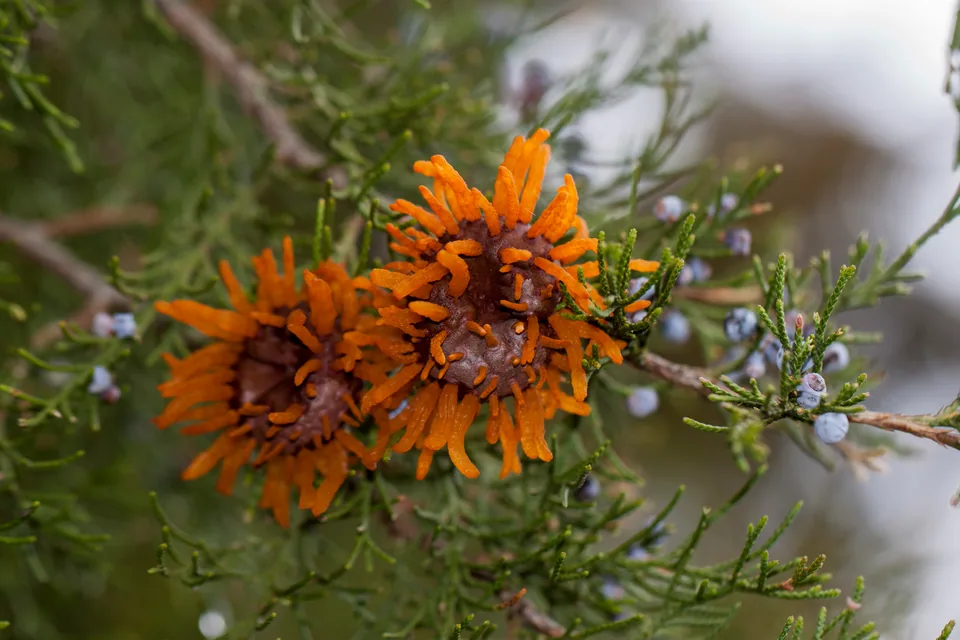
Fungus
Rust
Pucciniales
Written by Emilio Marruso
Classification: Basidiomycota › Pucciniomycotina › Pucciniomycetes
Plants it attacks
Plants in our guide where this problem is reported. Open a plant to see the sources.
- Fernleaf Yarrow
Symptom: Diseases listed for the plant
- Woolly Yarrow
Symptom: Susceptible to these diseases
- Black Cohosh
Symptom: Leaf spots can cause premature defoliation, reducing root growth and seed set; rust is an occasional problem.
- Red Bugbane
Symptom: Occasional rust and leaf spot
- Hyssop
Symptom: Rust, powdery mildew and leaf spots; powdery mildew and leaf spots in humid climates
- Hyssop
Symptom: Root rot develops in too-wet soils; rust, powdery mildew and leaf spots may occur.
- Serviceberry
Symptom: No serious problems; rust, leaf spot, blight and powdery mildew can occur, with sawfly, leaf miner, borers and scale among the insects.
- Lead Plant
Symptom: Some susceptibility to leaf spots, rust, canker and powdery mildew; no serious disease or insect problems
- Eastern Bluestar
Symptom: Rust may occur; no other significant problems
- Snapdragon
Symptom: Small, yellow swellings on leaves or stems that open to release rust-colored spores.
- Giant Cane
Symptom: Rust and leaf spots may occur; no serious problems otherwise
- Butterfly Weed
Symptom: Susceptible to rust and leaf spot.
Also reported on: Aaron's Beard, Allegheny Serviceberry, American Barberry, American Smoketree, Appalachian Ironweed, Arrowroot, Asparagus, Atlantic St. John's Wort, Beebalm, Bellflower, Bird-Foot Violet, Bitter Fleabane, Black Gum, Bloody Cranesbill Geranium, Bloody Dock, Blue Flax, Blue Oat Grass, Blue Star, Blue Wood Aster, Bog Rosemary, Bosnian Pine, Bush Clematis, Bushy Aster, Bushy St. John's Wort, California Incense Cedar, California Tickseed, Canterbury Bells, Carnation, Carpathian Bellflower, Catesby's Trillium, Cedarglade St. Johnswort, Cheddar Pink, China Rose, Chinese Barberry, Chinese Fountain Grass, Chinese Mahonia, Chinese Pink, Chinese Tupelo, Common barley, Common Valerian, Coral Bells, Cornflower, Cowpea, Creeping Hollygrape, Creeping Jenny, Cultivated garlic, Dancing Crane Cobra Lily, Darwin Barberry, Deer Fern, Deptford Pink, Dew Flower, Dewberry, Dewberry, Dusty Miller, Dwarf Wakerobin, Eastern Hemlock, European Pussy Willow, Feather Reed Grass, Fireweed, Flat-Topped White Aster, Forget-me-not, Forget-me-not, Fragrant Gladiolus, Germander, Golden Chain Tree, Goldenrod, Goldenrod, Goldenrod, Goldenrod, Goldenrod, Goldenrod, Goldenrod, Goldenrod, Goldenrod, Hardy Fushia, Hawthorn, Hawthorn, Hawthorn, Hawthorn, Hawthorn, Hawthorn, Hydrangea, Jack pine, Japanese Aster, Japanese Pussy Willow, Jerusalem Artichoke, Joe-Pye weed, Kalm's St. John's Wort, Large-Flowered Trillium, Leatherleaf Mahonia, Loosestrife, Maiden Pink, Mallow, Marsh Marigold, Maximilian Sunflower, Mayapple, Mayhaw, Meadowsweet, Morning Glory, Mosaic Plant, Mother of Thousands, Mount Olympus St. John's Wort, Mountain Mint, Mountain Mint, Mouseear Chickweed, Mugo Pine, Musk Mallow, Naked-stem Sunflower, Nettle-leaved Bellflower, Obedient Plant, Oregon Grape, Painted Trillium, Peach-leaved Bellflower, Peacock-eye Pink, Pearl millet, Pennsylvania Sedge, Prairie Trillium, Purple Goat's Beard, Purple Meadowrue, Purple Milkweed, Resinous Sunflower, Rigid Whitetop Aster, Robin's Plantain, Rose of Sharon, Rosinweed, Rough Hawkweed, Savannah Iris, Sea Thrift, Silver Buffaloberry, Small Woodland Sunflower, Smooth Sumac, Snapdragon Vine, Sneezeweed, Southern Lady Fern, Southern Red Trillium, Southern Sneezeweed, Spearmint, Spotted Beebalm, Spotted Bellflower, Spreading Aster, St. Andrew's Cross, St. John's Wort, Sulphur Buckwheat, Sumac, Sweet Betsy, Sweet William, Sweet Woodruff, Switchgrass, Teak, Ten-petaled Sunflower, Thorny Olive, Toadshade Trillium, Tree Mallow, Tree Mallow, Tufted Fescue, Twisted Trillium, Vasey's Trillium, Wallich's Woodfern, White Spruce, Wild Bergamot, Wild Geranium, Willowleaf Sunflower, Winged Sumac, Wood Anemone, Woodland Sunflower, X heucherella, Yellow Trillium
Remedies
What our plant sheets report, with the outcome checked against official sources. Traditional remedies without an official source are flagged.
Treat
clipping and disposing of diseased leaves Works
How: Removing a few damaged leaves here and there can control the spread of rust.
Reported for 1 plant: Common barley
disposing of affected parts Works
How: Rust is dealt with by removing the affected parts and improving air circulation.
Reported for 1 plant: China Rose
pinch off infected leaves Works
How: Pinch off rust infected leaves and dispose of them in the trash, not compost; do not remove more than 1/3 of the plant foliage at any one time.
Reported for 1 plant: Mountain Mint
pinch off rust infected leaves Works
How: Pinch off rust infected leaves and remove them from the garden; do not remove more than 1/3 of the leaves at any one time.
Reported for 1 plant: Feather Reed Grass
pinching off infected leaves Works
How: Pinch off rust-infected leaves and dispose of them in the trash, not compost; do not remove more than 1/3 of the foliage at once.
Reported for 1 plant: Purple Milkweed
prune back infected growth Works
How: Prune back all the above-ground growth and let the plant rejuvenate; rake up and discard the debris, do not compost it.
Reported for 1 plant: Kalm's St. John's Wort
cleaning up plant refuse in the fall Partly works
How: Clean up plant refuse in the fall and space the plants adequately to promote good air circulation.
Reported for 2 plants: Canterbury Bells, Bird-Foot Violet
fall cleanup of plant refuse Partly works
How: Clean up plant refuse in the fall and space plants adequately for air circulation.
Reported for 2 plants: Carpathian Bellflower, Woodland Sunflower
neem oil Partly works
How: Rusts are sensitive to some contact materials including neem oil.
Reported for 2 plants: Robin's Plantain, Hydrangea
air circulation and debris clean-up Partly works
How: Provide good air circulation, clean up all debris and avoid overhead watering.
Reported for 1 plant: Goldenrod
autumn clean-up and spacing Partly works
How: Clean up plant refuse in the fall and space the plants adequately for good air circulation.
Reported for 1 plant: Bellflower
autumn clean-up of plant refuse Partly works
How: clean up plant refuse in the fall and space the plants for good air circulation
Reported for 1 plant: Maximilian Sunflower
cleaning up plant refuse in the fall Official source, not independently tested
How: Clean up plant refuse in the fall and space the plants for good air circulation.
Reported for 5 plants: Japanese Aster, Maiden Pink, Peacock-eye Pink, Resinous Sunflower, Spreading Aster
pruning back infected growth Official source, not independently tested
How: Prune back infected growth and let the plant rejuvenate; rake up and discard the debris, do not compost it.
Reported for 3 plants: Bushy St. John's Wort, Cedarglade St. Johnswort, Atlantic St. John's Wort
removing infected leaves and leaf litter Official source, not independently tested
How: Remove infected leaves and leaf litter in the planting site; this may require raking all leaves and destroying infected leaf litter.
Reported for 3 plants: Bushy St. John's Wort, Cedarglade St. Johnswort, Atlantic St. John's Wort
watering at the base of the plant Official source, not independently tested
How: Water from the base of the plant.
Reported for 3 plants: Snapdragon Vine, Mountain Mint, Appalachian Ironweed
autumn clean-up and spacing Official source, not independently tested
How: clean up plant refuse in the fall and space plants adequately to promote good air circulation
Reported for 2 plants: Peach-leaved Bellflower, Cheddar Pink
avoid overhead irrigation Official source, not independently tested
How: Avoid overhead irrigation or apply such that plants are not wet for extended periods of time.
Reported for 2 plants: Kalm's St. John's Wort, St. John's Wort
removing infected leaves Not verified
How: Remove infected leaves as soon as possible; remove and destroy seriously diseased plants and debris before spring growth.
Reported for 5 plants: Bog Rosemary, Wood Anemone, Sweet Woodruff, Mallow, Bloody Dock
removing affected leaves Not verified
How: Remove the affected leaves.
Reported for 3 plants: Sea Thrift, Spotted Bellflower, Hawthorn
removing affected foliage Not verified
How: However, this does not typically have a huge impact on the plants and affected foliage can simply be removed to prevent the problem from spreading.
Reported for 2 plants: Aaron's Beard, Blue Flax
avoiding overhead watering Not verified
How: Do not water from overhead and water only during the day so that plants dry before night.
Reported for 1 plant: Southern Lady Fern
baking soda spray Not verified
How: To 2L of water, add a drop of vegetable oil and a drop of detergent, then 4 teaspoons of bicarbonate of soda. Shake well and spray on the leaves; it will not kill the rust but will stop it from spreading.
Reported for 1 plant: Cultivated garlic
cleaning up debris and watering only during the day Not verified
How: Clean up all debris, especially around plants that have had a problem; do not water from overhead and water only during the day so that plants have time to dry before night.
Reported for 1 plant: White Spruce
87 more remedies are reported in single plant sheets.
Where it is found
No distribution data.