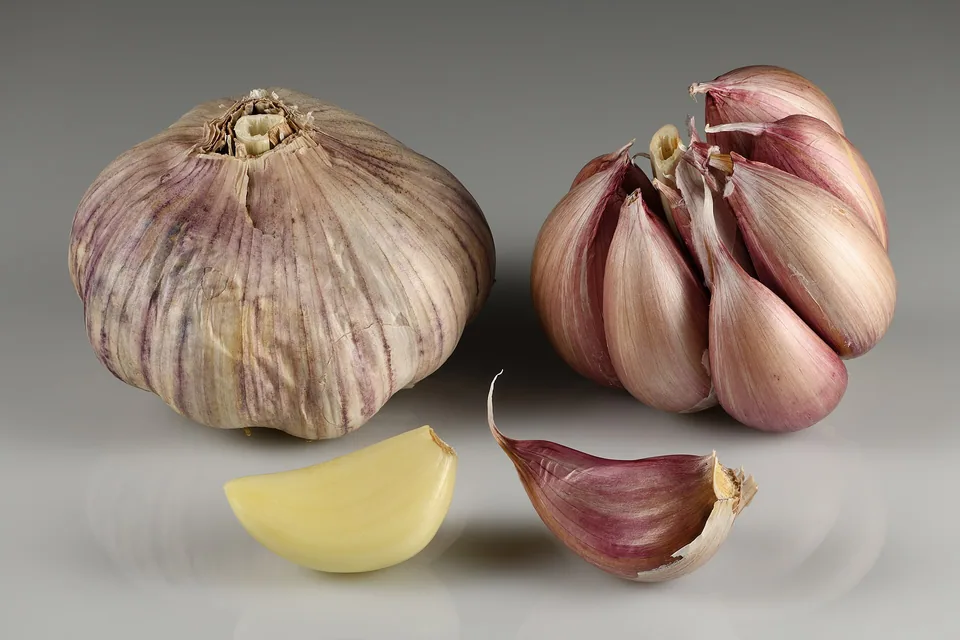

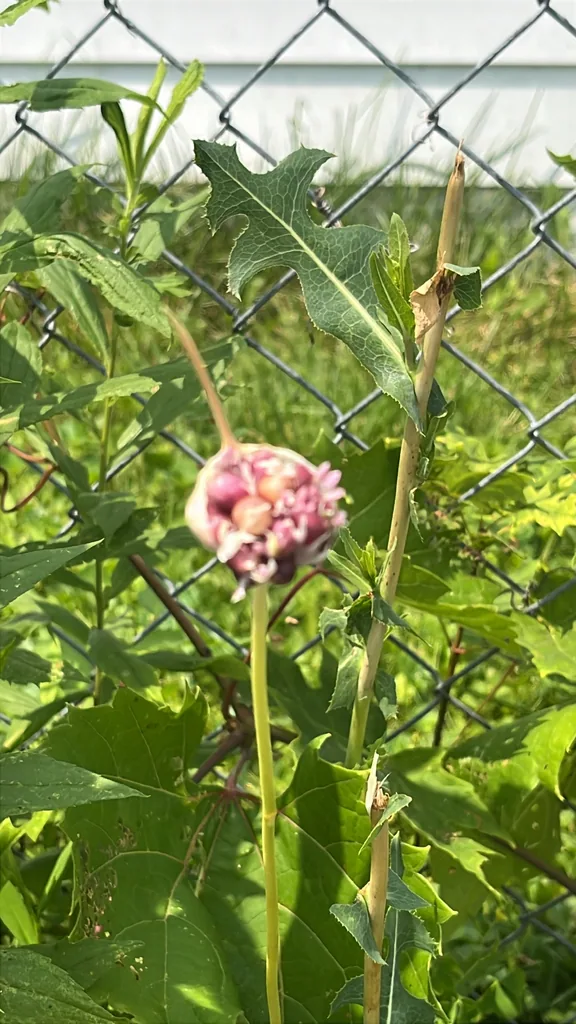

How to Grow and Care for Cultivated garlic
Allium sativum
Written by Emilio Marruso · last checked
Toxic to: Cats, Dogs, Horses, People · Why
At a glance
Growing garlic starts simply: in fall you plant single cloves, and their roots keep growing through the winter while little shows above ground. Give it full sun and steady water in spring, then lift the bulbs when half the leaves have turned brown. Once cured, softneck types keep 6–8 months at room temperature, and the young scapes are good to eat too.
- Sun
Full sun
What the sources say (1)
Light: Full sun
Full sun (6 or more hours of direct sunlight a day)
— Allium sativum (Clove of Garlic, Cultivated Garlic, Garlic, Serpent Garlic) | North Carolina Extension Gardener Plant Toolbox [1] - Water
1 inch of water a week in spring; stop watering when the leaves start to wither
What the sources say (4)
Watering: About 1 inch [2.5 cm] of water per week or enough water to prevent the soil from drying out during spring and early summer; supplemental irrigation if rainfall is not adequate
During spring and early summer, provide about 1 inch of water per week or enough water to prevent the soil from drying out.
— Vegetables: Growing Garlic in Home Gardens | WSU Extension Publications | Washington State University [5] Provide supplemental irrigation if rainfall is not adequate.
— Garlic, Allium sativum – Wisconsin Horticulture [2] Watering notes: Sensitive to moisture stress, especially during bulbing; stop watering when the foliage begins to wither to avoid stained bulbs and diseases
Garlic has a relatively shallow root system and is sensitive to moisture stress, especially during bulbing (about the end of May to mid July).
— Garlic, Allium sativum – Wisconsin Horticulture [2] Stop watering when the foliage begins to wither to avoid stained bulbs and diseases.
— Garlic, Allium sativum – Wisconsin Horticulture [2] - Cold
Survives winters down to −30 °F (−34.4 °C)
Very hardy · USDA 4a · RHS H7 · Z4
What the sources say (2)
Hardiness, coldest zone: 4a [winter low −34.4 to −31.7 °C (−30 to −25 °F)]
4a, 4b, 5a, 5b, 6a, 6b, 7a, 7b, 8a, 8b, 9a, 9b
— Allium sativum (Clove of Garlic, Cultivated Garlic, Garlic, Serpent Garlic) | North Carolina Extension Gardener Plant Toolbox [1] Hardiness, warmest zone: 9b [winter low −3.9 to −1.1 °C (25 to 30 °F)]
4a, 4b, 5a, 5b, 6a, 6b, 7a, 7b, 8a, 8b, 9a, 9b
— Allium sativum (Clove of Garlic, Cultivated Garlic, Garlic, Serpent Garlic) | North Carolina Extension Gardener Plant Toolbox [1] - Soil
Soil with pH 6.0–8.0
What the sources say (5)
Soil pH, minimum: 6.0
Soil pH: Neutral (6.0-8.0) Soil Drainage: Good Drainage
— Allium sativum (Clove of Garlic, Cultivated Garlic, Garlic, Serpent Garlic) | North Carolina Extension Gardener Plant Toolbox [1] Soil pH, maximum: 8.0
According to NC State Extension Plant Toolbox: Soil pH: Neutral (6.0-8.0) Soil Drainage:
— Allium sativum (Clove of Garlic, Cultivated Garlic, Garlic, Serpent Garlic) | North Carolina Extension Gardener Plant Toolbox [1] According to Penn State Extension (garlic production): Soils that are rich in organic matter with a pH of 6.0–6.5 are best.
— Garlic Production [6] According to University of Georgia Extension: The optimum soil pH for garlic is between 6 and 7.
— Garlic Production for the Gardener | CAES Field Report [7] Soil pH: Neutral (6.0-8.0) Soil Drainage: Good Drainage
— Allium sativum (Clove of Garlic, Cultivated Garlic, Garlic, Serpent Garlic) | North Carolina Extension Gardener Plant Toolbox [1] - Planting
Plant the cloves in fall, from mid-September to November depending on your climate
What the sources say (7)
Planting: North Carolina: late October to November, possibly through December in more southern areas; Wisconsin: late summer or fall, usually within a week or two after the first killing frost
North Carolina: in North Carolina plant individual cloves from late October to November, possibly through December in more southern areas, for a May to June harvest time.
— Allium sativum (Clove of Garlic, Cultivated Garlic, Garlic, Serpent Garlic) | North Carolina Extension Gardener Plant Toolbox [1] Wisconsin: In Wisconsin, garlic should be planted in later summer or fall, usually within a week or two after the first killing frost.
— Garlic, Allium sativum – Wisconsin Horticulture [2] According to Utah State University Extension: Garlic can be planted from mid-September through early November.
— How to Grow Garlic in Your Garden | USU [4] According to Penn State Extension (growing and using garlic): Plant individual garlic cloves (pointy end up) 1 to 2 inches deep in a sunny location with well-drained garden soil in mid- to late-October.
— Growing and Using Garlic [8] Georgia: The plant is extremely frost hardy and, if planted in October, may have tops showing above the soil and be well rooted by November.
— Garlic Production for the Gardener | CAES Field Report [7] in North Carolina plant individual cloves from late October to November, possibly through December in more southern areas, for a May to June harvest time.
— Allium sativum (Clove of Garlic, Cultivated Garlic, Garlic, Serpent Garlic) | North Carolina Extension Gardener Plant Toolbox [1] In Wisconsin, garlic should be planted in later summer or fall, usually within a week or two after the first killing frost.
— Garlic, Allium sativum – Wisconsin Horticulture [2] - Feeding
Feed at planting and again when shoots are 4–6 in tall; never once bulbs start forming
What the sources say (6)
When: At planting, then in spring when shoots are 10.2-15.2 cm [4–6 in] tall
Garlic is a moderate to heavy feeder, so apply a nitrogen fertilizer at planting and again when the shoots are 4-6” tall.
— Garlic, Allium sativum – Wisconsin Horticulture [2] The remainder of the N should be topdressed in the spring after shoots are 4–6 in. tall.
— Garlic Production for the Gardener | CAES Field Report [7] Avoid: Fertilizing after bulb formation begins; late nitrogen applications, which delay bulbing; over-fertilization; topdressing plants that are not dry (fertilizer burn)
Do not apply any more fertilizer after bulb formation begins (see fertility).
— Garlic Production for the Gardener | CAES Field Report [7] Avoid N applications after the first week in April to prevent delayed bulbing.
— Garlic Production for the Gardener | CAES Field Report [7] Cure bulbs 6–10 days prior to storage. Avoid over-fertilization and overwatering.
— Vegetables: Growing Garlic in Home Gardens | WSU Extension Publications | Washington State University [5] Apply all topdressings to dry plants at midday to reduce the chance of fertilizer burn.
— Garlic Production [6] - Harvest
Dig up when half the leaves are brown, don't pull; eat the bulbs and young scapes
What the sources say (3)
How to harvest: Harvest when about half of the leaves have turned brown; lift the bulbs with a spade, fork or shovel instead of pulling the stem, then cure them in a shaded, well-ventilated place for a few weeks.
Harvest garlic when about half of the leaves have started turning brown.
— Allium sativum (Clove of Garlic, Cultivated Garlic, Garlic, Serpent Garlic) | North Carolina Extension Gardener Plant Toolbox [1] Do not pull the stem to harvest. Instead, use a spade or shovel to lift the bulb from the ground.
— Growing and Using Garlic [8] To cure, allow them to dry and harden in a well-ventilated, shaded area for a few weeks.
— Growing and Using Garlic [8] - Pests
Onion thrips, onion maggots, white rot and rust; soil that's too wet rots the bulbs
What the sources say (11)
Pests: onion thrips, onion maggot, bulb mites, allium leaf miner, cutworms, cabbage loopers, wireworms
The onion thrip can be a major problem on garlic. Garlic gardeners should also scout for damage from cutworms, cabbage loopers and wireworms.
— Garlic Production for the Gardener | CAES Field Report [7] Allium leaf miner and onion thrips are the major insect pests of garlic in the eastern United States.
— Garlic Production [6] Bulb rot can occur in too-wet soils. Bulb mites can occur.
— Allium sativum (Clove of Garlic, Cultivated Garlic, Garlic, Serpent Garlic) | North Carolina Extension Gardener Plant Toolbox [1] The larvae tunnel through the underground portions of the stem and the bulb, where they feed.
— Vegetables: Growing Garlic in Home Gardens | WSU Extension Publications | Washington State University [5] Diseases: basal rot (fusarium), white rot, gray mold (botrytis neck rot), garlic rust, black mold, downy mildew, pink root, powdery mildew, purple blotch, bulb rot
Garlic is susceptible to most onion diseases, including botrytis, pink root, powdery mildew and purple blotch.
— Garlic Production for the Gardener | CAES Field Report [7] Several diseases affect garlic, including basal rot, Fusarium white rot ( Sclerotinia ), and occasionally Botrytis .
— Garlic Production [6] Puccinia porri) Symptoms: Small white to yellow flecks and spots that may become elongate or diamond shaped.
— Vegetables: Growing Garlic in Home Gardens | WSU Extension Publications | Washington State University [5] Aspergillus niger or A. ochraceous K. Wilh.) Symptoms: Discoloration at neck with lesions and streaks of black.
— Vegetables: Growing Garlic in Home Gardens | WSU Extension Publications | Washington State University [5] Peronospora destructor ) on Onion Leaf Symptoms: A grayish or white, downy fungal growth on leaves, which often die back.
— Vegetables: Growing Garlic in Home Gardens | WSU Extension Publications | Washington State University [5] A yellow, water-soaked discoloration around the neck of the garlic plant. It is also known as neck rot.
— Vegetables: Growing Garlic in Home Gardens | WSU Extension Publications | Washington State University [5] Bulb rot can occur in too-wet soils. Bulb mites can occur.
— Allium sativum (Clove of Garlic, Cultivated Garlic, Garlic, Serpent Garlic) | North Carolina Extension Gardener Plant Toolbox [1] - Watch out
Handling it can irritate the skin of some people: wear gloves
- Size
12–18 in tall and 8–12 in wide
What the sources say (2)
Mature height: 30.5-45.7 cm (1 ft 0 in - 1 ft 6 in)
Dimensions: Height: 1 ft. 0 in. - 1 ft. 6 in. Width: 0 ft. 8 in. - 1 ft. 0 in.
— Allium sativum (Clove of Garlic, Cultivated Garlic, Garlic, Serpent Garlic) | North Carolina Extension Gardener Plant Toolbox [1] Mature width: 20.3-30.5 cm (0 ft 8 in - 1 ft 0 in)
Dimensions: Height: 1 ft. 0 in. - 1 ft. 6 in. Width: 0 ft. 8 in. - 1 ft. 0 in.
— Allium sativum (Clove of Garlic, Cultivated Garlic, Garlic, Serpent Garlic) | North Carolina Extension Gardener Plant Toolbox [1] - Propagation
Not from seed: plant cloves from your biggest bulbs, separating them just before planting
What the sources say (4)
Propagation: Bulbs (cloves); not propagated by seed
Garlic is only propagated from the bulbs, since it has lost the ability to produce fertile seeds
— Garlic, Allium sativum – Wisconsin Horticulture [2] Saving seeds: Garlic is not grown from true seed: keep the largest, best-formed bulbs and plant their cloves, separating the cloves just before planting.
The largest, healthiest bulbs may be used for the next planting.
— How to Grow Garlic in Your Garden | USU [4] Always save the largest and best-formed bulbs for planting.
— Garlic Production for the Gardener | CAES Field Report [7] Do not divide the bulb until ready to plant; early separation decreases yields.
— Garlic Production for the Gardener | CAES Field Report [7] - Safety
Toxic to dogs, cats and horses: keep pets away from it
Overview
Garlic is an edible bulb of the amaryllis family grown in full sun in loose, fertile, well-drained soil. [1] Cloves are planted in fall and the bulbs are harvested when about half of the leaves have turned brown. [2]
Cultivated garlic care
Measurements in square brackets are our conversion into the other unit system; the quoted text is unchanged.
How to water Cultivated garlic
Watering
About 1 inch [2.5 cm] of water per week or enough water to prevent the soil from drying out during spring and early summer; supplemental irrigation if rainfall is not adequate
What the sources say (2)
During spring and early summer, provide about 1 inch of water per week or enough water to prevent the soil from drying out.Provide supplemental irrigation if rainfall is not adequate.Watering notes
Sensitive to moisture stress, especially during bulbing; stop watering when the foliage begins to wither to avoid stained bulbs and diseases
What the sources say (2)
Garlic has a relatively shallow root system and is sensitive to moisture stress, especially during bulbing (about the end of May to mid July).Stop watering when the foliage begins to wither to avoid stained bulbs and diseases.How much light Cultivated garlic needs
Full sun
What the sources say (1)
Full sun (6 or more hours of direct sunlight a day)How much cold Cultivated garlic can take
Hardiness, coldest zone
4a [winter low −34.4 to −31.7 °C (−30 to −25 °F)]
What the sources say (1)
4a, 4b, 5a, 5b, 6a, 6b, 7a, 7b, 8a, 8b, 9a, 9bHardiness, warmest zone
9b [winter low −3.9 to −1.1 °C (25 to 30 °F)]
What the sources say (1)
4a, 4b, 5a, 5b, 6a, 6b, 7a, 7b, 8a, 8b, 9a, 9bBest soil for Cultivated garlic
Soil pH, minimum
6.0
What the sources say (1)
Soil pH:
Neutral (6.0-8.0)
Soil Drainage:
Good DrainageSoil pH, maximum
8.0
What each source says
According to NC State Extension Plant Toolbox: 8.0
According to Penn State Extension (garlic production): 6.5
According to University of Georgia Extension: 7.0
What the sources say (4)
According to NC State Extension Plant Toolbox: Soil pH: Neutral (6.0-8.0) Soil Drainage:According to Penn State Extension (garlic production): Soils that are rich in organic matter with a pH of 6.0–6.5 are best.According to University of Georgia Extension: The optimum soil pH for garlic is between 6 and 7.Soil pH:
Neutral (6.0-8.0)
Soil Drainage:
Good DrainageWhere to grow Cultivated garlic
The sources give different values depending on region, zone or growing conditions.
What each source says
According to NC State Extension Plant Toolbox: 15.2-20.3 cm (6-8 in)
According to Utah State University Extension: 7.6-10.2 cm (3-4 in) apart in the row, rows 15.2-25.4 cm (6-10 in) apart
According to Washington State University Extension: 10.2-15.2 cm (4-6 in) apart in rows 30.5-61.0 cm (12-24 in) apart
According to Penn State Extension (garlic production): 10.2-15.2 cm (4-6 in) apart in rows 15.2-30.5 cm (6-12 in) apart
According to Penn State Extension (growing and using garlic): 15.2-17.8 cm (6-7 in) apart in rows 30.5 cm (1 ft) apart
According to University of Wisconsin Extension: About 15.2 cm (6 in) apart
What the sources say (6)
According to NC State Extension Plant Toolbox: Seperate individual cloves from the bulb and plant 6 to 8 inches apart and 2 to 3 inches deep.According to Utah State University Extension: Cloves should be spaced 3-4 inches apart in the row, with rows 6-10 inches apart.According to Washington State University Extension: Garlic should be planted 4–6 inches apart in rows that are spaced 12–24 inches apart.According to Penn State Extension (garlic production): rows 6–12 inches apart and cloves spaced 4–6 inches apart (depending on the size bulb grown).According to Penn State Extension (growing and using garlic): Space cloves 6 to 7 inches apart in rows, and allow 1 foot between rows.According to University of Wisconsin Extension: Place the cloves pointed side up, 2-3” deep and about 6” apart.How to propagate Cultivated garlic
Bulbs (cloves); not propagated by seed
What the sources say (1)
Garlic is only propagated from the bulbs, since it has lost the ability to produce fertile seedsHow to grow Cultivated garlic
The plant
Life cycle
perennial
What each source says
:
What the sources say (4)
: A hardy perennial that can overwinter, garlic is grown as an annual because it is harvested in its first year of growth.Garlic is a hardy perennial that grows best in full sun and fertile, well drained soils.Garlic ( Allium sativum ) is a hardy perennial member of the onion family.This perennial plant, most often grown as an annual, produces edible bulbs composed of a number of cloves.Family
Mature height
30.5-45.7 cm (1 ft 0 in - 1 ft 6 in)
What the sources say (1)
Dimensions: Height: 1 ft. 0 in. - 1 ft. 6 in. Width: 0 ft. 8 in. - 1 ft. 0 in.Mature width
20.3-30.5 cm (0 ft 8 in - 1 ft 0 in)
What the sources say (1)
Dimensions: Height: 1 ft. 0 in. - 1 ft. 6 in. Width: 0 ft. 8 in. - 1 ft. 0 in.Sowing and growth
Sowing depth
The sources disagree:
Seperate individual cloves from the bulb and plant 6 to 8 inches apart and 2 to 3 inches deep.
[1]Plant the cloves so that the tops are 2 inches below the soil line
[5]Most garlic cultivars are planted 1 to 1.5 inches deep; elephant garlic should be planted 2 to 2.5 inches deep.
[6]Plant cloves 1–3 in. deep and 6 in. apart.
[7]Plant individual garlic cloves (pointy end up) 1 to 2 inches deep in a sunny location with well-drained garden soil in mid- to late-October.
[8]
Row spacing
The sources disagree:
Cloves should be spaced 3-4 inches apart in the row, with rows 6-10 inches apart.
[4]Garlic should be planted 4–6 inches apart in rows that are spaced 12–24 inches apart.
[5]Rows are usually planted 12–14 in. apart. In colder areas of the state, cloves may be planted slightly deeper for winter protection.
[7]Space cloves 6 to 7 inches apart in rows, and allow 1 foot between rows.
[8]
Days to maturity
240
What the sources say (2)
Days to harvest: Approximately 240 days. Yield: 10–30 bulbs per 10-foot row.Also, since garlic requires up to 8 months to mature, plant in an area where it won’t be disturbed.Harvest and storage
How to harvest
Harvest when about half of the leaves have turned brown; lift the bulbs with a spade, fork or shovel instead of pulling the stem, then cure them in a shaded, well-ventilated place for a few weeks.
What the sources say (3)
Harvest garlic when about half of the leaves have started turning brown.Do not pull the stem to harvest. Instead, use a spade or shovel to lift the bulb from the ground.To cure, allow them to dry and harden in a well-ventilated, shaded area for a few weeks.Storage
Store cured whole bulbs in a cool, dry, ventilated place at 32-35 F (0-2 C), 65-75 percent relative humidity; avoid freezing; at room temperature hardneck keeps 3-4 months and softneck 6-8 months.
What the sources say (3)
Store garlic in cool (32-40°F), dry conditions. Avoid freezing.The cured bulbs should be placed in clean cardboard boxes or burlap bags and stored at 32–35°F and 65–75 percent relative humidity.Generally, hardneck garlic can be stored for only 3-4 months at room temperature without significant deterioration in quality, while softneck garlic generally can be kept at room temperature for 6-8 months.Saving seeds
Garlic is not grown from true seed: keep the largest, best-formed bulbs and plant their cloves, separating the cloves just before planting.
What the sources say (3)
The largest, healthiest bulbs may be used for the next planting.Always save the largest and best-formed bulbs for planting.Do not divide the bulb until ready to plant; early separation decreases yields.Pests and diseases
Pests
onion thrips, onion maggot, bulb mites, allium leaf miner, cutworms, cabbage loopers, wireworms
What the sources say (4)
The onion thrip can be a major problem on garlic. Garlic gardeners should also scout for damage from cutworms, cabbage loopers and wireworms.Allium leaf miner and onion thrips are the major insect pests of garlic in the eastern United States.Bulb rot can occur in too-wet soils. Bulb mites can occur.The larvae tunnel through the underground portions of the stem and the bulb, where they feed.Diseases
basal rot (fusarium), white rot, gray mold (botrytis neck rot), garlic rust, black mold, downy mildew, pink root, powdery mildew, purple blotch, bulb rot
What the sources say (7)
Garlic is susceptible to most onion diseases, including botrytis, pink root, powdery mildew and purple blotch.Several diseases affect garlic, including basal rot, Fusarium white rot ( Sclerotinia ), and occasionally Botrytis .Puccinia porri) Symptoms: Small white to yellow flecks and spots that may become elongate or diamond shaped.Aspergillus niger or A. ochraceous K. Wilh.) Symptoms: Discoloration at neck with lesions and streaks of black.Peronospora destructor ) on Onion Leaf Symptoms: A grayish or white, downy fungal growth on leaves, which often die back.A yellow, water-soaked discoloration around the neck of the garlic plant. It is also known as neck rot.Bulb rot can occur in too-wet soils. Bulb mites can occur.Fertilizing
When
At planting, then in spring when shoots are 10.2-15.2 cm [4–6 in] tall
What the sources say (2)
Garlic is a moderate to heavy feeder, so apply a nitrogen fertilizer at planting and again when the shoots are 4-6” tall.The remainder of the N should be topdressed in the spring after shoots are 4–6 in. tall.How often
The sources disagree:
Garlic is a moderate to heavy feeder, so apply a nitrogen fertilizer at planting and again when the shoots are 4-6” tall.
[2]Side-dress with ½ pounds of nitrogen fertilizer (21-0-0) per 100 square feet in midApril and ¼ pounds in late May.
[4]Apply one 75-pound application at planting, a 25-pound application at 6-inch height, and the remaining 25 pounds around May 1.
[6]
Natural fertilizers
Well-composted manure incorporated at 4.88 kg [10.8 lb]/m² as a soil amendment; blood meal as an organic nitrogen source at planting; compost side-dressing when tops are 15.2-20.3 cm [6–8 in] tall; no more than 2.54 cm [1 in] of well-composted organic matter
What the sources say (4)
Well-composted manure applied and incorporated at a rate of 100 lb per 100 sq ft is ideal as a soil amendment, especially on low organic matter soils.About one-quarter to one-third of the recommended N should be broadcast and incorporated in early fall before planting; use 5-10-15 or 10-10-10 or an organic source such as blood meal.Side-dress the garlic plants with compost in late April or May when the tops are 6–8 inches tall.If you fertilize with compost, apply no more than 1 inch of well-composted organic matter per 100 square feet of garden areaMineral fertilizers
Pre-plant: 10-10-10 at 146.4 g/m², with part of the nitrogen from 5-10-15 or 10-10-10 before planting; spring side-dressing with a nitrogen fertilizer such as 21-0-0 at 24.4 g/m², then 12.2 g/m²
What each source says
before planting, early fall: One-quarter to one-third of the recommended nitrogen, broadcast and incorporated, as 5-10-15, 10-10-10 or blood meal.
spring side-dressing, late February or early March: Ammonium nitrate, 14.9 g per m of row.
What the sources say (5)
before planting, early fall: About one-quarter to one-third of the recommended N should be broadcast and incorporated in early fall before planting; use 5-10-15 or 10-10-10 or an organic source such as blood meal.spring side-dressing, late February or early March: In late February or early March, sidedress garlic with about 1 lb of ammonium nitrate per 100 ft of row.As a general recommendation, apply 3 lb of 10-10-10 fertilizer per 100 sq ft. Follow soil test recommendations for your particular garden soil.About one-quarter to one-third of the recommended N should be broadcast and incorporated in early fall before planting; use 5-10-15 or 10-10-10 or an organic source such as blood meal.Side-dress with ½ pounds of nitrogen fertilizer (21-0-0) per 100 square feet in midApril and ¼ pounds in late May.Micronutrients
Calcium and magnesium, which can be low in acid soils, supplied with dolomitic lime following lime recommendations; compost or other organic amendments keep micronutrient supplies adequate
What the sources say (2)
Calcium and magnesium may be low in acid soils. The need for these elements usually can be met by using dolomitic lime and following lime recommendations.Micronutrients — Addition of compost or other types of organic amendments will help to ensure that micronutrient supplies are adequate.Avoid
Fertilizing after bulb formation begins; late nitrogen applications, which delay bulbing; over-fertilization; topdressing plants that are not dry (fertilizer burn)
What the sources say (4)
Do not apply any more fertilizer after bulb formation begins (see fertility).Avoid N applications after the first week in April to prevent delayed bulbing.Cure bulbs 6–10 days prior to storage. Avoid over-fertilization and overwatering.Apply all topdressings to dry plants at midday to reduce the chance of fertilizer burn.Signs of deficiency
Nitrogen: yellowing of older leaves and leaf tips, general yellowing, poor vigor and low yields; phosphorus: dark green to purple leaves and stunted growth; potassium: marginal scorching of older leaves
What the sources say (2)
Symptoms of nitrogen deficiency include a yellowing of older leaves and leaf tips, general yellowing of the plant, poor vigor and low yields.Symptoms of P deficiency include dark green to purple leaves and stunted growth. Symptoms of K deficiency include marginal scorching of the older leaves.Signs of excess
Delayed bulbing from late nitrogen applications
What the sources say (1)
Avoid N applications after the first week in April to prevent delayed bulbing.Spacing
Between plants
The sources give different values depending on region, zone or growing conditions.
What each source says
North Carolina (USA): 15.2-20.3 cm [6–8 in]
Utah (USA): 7.6-10.2 cm [3–4 in] in the row
Washington (USA): 10.2-15.2 cm [4–6 in]
Pennsylvania (USA), raised beds: 10.2-15.2 cm [4–6 in], by bulb size
Georgia (USA): 15.2 cm [6 in]
Pennsylvania (USA), home gardens: 15.2-17.8 cm [6–7 in]
What the sources say (6)
North Carolina (USA): Seperate individual cloves from the bulb and plant 6 to 8 inches apart and 2 to 3 inches deep.Utah (USA): Plant cloves 2-3 inches deep, in rows 6-10 inches apart, with cloves 3-4 inches apart in the row.Washington (USA): Garlic should be planted 4–6 inches apart in rows that are spaced 12–24 inches apart.Pennsylvania (USA), raised beds: planted by placing each clove by hand into raised beds with rows 6–12 inches apart and cloves spaced 4–6 inches apart (depending on the size bulb grown)Georgia (USA): Plant cloves 1–3 in. deep and 6 in. apart. Rows are usually planted 12–14 in. apart.Pennsylvania (USA), home gardens: Space cloves 6 to 7 inches apart in rows, and allow 1 foot between rows.Between rows
The sources give different values depending on region, zone or growing conditions.
What each source says
Utah (USA): 15.2-25.4 cm [6–10 in]
Washington (USA): 30.5-61 cm [12–24 in]
Pennsylvania (USA), raised beds: 15.2-30.5 cm [6–12 in]
Georgia (USA): 30.5-35.6 cm [12–14 in]
Pennsylvania (USA), home gardens: 30.5 cm [12 in]
What the sources say (5)
Utah (USA): Plant cloves 2-3 inches deep, in rows 6-10 inches apart, with cloves 3-4 inches apart in the row.Washington (USA): Garlic should be planted 4–6 inches apart in rows that are spaced 12–24 inches apart.Pennsylvania (USA), raised beds: planted by placing each clove by hand into raised beds with rows 6–12 inches apart and cloves spaced 4–6 inches apart (depending on the size bulb grown)Georgia (USA): Plant cloves 1–3 in. deep and 6 in. apart. Rows are usually planted 12–14 in. apart.Pennsylvania (USA), home gardens: Space cloves 6 to 7 inches apart in rows, and allow 1 foot between rows.Roots
Root system
Shallow root system; roots develop in autumn and winter, until the ground freezes, while little top growth occurs.
What the sources say (3)
Garlic has a relatively shallow root system and is sensitive to moisture stress, especially during bulbing (about the end of May to mid July).During the fall and winter, the root system develops even though little top growth occurs.Garlic grows roots until the ground freezes, which is when it goes dormant.After harvest
Storage
Cure in a warm, dry place out of the sun (3-4 weeks); store cured bulbs at 0-1.7 °C [32–35 °F] and 65-75% relative humidity, protected from freezing. At room temperature hardneck types keep 3-4 months and softneck types 6-8 months; hardneck at 0 °C [32 °F] keeps up to 7 months; higher temperatures cause sprouting and higher humidity rooting.
What the sources say (6)
Garlic needs to cure after digging in a warm dry place out of the sun.After curing for 3-4 weeks, the roots and remaining shoots should have dried down.The cured bulbs should be placed in clean cardboard boxes or burlap bags and stored at 32–35°F and 65–75 percent relative humidity.Generally, hardneck garlic can be stored for only 3-4 months at room temperature without significant deterioration in quality, while softneck garlic generally can be kept at room temperature for 6-8 months.Storing hardneck garlic at 32°F will extend storage life up to 7 months; higher temperatures will cause sprouting and higher humidity will promote rooting.In very cold areas, the bulbs should be protected from freezing.Heat and drought
Drought
Sensitive to moisture stress, especially during bulbing: drought reduces yield and bulb size, and dry soil causes irregularly shaped bulbs.
What the sources say (3)
Garlic has a relatively shallow root system and is sensitive to moisture stress, especially during bulbing (about the end of May to mid July).Drought stress during growth decreases yield and reduces bulb size.The soil must be kept evenly moist as dry soil will cause irregularly shaped bulbs.Cultivated garlic pests and problems
Bulb rot
Symptom: Bulb rot in too-wet soils
What to do: Cut back on watering before harvest time
What the sources say (2)
Cut back on watering before harvest time to prevent bulb rot.
— Allium sativum (Clove of Garlic, Cultivated Garlic, Garlic, Serpent Garlic) | North Carolina Extension Gardener Plant Toolbox [1] Bulb rot can occur in too-wet soils. Bulb mites can occur.
— Allium sativum (Clove of Garlic, Cultivated Garlic, Garlic, Serpent Garlic) | North Carolina Extension Gardener Plant Toolbox [1] Contact dermatitis
Symptom: Skin reaction in some people when handling the plant
What to do: Wear gloves when handling
What the sources say (1)
This plant may cause contact dermatitis in some people. Wear gloves when handling.
— Allium sativum (Clove of Garlic, Cultivated Garlic, Garlic, Serpent Garlic) | North Carolina Extension Gardener Plant Toolbox [1]
Remedies
Each remedy shows what official sources say about it; traditional remedies without an official source are marked as such. Harmful ones are listed so you know to avoid them.
Treating the plant
aphids
soap spray Works
spraying home remedies that contain dish detergent on plants on a sunny day can injure the plant, essentially burning it.
— extension.psu.edu [11] How: Combine 1 tablespoon of a vegetable oil based soap with 1L of water. Shake well and spray over the aphid making sure it runs down into the overlapping leaves.
Combine 1 tablespoon of a vegetable oil based soap with 1L of water. Shake well and spray over the aphid making sure it runs down into the overlapping leaves.
— organicgardener.com.au [9] What the evidence says insecticidal soap is a safe, effective organic insecticide with minimal environmental impact.
— extension.psu.edu [10]
rust
baking soda spray Not verified
Traditional remedy, not verified by an official source.
How: To 2L of water, add a drop of vegetable oil and a drop of detergent, then 4 teaspoons of bicarbonate of soda. Shake well and spray on the leaves; it will not kill the rust but will stop it from spreading.
fungal diseases
baking soda soak for cloves Not verified
Traditional remedy, not verified by an official source.
How: Break the bulbs apart and soak the cloves overnight (not longer) in 1L of water with 1 teaspoon of bicarbonate of soda before planting.
nematodes
hot water soak for cloves Not verified
Traditional remedy, not verified by an official source.
How: Soak the cloves in hot water (110 F - 112 F) for 10 to 12 minutes before planting.
cornmeal soil dressing Not verified
Traditional remedy, not verified by an official source.
How: Horticultural cornmeal applied as a top dressing to the soil at the rate of one pound per 100 square feet.
mites
water and alcohol soak for cloves Not verified
Traditional remedy, not verified by an official source.
How: Soak the separated cloves in water overnight to loosen the clove covers, then soak them for a few minutes in alcohol at planting time.
grasshoppers
floating row cover Not verified
Traditional remedy, not verified by an official source.
How: Put on floating row covers at the first sign of a real infestation.
thrips
stiff water spray Works
How: Apply a stiff spray of water to wash thrips from plants; add compost and use mulches.
Thrips are best managed with cultural practices and natural biological control. Add compost, use mulches or apply a stiff spray of water to wash thrips from plants
— How to Grow Garlic in Your Garden | USU [4] What the evidence says Thrips are best managed with cultural practices and natural biological control. Add compost, use mulches or apply a stiff spray of water to wash thrips from plants
— How to Grow Garlic in Your Garden | USU [4]
onion maggot
floating row cover Works
How: Floating row covers can prevent egg-laying female flies.
Floating row covers can prevent egg-laying female flies.
— Vegetables: Growing Garlic in Home Gardens | WSU Extension Publications | Washington State University [5] What the evidence says Floating row covers can prevent egg-laying female flies.
— Vegetables: Growing Garlic in Home Gardens | WSU Extension Publications | Washington State University [5]
Is Cultivated garlic toxic to pets?
Reported by the source, quoted verbatim. This is not medical or veterinary advice: if a person or an animal may have eaten this plant, contact a poison control centre or a veterinarian.
Animals
#deer resistant #problem for dogs #problem for horses #problem for cats #cool season vegetable
[1]The source flags the risk for this animal but does not explain why.
People
Vomiting, breakdown of red blood cells (hemolytic anemia, Heinz body anemia), blood in urine, weakness, high heart rate, panting
[1]- Toxic principle
Poison Toxic Principle: N-propyl disulfide, diallyl disulfide
[1]- Symptoms
Poison Symptoms: Vomiting, breakdown of red blood cells (hemolytic anemia, Heinz body anemia), blood in urine, weakness, high heart rate, panting
[1]- Severity
Poison Severity: Low Poison Symptoms: Vomiting, breakdown of red blood cells
[1]
Calendar
Planting
North Carolina: late October to November, possibly through December in more southern areas; Wisconsin: late summer or fall, usually within a week or two after the first killing frost
What each source says
North Carolina: Late October to November, possibly through December in more southern areas
Wisconsin: Late summer or fall, usually within a week or two after the first killing frost
According to Utah State University Extension: Mid-September through early November
According to Penn State Extension (growing and using garlic): Mid- to late October
Georgia: Fall (October)
What the sources say (7)
North Carolina: in North Carolina plant individual cloves from late October to November, possibly through December in more southern areas, for a May to June harvest time.Wisconsin: In Wisconsin, garlic should be planted in later summer or fall, usually within a week or two after the first killing frost.According to Utah State University Extension: Garlic can be planted from mid-September through early November.According to Penn State Extension (growing and using garlic): Plant individual garlic cloves (pointy end up) 1 to 2 inches deep in a sunny location with well-drained garden soil in mid- to late-October.Georgia: The plant is extremely frost hardy and, if planted in October, may have tops showing above the soil and be well rooted by November.in North Carolina plant individual cloves from late October to November, possibly through December in more southern areas, for a May to June harvest time.In Wisconsin, garlic should be planted in later summer or fall, usually within a week or two after the first killing frost.Harvest
When about half of the leaves have turned brown; May to June in North Carolina (fall planting)
What each source says
North Carolina: May to June (fall planting)
Northwest: Midsummer
According to University of Georgia Extension: Early summer
What the sources say (5)
North Carolina: in North Carolina plant individual cloves from late October to November, possibly through December in more southern areas, for a May to June harvest time.Northwest: For home gardeners in the Northwest, garlic ( Allium sativum ) is easy to grow, prolific, and can be stored for several months after it is harvested in midsummer.According to University of Georgia Extension: The crop matures in the early summer.Harvest garlic when about half of the leaves have started turning brown.in North Carolina plant individual cloves from late October to November, possibly through December in more southern areas, for a May to June harvest time.Months as given by the sources, which are mostly from the United States (northern hemisphere). In the southern hemisphere they shift by about six months.
Relative to frost
Less precise estimate: there is no weather station within 300 km.
Find frost dates by ZIP code or city
Plant: 1 to 2 weeks after the first frost
In Wisconsin, garlic should be planted in later summer or fall, usually within a week or two after the first killing frost.
— Garlic, Allium sativum – Wisconsin Horticulture [2]
Count from the average frost dates where you live.
Edibility
Reported by the source, quoted verbatim. Do not eat a plant on the basis of this page alone: identification mistakes can be dangerous.
Indicative values
Values from a secondary source, not checked word for word like the rest of this page. Use them as a starting point.
- Drought tolerant
- yesIndicative value, adapt it to your climate · Secondary source · Data for the variety Allium sativum 'Inchelium Red'
- Care level
- MediumIndicative value, adapt it to your climate · Secondary source · Data for the variety Allium sativum 'Inchelium Red'
- Growth rate
- HighIndicative value, adapt it to your climate · Secondary source · Data for the variety Allium sativum 'Inchelium Red'
- Pruning
- March, April, May, June, July, August, September, June, July, August, MayIndicative value, adapt it to your climate · Secondary source · Data for the variety Allium sativum 'Inchelium Red'
Similar plants
- Allium siculum Allium siculum
- Allium triquetrum Allium triquetrum
- Blue Globe Onion Allium caeruleum
- Broadleaf wild leek Allium ampeloprasum
- Chives Allium schoenoprasum
- Field Garlic Allium vineale
- Garlic Chives Allium tuberosum
- Lily Leek Allium moly
Sources
Every value above is quoted from these documents. Links lead to the original publisher.
- Allium sativum (Clove of Garlic, Cultivated Garlic, Garlic, Serpent Garlic) | North Carolina Extension Gardener Plant Toolbox · plants.ces.ncsu.edu, consulted
- Garlic, Allium sativum – Wisconsin Horticulture · hort.extension.wisc.edu, consulted
- Clove of Garlic - Allium sativum | North Carolina Extension Gardener Plant Toolbox · plants.ces.ncsu.edu, consulted
- How to Grow Garlic in Your Garden | USU · extension.usu.edu, consulted
- Vegetables: Growing Garlic in Home Gardens | WSU Extension Publications | Washington State University · pubs.extension.wsu.edu, consulted
- Garlic Production · extension.psu.edu, consulted
- Garlic Production for the Gardener | CAES Field Report · extension.uga.edu, consulted
- Growing and Using Garlic · extension.psu.edu, consulted
- organicgardener.com.au · organicgardener.com.au
- extension.psu.edu · extension.psu.edu
- extension.psu.edu · extension.psu.edu
Written by Emilio Marruso · last checked