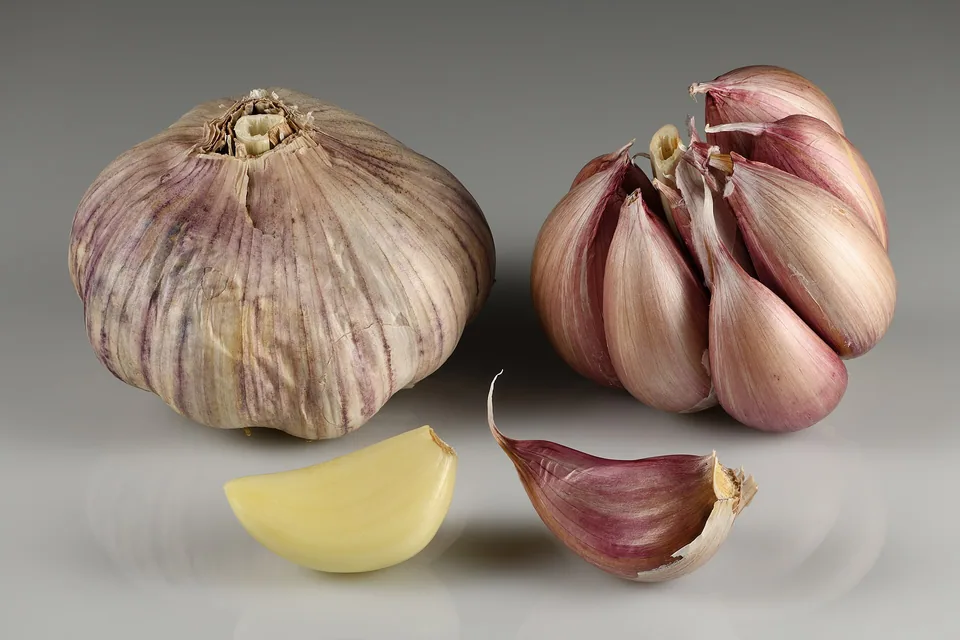

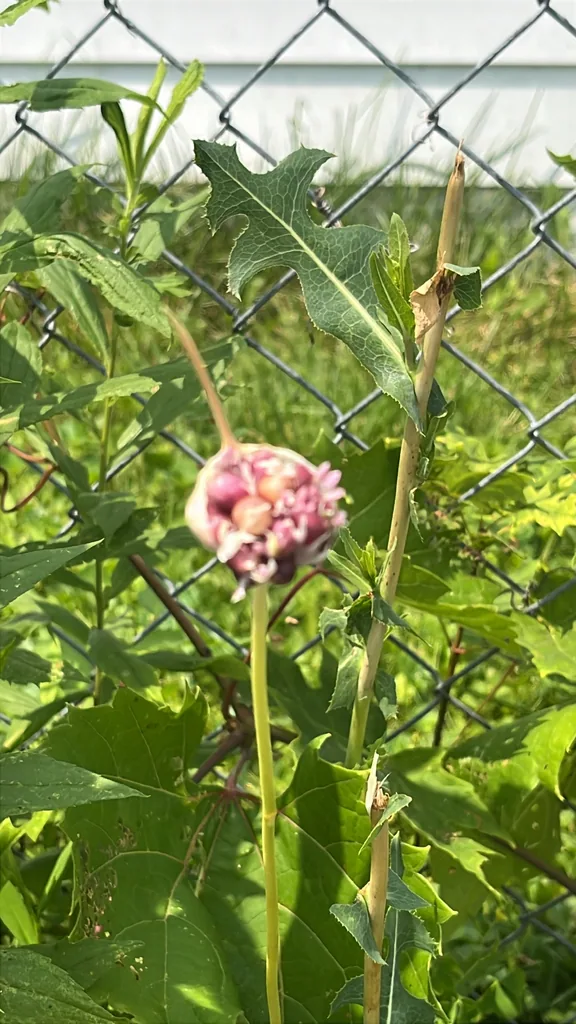

Cómo cultivar y cuidar Ajo
Allium sativum
Escrito por Emilio Marruso · última revisión
Tóxica para: Gatos, Perros, Caballos, Personas · Por qué
De un vistazo
Cultivar ajos empieza de forma sencilla: en otoño plantas dientes sueltos y sus raíces siguen creciendo durante el invierno mientras arriba apenas se ve nada. Dales sol pleno y riego constante en primavera, y saca las cabezas cuando la mitad de las hojas se hayan vuelto marrones. Ya curados, los de cuello blando se conservan 6–8 meses a temperatura ambiente, y los tallos florales tiernos también se comen.
- Sol
Sol pleno
Qué dicen las fuentes (1)
Luz: Pleno sol
Full sun (6 or more hours of direct sunlight a day)
— Allium sativum (Clove of Garlic, Cultivated Garlic, Garlic, Serpent Garlic) | North Carolina Extension Gardener Plant Toolbox [1] - Riego
2,5 cm de agua a la semana en primavera; deja de regar cuando las hojas empiecen a secarse
Qué dicen las fuentes (4)
Riego: Aproximadamente 1 pulgada [2,5 cm] de agua por semana o suficiente agua para evitar que el suelo se seque durante la primavera y el verano temprano; riego suplementario si la lluvia no es adecuada
During spring and early summer, provide about 1 inch of water per week or enough water to prevent the soil from drying out.
— Vegetables: Growing Garlic in Home Gardens | WSU Extension Publications | Washington State University [5] Provide supplemental irrigation if rainfall is not adequate.
— Garlic, Allium sativum – Wisconsin Horticulture [2] Notas sobre el riego: Es sensible al estrés por humedad, especialmente durante el engrosamiento del bulbo; deja de regar cuando el follaje comience a marchitarse para evitar bulbos manchados y enfermedades.
Garlic has a relatively shallow root system and is sensitive to moisture stress, especially during bulbing (about the end of May to mid July).
— Garlic, Allium sativum – Wisconsin Horticulture [2] Stop watering when the foliage begins to wither to avoid stained bulbs and diseases.
— Garlic, Allium sativum – Wisconsin Horticulture [2] - Frío
Aguanta inviernos de hasta −34,4 °C (−30 °F)
Muy rústica · USDA 4a · RHS H7 · Z4
Qué dicen las fuentes (2)
Rusticidad, zona más fría: 4a [mínima invernal de −34,4 a −31,7 °C (de −30 a −25 °F)]
4a, 4b, 5a, 5b, 6a, 6b, 7a, 7b, 8a, 8b, 9a, 9b
— Allium sativum (Clove of Garlic, Cultivated Garlic, Garlic, Serpent Garlic) | North Carolina Extension Gardener Plant Toolbox [1] Rusticidad, zona más cálida: 9b [mínima invernal de −3,9 a −1,1 °C (de 25 a 30 °F)]
4a, 4b, 5a, 5b, 6a, 6b, 7a, 7b, 8a, 8b, 9a, 9b
— Allium sativum (Clove of Garlic, Cultivated Garlic, Garlic, Serpent Garlic) | North Carolina Extension Gardener Plant Toolbox [1] - Suelo
Suelo con pH 6,0–8,0
Qué dicen las fuentes (5)
pH del suelo, mínimo: 6.0
Soil pH: Neutral (6.0-8.0) Soil Drainage: Good Drainage
— Allium sativum (Clove of Garlic, Cultivated Garlic, Garlic, Serpent Garlic) | North Carolina Extension Gardener Plant Toolbox [1] pH del suelo, máximo: 8.0
Según NC State Extension Plant Toolbox: Soil pH: Neutral (6.0-8.0) Soil Drainage:
— Allium sativum (Clove of Garlic, Cultivated Garlic, Garlic, Serpent Garlic) | North Carolina Extension Gardener Plant Toolbox [1] Según Penn State Extension (garlic production): Soils that are rich in organic matter with a pH of 6.0–6.5 are best.
— Garlic Production [6] Según University of Georgia Extension: The optimum soil pH for garlic is between 6 and 7.
— Garlic Production for the Gardener | CAES Field Report [7] Soil pH: Neutral (6.0-8.0) Soil Drainage: Good Drainage
— Allium sativum (Clove of Garlic, Cultivated Garlic, Garlic, Serpent Garlic) | North Carolina Extension Gardener Plant Toolbox [1] - Plantación
Planta los dientes en otoño, de mediados de septiembre a noviembre según tu clima
Qué dicen las fuentes (7)
Plantación: Carolina del Norte: fines de octubre a noviembre, posiblemente hasta diciembre en áreas más al sur; Wisconsin: fines de verano u otoño, generalmente dentro de una o dos semanas después de la primera helada mortal
Carolina del Norte: in North Carolina plant individual cloves from late October to November, possibly through December in more southern areas, for a May to June harvest time.
— Allium sativum (Clove of Garlic, Cultivated Garlic, Garlic, Serpent Garlic) | North Carolina Extension Gardener Plant Toolbox [1] Wisconsin: In Wisconsin, garlic should be planted in later summer or fall, usually within a week or two after the first killing frost.
— Garlic, Allium sativum – Wisconsin Horticulture [2] Según Utah State University Extension: Garlic can be planted from mid-September through early November.
— How to Grow Garlic in Your Garden | USU [4] Según Penn State Extension (growing and using garlic): Plant individual garlic cloves (pointy end up) 1 to 2 inches deep in a sunny location with well-drained garden soil in mid- to late-October.
— Growing and Using Garlic [8] Georgia: The plant is extremely frost hardy and, if planted in October, may have tops showing above the soil and be well rooted by November.
— Garlic Production for the Gardener | CAES Field Report [7] in North Carolina plant individual cloves from late October to November, possibly through December in more southern areas, for a May to June harvest time.
— Allium sativum (Clove of Garlic, Cultivated Garlic, Garlic, Serpent Garlic) | North Carolina Extension Gardener Plant Toolbox [1] In Wisconsin, garlic should be planted in later summer or fall, usually within a week or two after the first killing frost.
— Garlic, Allium sativum – Wisconsin Horticulture [2] - Abonado
Abona al plantar y otra vez cuando los brotes midan 10–15 cm; nunca cuando empiece a formarse la cabeza
Qué dicen las fuentes (6)
Cuándo: Al plantar, luego en primavera cuando los brotes midan 10,2-15,2 cm [4–6 in] de alto
Garlic is a moderate to heavy feeder, so apply a nitrogen fertilizer at planting and again when the shoots are 4-6” tall.
— Garlic, Allium sativum – Wisconsin Horticulture [2] The remainder of the N should be topdressed in the spring after shoots are 4–6 in. tall.
— Garlic Production for the Gardener | CAES Field Report [7] Evitar: Fertilizar después de que comienza la formación del bulbo; aplicaciones tardías de nitrógeno, que retrasan el bulbado; fertilización excesiva; abono lateral sobre plantas que no están secas (quemadura por fertilizante)
Do not apply any more fertilizer after bulb formation begins (see fertility).
— Garlic Production for the Gardener | CAES Field Report [7] Avoid N applications after the first week in April to prevent delayed bulbing.
— Garlic Production for the Gardener | CAES Field Report [7] Cure bulbs 6–10 days prior to storage. Avoid over-fertilization and overwatering.
— Vegetables: Growing Garlic in Home Gardens | WSU Extension Publications | Washington State University [5] Apply all topdressings to dry plants at midday to reduce the chance of fertilizer burn.
— Garlic Production [6] - Cosecha
Sácalos con una horca cuando la mitad de las hojas estén marrones, sin tirar; se comen cabezas y tallos tiernos
Qué dicen las fuentes (3)
Cómo cosechar: Cosecha cuando aproximadamente la mitad de las hojas se hayan vuelto marrones; levanta los bulbos con una pala, horca o pala ancha en lugar de tirar del tallo, luego cúralos en un lugar sombreado y bien ventilado durante unas semanas.
Harvest garlic when about half of the leaves have started turning brown.
— Allium sativum (Clove of Garlic, Cultivated Garlic, Garlic, Serpent Garlic) | North Carolina Extension Gardener Plant Toolbox [1] Do not pull the stem to harvest. Instead, use a spade or shovel to lift the bulb from the ground.
— Growing and Using Garlic [8] To cure, allow them to dry and harden in a well-ventilated, shaded area for a few weeks.
— Growing and Using Garlic [8] - Plagas
Trips y mosca de la cebolla, podredumbre blanca y roya; la tierra demasiado húmeda pudre las cabezas
Qué dicen las fuentes (11)
Plagas: trips de la cebolla, gusano de la cebolla, ácaros del bulbo, minador de la hoja del ajo, gusanos cortadores, orugas del repollo, gusanos de alambre
The onion thrip can be a major problem on garlic. Garlic gardeners should also scout for damage from cutworms, cabbage loopers and wireworms.
— Garlic Production for the Gardener | CAES Field Report [7] Allium leaf miner and onion thrips are the major insect pests of garlic in the eastern United States.
— Garlic Production [6] Bulb rot can occur in too-wet soils. Bulb mites can occur.
— Allium sativum (Clove of Garlic, Cultivated Garlic, Garlic, Serpent Garlic) | North Carolina Extension Gardener Plant Toolbox [1] The larvae tunnel through the underground portions of the stem and the bulb, where they feed.
— Vegetables: Growing Garlic in Home Gardens | WSU Extension Publications | Washington State University [5] Enfermedades: pudrición basal (fusarium), pudrición blanca, moho gris (pudrición del cuello por botrytis), roya del ajo, moho negro, mildiu velloso, raíz rosada, mildiu polvoriento, mancha púrpura, pudrición del bulbo
Garlic is susceptible to most onion diseases, including botrytis, pink root, powdery mildew and purple blotch.
— Garlic Production for the Gardener | CAES Field Report [7] Several diseases affect garlic, including basal rot, Fusarium white rot ( Sclerotinia ), and occasionally Botrytis .
— Garlic Production [6] Puccinia porri) Symptoms: Small white to yellow flecks and spots that may become elongate or diamond shaped.
— Vegetables: Growing Garlic in Home Gardens | WSU Extension Publications | Washington State University [5] Aspergillus niger or A. ochraceous K. Wilh.) Symptoms: Discoloration at neck with lesions and streaks of black.
— Vegetables: Growing Garlic in Home Gardens | WSU Extension Publications | Washington State University [5] Peronospora destructor ) on Onion Leaf Symptoms: A grayish or white, downy fungal growth on leaves, which often die back.
— Vegetables: Growing Garlic in Home Gardens | WSU Extension Publications | Washington State University [5] A yellow, water-soaked discoloration around the neck of the garlic plant. It is also known as neck rot.
— Vegetables: Growing Garlic in Home Gardens | WSU Extension Publications | Washington State University [5] Bulb rot can occur in too-wet soils. Bulb mites can occur.
— Allium sativum (Clove of Garlic, Cultivated Garlic, Garlic, Serpent Garlic) | North Carolina Extension Gardener Plant Toolbox [1] - Atención
Tocarlo puede irritar la piel de algunas personas: usa guantes
- Tamaño
30–45 cm de alto y 20–30 cm de ancho
Qué dicen las fuentes (2)
Altura adulta: 30.5-45.7 cm (1 pie 0 pulg - 1 pie 6 pulg)
Dimensions: Height: 1 ft. 0 in. - 1 ft. 6 in. Width: 0 ft. 8 in. - 1 ft. 0 in.
— Allium sativum (Clove of Garlic, Cultivated Garlic, Garlic, Serpent Garlic) | North Carolina Extension Gardener Plant Toolbox [1] Anchura adulta: 20.3-30.5 cm (0 pies 8 pulgadas - 1 pie 0 pulgadas)
Dimensions: Height: 1 ft. 0 in. - 1 ft. 6 in. Width: 0 ft. 8 in. - 1 ft. 0 in.
— Allium sativum (Clove of Garlic, Cultivated Garlic, Garlic, Serpent Garlic) | North Carolina Extension Gardener Plant Toolbox [1] - Multiplicación
No se siembra: planta los dientes de tus mejores cabezas, separándolos justo antes de plantar
Qué dicen las fuentes (4)
Propagación: Bulbos (dientes); no se propaga por semilla
Garlic is only propagated from the bulbs, since it has lost the ability to produce fertile seeds
— Garlic, Allium sativum – Wisconsin Horticulture [2] Guardar semillas: El ajo no se cultiva a partir de semilla verdadera: guarda los bulbos más grandes y mejor formados y planta sus dientes, separando los dientes justo antes de plantar.
The largest, healthiest bulbs may be used for the next planting.
— How to Grow Garlic in Your Garden | USU [4] Always save the largest and best-formed bulbs for planting.
— Garlic Production for the Gardener | CAES Field Report [7] Do not divide the bulb until ready to plant; early separation decreases yields.
— Garlic Production for the Gardener | CAES Field Report [7] - Seguridad
Tóxico para perros, gatos y caballos: mantén a tus animales lejos
Resumen
El ajo es un bulbo comestible de la familia de las amarilis que se cultiva a pleno sol en suelo suelto, fértil y bien drenado. [1] Los dientes se plantan en otoño y los bulbos se cosechan cuando aproximadamente la mitad de las hojas se han vuelto marrones. [2]
Citado en inglés, como en la fuente.
Cuidados
Las medidas entre corchetes son nuestra conversión al otro sistema de unidades; el texto citado no cambia.
Riego
Riego
Aproximadamente 1 pulgada [2,5 cm] de agua por semana o suficiente agua para evitar que el suelo se seque durante la primavera y el verano temprano; riego suplementario si la lluvia no es adecuada
Qué dicen las fuentes (2)
During spring and early summer, provide about 1 inch of water per week or enough water to prevent the soil from drying out.Provide supplemental irrigation if rainfall is not adequate.Notas sobre el riego
Es sensible al estrés por humedad, especialmente durante el engrosamiento del bulbo; deja de regar cuando el follaje comience a marchitarse para evitar bulbos manchados y enfermedades.
Qué dicen las fuentes (2)
Garlic has a relatively shallow root system and is sensitive to moisture stress, especially during bulbing (about the end of May to mid July).Stop watering when the foliage begins to wither to avoid stained bulbs and diseases.Luz
Pleno sol
Qué dicen las fuentes (1)
Full sun (6 or more hours of direct sunlight a day)Clima y frío
Rusticidad, zona más fría
4a [mínima invernal de −34,4 a −31,7 °C (de −30 a −25 °F)]
Qué dicen las fuentes (1)
4a, 4b, 5a, 5b, 6a, 6b, 7a, 7b, 8a, 8b, 9a, 9bRusticidad, zona más cálida
9b [mínima invernal de −3,9 a −1,1 °C (de 25 a 30 °F)]
Qué dicen las fuentes (1)
4a, 4b, 5a, 5b, 6a, 6b, 7a, 7b, 8a, 8b, 9a, 9bSuelo
pH del suelo, mínimo
6.0
Qué dicen las fuentes (1)
Soil pH:
Neutral (6.0-8.0)
Soil Drainage:
Good DrainagepH del suelo, máximo
8.0
Lo que dice cada fuente
Según NC State Extension Plant Toolbox: 8.0
Según Penn State Extension (garlic production): 6.5
Según University of Georgia Extension: 7.0
Qué dicen las fuentes (4)
Según NC State Extension Plant Toolbox: Soil pH: Neutral (6.0-8.0) Soil Drainage:Según Penn State Extension (garlic production): Soils that are rich in organic matter with a pH of 6.0–6.5 are best.Según University of Georgia Extension: The optimum soil pH for garlic is between 6 and 7.Soil pH:
Neutral (6.0-8.0)
Soil Drainage:
Good DrainageDónde cultivarla
Las fuentes dan valores distintos según la región, la zona o las condiciones de cultivo.
Lo que dice cada fuente
Según NC State Extension Plant Toolbox: 15.2-20.3 cm (6-8 pulgadas)
Según Utah State University Extension: 7.6-10.2 cm (3-4 pulgadas) de separación en la hilera, hileras a 15.2-25.4 cm (6-10 pulgadas) de separación
Según Washington State University Extension: 10.2-15.2 cm (4-6 pulgadas) de separación en hileras a 30.5-61.0 cm (12-24 pulgadas) de separación
Según Penn State Extension (garlic production): 10.2-15.2 cm (4-6 pulgadas) de separación en hileras a 15.2-30.5 cm (6-12 pulgadas) de separación
Según Penn State Extension (growing and using garlic): 15.2-17.8 cm (6-7 pulgadas) de separación en hileras a 30.5 cm (1 pie) de separación
Según University of Wisconsin Extension: A unos 15.2 cm (6 pulgadas) de distancia
Qué dicen las fuentes (6)
Según NC State Extension Plant Toolbox: Seperate individual cloves from the bulb and plant 6 to 8 inches apart and 2 to 3 inches deep.Según Utah State University Extension: Cloves should be spaced 3-4 inches apart in the row, with rows 6-10 inches apart.Según Washington State University Extension: Garlic should be planted 4–6 inches apart in rows that are spaced 12–24 inches apart.Según Penn State Extension (garlic production): rows 6–12 inches apart and cloves spaced 4–6 inches apart (depending on the size bulb grown).Según Penn State Extension (growing and using garlic): Space cloves 6 to 7 inches apart in rows, and allow 1 foot between rows.Según University of Wisconsin Extension: Place the cloves pointed side up, 2-3” deep and about 6” apart.Propagación
Bulbos (dientes); no se propaga por semilla
Qué dicen las fuentes (1)
Garlic is only propagated from the bulbs, since it has lost the ability to produce fertile seedsCultivo
La planta
Ciclo de vida
perenne
Lo que dice cada fuente
:
Qué dicen las fuentes (4)
: A hardy perennial that can overwinter, garlic is grown as an annual because it is harvested in its first year of growth.Garlic is a hardy perennial that grows best in full sun and fertile, well drained soils.Garlic ( Allium sativum ) is a hardy perennial member of the onion family.This perennial plant, most often grown as an annual, produces edible bulbs composed of a number of cloves.Familia
Altura adulta
30.5-45.7 cm (1 pie 0 pulg - 1 pie 6 pulg)
Qué dicen las fuentes (1)
Dimensions: Height: 1 ft. 0 in. - 1 ft. 6 in. Width: 0 ft. 8 in. - 1 ft. 0 in.Anchura adulta
20.3-30.5 cm (0 pies 8 pulgadas - 1 pie 0 pulgadas)
Qué dicen las fuentes (1)
Dimensions: Height: 1 ft. 0 in. - 1 ft. 6 in. Width: 0 ft. 8 in. - 1 ft. 0 in.Siembra y crecimiento
Profundidad de siembra
Las fuentes no coinciden:
Seperate individual cloves from the bulb and plant 6 to 8 inches apart and 2 to 3 inches deep.
[1]Plant the cloves so that the tops are 2 inches below the soil line
[5]Most garlic cultivars are planted 1 to 1.5 inches deep; elephant garlic should be planted 2 to 2.5 inches deep.
[6]Plant cloves 1–3 in. deep and 6 in. apart.
[7]Plant individual garlic cloves (pointy end up) 1 to 2 inches deep in a sunny location with well-drained garden soil in mid- to late-October.
[8]
Distancia entre hileras
Las fuentes no coinciden:
Cloves should be spaced 3-4 inches apart in the row, with rows 6-10 inches apart.
[4]Garlic should be planted 4–6 inches apart in rows that are spaced 12–24 inches apart.
[5]Rows are usually planted 12–14 in. apart. In colder areas of the state, cloves may be planted slightly deeper for winter protection.
[7]Space cloves 6 to 7 inches apart in rows, and allow 1 foot between rows.
[8]
Días hasta la madurez
240
Qué dicen las fuentes (2)
Days to harvest: Approximately 240 days. Yield: 10–30 bulbs per 10-foot row.Also, since garlic requires up to 8 months to mature, plant in an area where it won’t be disturbed.Cosecha y conservación
Cómo cosechar
Cosecha cuando aproximadamente la mitad de las hojas se hayan vuelto marrones; levanta los bulbos con una pala, horca o pala ancha en lugar de tirar del tallo, luego cúralos en un lugar sombreado y bien ventilado durante unas semanas.
Qué dicen las fuentes (3)
Harvest garlic when about half of the leaves have started turning brown.Do not pull the stem to harvest. Instead, use a spade or shovel to lift the bulb from the ground.To cure, allow them to dry and harden in a well-ventilated, shaded area for a few weeks.Conservación
Guarda los bulbos curados enteros en un lugar fresco, seco y ventilado a 32-35 F (0-2 C), 65-75 por ciento de humedad relativa; evita la congelación; a temperatura ambiente el ajo duro se conserva 3-4 meses y el blando 6-8 meses.
Qué dicen las fuentes (3)
Store garlic in cool (32-40°F), dry conditions. Avoid freezing.The cured bulbs should be placed in clean cardboard boxes or burlap bags and stored at 32–35°F and 65–75 percent relative humidity.Generally, hardneck garlic can be stored for only 3-4 months at room temperature without significant deterioration in quality, while softneck garlic generally can be kept at room temperature for 6-8 months.Guardar semillas
El ajo no se cultiva a partir de semilla verdadera: guarda los bulbos más grandes y mejor formados y planta sus dientes, separando los dientes justo antes de plantar.
Qué dicen las fuentes (3)
The largest, healthiest bulbs may be used for the next planting.Always save the largest and best-formed bulbs for planting.Do not divide the bulb until ready to plant; early separation decreases yields.Plagas y enfermedades
Plagas
trips de la cebolla, gusano de la cebolla, ácaros del bulbo, minador de la hoja del ajo, gusanos cortadores, orugas del repollo, gusanos de alambre
Qué dicen las fuentes (4)
The onion thrip can be a major problem on garlic. Garlic gardeners should also scout for damage from cutworms, cabbage loopers and wireworms.Allium leaf miner and onion thrips are the major insect pests of garlic in the eastern United States.Bulb rot can occur in too-wet soils. Bulb mites can occur.The larvae tunnel through the underground portions of the stem and the bulb, where they feed.Enfermedades
pudrición basal (fusarium), pudrición blanca, moho gris (pudrición del cuello por botrytis), roya del ajo, moho negro, mildiu velloso, raíz rosada, mildiu polvoriento, mancha púrpura, pudrición del bulbo
Qué dicen las fuentes (7)
Garlic is susceptible to most onion diseases, including botrytis, pink root, powdery mildew and purple blotch.Several diseases affect garlic, including basal rot, Fusarium white rot ( Sclerotinia ), and occasionally Botrytis .Puccinia porri) Symptoms: Small white to yellow flecks and spots that may become elongate or diamond shaped.Aspergillus niger or A. ochraceous K. Wilh.) Symptoms: Discoloration at neck with lesions and streaks of black.Peronospora destructor ) on Onion Leaf Symptoms: A grayish or white, downy fungal growth on leaves, which often die back.A yellow, water-soaked discoloration around the neck of the garlic plant. It is also known as neck rot.Bulb rot can occur in too-wet soils. Bulb mites can occur.Abonado
Cuándo
Al plantar, luego en primavera cuando los brotes midan 10,2-15,2 cm [4–6 in] de alto
Qué dicen las fuentes (2)
Garlic is a moderate to heavy feeder, so apply a nitrogen fertilizer at planting and again when the shoots are 4-6” tall.The remainder of the N should be topdressed in the spring after shoots are 4–6 in. tall.Frecuencia
Las fuentes no coinciden:
Garlic is a moderate to heavy feeder, so apply a nitrogen fertilizer at planting and again when the shoots are 4-6” tall.
[2]Side-dress with ½ pounds of nitrogen fertilizer (21-0-0) per 100 square feet in midApril and ¼ pounds in late May.
[4]Apply one 75-pound application at planting, a 25-pound application at 6-inch height, and the remaining 25 pounds around May 1.
[6]
Abonos naturales
Estiércol bien compostado incorporado a 4,88 kg [10,8 lb]/m² como enmienda del suelo; harina de sangre como fuente de nitrógeno orgánico al plantar; abono lateral con compost cuando las puntas midan 15,2-20,3 cm [6–8 in] de alto; no más de 2,54 cm [1 in] de materia orgánica bien compostada
Qué dicen las fuentes (4)
Well-composted manure applied and incorporated at a rate of 100 lb per 100 sq ft is ideal as a soil amendment, especially on low organic matter soils.About one-quarter to one-third of the recommended N should be broadcast and incorporated in early fall before planting; use 5-10-15 or 10-10-10 or an organic source such as blood meal.Side-dress the garlic plants with compost in late April or May when the tops are 6–8 inches tall.If you fertilize with compost, apply no more than 1 inch of well-composted organic matter per 100 square feet of garden areaAbonos minerales
Antes de plantar: 10-10-10 a 146,4 g/m², con parte del nitrógeno de 5-10-15 o 10-10-10 antes de plantar; abono lateral en primavera con un fertilizante nitrogenado como 21-0-0 a 24,4 g/m², luego 12,2 g/m²
Lo que dice cada fuente
antes de plantar, a principios de otoño: De un cuarto a un tercio del nitrógeno recomendado, distribuido e incorporado, como 5-10-15, 10-10-10 o harina de sangre.
abono lateral en primavera, a fines de febrero o principios de marzo: Nitrato de amonio, 14.9 g por metro de hilera.
Qué dicen las fuentes (5)
antes de plantar, a principios de otoño: About one-quarter to one-third of the recommended N should be broadcast and incorporated in early fall before planting; use 5-10-15 or 10-10-10 or an organic source such as blood meal.abono lateral en primavera, a fines de febrero o principios de marzo: In late February or early March, sidedress garlic with about 1 lb of ammonium nitrate per 100 ft of row.As a general recommendation, apply 3 lb of 10-10-10 fertilizer per 100 sq ft. Follow soil test recommendations for your particular garden soil.About one-quarter to one-third of the recommended N should be broadcast and incorporated in early fall before planting; use 5-10-15 or 10-10-10 or an organic source such as blood meal.Side-dress with ½ pounds of nitrogen fertilizer (21-0-0) per 100 square feet in midApril and ¼ pounds in late May.Microelementos
Calcio y magnesio, que pueden ser bajos en suelos ácidos, se aportan con cal dolomítica siguiendo las recomendaciones de encalado; el compost u otras enmiendas orgánicas mantienen un suministro adecuado de micronutrientes
Qué dicen las fuentes (2)
Calcium and magnesium may be low in acid soils. The need for these elements usually can be met by using dolomitic lime and following lime recommendations.Micronutrients — Addition of compost or other types of organic amendments will help to ensure that micronutrient supplies are adequate.Evitar
Fertilizar después de que comienza la formación del bulbo; aplicaciones tardías de nitrógeno, que retrasan el bulbado; fertilización excesiva; abono lateral sobre plantas que no están secas (quemadura por fertilizante)
Qué dicen las fuentes (4)
Do not apply any more fertilizer after bulb formation begins (see fertility).Avoid N applications after the first week in April to prevent delayed bulbing.Cure bulbs 6–10 days prior to storage. Avoid over-fertilization and overwatering.Apply all topdressings to dry plants at midday to reduce the chance of fertilizer burn.Signos de carencia
Nitrógeno: amarillamiento de las hojas más viejas y de las puntas de las hojas, amarillamiento general, vigor deficiente y bajos rendimientos; fósforo: hojas verde oscuro a púrpura y crecimiento atrofiado; potasio: quemaduras marginales en las hojas más viejas
Qué dicen las fuentes (2)
Symptoms of nitrogen deficiency include a yellowing of older leaves and leaf tips, general yellowing of the plant, poor vigor and low yields.Symptoms of P deficiency include dark green to purple leaves and stunted growth. Symptoms of K deficiency include marginal scorching of the older leaves.Signos de exceso
Retraso del bulbado por aplicaciones tardías de nitrógeno
Qué dicen las fuentes (1)
Avoid N applications after the first week in April to prevent delayed bulbing.Distancias
Entre plantas
Las fuentes dan valores distintos según la región, la zona o las condiciones de cultivo.
Lo que dice cada fuente
Carolina del Norte (EE. UU.): 15.2-20.3 cm [6–8 in]
Utah (EE. UU.): 7.6-10.2 cm [3–4 in] en la hilera
Washington (EE. UU.): 10.2-15.2 cm [4–6 in]
Pensilvania (EE. UU.), bancales elevados: 10.2-15.2 cm [4–6 in], según el tamaño del bulbo
Georgia (EE. UU.): 15.2 cm [6 in]
Pensilvania (EE. UU.), jardines domésticos: 15.2-17.8 cm [6–7 in]
Qué dicen las fuentes (6)
Carolina del Norte (EE. UU.): Seperate individual cloves from the bulb and plant 6 to 8 inches apart and 2 to 3 inches deep.Utah (EE. UU.): Plant cloves 2-3 inches deep, in rows 6-10 inches apart, with cloves 3-4 inches apart in the row.Washington (EE. UU.): Garlic should be planted 4–6 inches apart in rows that are spaced 12–24 inches apart.Pensilvania (EE. UU.), bancales elevados: planted by placing each clove by hand into raised beds with rows 6–12 inches apart and cloves spaced 4–6 inches apart (depending on the size bulb grown)Georgia (EE. UU.): Plant cloves 1–3 in. deep and 6 in. apart. Rows are usually planted 12–14 in. apart.Pensilvania (EE. UU.), jardines domésticos: Space cloves 6 to 7 inches apart in rows, and allow 1 foot between rows.Entre hileras
Las fuentes dan valores distintos según la región, la zona o las condiciones de cultivo.
Lo que dice cada fuente
Utah (EE. UU.): 15.2-25.4 cm [6–10 in]
Washington (EE. UU.): 30.5-61 cm [12–24 in]
Pensilvania (EE. UU.), bancales elevados: 15.2-30.5 cm [6–12 in]
Georgia (EE. UU.): 30.5-35.6 cm [12–14 in]
Pensilvania (EE. UU.), jardines domésticos: 30.5 cm [12 in]
Qué dicen las fuentes (5)
Utah (EE. UU.): Plant cloves 2-3 inches deep, in rows 6-10 inches apart, with cloves 3-4 inches apart in the row.Washington (EE. UU.): Garlic should be planted 4–6 inches apart in rows that are spaced 12–24 inches apart.Pensilvania (EE. UU.), bancales elevados: planted by placing each clove by hand into raised beds with rows 6–12 inches apart and cloves spaced 4–6 inches apart (depending on the size bulb grown)Georgia (EE. UU.): Plant cloves 1–3 in. deep and 6 in. apart. Rows are usually planted 12–14 in. apart.Pensilvania (EE. UU.), jardines domésticos: Space cloves 6 to 7 inches apart in rows, and allow 1 foot between rows.Raíces
Sistema radicular
El sistema de raíces es poco profundo; las raíces se desarrollan en otoño e invierno, hasta que el suelo se congela, mientras que el crecimiento aéreo es escaso.
Qué dicen las fuentes (3)
Garlic has a relatively shallow root system and is sensitive to moisture stress, especially during bulbing (about the end of May to mid July).During the fall and winter, the root system develops even though little top growth occurs.Garlic grows roots until the ground freezes, which is when it goes dormant.Tras la cosecha
Conservación
Cura en un lugar cálido y seco, fuera del sol (3-4 semanas); almacena los bulbos curados a 0-1.7 °C [32–35 °F] y 65-75% de humedad relativa, protegidos de la congelación. A temperatura ambiente, los tipos de cuello duro se conservan 3-4 meses y los de cuello blando 6-8 meses; los de cuello duro a 0 °C [32 °F] se conservan hasta 7 meses; las temperaturas más altas causan brotes y la mayor humedad causa enraizamiento.
Qué dicen las fuentes (6)
Garlic needs to cure after digging in a warm dry place out of the sun.After curing for 3-4 weeks, the roots and remaining shoots should have dried down.The cured bulbs should be placed in clean cardboard boxes or burlap bags and stored at 32–35°F and 65–75 percent relative humidity.Generally, hardneck garlic can be stored for only 3-4 months at room temperature without significant deterioration in quality, while softneck garlic generally can be kept at room temperature for 6-8 months.Storing hardneck garlic at 32°F will extend storage life up to 7 months; higher temperatures will cause sprouting and higher humidity will promote rooting.In very cold areas, the bulbs should be protected from freezing.Calor y sequía
Sequía
Es sensible al estrés por humedad, especialmente durante el engrosamiento del bulbo: la sequía reduce el rendimiento y el tamaño del bulbo, y el suelo seco produce bulbos de forma irregular.
Qué dicen las fuentes (3)
Garlic has a relatively shallow root system and is sensitive to moisture stress, especially during bulbing (about the end of May to mid July).Drought stress during growth decreases yield and reduces bulb size.The soil must be kept evenly moist as dry soil will cause irregularly shaped bulbs.Problemas
Pudrición del bulbo
Síntoma: Pudrición del bulbo en suelos demasiado húmedos
Qué hacer: Reduce el riego antes de la cosecha
Qué dicen las fuentes (2)
Cut back on watering before harvest time to prevent bulb rot.
— Allium sativum (Clove of Garlic, Cultivated Garlic, Garlic, Serpent Garlic) | North Carolina Extension Gardener Plant Toolbox [1] Bulb rot can occur in too-wet soils. Bulb mites can occur.
— Allium sativum (Clove of Garlic, Cultivated Garlic, Garlic, Serpent Garlic) | North Carolina Extension Gardener Plant Toolbox [1] Dermatitis por contacto
Síntoma: Reacción en la piel en algunas personas al manipular la planta
Qué hacer: Usa guantes al manipular.
Qué dicen las fuentes (1)
This plant may cause contact dermatitis in some people. Wear gloves when handling.
— Allium sativum (Clove of Garlic, Cultivated Garlic, Garlic, Serpent Garlic) | North Carolina Extension Gardener Plant Toolbox [1]
Remedios
Cada remedio indica qué dicen las fuentes oficiales; los remedios tradicionales sin fuente oficial aparecen marcados. Los perjudiciales están para que sepas evitarlos.
Cuidar la planta
pulgones
pulverización con jabón Funciona
spraying home remedies that contain dish detergent on plants on a sunny day can injure the plant, essentially burning it.
— extension.psu.edu [11] Cómo: Combina 1 cucharada de un jabón a base de aceite vegetal con 1L de agua. Agita bien y rocía sobre los pulgones asegurándote de que escurra hacia las hojas superpuestas.
Combine 1 tablespoon of a vegetable oil based soap with 1L of water. Shake well and spray over the aphid making sure it runs down into the overlapping leaves.
— organicgardener.com.au [9] Qué dicen las pruebas insecticidal soap is a safe, effective organic insecticide with minimal environmental impact.
— extension.psu.edu [10]
roya
rociado con bicarbonato de sodio No verificado
Remedio tradicional, no verificado por una fuente oficial.
Cómo: A 2L de agua, añade una gota de aceite vegetal y una gota de detergente, luego 4 cucharaditas de bicarbonato de sodio. Agita bien y rocía sobre las hojas; no matará la roya pero evitará que se propague.
enfermedades fúngicas
remojo con bicarbonato para los dientes de ajo No verificado
Remedio tradicional, no verificado por una fuente oficial.
Cómo: Separa los bulbos y remoja los dientes durante la noche (no más) en 1L de agua con 1 cucharadita de bicarbonato de sodio antes de plantar.
nematodos
remojo en agua caliente para los dientes de ajo No verificado
Remedio tradicional, no verificado por una fuente oficial.
Cómo: Remoja los dientes en agua caliente (110 F - 112 F) durante 10 a 12 minutos antes de plantar.
enmienda del suelo con harina de maíz No verificado
Remedio tradicional, no verificado por una fuente oficial.
Cómo: Harina de maíz hortícola aplicada como cobertura superior al suelo a razón de una libra por cada 100 pies cuadrados.
ácaros
remojo en agua y alcohol para los dientes de ajo No verificado
Remedio tradicional, no verificado por una fuente oficial.
Cómo: Remoja los dientes separados en agua durante la noche para aflojar las cubiertas de los dientes, luego remójalos durante unos minutos en alcohol al momento de plantar.
saltamontes
cobertura flotante de hileras No verificado
Remedio tradicional, no verificado por una fuente oficial.
Cómo: Coloca cubiertas flotantes de hileras a la primera señal de una infestación real.
trips
chorro de agua firme Funciona
Cómo: Aplica un chorro fuerte de agua para lavar los trips de las plantas; añade compost y usa mantillos.
Thrips are best managed with cultural practices and natural biological control. Add compost, use mulches or apply a stiff spray of water to wash thrips from plants
— How to Grow Garlic in Your Garden | USU [4] Qué dicen las pruebas Thrips are best managed with cultural practices and natural biological control. Add compost, use mulches or apply a stiff spray of water to wash thrips from plants
— How to Grow Garlic in Your Garden | USU [4]
gusano de la cebolla
cobertura flotante de hileras Funciona
Cómo: Las cubiertas flotantes de hileras pueden evitar que las moscas hembras pongan huevos.
Floating row covers can prevent egg-laying female flies.
— Vegetables: Growing Garlic in Home Gardens | WSU Extension Publications | Washington State University [5] Qué dicen las pruebas Floating row covers can prevent egg-laying female flies.
— Vegetables: Growing Garlic in Home Gardens | WSU Extension Publications | Washington State University [5]
Venenosa para los animales
Según la fuente, citada textualmente. No es un consejo médico ni veterinario: si una persona o un animal pudo haber ingerido esta planta, contacta con un centro de toxicología o con un veterinario.
Animales
#deer resistant #problem for dogs #problem for horses #problem for cats #cool season vegetable
[1]La fuente señala el riesgo para este animal pero no explica por qué.
Personas
Vomiting, breakdown of red blood cells (hemolytic anemia, Heinz body anemia), blood in urine, weakness, high heart rate, panting
[1]- Principio tóxico
Poison Toxic Principle: N-propyl disulfide, diallyl disulfide
[1]- Síntomas
Poison Symptoms: Vomiting, breakdown of red blood cells (hemolytic anemia, Heinz body anemia), blood in urine, weakness, high heart rate, panting
[1]- Gravedad
Poison Severity: Low Poison Symptoms: Vomiting, breakdown of red blood cells
[1]
Calendario
Plantación
Carolina del Norte: fines de octubre a noviembre, posiblemente hasta diciembre en áreas más al sur; Wisconsin: fines de verano u otoño, generalmente dentro de una o dos semanas después de la primera helada mortal
Lo que dice cada fuente
Carolina del Norte: Fines de octubre a noviembre, posiblemente hasta diciembre en áreas más al sur
Wisconsin: Fines de verano u otoño, generalmente dentro de una o dos semanas después de la primera helada mortal
Según Utah State University Extension: Mediados de septiembre hasta principios de noviembre
Según Penn State Extension (growing and using garlic): Mediados a fines de octubre
Georgia: Otoño (octubre)
Qué dicen las fuentes (7)
Carolina del Norte: in North Carolina plant individual cloves from late October to November, possibly through December in more southern areas, for a May to June harvest time.Wisconsin: In Wisconsin, garlic should be planted in later summer or fall, usually within a week or two after the first killing frost.Según Utah State University Extension: Garlic can be planted from mid-September through early November.Según Penn State Extension (growing and using garlic): Plant individual garlic cloves (pointy end up) 1 to 2 inches deep in a sunny location with well-drained garden soil in mid- to late-October.Georgia: The plant is extremely frost hardy and, if planted in October, may have tops showing above the soil and be well rooted by November.in North Carolina plant individual cloves from late October to November, possibly through December in more southern areas, for a May to June harvest time.In Wisconsin, garlic should be planted in later summer or fall, usually within a week or two after the first killing frost.Cosecha
Cuando aproximadamente la mitad de las hojas se hayan vuelto marrones; mayo a junio en Carolina del Norte (siembra de otoño)
Lo que dice cada fuente
Carolina del Norte: Mayo a junio (siembra de otoño)
Noroeste: Mediados de verano
Según University of Georgia Extension: Principios del verano
Qué dicen las fuentes (5)
Carolina del Norte: in North Carolina plant individual cloves from late October to November, possibly through December in more southern areas, for a May to June harvest time.Noroeste: For home gardeners in the Northwest, garlic ( Allium sativum ) is easy to grow, prolific, and can be stored for several months after it is harvested in midsummer.Según University of Georgia Extension: The crop matures in the early summer.Harvest garlic when about half of the leaves have started turning brown.in North Carolina plant individual cloves from late October to November, possibly through December in more southern areas, for a May to June harvest time.Meses tal como los dan las fuentes, en su mayoría de Estados Unidos (hemisferio norte). En el hemisferio sur se desplazan unos seis meses.
Respecto a las heladas
Estimación menos precisa: no hay ninguna estación meteorológica a menos de 300 km.
Busca las fechas de heladas por código postal o ciudad
Plantación: de 1 a 2 semanas después de la primera helada
In Wisconsin, garlic should be planted in later summer or fall, usually within a week or two after the first killing frost.
— Garlic, Allium sativum – Wisconsin Horticulture [2]
Cuenta desde las fechas medias de las heladas de tu zona.
Comestibilidad
Según la fuente, citada textualmente. No comas una planta basándote solo en esta página: los errores de identificación pueden ser peligrosos.
Valores orientativos
Valores de una fuente secundaria, no comprobados palabra por palabra como el resto de esta página. Úselos como punto de partida.
- Resiste la sequía
- SíValor orientativo, adáptalo a tu clima · Fuente secundaria · Dato de la variedad Allium sativum 'Inchelium Red'
- Nivel de cuidado
- MedioValor orientativo, adáptalo a tu clima · Fuente secundaria · Dato de la variedad Allium sativum 'Inchelium Red'
- Crecimiento
- AltaValor orientativo, adáptalo a tu clima · Fuente secundaria · Dato de la variedad Allium sativum 'Inchelium Red'
- Poda
- marzo, abril, mayo, junio, julio, agosto, septiembre, junio, julio, agosto, mayoValor orientativo, adáptalo a tu clima · Fuente secundaria · Dato de la variedad Allium sativum 'Inchelium Red'
Plantas similares
- Allium siculum Allium siculum
- Allium triquetrum Allium triquetrum
- Blue Globe Onion Allium caeruleum
- Ajoporro Allium ampeloprasum
- Cebollino Allium schoenoprasum
- Ajo salvaje Allium vineale
- Garlic Chives Allium tuberosum
- Lily Leek Allium moly
Fuentes
Cada valor anterior se cita de estos documentos. Los enlaces llevan al editor original.
- Allium sativum (Clove of Garlic, Cultivated Garlic, Garlic, Serpent Garlic) | North Carolina Extension Gardener Plant Toolbox · plants.ces.ncsu.edu, consultado
- Garlic, Allium sativum – Wisconsin Horticulture · hort.extension.wisc.edu, consultado
- Clove of Garlic - Allium sativum | North Carolina Extension Gardener Plant Toolbox · plants.ces.ncsu.edu, consultado
- How to Grow Garlic in Your Garden | USU · extension.usu.edu, consultado
- Vegetables: Growing Garlic in Home Gardens | WSU Extension Publications | Washington State University · pubs.extension.wsu.edu, consultado
- Garlic Production · extension.psu.edu, consultado
- Garlic Production for the Gardener | CAES Field Report · extension.uga.edu, consultado
- Growing and Using Garlic · extension.psu.edu, consultado
- organicgardener.com.au · organicgardener.com.au
- extension.psu.edu · extension.psu.edu
- extension.psu.edu · extension.psu.edu
Escrito por Emilio Marruso · última revisión