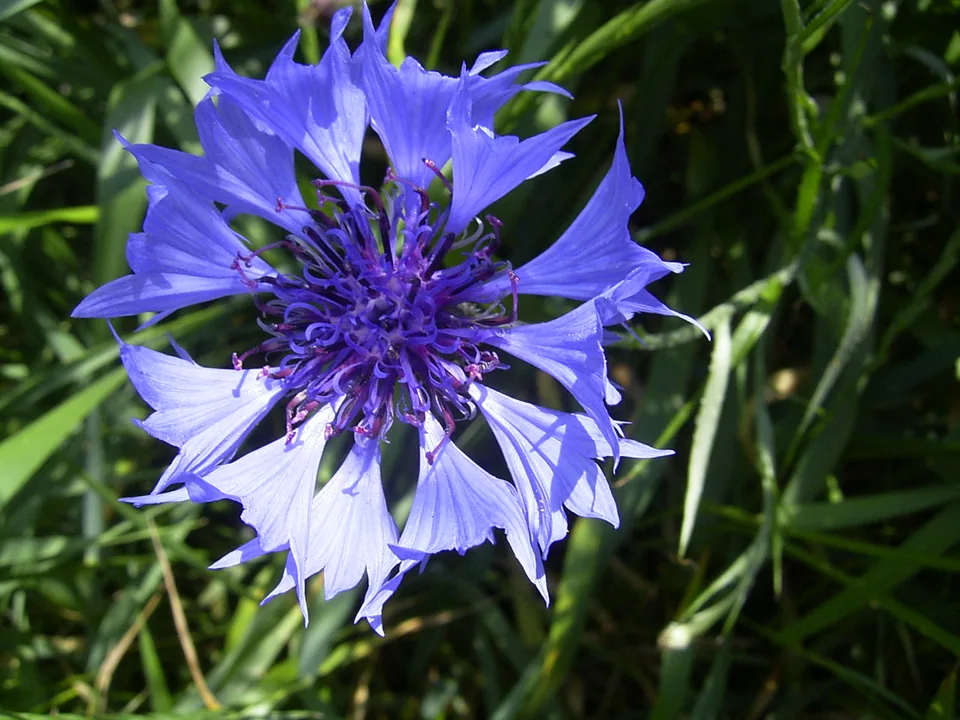


How to Grow and Care for Cornflower
Centaurea cyanus
Written by Emilio Marruso · last checked
Not toxic to cats and dogs, according to the sources · Sources
At a glance
Cornflower is an easy annual for sunny spots: it can grow without fertilizer, tolerates poor soils and gets by on little water. Start seeds indoors 6–8 weeks before the last frost, or sow outdoors in fall where winters are mild. The flowers are edible, and the plants reseed easily, bringing birds and butterflies if you leave some blooms.
- Sun
Full sun to light shade
What the sources say (1)
Light: Full sun to light shade
Cornflower prefers full sun to light shade but the stems will flop with too much shade.
— Centaurea cyanus (Bachelor's Button, Bachelors Buttons, Bluebottle, Cornflower) | North Carolina Extension Gardener Plant Toolbox [1] - Water
Handles dry spells but likes soil that stays a little moist
What the sources say (1)
Watering: Tolerates low water conditions but prefers medium moisture, well-drained soils
It tolerates low water conditions but prefers medium moisture, well-drained soils.
— Centaurea cyanus (Bachelor's Button, Bachelors Buttons, Bluebottle, Cornflower) | North Carolina Extension Gardener Plant Toolbox [1] - Cold
Survives winters down to −50 °F (−45.6 °C)
Very hardy · USDA 2a · RHS H7 · Z2
What the sources say (2)
Hardiness, coldest zone: 2a [winter low −45.6 to −42.8 °C (−50 to −45 °F)]
2a, 2b, 3a, 3b, 4a, 4b, 5a, 5b, 6a, 6b, 7a, 7b, 8a, 8b, 9a, 9b, 10a, 10b, 11a, 11b
— Centaurea cyanus (Bachelor's Button, Bachelors Buttons, Bluebottle, Cornflower) | North Carolina Extension Gardener Plant Toolbox [1] Hardiness, warmest zone: 11b [winter low 7.2 to 10 °C (45 to 50 °F)]
2a, 2b, 3a, 3b, 4a, 4b, 5a, 5b, 6a, 6b, 7a, 7b, 8a, 8b, 9a, 9b, 10a, 10b, 11a, 11b
— Centaurea cyanus (Bachelor's Button, Bachelors Buttons, Bluebottle, Cornflower) | North Carolina Extension Gardener Plant Toolbox [1] - Soil
Well-drained soil; poor soil is fine
What the sources say (2)
Watering: Tolerates low water conditions but prefers medium moisture, well-drained soils
It tolerates low water conditions but prefers medium moisture, well-drained soils.
— Centaurea cyanus (Bachelor's Button, Bachelors Buttons, Bluebottle, Cornflower) | North Carolina Extension Gardener Plant Toolbox [1] How often: Can be grown without fertilizer; tolerates poor soils
Cornflower is very adaptable and will tolerate poor soils and no fertilization.
— Centaurea cyanus (Bachelor's Button, Bachelors Buttons, Bluebottle, Cornflower) | North Carolina Extension Gardener Plant Toolbox [1] - Feeding
No fertilizer needed
What the sources say (1)
How often: Can be grown without fertilizer; tolerates poor soils
Cornflower is very adaptable and will tolerate poor soils and no fertilization.
— Centaurea cyanus (Bachelor's Button, Bachelors Buttons, Bluebottle, Cornflower) | North Carolina Extension Gardener Plant Toolbox [1] - Harvest
The flowers are edible
- Pests
Few serious problems; watch for aphids, mealybugs, wilt, rots and rust
What the sources say (2)
Pests: aphids, mealybugs
Also watch for aphids and mealybugs.
— Centaurea cyanus (Bachelor's Button, Bachelors Buttons, Bluebottle, Cornflower) | North Carolina Extension Gardener Plant Toolbox [1] Diseases: wilt, rots, rusts
Wilt, rots and rusts are possible.
— Centaurea cyanus (Bachelor's Button, Bachelors Buttons, Bluebottle, Cornflower) | North Carolina Extension Gardener Plant Toolbox [1] - Watch out
Reseeds easily: cut off faded flowers to control it; leave some to bring birds and butterflies
- Size
1–3 ft tall and 1–2 ft wide; tall plants may need a stake
What the sources say (2)
Mature height: 30-91 cm (1 to 3 ft)
Height: 1 ft. 0 in. - 3 ft. 0 in.
— Centaurea cyanus (Bachelor's Button, Bachelors Buttons, Bluebottle, Cornflower) | North Carolina Extension Gardener Plant Toolbox [1] Mature width: 30-61 cm (1 to 2 ft)
Width: 1 ft. 0 in. - 2 ft. 0 in.
— Centaurea cyanus (Bachelor's Button, Bachelors Buttons, Bluebottle, Cornflower) | North Carolina Extension Gardener Plant Toolbox [1] - Propagation
Grows from seed
What the sources say (1)
Propagation: Seed
Recommended Propagation Strategy: Seed Country Or Region Of Origin:
— Centaurea cyanus (Bachelor's Button, Bachelors Buttons, Bluebottle, Cornflower) | North Carolina Extension Gardener Plant Toolbox [1] - Sowing
Sow indoors 6–8 weeks before the last frost, or outdoors in fall where winters are mild
What the sources say (3)
Sowing: Start seeds indoors 6-8 weeks before last frost; in mild winter climates seed directly outdoors in the fall
cooler climates: seeds should be started indoors 6-8 weeks before last frost
— Centaurea cyanus (Bachelor's Button, Bachelors Buttons, Bluebottle, Cornflower) | North Carolina Extension Gardener Plant Toolbox [1] mild winter climates: in mild winter climates can be seeded in situ directly outdoors in the fall
— Centaurea cyanus (Bachelor's Button, Bachelors Buttons, Bluebottle, Cornflower) | North Carolina Extension Gardener Plant Toolbox [1] Because it does better in cooler climates, seeds should be started indoors 6-8 weeks before last frost, or in mild winter climates can be seeded in situ directly outdoors in the fall.
— Centaurea cyanus (Bachelor's Button, Bachelors Buttons, Bluebottle, Cornflower) | North Carolina Extension Gardener Plant Toolbox [1] - Containers
Grows in containers too
What the sources say (1)
In containers: Yes
Place the plant in a container to better control the seeds or a naturalized area where the plant will reseed itself.
— Centaurea cyanus (Bachelor's Button, Bachelors Buttons, Bluebottle, Cornflower) | North Carolina Extension Gardener Plant Toolbox [1] - Safety
Not toxic to cats, dogs or horses
Overview
Cornflower is a hardy, low maintenance cool season annual with blue flowers in the aster family. [1] It prefers full sun to light shade, tolerates low water conditions and is grown from seed. [1] Plants reseed and naturalize easily. [1]
This record is incomplete: the sources we read do not cover every field yet.
Not yet covered by our sources: Pruning
Cornflower care
How to water Cornflower
Tolerates low water conditions but prefers medium moisture, well-drained soils
What the sources say (1)
It tolerates low water conditions but prefers medium moisture, well-drained soils.How much light Cornflower needs
Full sun to light shade
What the sources say (1)
Cornflower prefers full sun to light shade but the stems will flop with too much shade.How much cold Cornflower can take
Hardiness, coldest zone
2a [winter low −45.6 to −42.8 °C (−50 to −45 °F)]
What the sources say (1)
2a, 2b, 3a, 3b, 4a, 4b, 5a, 5b, 6a, 6b, 7a, 7b, 8a, 8b, 9a, 9b, 10a, 10b, 11a, 11bHardiness, warmest zone
11b [winter low 7.2 to 10 °C (45 to 50 °F)]
What the sources say (1)
2a, 2b, 3a, 3b, 4a, 4b, 5a, 5b, 6a, 6b, 7a, 7b, 8a, 8b, 9a, 9b, 10a, 10b, 11a, 11bWhere to grow Cornflower
Yes
What the sources say (1)
Place the plant in a container to better control the seeds or a naturalized area where the plant will reseed itself.How to propagate Cornflower
Seed
What the sources say (1)
Recommended Propagation Strategy:
Seed
Country Or Region Of Origin:How to grow Cornflower
The plant
Life cycle
annual
What the sources say (1)
Cornflower is a hardy, low maintenance cool season annual with striking blue flowers in the Asteraceae (aster) family.Family
Asteraceae
What the sources say (1)
Cornflower is a hardy, low maintenance cool season annual with striking blue flowers in the Asteraceae (aster) family.Mature height
30-91 cm (1 to 3 ft)
What the sources say (1)
Height: 1 ft. 0 in. - 3 ft. 0 in.Mature width
30-61 cm (1 to 2 ft)
What the sources say (1)
Width: 1 ft. 0 in. - 2 ft. 0 in.Pests and diseases
Pests
aphids, mealybugs
What the sources say (1)
Also watch for aphids and mealybugs.Diseases
wilt, rots, rusts
What the sources say (1)
Wilt, rots and rusts are possible.Fertilizing
How often
Can be grown without fertilizer; tolerates poor soils
What the sources say (1)
Cornflower is very adaptable and will tolerate poor soils and no fertilization.Cornflower pests and problems
Floppy stems
Symptom: Stems flop with too much shade; taller plants may need staking.
What to do: Stake the plants or plant them with other plants that will hold them up.
What the sources say (1)
Taller plants may need staking or need to be planted with other plants that will hold them up.
— Centaurea cyanus (Bachelor's Button, Bachelors Buttons, Bluebottle, Cornflower) | North Carolina Extension Gardener Plant Toolbox [1] Wilt, rots, rusts and sucking insects
Symptom: No serious insect or disease problems; wilt, rots and rusts are possible, and aphids and mealybugs may appear.
What to do: Not stated in the source.
What the sources say (1)
They have no serious insect or disease problems to note. Wilt, rots and rusts are possible. Also watch for aphids and mealybugs.
— Centaurea cyanus (Bachelor's Button, Bachelors Buttons, Bluebottle, Cornflower) | North Carolina Extension Gardener Plant Toolbox [1] Self-seeding
Symptom: Plants reseed and naturalize easily.
What to do: Dead-head to control the seeds; limit dead-heading to bring birds and butterflies.
What the sources say (1)
However, if the goal is to bring birds and butterflies into the garden, limit the dead-heading.
— Centaurea cyanus (Bachelor's Button, Bachelors Buttons, Bluebottle, Cornflower) | North Carolina Extension Gardener Plant Toolbox [1]
Remedies
Each remedy shows what official sources say about it; traditional remedies without an official source are marked as such. Harmful ones are listed so you know to avoid them.
Treating the plant
powdery mildew
neem oil spray Partly works
How: A spray made from a solution of potassium bicarbonate or neem oil can help to control its spread.
A spray made from a solution of potassium bicarbonate or neem oil can help to control its spread.
— gardentopia.eu [3] What the evidence says However, neem oil is not effective against every insect and disease, and often must be frequently reapplied to reach the desired outcome.
— extension.unh.edu [4] potassium bicarbonate spray Not verified
Traditional remedy, not verified by an official source.
How: A spray made from a solution of potassium bicarbonate or neem oil can help to control its spread.
baking soda and water spray Not verified
Traditional remedy, not verified by an official source.
How: A simple spray of baking soda and water, or a commercial fungicide if it is a large outbreak.
clipping infected parts Works
How: Remove and destroy all infected plant parts to reduce the source of fungal spores.
If the disease does appear, the first step is to remove and destroy all infected plant parts to reduce the source of fungal spores.
— gardentopia.eu [3] What the evidence says Many insect and disease issues can be solved in the home garden by hand-picking insects or clipping and disposing of diseased plant parts.
— extension.unh.edu [4]
aphids
jet of water Not verified
Traditional remedy, not verified by an official source.
How: For a small number of pests, a strong jet of water from a hose is often enough to dislodge and kill them.
soapy water spray Harmful
How: Use a bit of soapy water if the aphids are really persistent.
I just blast them off with the hose or use a bit of soapy water if they are really persistent.
— gardentopia.eu [3] What the evidence says Most dish soaps are not naturally occurring substances nor are they biodegradable. They can contain detergents and degreasers that are harmful to groundwater and aquatic and soil organisms.
— ucanr.edu [5] attracting ladybugs and lacewings Works
How: Encourage natural predators by planting a diversity of flowering plants, including dill, fennel, and yarrow.
Encouraging natural predators in the garden is a highly effective long-term strategy.
— gardentopia.eu [3] What the evidence says Beneficial insects such as ladybugs eat aphids, which are pests.
— extension.psu.edu [6]
pests
hand-picking Works
How: Hand-picking larger pests.
This can include hand-picking larger pests, using jets of water to dislodge insects like aphids, and setting up physical barriers where appropriate.
— gardentopia.eu [3] What the evidence says Many insect and disease issues can be solved in the home garden by hand-picking insects or clipping and disposing of diseased plant parts.
— extension.unh.edu [4]
Is Cornflower poisonous?
Reported by the source, quoted verbatim. This is not medical or veterinary advice: if a person or an animal may have eaten this plant, contact a poison control centre or a veterinarian.
#non-toxic for cats #non-toxic for horses #non-toxic for dogs #full sun tolerant #partial shade tolerant
[1]The source flags the risk for this animal but does not explain why.
Calendar
Sowing
Start seeds indoors 6-8 weeks before last frost; in mild winter climates seed directly outdoors in the fall
What each source says
cooler climates: Start seeds indoors 6-8 weeks before last frost
mild winter climates: Seed directly outdoors in the fall
What the sources say (3)
cooler climates: seeds should be started indoors 6-8 weeks before last frostmild winter climates: in mild winter climates can be seeded in situ directly outdoors in the fallBecause it does better in cooler climates, seeds should be started indoors 6-8 weeks before last frost, or in mild winter climates can be seeded in situ directly outdoors in the fall.Pruning
Not stated in the sources we read.
Months as given by the sources, which are mostly from the United States (northern hemisphere). In the southern hemisphere they shift by about six months.
Relative to frost
Less precise estimate: there is no weather station within 300 km.
Find frost dates by ZIP code or city
Sow indoors: 6 to 8 weeks before the last frost
seeds should be started indoors 6-8 weeks before last frost
— Centaurea cyanus (Bachelor's Button, Bachelors Buttons, Bluebottle, Cornflower) | North Carolina Extension Gardener Plant Toolbox [1]
Count from the average frost dates where you live.
Edibility
Reported by the source, quoted verbatim. Do not eat a plant on the basis of this page alone: identification mistakes can be dangerous.
Edibility: Flowers are edible. Dimensions: Height: 1 ft. 0 in. - 3 ft. 0
[1]
Indicative values
Values from a secondary source, not checked word for word like the rest of this page. Use them as a starting point.
- Soil pH
- 6-7.5Indicative value, adapt it to your climate · Secondary source
- Care level
- MediumIndicative value, adapt it to your climate · Secondary source
- Growth rate
- LowIndicative value, adapt it to your climate · Secondary source
- Pruning
- February, March, April, May, MayIndicative value, adapt it to your climate · Secondary source
Similar plants
- Dusty Miller Centaurea cineraria
- Mountain Bluet Centaurea montana
- Spotted Knapweed Centaurea maculosa
- Yellow Star Thistle Centaurea solstitialis
- Brown knapweed Centaurea jacea
- Bighead knapweed Centaurea macrocephala
- Tyrol knapweed Centaurea nigrescens
- Whitewash cornflower Centaurea dealbata
Sources
Every value above is quoted from these documents. Links lead to the original publisher.
- Centaurea cyanus (Bachelor's Button, Bachelors Buttons, Bluebottle, Cornflower) | North Carolina Extension Gardener Plant Toolbox · plants.ces.ncsu.edu, consulted
- Cornflower - Centaurea cyanus | North Carolina Extension Gardener Plant Toolbox · plants.ces.ncsu.edu, consulted
- gardentopia.eu · gardentopia.eu
- extension.unh.edu · extension.unh.edu
- ucanr.edu · ucanr.edu
- extension.psu.edu · extension.psu.edu
Written by Emilio Marruso · last checked