
How to Grow and Care for Brown knapweed
Centaurea jacea
Written by Emilio Marruso · last checked
At a glance
Brown knapweed is a perennial that comes back year after year, happy in full sun and even willing to take a little shade. Sow it in mid spring in a cold frame, set the young plants out in summer, and later make more by dividing clumps in autumn. Keep an eye on it, though: it can spread and crowd out other plants.
- Sun
Full sun; also takes some shade
- Planting
Plant out in summer
What the sources say (1)
Planting: Summer
prick the seedlings out into individual pots and plant them out into their permanent positions in the summer.
— Centaurea jacea - Useful Temperate Plants [7] - Watch out
Can spread and crowd out other plants; pull and dig it out, mowing won't stop it
- Propagation
From seed, by dividing clumps in autumn, or from cuttings taken at the base in spring
What the sources say (3)
Propagation: Seed; division in autumn; basal cuttings in spring
Seed - sow mid spring in a cold frame. When they are large enough to handle
— Centaurea jacea - Useful Temperate Plants [7] Division in autumn. Very easy, larger clumps can be replanted direct into their permanent positions
— Centaurea jacea - Useful Temperate Plants [7] Basal cuttings in spring. Harvest the shoots when they are about 10 - 15cm long
— Centaurea jacea - Useful Temperate Plants [7] - Sowing
Sow in mid spring in a cold frame
What the sources say (1)
Sowing: Mid spring, in a cold frame
Seed - sow mid spring in a cold frame. When they are large enough to handle
— Centaurea jacea - Useful Temperate Plants [7]
Overview
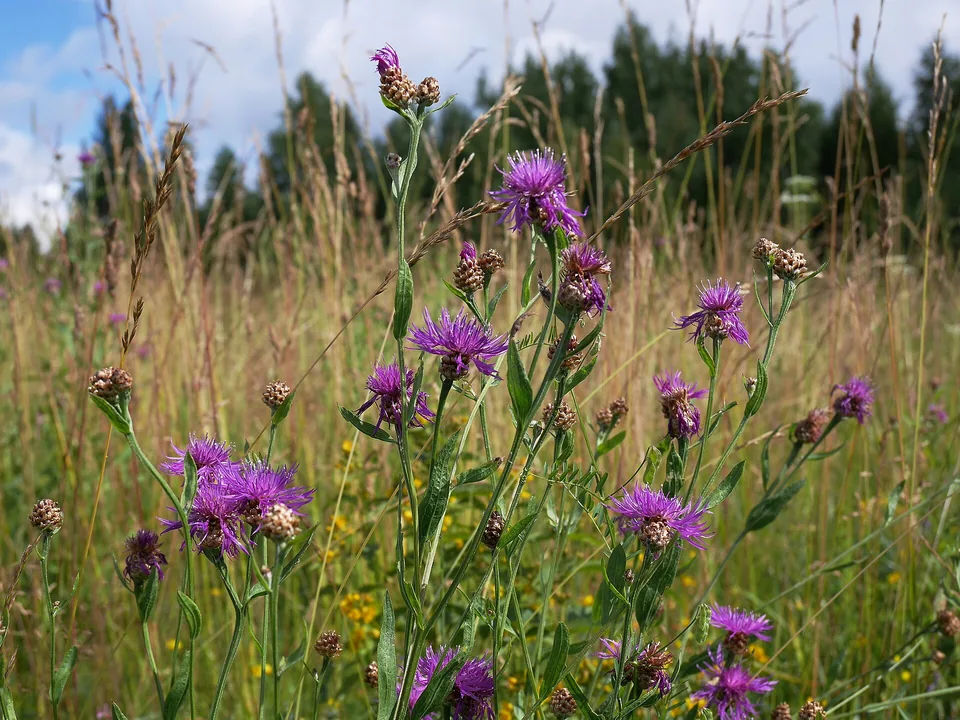
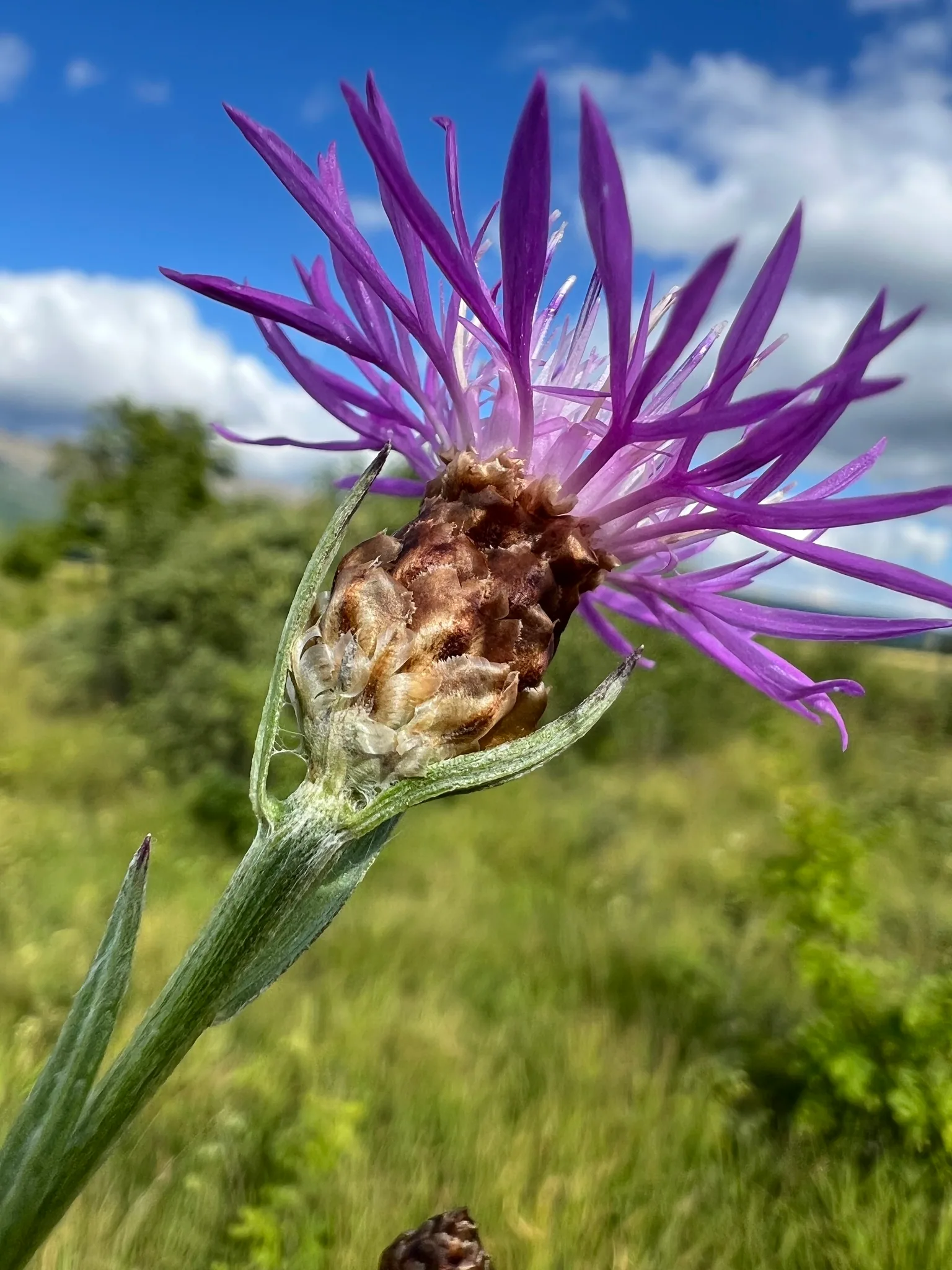
Brown knapweed is a short-lived perennial of the daisy family, native to Europe. [5] Where it has been introduced it is treated as an invasive weed that outcompetes native species. [5][6] It prefers sunny positions and well-drained soil and can be raised from seed, division or basal cuttings. [6][7]
This record is incomplete: the sources we read do not cover every field yet.
Not yet covered by our sources: Hardiness, coldest zone, Hardiness, warmest zone
Brown knapweed care
How to water Brown knapweed
The sources give different values depending on region, zone or growing conditions.
What each source says
According to Minnesota Department of Agriculture: Thrives in cool, moist locations
According to Lower Hudson PRISM: Does not tolerate consistently moist conditions well; better competitor on dry sites
What the sources say (2)
According to Minnesota Department of Agriculture: It thrives in sunny locations but is also somewhat shade tolerant. It thrives in cool, moist locations.According to Lower Hudson PRISM: it does not tolerate consistently moist conditions well and is a much better competitor on dry sites.How much light Brown knapweed needs
How much cold Brown knapweed can take
Hardiness, coldest zone
Not stated in the sources we read.
Hardiness, warmest zone
Not stated in the sources we read.
How to propagate Brown knapweed
Seed; division in autumn; basal cuttings in spring
What the sources say (3)
Seed - sow mid spring in a cold frame. When they are large enough to handleDivision in autumn. Very easy, larger clumps can be replanted direct into their permanent positionsBasal cuttings in spring. Harvest the shoots when they are about 10 - 15cm longHow to grow Brown knapweed
The plant
Life cycle
perennial
What the sources say (1)
Duration
Perennial
Fruit Complexity
Simple
Fruit Dehiscence
No
Fruit Type
Cypsela
Fruit Wet/DryFamily
Asteraceae
What the sources say (1)
Order
Asterales
Family
Asteraceae
Genus
Centaurea
Species
Centaurea jacea L. - Brown Knapweed; Brown Knap Weed; Brownray Knapweed; Brown Ray Knapweed; Brownray Knap Weed; Brown Ray Knap WeedBrown knapweed pests and problems
Invasive spread
Symptom: Outcompetes desirable species and forms large monocultures
What to do: A combination of hand-pulling and digging is an option for small infestations; mowing does not control it
What the sources say (3)
Brown knapweed outcompetes desirable species and forms large monocultures.
— Brown Knapweed | Minnesota Department of Agriculture [6] A combination of hand-pulling and digging is an option for small infestations.
— Brown Knapweed | Minnesota Department of Agriculture [6] Mowing does not control brown knapweed, and the mower may spread seeds.
— Brown Knapweed | Minnesota Department of Agriculture [6]
Remedies
Each remedy shows what official sources say about it; traditional remedies without an official source are marked as such. Harmful ones are listed so you know to avoid them.
Getting rid of it
invasive spread
hand pulling Partly works
For all management options, infestation sites will need to be monitored and treated repeatedly until the seedbanks are depleted.
— Brown Knapweed | Minnesota Department of Agriculture [6] How: Consistent pulling by hand is effective against brown knapweed, so long as all the species’ extensive taproot is removed. This is a very time and labor-intensive effort and useful only for small populations.
Consistent pulling by hand is effective against brown knapweed, so long as all the species’ extensive taproot is removed. This is a very time and labor-intensive effort and useful only for small populations.
— Brown knapweed (Centaurea jacea) - Lower Hudson Partnership for Regional Invasive Species Management [5] What the evidence says A combination of hand-pulling and digging is an option for small infestations.
— Brown Knapweed | Minnesota Department of Agriculture [6] mowing before flowering Not proven
For all management options, infestation sites will need to be monitored and treated repeatedly until the seedbanks are depleted.
— Brown Knapweed | Minnesota Department of Agriculture [6] How: Mow or cut plants before flowering to prevent seed set. Note this will not kill the plants.
Mow or cut plants before flowering to prevent seed set. Note this will not kill the plants.
— dnr.wisconsin.gov [9] What the evidence says Mowing does not control brown knapweed, and the mower may spread seeds.
— Brown Knapweed | Minnesota Department of Agriculture [6] black plastic mulch Not verified
Traditional remedy, not verified by an official source.
For all management options, infestation sites will need to be monitored and treated repeatedly until the seedbanks are depleted.
— Brown Knapweed | Minnesota Department of Agriculture [6] How: Mulching with black plastic is effective at controlling small areas of brown knapweed.
annual tilling Not verified
Traditional remedy, not verified by an official source.
For all management options, infestation sites will need to be monitored and treated repeatedly until the seedbanks are depleted.
— Brown Knapweed | Minnesota Department of Agriculture [6] How: Although brown knapweed will not survive consistent annual tiling, this is not an acceptable method of management in natural areas. It can be utilized effectively on a small scale in cultivated fields or gardens.
Calendar
Sowing
Mid spring, in a cold frame
What the sources say (1)
Seed - sow mid spring in a cold frame. When they are large enough to handlePlanting
Summer
What the sources say (1)
prick the seedlings out into individual pots and plant them out into their permanent positions in the summer.Months as given by the sources, which are mostly from the United States (northern hemisphere). In the southern hemisphere they shift by about six months.
Similar plants
- Cornflower Centaurea cyanus
- Spotted Knapweed Centaurea maculosa
- Yellow Star Thistle Centaurea solstitialis
- Dusty Miller Centaurea cineraria
- Mountain Bluet Centaurea montana
- Bighead knapweed Centaurea macrocephala
- Tyrol knapweed Centaurea nigrescens
- Whitewash cornflower Centaurea dealbata
Sources
Every value above is quoted from these documents. Links lead to the original publisher.
- Centaurea jacea L. subsp. jacea · infoflora.ch, consulted
- Centaurea jacea / Species Page / Plant Atlas · tennessee-kentucky.plantatlas.usf.edu, consulted
- Knapweeds – Renz Weed Science · renzweedscience.cals.wisc.edu, consulted
- Biology, Ecology and Management of · montana.edu, consulted
- Brown knapweed (Centaurea jacea) - Lower Hudson Partnership for Regional Invasive Species Management · lhprism.org, consulted
- Brown Knapweed | Minnesota Department of Agriculture · mda.state.mn.us, consulted
- Centaurea jacea - Useful Temperate Plants · temperate.theferns.info, consulted
- Centaurea jacea (Brown Knapweed): Minnesota Wildflowers · minnesotawildflowers.info, consulted
- dnr.wisconsin.gov · dnr.wisconsin.gov
Written by Emilio Marruso · last checked