
How to Grow and Care for Bighead knapweed
Centaurea macrocephala
Written by Emilio Marruso · last checked
At a glance
This centaurea is happy in full sun or partial shade, as long as its soil stays evenly moist. You can start it from seed in spring in a cold frame, or simply divide a plant in spring or fall to get more. It's a simple, rewarding way to fill your garden with new plants.
- Sun
Full sun to partial shade
What the sources say (2)
- Water
Medium water: keep the soil moist
What the sources say (2)
- Cold
Survives winters down to −40 °F (−40 °C)
Very hardy · USDA 3 · RHS H7 · Z3
What the sources say (4)
- Pests
Watch for white mold, rust, mildew and blights
- Propagation
From seed, or divide the plant in spring or fall
What the sources say (2)
Propagation: Seed; division (spring or fall); root divisions
Propagation Start seeds in a cold frame in spring, or divide plants in spring or fall. Problems White mold, rust, mildews, thread blight, and Southern blight.
— Giant knapweed - Fine Gardening [5] It reproduces by seed and reproduction is also possible from root divisions. The rosette typically does not produce a flowering stem the first year.
— Washington State Noxious Weed Control Board [1] - Sowing
Sow in spring in a cold frame
What the sources say (1)
Sowing: Spring (in a cold frame)
Propagation Start seeds in a cold frame in spring, or divide plants in spring or fall. Problems White mold, rust, mildews, thread blight, and Southern blight.
— Giant knapweed - Fine Gardening [5]
Overview
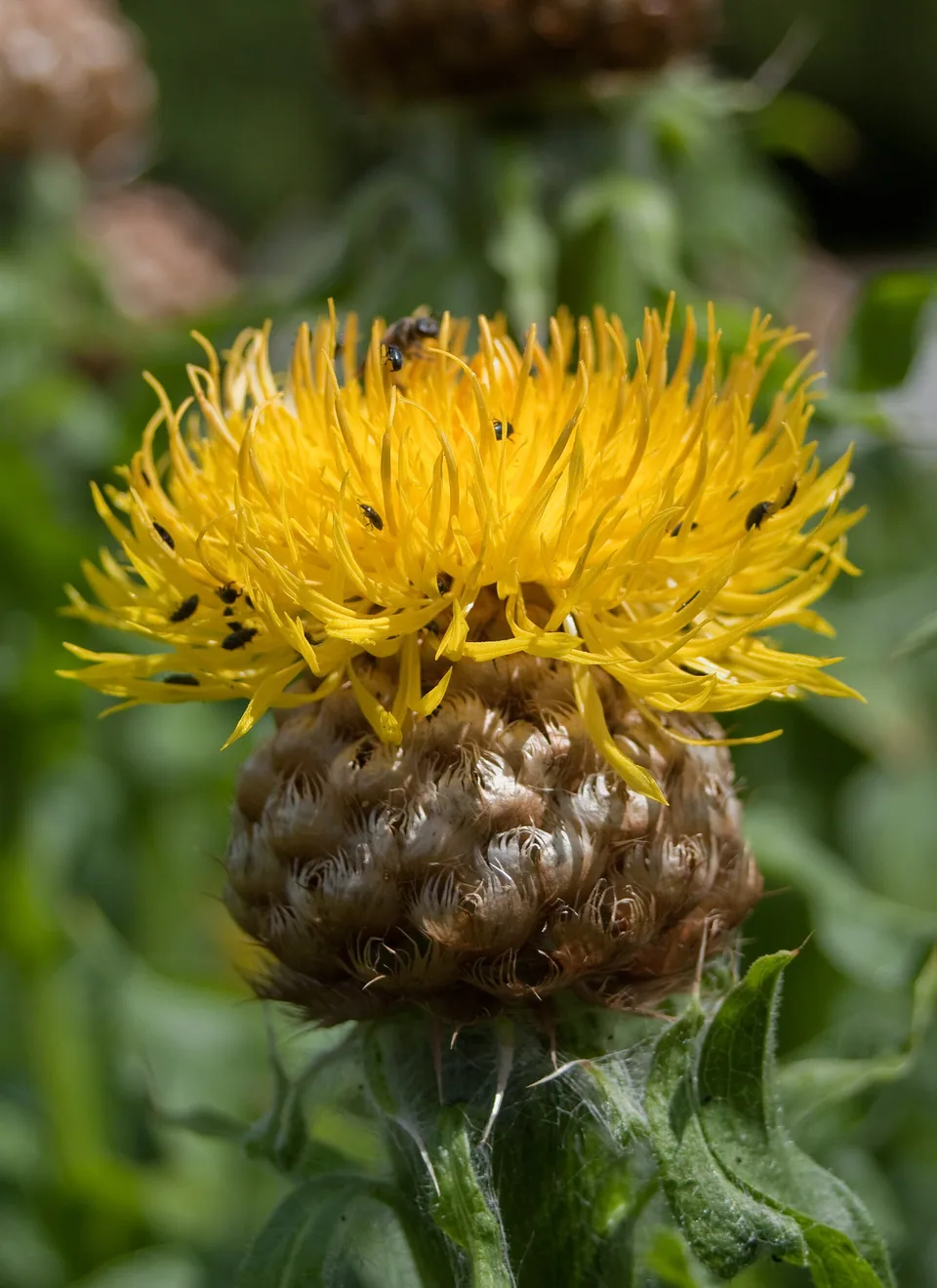
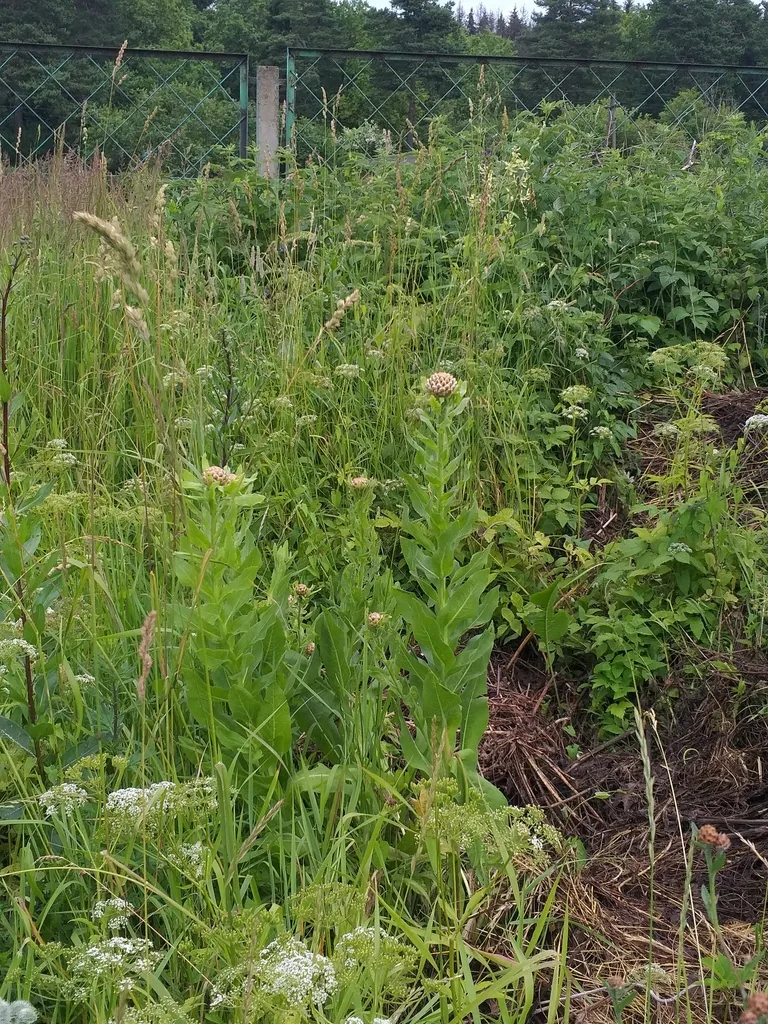
Centaurea macrocephala has large, deep yellow thistle flowers from fat, rusty buds and is used for cut and dried arrangements. [5] It has escaped from gardens into pastures and natural areas and is a Class A noxious weed in Washington State. [2][1] It reproduces mainly by seed, producing up to 200 seeds per flowerhead. [2]
This record is incomplete: the sources we read do not cover every field yet.
Not yet covered by our sources: Pruning
Bighead knapweed care
How to water Bighead knapweed
Medium moisture; moist soil
How much light Bighead knapweed needs
Full sun to partial shade
How much cold Bighead knapweed can take
Hardiness, coldest zone
3 [winter low −40 to −34.4 °C (−40 to −30 °F)]
What each source says
According to Fine Gardening: 3-9 [winter low −40 to −1.1 °C (−40 to 30 °F)]
Hardiness, warmest zone
9 [winter low −6.7 to −1.1 °C (20 to 30 °F)]
What each source says
According to Fine Gardening: 3-9 [winter low −40 to −1.1 °C (−40 to 30 °F)]
How to propagate Bighead knapweed
Seed; division (spring or fall); root divisions
What the sources say (2)
Propagation Start seeds in a cold frame in spring, or divide plants in spring or fall.
Problems White mold, rust, mildews, thread blight, and Southern blight.It reproduces by seed and reproduction is also possible from root divisions. The rosette typically does not produce a flowering stem the first year.Bighead knapweed pests and problems
White mold, rust, mildews, thread blight and Southern blight
What the sources say (1)
Propagation Start seeds in a cold frame in spring, or divide plants in spring or fall. Problems White mold, rust, mildews, thread blight, and Southern blight.
— Giant knapweed - Fine Gardening [5]
Remedies
Each remedy shows what official sources say about it; traditional remedies without an official source are marked as such. Harmful ones are listed so you know to avoid them.
Getting rid of it
bighead knapweed infestation
digging out small plants Partly works
Once confident that all the roots have been removed, replant with ground cover, grass, or other desirable plants. Watch for regrowth from seeds.
— Bighead knapweed identification and control - King County, Washington [2] How: Isolated small populations can be dug out with a shovel or stout trowel, removing all the roots; then replant with ground cover, grass or other desirable plants and watch for regrowth from seeds.
Isolated small populations can be dug out using a shovel or stout trowel, making sure to remove all the roots.
— Bighead knapweed identification and control - King County, Washington [2] What the evidence says Pulling bighead knapweed is impractical for large infestations, but small plants may be dug out.
— Washington State Noxious Weed Control Board [1] hand pulling Not proven
How: Hand pulling breaks the plant and the remaining part resprouts from the crown.
Hand pulling, however, is mostly ineffective due to breakage. The remaining plant will resprout from the crown.
— Bighead knapweed identification and control - King County, Washington [2] What the evidence says Hand pulling, however, is mostly ineffective due to breakage. The remaining plant will resprout from the crown.
— Bighead knapweed identification and control - King County, Washington [2] repeated mowing Partly works
How: Repeated mowing reduces seed production and eventually diminishes root reserves.
Repeated mowing will reduce seed production, and will eventually diminish root reserves.
— Washington State Noxious Weed Control Board [1] What the evidence says ability to produce seed, but plants will re-grow and flower again after a single mowing.
— Bighead knapweed identification and control - King County, Washington [2] tilling and cultivation Works
How: Till so that seeds and plant matter are buried below one and a half inches, then replant the area with a healthy cover crop.
Tilling and cultivation that buries seeds and plant matter below a depth of one and half inches can be effective, especially if the area is replanted with a healthy cover crop.
— Bighead knapweed identification and control - King County, Washington [2] What the evidence says Tilling and cultivation that buries seeds and plant matter below a depth of one and half inches can be effective, especially if the area is replanted with a healthy cover crop.
— Bighead knapweed identification and control - King County, Washington [2] disposal of seedheads in the garbage Official source, not independently tested
How: Seeds, flowers and seedheads go in the garbage.
Bighead knapweed reproduces by seed, flower, and seedheads. These should be disposed of in the garbage.
— Bighead knapweed identification and control - King County, Washington [2]
Calendar
Sowing
Spring (in a cold frame)
What the sources say (1)
Propagation Start seeds in a cold frame in spring, or divide plants in spring or fall.
Problems White mold, rust, mildews, thread blight, and Southern blight.Pruning
Not stated in the sources we read.
Months as given by the sources, which are mostly from the United States (northern hemisphere). In the southern hemisphere they shift by about six months.
Indicative values
Values from a secondary source, not checked word for word like the rest of this page. Use them as a starting point.
- Life cycle
- Herbaceous PerennialIndicative value, adapt it to your climate · Secondary source
- Mature height
- 91.4-121.9 cm (3-4 ft)Indicative value, adapt it to your climate · Secondary source
- Hours of sun
- 6-8 hoursIndicative value, adapt it to your climate · Secondary source
- Soil pH
- 6-7.5Indicative value, adapt it to your climate · Secondary source
- Care level
- MediumIndicative value, adapt it to your climate · Secondary source
- Growth rate
- HighIndicative value, adapt it to your climate · Secondary source
- Pruning
- May, June, JulyIndicative value, adapt it to your climate · Secondary source
Similar plants
- Cornflower Centaurea cyanus
- Dusty Miller Centaurea cineraria
- Mountain Bluet Centaurea montana
- Spotted Knapweed Centaurea maculosa
- Tyrol knapweed Centaurea nigrescens
- Whitewash cornflower Centaurea dealbata
- Yellow Star Thistle Centaurea solstitialis
- Brown knapweed Centaurea jacea
Sources
Every value above is quoted from these documents. Links lead to the original publisher.
- Washington State Noxious Weed Control Board · nwcb.wa.gov, consulted
- Bighead knapweed identification and control - King County, Washington · kingcounty.gov, consulted
- VicFlora: Centaurea macrocephala · vicflora.rbg.vic.gov.au, consulted
- WRITTEN FINDINGS OF THE · nwcb.wa.gov, consulted
- Giant knapweed - Fine Gardening · finegardening.com, consulted
- bighead knapweed (Centaurea macrocephala Puschk. ex Willd.) · invasive.org, consulted
Written by Emilio Marruso · last checked