
Cómo cultivar y cuidar Bighead knapweed
Centaurea macrocephala
Escrito por Emilio Marruso · última revisión
De un vistazo
Esta centaurea crece contenta a pleno sol o en semisombra, siempre que la tierra se mantenga húmeda. Puedes empezar desde semilla en primavera en una cajonera fría, o simplemente dividir una planta en primavera u otoño para tener más. Es una forma sencilla y gratificante de llenar tu jardín de plantas nuevas.
- Sol
Pleno sol o semisombra
Qué dicen las fuentes (2)
- Riego
Riego moderado: mantén la tierra húmeda
Qué dicen las fuentes (2)
- Frío
Aguanta inviernos de hasta −40 °C (−40 °F)
Muy rústica · USDA 3 · RHS H7 · Z3
Qué dicen las fuentes (4)
- Plagas
Vigila el moho blanco, la roya, el oídio, el mildiu y los tizones
- Multiplicación
Por semilla o dividiendo la mata en primavera u otoño
Qué dicen las fuentes (2)
Propagación: Semilla; división (primavera u otoño); divisiones de raíces
Propagation Start seeds in a cold frame in spring, or divide plants in spring or fall. Problems White mold, rust, mildews, thread blight, and Southern blight.
— Giant knapweed - Fine Gardening [5] It reproduces by seed and reproduction is also possible from root divisions. The rosette typically does not produce a flowering stem the first year.
— Washington State Noxious Weed Control Board [1] - Siembra
Siembra en primavera en una cajonera fría
Qué dicen las fuentes (1)
Siembra: Primavera (en un marco frío)
Propagation Start seeds in a cold frame in spring, or divide plants in spring or fall. Problems White mold, rust, mildews, thread blight, and Southern blight.
— Giant knapweed - Fine Gardening [5]
Resumen
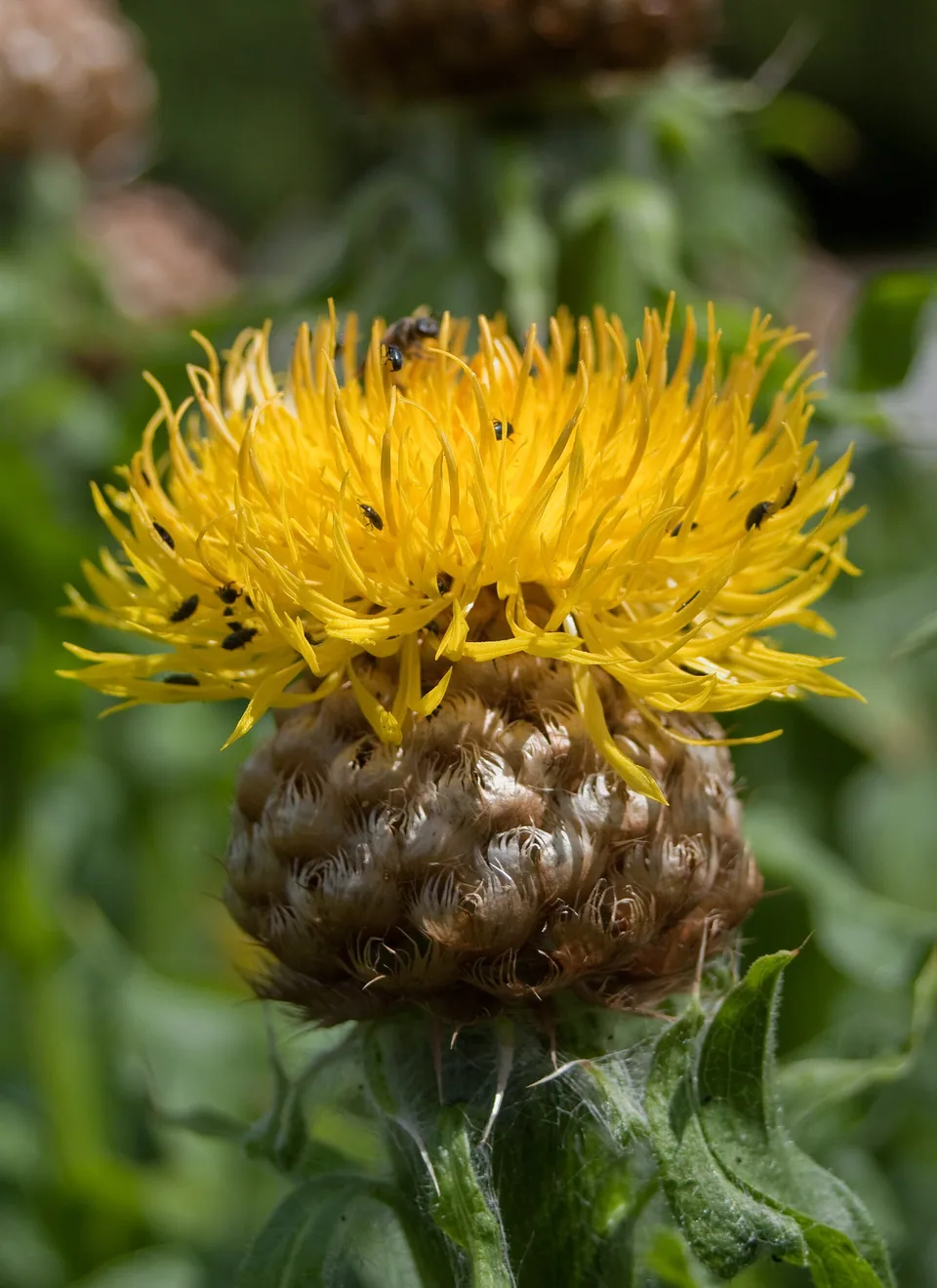
Centaurea macrocephala tiene grandes flores de cardo amarillo intenso que brotan de capullos oxidados y se usa para arreglos de corte y secado. [5] Ha escapado de los jardines hacia pastizales y áreas naturales y es una maleza nociva de Clase A en el estado de Washington. [2][1] Se reproduce principalmente por semilla, produciendo hasta 200 semillas por cabeza floral. [2]
Citado en inglés, como en la fuente.
Esta ficha está incompleta: las fuentes consultadas aún no cubren todos los campos.
Aún no cubierto por nuestras fuentes: Poda
Cuidados
Riego
Humedad media; suelo húmedo
Luz
Pleno sol a semisombra
Clima y frío
Rusticidad, zona más fría
3 [mínima invernal de −40 a −34,4 °C (de −40 a −30 °F)]
Lo que dice cada fuente
Según Fine Gardening: 3-9 [mínima invernal de −40 a −1,1 °C (de −40 a 30 °F)]
Rusticidad, zona más cálida
9 [mínima invernal de −6,7 a −1,1 °C (de 20 a 30 °F)]
Lo que dice cada fuente
Según Fine Gardening: 3-9 [mínima invernal de −40 a −1,1 °C (de −40 a 30 °F)]
Propagación
Semilla; división (primavera u otoño); divisiones de raíces
Qué dicen las fuentes (2)
Propagation Start seeds in a cold frame in spring, or divide plants in spring or fall.
Problems White mold, rust, mildews, thread blight, and Southern blight.It reproduces by seed and reproduction is also possible from root divisions. The rosette typically does not produce a flowering stem the first year.Problemas
Moho blanco, roya, mildiu, tizno de hilo y tizón sureño
Qué dicen las fuentes (1)
Propagation Start seeds in a cold frame in spring, or divide plants in spring or fall. Problems White mold, rust, mildews, thread blight, and Southern blight.
— Giant knapweed - Fine Gardening [5]
Remedios
Cada remedio indica qué dicen las fuentes oficiales; los remedios tradicionales sin fuente oficial aparecen marcados. Los perjudiciales están para que sepas evitarlos.
Cómo eliminarla
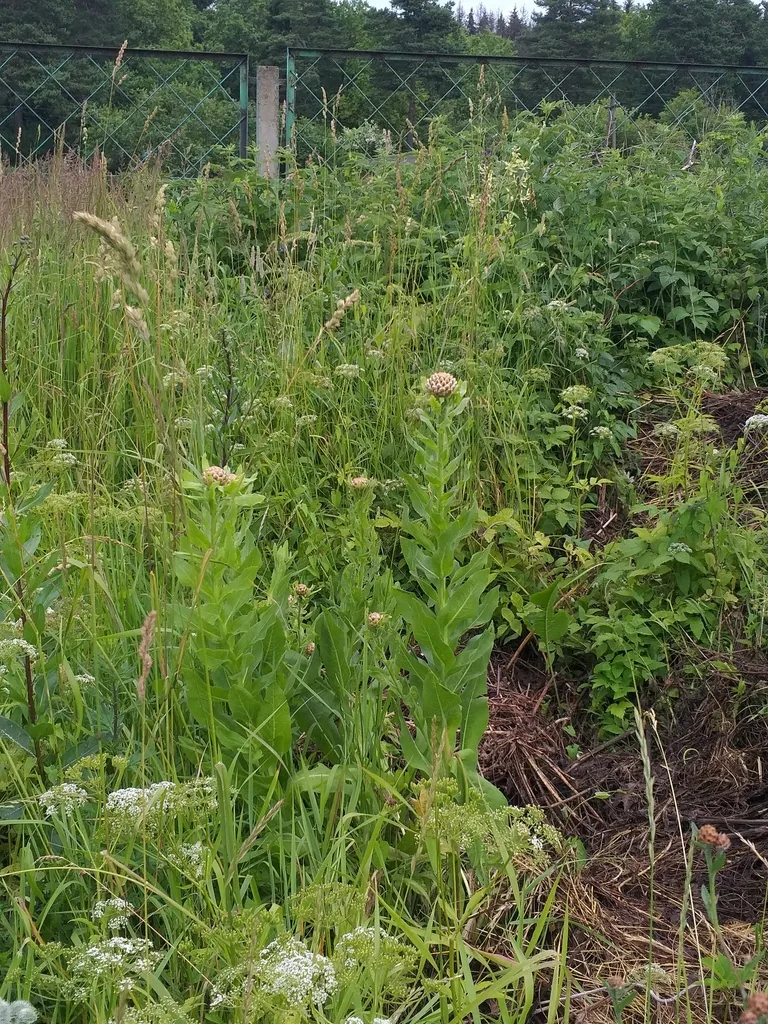
infestación de centaura de cabeza grande
Desentierra las plantas pequeñas Funciona en parte
Once confident that all the roots have been removed, replant with ground cover, grass, or other desirable plants. Watch for regrowth from seeds.
— Bighead knapweed identification and control - King County, Washington [2] Cómo: Las poblaciones pequeñas y aisladas se pueden desenterrar con una pala o una azada resistente, quitando todas las raíces; luego replanta con cobertura vegetal, césped u otras plantas deseables y vigila el rebrote.
Isolated small populations can be dug out using a shovel or stout trowel, making sure to remove all the roots.
— Bighead knapweed identification and control - King County, Washington [2] Qué dicen las pruebas Pulling bighead knapweed is impractical for large infestations, but small plants may be dug out.
— Washington State Noxious Weed Control Board [1] arrancado a mano No demostrado
Cómo: Si arrancas la planta a mano, se rompe y la parte restante vuelve a brotar desde la corona.
Hand pulling, however, is mostly ineffective due to breakage. The remaining plant will resprout from the crown.
— Bighead knapweed identification and control - King County, Washington [2] Qué dicen las pruebas Hand pulling, however, is mostly ineffective due to breakage. The remaining plant will resprout from the crown.
— Bighead knapweed identification and control - King County, Washington [2] siega repetida Funciona en parte
Cómo: El corte repetido reduce la producción de semillas y, con el tiempo, disminuye las reservas de las raíces.
Repeated mowing will reduce seed production, and will eventually diminish root reserves.
— Washington State Noxious Weed Control Board [1] Qué dicen las pruebas ability to produce seed, but plants will re-grow and flower again after a single mowing.
— Bighead knapweed identification and control - King County, Washington [2] laboreo y cultivo Funciona
Cómo: Labra la tierra para que las semillas y los restos vegetales queden enterrados a más de una pulgada y media de profundidad. Luego vuelve a sembrar la zona con un cultivo de cobertura sano.
Tilling and cultivation that buries seeds and plant matter below a depth of one and half inches can be effective, especially if the area is replanted with a healthy cover crop.
— Bighead knapweed identification and control - King County, Washington [2] Qué dicen las pruebas Tilling and cultivation that buries seeds and plant matter below a depth of one and half inches can be effective, especially if the area is replanted with a healthy cover crop.
— Bighead knapweed identification and control - King County, Washington [2] Eliminación de las cabezas de semillas en la basura Fuente oficial, sin prueba independiente
Cómo: Las semillas, las flores y las cabezas de semillas van a la basura.
Bighead knapweed reproduces by seed, flower, and seedheads. These should be disposed of in the garbage.
— Bighead knapweed identification and control - King County, Washington [2]
Calendario
Siembra
Primavera (en un marco frío)
Qué dicen las fuentes (1)
Propagation Start seeds in a cold frame in spring, or divide plants in spring or fall.
Problems White mold, rust, mildews, thread blight, and Southern blight.Poda
No figura en las fuentes consultadas.
Meses tal como los dan las fuentes, en su mayoría de Estados Unidos (hemisferio norte). En el hemisferio sur se desplazan unos seis meses.
Valores orientativos
Valores de una fuente secundaria, no comprobados palabra por palabra como el resto de esta página. Úselos como punto de partida.
- Ciclo de vida
- Perenne herbáceaValor orientativo, adáptalo a tu clima · Fuente secundaria
- Altura adulta
- 91.4-121.9 cm (3-4 pies)Valor orientativo, adáptalo a tu clima · Fuente secundaria
- Horas de sol
- 6-8 horasValor orientativo, adáptalo a tu clima · Fuente secundaria
- pH del suelo
- 6-7.5Valor orientativo, adáptalo a tu clima · Fuente secundaria
- Nivel de cuidado
- MedioValor orientativo, adáptalo a tu clima · Fuente secundaria
- Crecimiento
- AltaValor orientativo, adáptalo a tu clima · Fuente secundaria
- Poda
- Mayo, junio, julioValor orientativo, adáptalo a tu clima · Fuente secundaria
Plantas similares
- Aciano Centaurea cyanus
- Dusty Miller Centaurea cineraria
- Mountain Bluet Centaurea montana
- Spotted Knapweed Centaurea maculosa
- Tyrol knapweed Centaurea nigrescens
- Whitewash cornflower Centaurea dealbata
- Yellow Star Thistle Centaurea solstitialis
- Brown knapweed Centaurea jacea
Fuentes
Cada valor anterior se cita de estos documentos. Los enlaces llevan al editor original.
- Washington State Noxious Weed Control Board · nwcb.wa.gov, consultado
- Bighead knapweed identification and control - King County, Washington · kingcounty.gov, consultado
- VicFlora: Centaurea macrocephala · vicflora.rbg.vic.gov.au, consultado
- WRITTEN FINDINGS OF THE · nwcb.wa.gov, consultado
- Giant knapweed - Fine Gardening · finegardening.com, consultado
- bighead knapweed (Centaurea macrocephala Puschk. ex Willd.) · invasive.org, consultado
Escrito por Emilio Marruso · última revisión