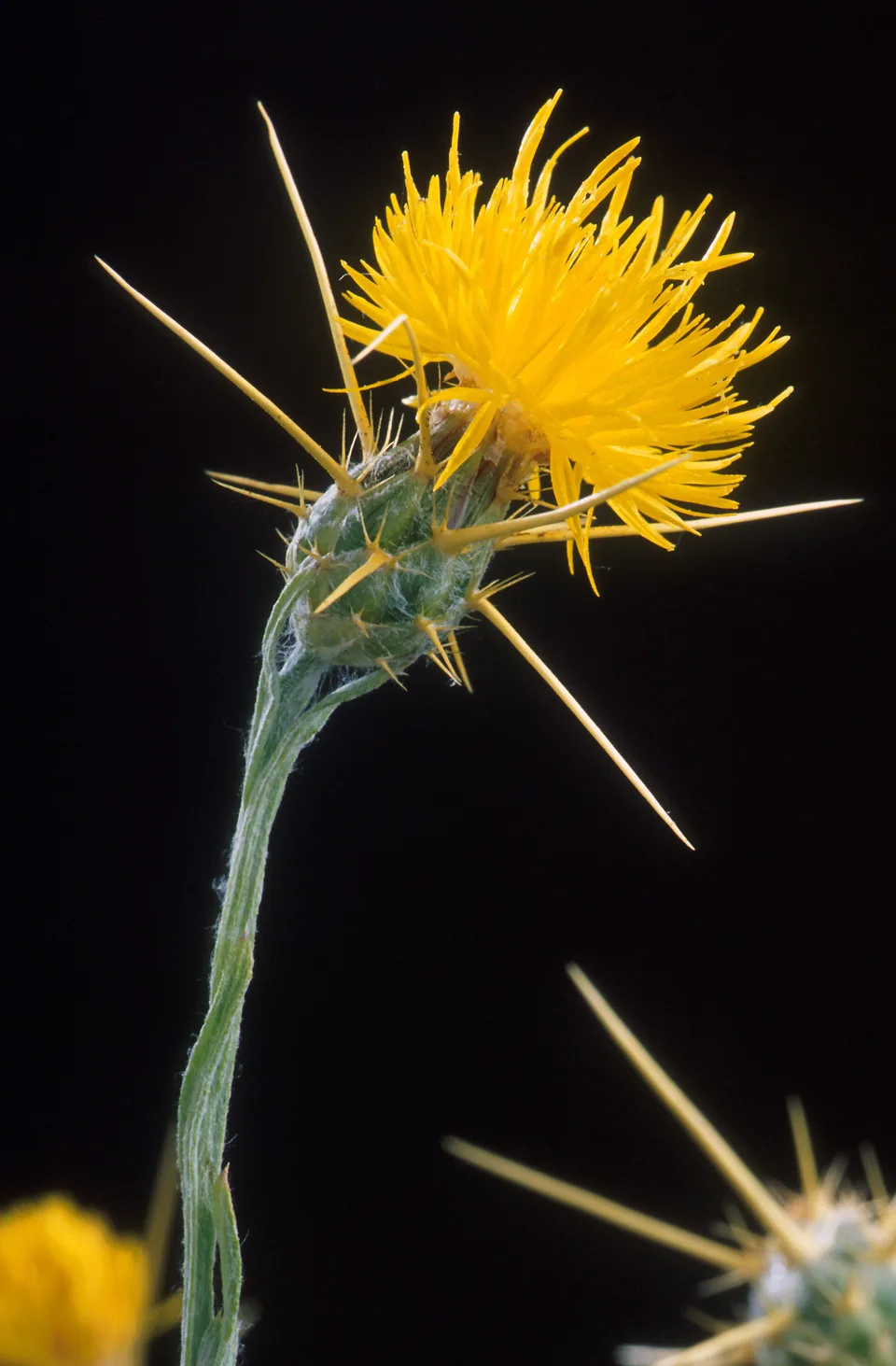


Cómo cultivar y cuidar Yellow Star Thistle
Centaurea solstitialis
Escrito por Emilio Marruso · última revisión
Tóxica para: Caballos · Por qué
De un vistazo
El abrepuño amarillo es una planta anual amante del sol que pide muy poco: dale sol pleno y un suelo bien drenado, y aguantará la sequía sin problema. Crece a partir de semilla hasta 91 cm de alto, y las cabras se la comen a gusto incluso cuando ya tiene espinas. Eso sí, mantenla lejos de los caballos: si se la comen, los destruye.
- Sol
Sol pleno; no puede crecer a la sombra
Qué dicen las fuentes (1)
Luz: Pleno sol; no puede crecer en la sombra
It can tolerate drought. It cannot grow in the shade.
— Centaurea solstitialis (Barnaby's Thistle, Yellow Knapweed, Yellow Star Thistle) | North Carolina Extension Gardener Plant Toolbox [1] - Riego
Tolera la sequía, así que necesita poco riego
Qué dicen las fuentes (1)
Riego: Tolera la sequía; prefiere suelo bien drenado
Prefers well-drained soil of any type and any pH and can grow in nutritionally poor soil as well as very alkaline soils. It can tolerate drought.
— Centaurea solstitialis (Barnaby's Thistle, Yellow Knapweed, Yellow Star Thistle) | North Carolina Extension Gardener Plant Toolbox [1] - Frío
Aguanta inviernos de hasta −28,9 °C (−20 °F)
Muy rústica · USDA 5a · RHS H7 · Z5
Qué dicen las fuentes (2)
Rusticidad, zona más fría: 5a [mínima invernal de −28,9 a −26,1 °C (de −20 a −15 °F)]
USDA Plant Hardiness Zone: 5a, 5b, 6a, 6b, 7a, 7b, 8a, 8b, 9a
— Centaurea solstitialis (Barnaby's Thistle, Yellow Knapweed, Yellow Star Thistle) | North Carolina Extension Gardener Plant Toolbox [1] Rusticidad, zona más cálida: 9a [mínima invernal de −6,7 a −3,9 °C (de 20 a 25 °F)]
USDA Plant Hardiness Zone: 5a, 5b, 6a, 6b, 7a, 7b, 8a, 8b, 9a
— Centaurea solstitialis (Barnaby's Thistle, Yellow Knapweed, Yellow Star Thistle) | North Carolina Extension Gardener Plant Toolbox [1] - Suelo
Prefiere un suelo bien drenado
Qué dicen las fuentes (1)
Riego: Tolera la sequía; prefiere suelo bien drenado
Prefers well-drained soil of any type and any pH and can grow in nutritionally poor soil as well as very alkaline soils. It can tolerate drought.
— Centaurea solstitialis (Barnaby's Thistle, Yellow Knapweed, Yellow Star Thistle) | North Carolina Extension Gardener Plant Toolbox [1] - Tamaño
Planta anual que crece hasta 91 cm de alto
Qué dicen las fuentes (2)
Altura adulta: hasta 91.44 cm (3 pies)
The stem is erect, slender, hairy and branching, and can grow up to three feet tall
— Centaurea solstitialis (Barnaby's Thistle, Yellow Knapweed, Yellow Star Thistle) | North Carolina Extension Gardener Plant Toolbox [1] Ciclo de vida: anual
Genus: Centaurea Species: solstitialis Family: Asteraceae Life Cycle: Annual
— Centaurea solstitialis (Barnaby's Thistle, Yellow Knapweed, Yellow Star Thistle) | North Carolina Extension Gardener Plant Toolbox [1] - Multiplicación
Se multiplica por semilla
Qué dicen las fuentes (1)
Propagación: Semilla
Recommended Propagation Strategy: Seed
— Centaurea solstitialis (Barnaby's Thistle, Yellow Knapweed, Yellow Star Thistle) | North Carolina Extension Gardener Plant Toolbox [1] - Seguridad
Mortal para los caballos si se la comen; no es tóxica para gatos ni perros
Resumen
El abrepuño amarillo es una anual de invierno considerada invasora en muchos estados del oeste y del medio oeste alto de los EE. UU. [1] Prefiere suelo bien drenado, tolera la sequía y no puede crecer en la sombra. [1] Ingerida por caballos, puede causar la muerte por inanición o deshidratación. [1]
Citado en inglés, como en la fuente.
Cuidados
Riego
Tolera la sequía; prefiere suelo bien drenado
Qué dicen las fuentes (1)
Prefers well-drained soil of any type and any pH and can grow in nutritionally poor soil as well as very alkaline soils. It can tolerate drought.Luz
Pleno sol; no puede crecer en la sombra
Qué dicen las fuentes (1)
It can tolerate drought. It cannot grow in the shade.Clima y frío
Rusticidad, zona más fría
5a [mínima invernal de −28,9 a −26,1 °C (de −20 a −15 °F)]
Qué dicen las fuentes (1)
USDA Plant Hardiness Zone:
5a, 5b, 6a, 6b, 7a, 7b, 8a, 8b, 9aRusticidad, zona más cálida
9a [mínima invernal de −6,7 a −3,9 °C (de 20 a 25 °F)]
Qué dicen las fuentes (1)
USDA Plant Hardiness Zone:
5a, 5b, 6a, 6b, 7a, 7b, 8a, 8b, 9aPropagación
Semilla
Qué dicen las fuentes (1)
Recommended Propagation Strategy:
SeedCultivo
La planta
Ciclo de vida
anual
Qué dicen las fuentes (1)
Genus:
Centaurea
Species:
solstitialis
Family:
Asteraceae
Life Cycle:
AnnualFamilia
Asteraceae
Qué dicen las fuentes (1)
Genus:
Centaurea
Species:
solstitialis
Family:
Asteraceae
Life Cycle:
Annual
Recommended Propagation Strategy:
SeedAltura adulta
hasta 91.44 cm (3 pies)
Qué dicen las fuentes (1)
The stem is erect, slender, hairy and branching, and can grow up to three feet tallRemedios
Cada remedio indica qué dicen las fuentes oficiales; los remedios tradicionales sin fuente oficial aparecen marcados. Los perjudiciales están para que sepas evitarlos.
Cómo eliminarla
infestación de centaurea amarilla
excavación manual de plantas Funciona
Cómo: Corta y retira los tallos para acceder a las raíces y corta las plantas por debajo de la corona de la raíz; como plantas anuales, no volverán a crecer. Vuelve a la zona cada año.
Cut and remove stems to access roots. Chop plants below the root crown. As annual plants, they won’t regrow.
— solvepestproblems.oregonstate.edu [2] Qué dicen las pruebas Hand tools are effective to remove individual plants and small patches.
— solvepestproblems.oregonstate.edu [2] siega programada Funciona en parte
Plants will regrow stems and then flowers if mowed too early.
— solvepestproblems.oregonstate.edu [2] Cómo: Siega en la etapa de espinas tardías o de floración temprana; siega una segunda o tercera vez para evitar que las plantas florezcan.
Mow at the late spiny or early flowering stage.
— solvepestproblems.oregonstate.edu [2] Qué dicen las pruebas Carefully timed mowing limits yellow starthistle seed production.
— solvepestproblems.oregonstate.edu [2] Corta el césped y luego arranca a mano. No verificado
Remedio tradicional, no verificado por una fuente oficial.
Cómo: Primero siega cerca del solsticio de verano, después de que las plantas hayan espigado pero antes de que las semillas maduren; después de varias temporadas de siega, arranca a mano las plantas restantes antes de que produzcan semillas.
Cultiva el suelo en primavera Funciona en parte
If you cultivate too early (before the last rains), more seeds will sprout.
— solvepestproblems.oregonstate.edu [2] Cómo: Cultiva después de las últimas lluvias y antes de la floración; será necesario otro cultivo para evitar que las plantas restantes produzcan semillas.
Cultivate yellow starthistle after the last rains and before flowering for best results.
— solvepestproblems.oregonstate.edu [2] Qué dicen las pruebas Cultivating and/or mowing at the right time reduces seed production. This weakens a population of starthistle.
— solvepestproblems.oregonstate.edu [2] pastoreo dirigido Funciona en parte
Yellow starthistle is toxic to horses.
— solvepestproblems.oregonstate.edu [2] Move the livestock before they damage desired plants.
— solvepestproblems.oregonstate.edu [2] Cómo: Pastorea intensamente al menos 2 veces al año para evitar la floración; varios años de pastoreo agotan las semillas del suelo. Las ovejas y el ganado lo comen antes de que se formen las espinas; las cabras en cualquier etapa.
Graze heavily at least 2 times per year to prevent flowering. Several years of grazing will deplete the yellow starthistle seeds in the soil.
— solvepestproblems.oregonstate.edu [2] Qué dicen las pruebas Grazing is an effective way to reduce yellow starthistle canopy and keep it from flowering.
— solvepestproblems.oregonstate.edu [2] Embolsa las plantas en flor y deséchalas fuera del sitio. No verificado
Remedio tradicional, no verificado por una fuente oficial.
Cómo: Cuando estén en flor, embolsa las plantas y deséchalas fuera del sitio.
Venenosa para los animales
Según la fuente, citada textualmente. No es un consejo médico ni veterinario: si una persona o un animal pudo haber ingerido esta planta, contacta con un centro de toxicología o con un veterinario.
Comestibilidad
Según la fuente, citada textualmente. No comas una planta basándote solo en esta página: los errores de identificación pueden ser peligrosos.
Goats will eat Yellow Star Thistle even in the spiny stage.
[1]
Valores orientativos
Valores de una fuente secundaria, no comprobados palabra por palabra como el resto de esta página. Úselos como punto de partida.
- Horas de sol
- 6-8 horasValor orientativo, adáptalo a tu clima · Fuente secundaria
- Resiste la sequía
- SíValor orientativo, adáptalo a tu clima · Fuente secundaria
- pH del suelo
- 6-7.5Valor orientativo, adáptalo a tu clima · Fuente secundaria
- Nivel de cuidado
- MedioValor orientativo, adáptalo a tu clima · Fuente secundaria
- Crecimiento
- AltaValor orientativo, adáptalo a tu clima · Fuente secundaria
- Poda
- diciembre, enero, febreroValor orientativo, adáptalo a tu clima · Fuente secundaria
Plantas similares
- Aciano Centaurea cyanus
- Spotted Knapweed Centaurea maculosa
- Brown knapweed Centaurea jacea
- Dusty Miller Centaurea cineraria
- Mountain Bluet Centaurea montana
- Bighead knapweed Centaurea macrocephala
- Tyrol knapweed Centaurea nigrescens
- Whitewash cornflower Centaurea dealbata
Fuentes
Cada valor anterior se cita de estos documentos. Los enlaces llevan al editor original.
- Centaurea solstitialis (Barnaby's Thistle, Yellow Knapweed, Yellow Star Thistle) | North Carolina Extension Gardener Plant Toolbox · plants.ces.ncsu.edu, consultado
- solvepestproblems.oregonstate.edu · solvepestproblems.oregonstate.edu
Escrito por Emilio Marruso · última revisión