
How to Grow and Care for Whitewash cornflower
Centaurea dealbata
Written by Emilio Marruso · last checked
At a glance
Persian cornflower is a tough, easygoing plant for a sunny spot. Give it full sun and well-drained soil with average moisture, and it shrugs off even very cold winters. Set plants 8–12 inches apart, and when a clump grows, divide it into pieces that each carry shoots: new plants for your garden, or for a friend, at no cost.
- Sun
Full sun
What the sources say (2)
Light: Full sun
| Exposure: | Full sun | Soil or Media: | Well-drained | Leaves: | Simple, Lobed, Alternate
— Psephellus dealbatus - Kwantlen Polytechnic University, School of Horticulture - Plant Database [3] | GROWING PLACE CHARACTERISTICS | | Soil | - average wet soils | Lighting | - Heliophilous | Spacing, cm | From 20 to 30
— Balsvoji bajorė – Centaurea dealbata | FLORES [5] - Water
Average moisture: keep the soil moist, never soggy
What the sources say (2)
Watering notes: Well-drained soil; average moist soils
| Exposure: | Full sun | Soil or Media: | Well-drained | Leaves: | Simple, Lobed, Alternate
— Psephellus dealbatus - Kwantlen Polytechnic University, School of Horticulture - Plant Database [3] | GROWING PLACE CHARACTERISTICS | | Soil | - average wet soils | Lighting | - Heliophilous
— Balsvoji bajorė – Centaurea dealbata | FLORES [5] - Cold
Survives winters down to −40 °F (−40 °C)
Very hardy · USDA 3 · RHS H7 · Z3
What the sources say (1)
Hardiness, coldest zone: 3 [winter low −40 to −34.4 °C (−40 to −30 °F)]
| Hardiness Zone: | Zone 3: (-40 to -34 °C) | Plant Type: | Herbaceous perennial
— Psephellus dealbatus - Kwantlen Polytechnic University, School of Horticulture - Plant Database [3] - Soil
Well-drained soil
What the sources say (2)
Watering notes: Well-drained soil; average moist soils
| Exposure: | Full sun | Soil or Media: | Well-drained | Leaves: | Simple, Lobed, Alternate
— Psephellus dealbatus - Kwantlen Polytechnic University, School of Horticulture - Plant Database [3] | GROWING PLACE CHARACTERISTICS | | Soil | - average wet soils | Lighting | - Heliophilous
— Balsvoji bajorė – Centaurea dealbata | FLORES [5] - Spacing
8–12 in between plants
What the sources say (1)
Spacing: 20-30 cm [8–12 in]
| Lighting | - Heliophilous | Spacing, cm | From 20 to 30 | PLANT HEIGHT AND HABITUS | | Height | - tall - 61-80 cm
— Balsvoji bajorė – Centaurea dealbata | FLORES [5] - Propagation
Divide the clump: each piece of root needs its own shoots
What the sources say (1)
Propagation: Division (rhizomes with shoots)
Centaurea pulchenima and Centaurea dealbata are easyly propagated by rhizomes with shoots. Rhizome parts are planted to the final growing place.
— Balsvoji bajorė – Centaurea dealbata | FLORES [5]
Overview
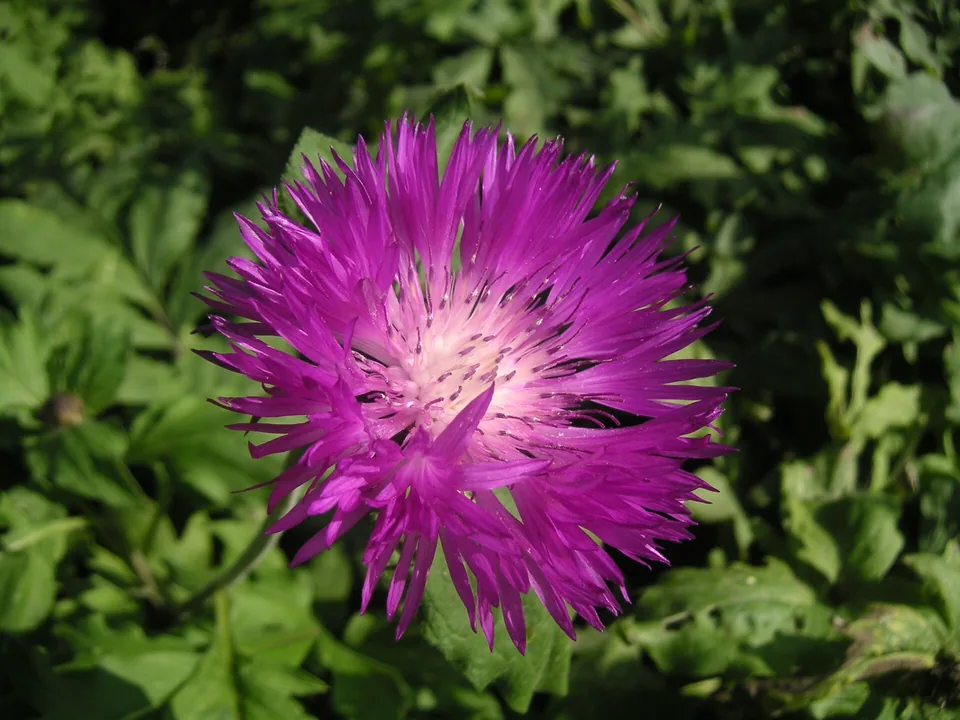
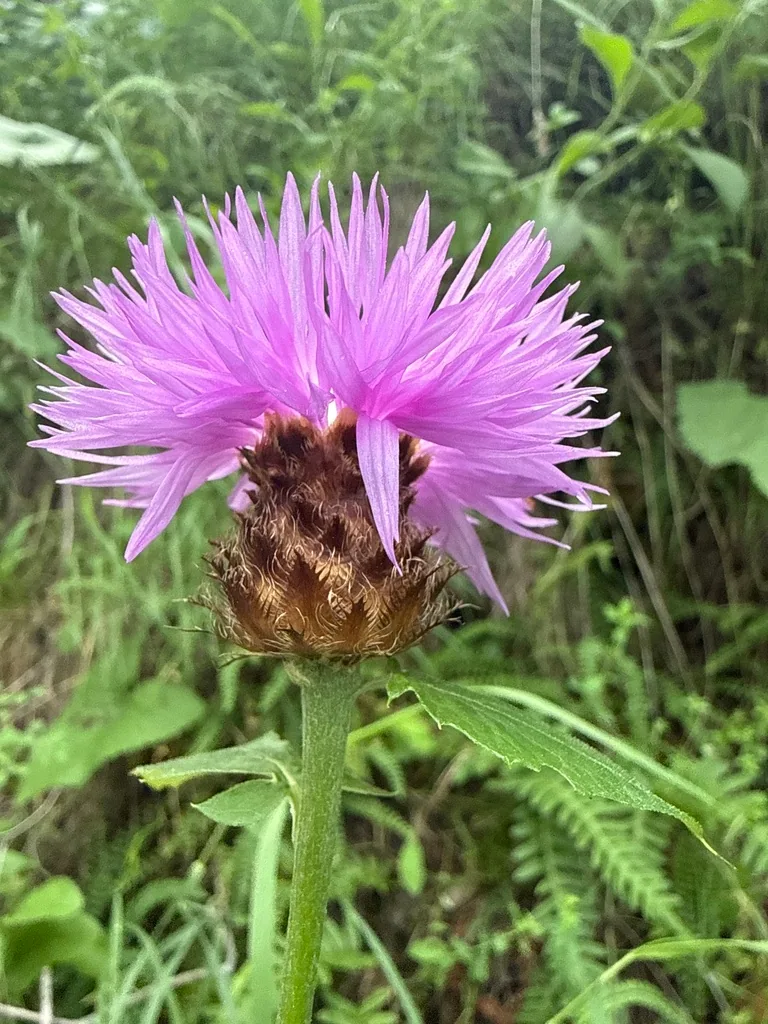
Centaurea dealbata (Psephellus dealbatus) is a perennial from the Caucasus grown as an ornamental and well suited to cutting. [4] It grows 60-100 cm [24–39 in] tall with leaves grey-felted beneath and lobed lower leaves. [4] It is a sun-loving perennial for borders and group plantings, attracting butterflies and beneficial insects. [3][5] Its pink flowers with white centres open from bronze buds in early June. [1]
This record is incomplete: the sources we read do not cover every field yet.
Not yet covered by our sources: Watering, Hardiness, warmest zone, Pruning
Whitewash cornflower care
Measurements in square brackets are our conversion into the other unit system; the quoted text is unchanged.
How to water Whitewash cornflower
Watering
Not stated in the sources we read.
Watering notes
Well-drained soil; average moist soils
What the sources say (2)
| Exposure:
| Full sun
| Soil or Media:
| Well-drained
| Leaves:
| Simple, Lobed, Alternate| GROWING PLACE CHARACTERISTICS |
| Soil |
- average wet soils
| Lighting |
- HeliophilousHow much light Whitewash cornflower needs
Full sun
What the sources say (2)
| Exposure:
| Full sun
| Soil or Media:
| Well-drained
| Leaves:
| Simple, Lobed, Alternate| GROWING PLACE CHARACTERISTICS |
| Soil |
- average wet soils
| Lighting |
- Heliophilous
| Spacing, cm | From 20 to 30How much cold Whitewash cornflower can take
Hardiness, coldest zone
3 [winter low −40 to −34.4 °C (−40 to −30 °F)]
What the sources say (1)
| Hardiness Zone:
| Zone 3: (-40 to -34 °C)
| Plant Type:
| Herbaceous perennialHardiness, warmest zone
Not stated in the sources we read.
Where to grow Whitewash cornflower
20-30 cm [8–12 in]
What the sources say (1)
| Lighting |
- Heliophilous
| Spacing, cm | From 20 to 30
| PLANT HEIGHT AND HABITUS |
| Height |
- tall - 61-80 cmHow to propagate Whitewash cornflower
Division (rhizomes with shoots)
What the sources say (1)
Centaurea pulchenima and Centaurea dealbata are easyly propagated by rhizomes with shoots. Rhizome parts are planted to the final growing place.Remedies
The sources we checked give no remedies for this plant.
Calendar
Pruning
Not stated in the sources we read.
Months as given by the sources, which are mostly from the United States (northern hemisphere). In the southern hemisphere they shift by about six months.
Indicative values
Values from a secondary source, not checked word for word like the rest of this page. Use them as a starting point.
- Life cycle
- Herbaceous PerennialIndicative value, adapt it to your climate · Secondary source
- Mature height
- 61-76.2 cm (2-2.5 ft)Indicative value, adapt it to your climate · Secondary source
- Hours of sun
- 8-10 hoursIndicative value, adapt it to your climate · Secondary source
- Watering
- AverageIndicative value, adapt it to your climate · Secondary source
- Drought tolerant
- yesIndicative value, adapt it to your climate · Secondary source
- Soil
- Well-drainedIndicative value, adapt it to your climate · Secondary source
- Soil pH
- 6-7.5Indicative value, adapt it to your climate · Secondary source
- Care level
- MediumIndicative value, adapt it to your climate · Secondary source
- Growth rate
- ModerateIndicative value, adapt it to your climate · Secondary source
- Pruning
- May, June, JulyIndicative value, adapt it to your climate · Secondary source
- Pests
- Blight, needle cast, Mildew, Mold, Rust, Rabbit resistantIndicative value, adapt it to your climate · Secondary source
Similar plants
- Bighead knapweed Centaurea macrocephala
- Cornflower Centaurea cyanus
- Dusty Miller Centaurea cineraria
- Mountain Bluet Centaurea montana
- Tyrol knapweed Centaurea nigrescens
- Spotted Knapweed Centaurea maculosa
- Yellow Star Thistle Centaurea solstitialis
- Brown knapweed Centaurea jacea
Sources
Every value above is quoted from these documents. Links lead to the original publisher.
- Centaureas: the best varieties to grow and how to care for | Gardens Illustrated · gardensillustrated.com, consulted
- MBG: Research: Russia: Ornamental plants from Russia · mobot.org, consulted
- Psephellus dealbatus - Kwantlen Polytechnic University, School of Horticulture - Plant Database · plantdatabase.kpu.ca, consulted
- filtknoppurt – Store norske leksikon · snl.no, consulted
- Balsvoji bajorė – Centaurea dealbata | FLORES · flores.lt, consulted
Written by Emilio Marruso · last checked