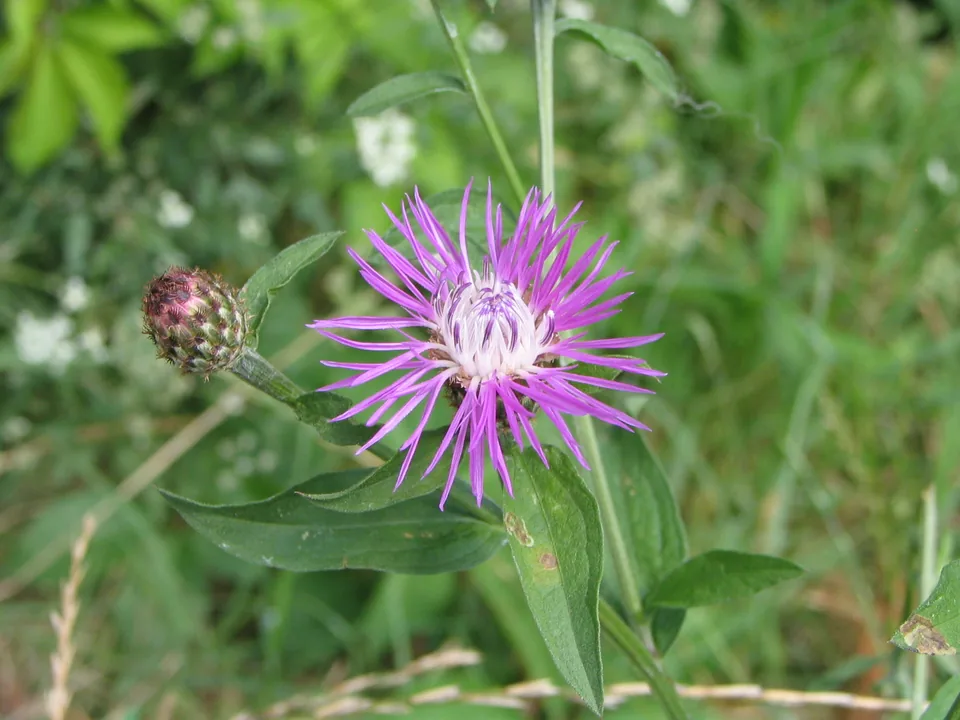
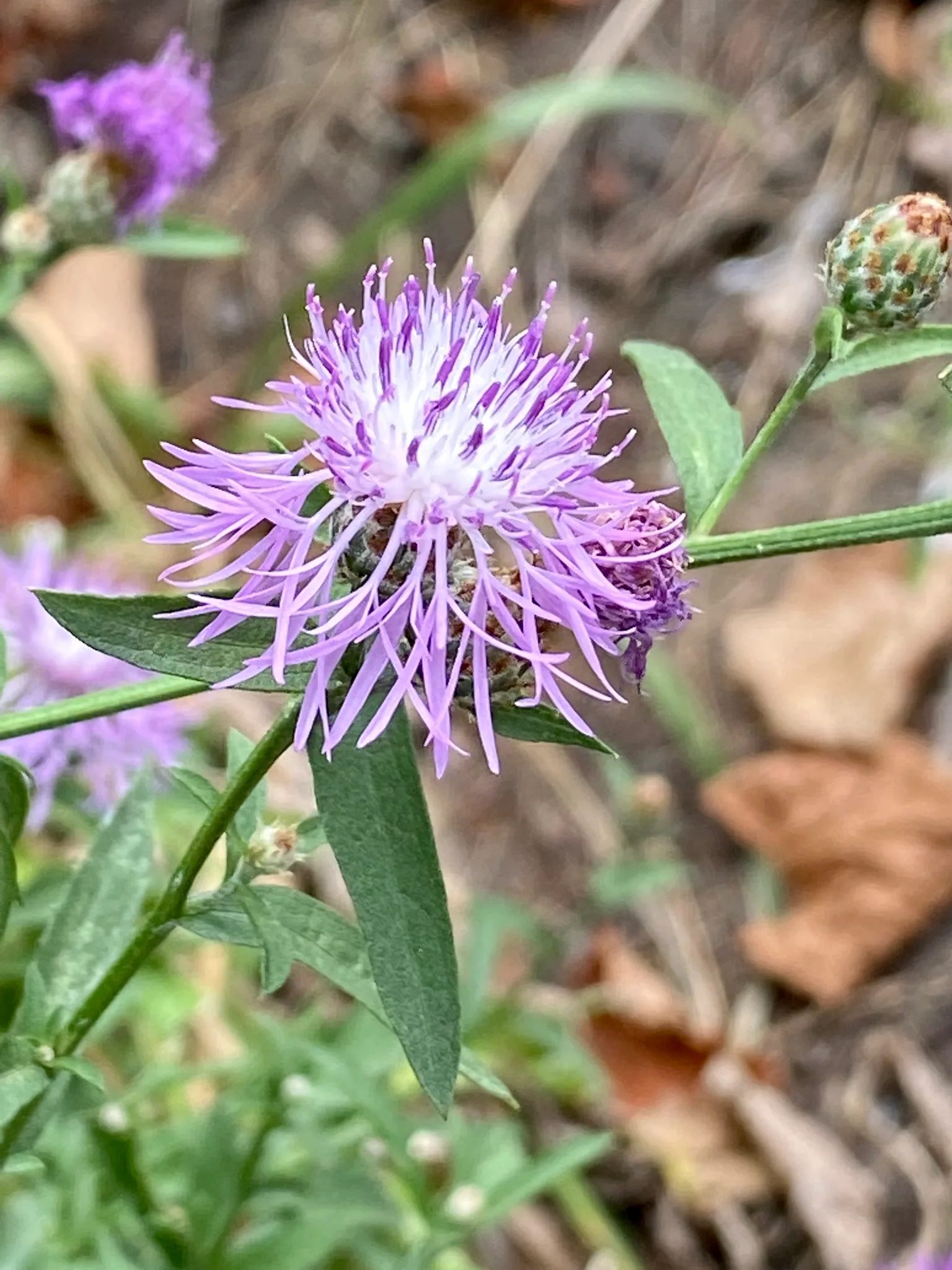

How to Grow and Care for Tyrol knapweed
Centaurea nigrescens
Written by Emilio Marruso · last checked
At a glance
This knapweed is an easygoing plant that fits many gardens: it grows in full sun or partial shade and likes soil that stays moist. It is happy in slightly acidic to slightly alkaline soil, pH 6.1–7.8. Best of all, you can grow new plants from seed or by dividing the roots, so one plant can soon become many.
- Sun
Full sun to partial shade
What the sources say (2)
Light: Full sun to partial shade
Habitat: | part shade, sun; disturbed soil; roadsides, fields, waste places, woodland edges
— Centaurea nigrescens (Alpine Knapweed): Minnesota Wildflowers [2] Requires an altitude of 0 to 1,931 meters (0 to 6,335 feet), full sun,(7)
— NAME OF SPECIES: Centaurea nigrescens [4] - Water
Likes moist soil: don't let it dry out
What the sources say (1)
Watering notes: Best adapted to moist conditions
Plants grow from 0 to 1000 meters elevation, require sunlight and are best adapted to moist conditions
— WRITTEN FINDINGS OF THE [3] - Cold
Survives winters down to −50 °F (−45.6 °C)
Very hardy · USDA 2a · RHS H7 · Z2
What the sources say (2)
Hardiness, coldest zone: 2a [winter low −45.6 to −42.8 °C (−50 to −45 °F)]
Requires an altitude of 0 to 1,931 meters (0 to 6,335 feet), full sun,(7) and survives in USDA Zone’s 2a through 11. (7)
— NAME OF SPECIES: Centaurea nigrescens [4] Hardiness, warmest zone: 11 [winter low 4.4 to 10 °C (40 to 50 °F)]
Requires an altitude of 0 to 1,931 meters (0 to 6,335 feet), full sun,(7) and survives in USDA Zone’s 2a through 11. (7)
— NAME OF SPECIES: Centaurea nigrescens [4] - Soil
Slightly acidic to slightly alkaline soil, pH 6.1–7.8
- Propagation
Grow new plants from seed or by dividing the roots
Overview
Centaurea nigrescens is a perennial knapweed with upright branching stems from a woody root crown. [1] It is listed as a Class A noxious weed in Washington State. [3] It has also been used as a garden plant. [3]
Tyrol knapweed care
How to water Tyrol knapweed
Best adapted to moist conditions
What the sources say (1)
Plants grow from 0 to 1000 meters elevation, require sunlight and are best adapted to moist conditionsHow much light Tyrol knapweed needs
Full sun to partial shade
How much cold Tyrol knapweed can take
Hardiness, coldest zone
2a [winter low −45.6 to −42.8 °C (−50 to −45 °F)]
What the sources say (1)
Requires an altitude of 0 to 1,931 meters (0 to 6,335 feet), full sun,(7) and survives in USDA Zone’s 2a through 11. (7)Hardiness, warmest zone
11 [winter low 4.4 to 10 °C (40 to 50 °F)]
What the sources say (1)
Requires an altitude of 0 to 1,931 meters (0 to 6,335 feet), full sun,(7) and survives in USDA Zone’s 2a through 11. (7)Best soil for Tyrol knapweed
Soil pH, minimum
6.1
What the sources say (1)
Soil types favored or tolerated: Requires a pH from 6.1 to 7.8 (7)Soil pH, maximum
7.8
What the sources say (1)
Soil types favored or tolerated: Requires a pH from 6.1 to 7.8 (7)How to propagate Tyrol knapweed
Remedies
Each remedy shows what official sources say about it; traditional remedies without an official source are marked as such. Harmful ones are listed so you know to avoid them.
Getting rid of it
tyrol knapweed infestation
hand pulling with the whole taproot Official source, not independently tested
Monitor for regrowth.
— dnr.wisconsin.gov [5] How: Handpull the plants, being sure to remove the entire taproot.
Handpull the plants, being sure to remove the entire taproot.
— dnr.wisconsin.gov [5] repeated digging out Partly works
Dig out as much of the plant as possible and watch for re-sprouting from root fragments.
— nwcb.wa.gov [6] How: Dig out as much of the plant as possible and watch for re-sprouting from root fragments.
Small infestations can be controlled by repeatedly digging out the plant. Dig out as much of the plant as possible and watch for re-sprouting from root fragments.
— nwcb.wa.gov [6] What the evidence says Small infestations can be controlled by repeatedly digging out the plant.
— nwcb.wa.gov [6] mowing before flowering Partly works
Monitor for regrowth.
— dnr.wisconsin.gov [5] How: Mow or cut plants before flowering to prevent seed set; continual cutting is needed.
Mow or cut plants before flowering to prevent seed set. Note this will not immediately kill the plants; continual cutting is needed to exhaust root reserves.
— dnr.wisconsin.gov [5] What the evidence says Mow or cut plants before flowering to prevent seed set. Note this will not immediately kill the plants; continual cutting is needed to exhaust root reserves.
— dnr.wisconsin.gov [5] repeated cultivation then reseeding Official source, not independently tested
How: For larger populations on tillable land, control with repeated cultivation, then reseed with desired pasture species.
For larger populations on tillable land, control with repeated cultivation, then reseed with desired pasture species.
— nwcb.wa.gov [6]
Indicative values
Values from a secondary source, not checked word for word like the rest of this page. Use them as a starting point.
- Mature height
- 0-0 cm [0 in]Indicative value, adapt it to your climate · Secondary source
- Watering
- AverageIndicative value, adapt it to your climate · Secondary source
- Drought tolerant
- yesIndicative value, adapt it to your climate · Secondary source
- Care level
- MediumIndicative value, adapt it to your climate · Secondary source
- Growth rate
- LowIndicative value, adapt it to your climate · Secondary source
- Pruning
- February, MarchIndicative value, adapt it to your climate · Secondary source
Similar plants
- Bighead knapweed Centaurea macrocephala
- Cornflower Centaurea cyanus
- Dusty Miller Centaurea cineraria
- Mountain Bluet Centaurea montana
- Spotted Knapweed Centaurea maculosa
- Whitewash cornflower Centaurea dealbata
- Yellow Star Thistle Centaurea solstitialis
- Brown knapweed Centaurea jacea
Sources
Every value above is quoted from these documents. Links lead to the original publisher.
- PNW432 · cru.cahe.wsu.edu, consulted
- Centaurea nigrescens (Alpine Knapweed): Minnesota Wildflowers · minnesotawildflowers.info, consulted
- WRITTEN FINDINGS OF THE · nwcb.wa.gov, consulted
- NAME OF SPECIES: Centaurea nigrescens · dnr.wisconsin.gov, consulted
- dnr.wisconsin.gov · dnr.wisconsin.gov
- nwcb.wa.gov · nwcb.wa.gov
Written by Emilio Marruso · last checked