

How to Grow and Care for American Smoketree
Cotinus obovatus
Written by Emilio Marruso · last checked
At a glance
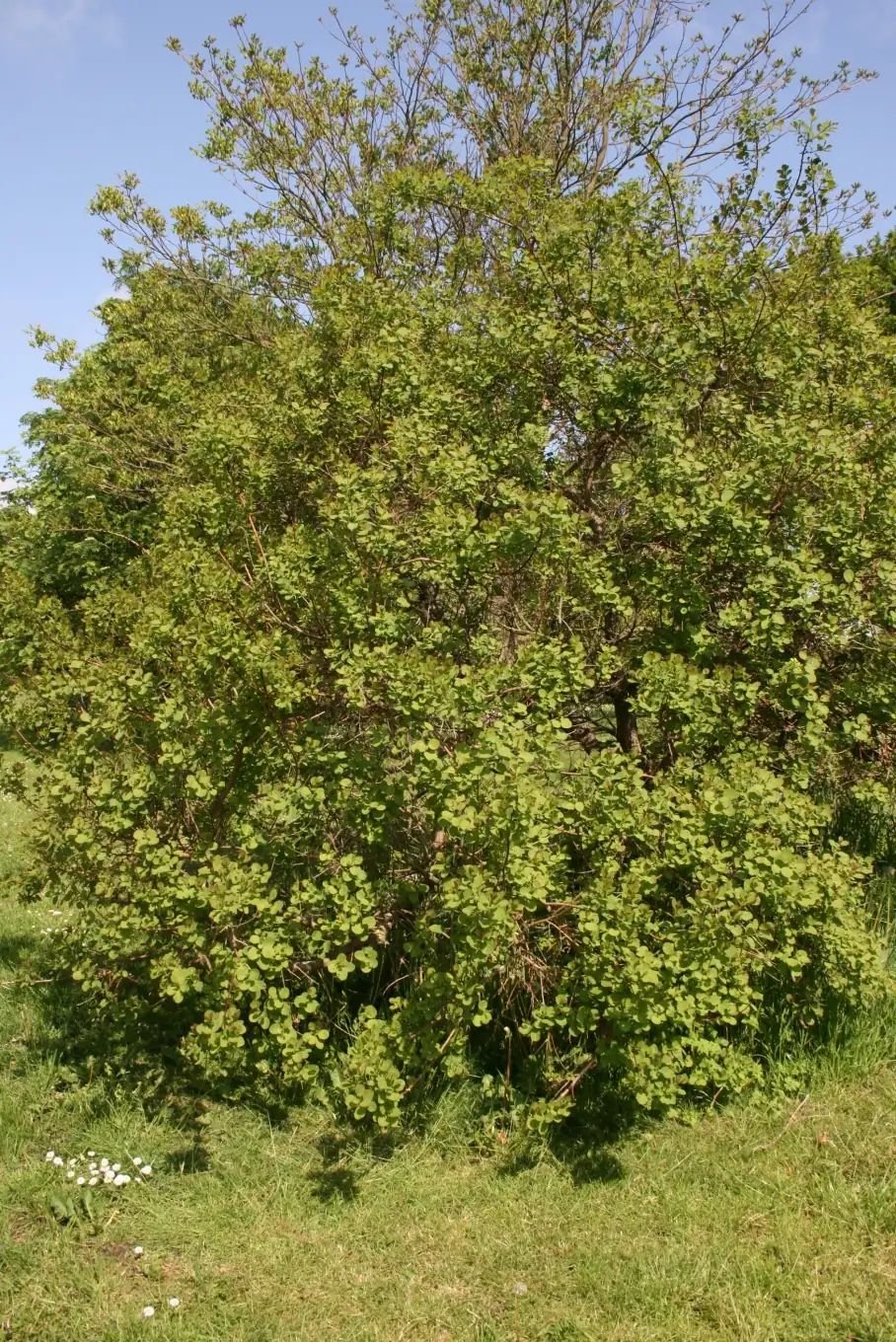
The American smoketree grows into a handsome tree 20–30 ft tall and just as wide, happy in full sun or partial shade. It asks for little: give it water in dry spells, but never let it sit in wet ground, and go easy on fertilizer. Kept free of that stress, it stays clear of leaf spots, rust and wilt.
- Sun
Full sun to partial shade
What the sources say (2)
Light: Full sun to partial shade
It prefers a well-drained infertile loam soil in the full sun but does tolerate a wide range of soils including clay and shallow rocky soil.
— Cotinus obovatus (American Smoketree, Chittamwood, Smokebush, Smoke Tree, Texas Smoke Tree, Wild Smoke Tree) | North Carolina Extension Gardener Plant Toolbox [1] Light: Full sun (6 or more hours of direct sunlight a day) Partial Shade (Direct sunlight only part of the day, 2-6 hours)
— Cotinus obovatus (American Smoketree, Chittamwood, Smokebush, Smoke Tree, Texas Smoke Tree, Wild Smoke Tree) | North Carolina Extension Gardener Plant Toolbox [1] - Water
Water well in dry weather, but never too much
What the sources say (2)
Watering: Uses a fair amount of water, especially in dry conditions
It does use a fair amount of water, especially in dry conditions.
— Cotinus obovatus (American Smoketree, Chittamwood, Smokebush, Smoke Tree, Texas Smoke Tree, Wild Smoke Tree) | North Carolina Extension Gardener Plant Toolbox [1] Watering notes: Overwatering can be detrimental; avoid planting in low-lying areas where soil conditions can remain wet
Overwatering and over fertilizing can be detrimental. Avoid planting in low-lying areas where soil conditions can remain wet.
— Cotinus obovatus (American Smoketree, Chittamwood, Smokebush, Smoke Tree, Texas Smoke Tree, Wild Smoke Tree) | North Carolina Extension Gardener Plant Toolbox [1] - Cold
Survives winters down to −40 °F (−40 °C)
Very hardy · USDA 3a · RHS H7 · Z3
What the sources say (2)
Hardiness, coldest zone: 3a [winter low −40 to −37.2 °C (−40 to −35 °F)]
USDA Plant Hardiness Zone: 3a, 3b, 4a, 4b, 5a, 5b, 6a, 6b, 7a, 7b, 8a, 8b
— Cotinus obovatus (American Smoketree, Chittamwood, Smokebush, Smoke Tree, Texas Smoke Tree, Wild Smoke Tree) | North Carolina Extension Gardener Plant Toolbox [1] Hardiness, warmest zone: 8b [winter low −9.4 to −6.7 °C (15 to 20 °F)]
USDA Plant Hardiness Zone: 3a, 3b, 4a, 4b, 5a, 5b, 6a, 6b, 7a, 7b, 8a, 8b
— Cotinus obovatus (American Smoketree, Chittamwood, Smokebush, Smoke Tree, Texas Smoke Tree, Wild Smoke Tree) | North Carolina Extension Gardener Plant Toolbox [1] - Soil
Avoid low spots where the soil stays wet
What the sources say (1)
Watering notes: Overwatering can be detrimental; avoid planting in low-lying areas where soil conditions can remain wet
Overwatering and over fertilizing can be detrimental. Avoid planting in low-lying areas where soil conditions can remain wet.
— Cotinus obovatus (American Smoketree, Chittamwood, Smokebush, Smoke Tree, Texas Smoke Tree, Wild Smoke Tree) | North Carolina Extension Gardener Plant Toolbox [1] - Feeding
Go easy: too much fertilizer harms it
What the sources say (1)
Avoid: Over-fertilizing, as well as overwatering
Overwatering and over fertilizing can be detrimental. Avoid planting in low-lying areas where soil conditions can remain wet.
— Cotinus obovatus (American Smoketree, Chittamwood, Smokebush, Smoke Tree, Texas Smoke Tree, Wild Smoke Tree) | North Carolina Extension Gardener Plant Toolbox [1] - Pests
Leaf spots, rust and wilt strike stressed trees; avoid wet soil and too much feeding
What the sources say (1)
Diseases: leaf spots, rust, wilt
Sometimes leaf spots, rust, and wilt can cause issues on stressed trees.
— Cotinus obovatus (American Smoketree, Chittamwood, Smokebush, Smoke Tree, Texas Smoke Tree, Wild Smoke Tree) | North Carolina Extension Gardener Plant Toolbox [1] - Size
20–30 ft tall and 20–31 ft wide
What the sources say (2)
Mature height: 609.6-914.4 cm (20-30 ft)
Dimensions: Height: 20 ft. 0 in. - 30 ft. 0 in. Width: 20 ft. 0 in. - 30 ft. 11 in.
— Cotinus obovatus (American Smoketree, Chittamwood, Smokebush, Smoke Tree, Texas Smoke Tree, Wild Smoke Tree) | North Carolina Extension Gardener Plant Toolbox [1] Mature width: 609.6-942.34 cm (20 ft 0 in - 30 ft 11 in)
Dimensions: Height: 20 ft. 0 in. - 30 ft. 0 in. Width: 20 ft. 0 in. - 30 ft. 11 in.
— Cotinus obovatus (American Smoketree, Chittamwood, Smokebush, Smoke Tree, Texas Smoke Tree, Wild Smoke Tree) | North Carolina Extension Gardener Plant Toolbox [1] - Propagation
From seed, stem cuttings or root cuttings
What the sources say (1)
Propagation: Root cutting, seed, stem cutting
Recommended Propagation Strategy: Root Cutting Seed Stem Cutting Country Or Region Of Origin:
— Cotinus obovatus (American Smoketree, Chittamwood, Smokebush, Smoke Tree, Texas Smoke Tree, Wild Smoke Tree) | North Carolina Extension Gardener Plant Toolbox [1]
Overview
Cotinus obovatus is a small tree or upright shrub native to the southern United States, named for the smoky hairs on its spent flower clusters. [1] It prefers well-drained infertile loam in full sun but tolerates a wide range of soils including clay and shallow rocky soil. [1] It uses a fair amount of water, especially in dry conditions, and overwatering can be detrimental. [1]
This record is incomplete: the sources we read do not cover every field yet.
Not yet covered by our sources: Pruning
American Smoketree care
How to water American Smoketree
Watering
Uses a fair amount of water, especially in dry conditions
What the sources say (1)
It does use a fair amount of water, especially in dry conditions.Watering notes
Overwatering can be detrimental; avoid planting in low-lying areas where soil conditions can remain wet
What the sources say (1)
Overwatering and over fertilizing can be detrimental. Avoid planting in low-lying areas where soil conditions can remain wet.How much light American Smoketree needs
Full sun to partial shade
What the sources say (2)
It prefers a well-drained infertile loam soil in the full sun but does tolerate a wide range of soils including clay and shallow rocky soil.Light:
Full sun (6 or more hours of direct sunlight a day)
Partial Shade (Direct sunlight only part of the day, 2-6 hours)How much cold American Smoketree can take
Hardiness, coldest zone
3a [winter low −40 to −37.2 °C (−40 to −35 °F)]
What the sources say (1)
USDA Plant Hardiness Zone:
3a, 3b, 4a, 4b, 5a, 5b, 6a, 6b, 7a, 7b, 8a, 8bHardiness, warmest zone
8b [winter low −9.4 to −6.7 °C (15 to 20 °F)]
What the sources say (1)
USDA Plant Hardiness Zone:
3a, 3b, 4a, 4b, 5a, 5b, 6a, 6b, 7a, 7b, 8a, 8bHow to propagate American Smoketree
Root cutting, seed, stem cutting
What the sources say (1)
Recommended Propagation Strategy:
Root Cutting
Seed
Stem Cutting
Country Or Region Of Origin:How to grow American Smoketree
The plant
Life cycle
perennial
What the sources say (1)
Life Cycle: Perennial Woody Recommended Propagation Strategy: Root Cutting Seed Stem CuttingFamily
Anacardiaceae
What the sources say (1)
It is a medium-maintenance small tree or upright shrub in the Anacardiaceae family.Mature height
609.6-914.4 cm (20-30 ft)
What the sources say (1)
Dimensions: Height: 20 ft. 0 in. - 30 ft. 0 in. Width: 20 ft. 0 in. - 30 ft. 11 in.Mature width
609.6-942.34 cm (20 ft 0 in - 30 ft 11 in)
What the sources say (1)
Dimensions: Height: 20 ft. 0 in. - 30 ft. 0 in. Width: 20 ft. 0 in. - 30 ft. 11 in.Pests and diseases
Diseases
leaf spots, rust, wilt
What the sources say (1)
Sometimes leaf spots, rust, and wilt can cause issues on stressed trees.Fertilizing
Avoid
Over-fertilizing, as well as overwatering
What the sources say (1)
Overwatering and over fertilizing can be detrimental. Avoid planting in low-lying areas where soil conditions can remain wet.American Smoketree pests and problems
Leaf spots, rust and wilt
Symptom: Leaf spots, rust and wilt on stressed trees
What to do: Avoid overwatering, over fertilizing and planting in wet low-lying areas
What the sources say (2)
Insects, Diseases, and Other Plant Problems: No serious insect or disease problems. Sometimes leaf spots, rust, and wilt can cause issues on stressed trees.
— Cotinus obovatus (American Smoketree, Chittamwood, Smokebush, Smoke Tree, Texas Smoke Tree, Wild Smoke Tree) | North Carolina Extension Gardener Plant Toolbox [1] Overwatering and over fertilizing can be detrimental. Avoid planting in low-lying areas where soil conditions can remain wet.
— Cotinus obovatus (American Smoketree, Chittamwood, Smokebush, Smoke Tree, Texas Smoke Tree, Wild Smoke Tree) | North Carolina Extension Gardener Plant Toolbox [1]
Remedies
Each remedy shows what official sources say about it; traditional remedies without an official source are marked as such. Harmful ones are listed so you know to avoid them.
Treating the plant
verticillium wilt
pruning tools cleaned with alcohol or bleach Works
Warning: Risky ingredient
If you use bleach, be sure to thoroughly rinse and oil tools after you are done pruning to prevent rusting.
— hort.extension.wisc.edu [6] How: Clean pruning tools between cuts by treating them for at least 30 seconds in a 10% bleach solution or 70% alcohol; if bleach is used, rinse and oil the tools afterwards.
Be sure to clean your pruning tools between cuts by treating them for at least 30 seconds in a 10% bleach solution or (preferably due its less corrosive properties) 70% alcohol
— hort.extension.wisc.edu [6] What the evidence says Decontaminating tools will help prevent spread of Verticillium from branch to branch, or more importantly from tree to tree, as you prune.
— hort.extension.wisc.edu [6] water and fertilize the tree properly Partly works
How: Established trees and shrubs should receive approximately one inch of water per week; use a drip or soaker hose near the drip line if rainfall is insufficient; fertilize based on a soil nutrient test.
Make sure established trees and shrubs receive approximately one inch of water per week.
— hort.extension.wisc.edu [6] What the evidence says Trees and shrubs infected with Verticillium cannot be cured and will likely eventually die. However, you can extend the life of your plants by making sure that you water and fertilize them properly.
— hort.extension.wisc.edu [6] prune out dead branches Partly works
How: Prune out dead branches as they occur and dispose of them by burning (where allowed) or landfilling; do not bury or compost them.
prune out dead branches as they occur. Dispose of these branches by burning (where allowed by local ordinance) or landfilling them. Do not bury or compost these branches.
— hort.extension.wisc.edu [6] What the evidence says When a tree exhibits mild symptoms, prune out affected limbs and water and fertilize to maintain tree vigor.
— extension.psu.edu [7] soil solarization with clear plastic Not verified
Traditional remedy, not verified by an official source.
How: Place clear plastic over smooth, cultivated soil, burying the edges, to trap heat; leave it in place for at least four weeks during the hot summer.
remove and destroy the infected plant Official source, not independently tested
How: Where the disease is confirmed, remove the infected plant with as much root system as possible and destroy it, taking care not to spread infected soil.
Where the disease is confirmed, taking care not to spread potentially infected soil around, remove the infected plant with as much root system as possible and destroy.
— rhs.org.uk [8]
Calendar
Pruning
Not stated in the sources we read.
Months as given by the sources, which are mostly from the United States (northern hemisphere). In the southern hemisphere they shift by about six months.
Similar plants
- Smoketree Cotinus coggygria
- American pepper Schinus molle
- Brazilian peppertree Schinus terebinthifolius
- Chinese Pistache Pistacia chinensis
- Chinese Sumac Rhus chinensis
- Michaux's Sumac Rhus michauxii
- Sicilian sumac Rhus coriaria
- Skunkbush Rhus trilobata
Sources
Every value above is quoted from these documents. Links lead to the original publisher.
- Cotinus obovatus (American Smoketree, Chittamwood, Smokebush, Smoke Tree, Texas Smoke Tree, Wild Smoke Tree) | North Carolina Extension Gardener Plant Toolbox · plants.ces.ncsu.edu, consulted
- Cotinus (American Smoketree, Smokebush, Smoketree) | North Carolina Extension Gardener Plant Toolbox · plants.ces.ncsu.edu, consulted
- Texas Smoke Tree - Cotinus obovatus | North Carolina Extension Gardener Plant Toolbox · plants.ces.ncsu.edu, consulted
- Chittamwood - Cotinus obovatus | North Carolina Extension Gardener Plant Toolbox · plants.ces.ncsu.edu, consulted
- Smoke Tree - Cotinus obovatus | North Carolina Extension Gardener Plant Toolbox · plants.ces.ncsu.edu, consulted
- hort.extension.wisc.edu · hort.extension.wisc.edu
- extension.psu.edu · extension.psu.edu
- rhs.org.uk · rhs.org.uk
Written by Emilio Marruso · last checked