
How to Grow and Care for American pepper
Schinus molle
Written by Emilio Marruso · last checked
Toxic to: People · Why
At a glance
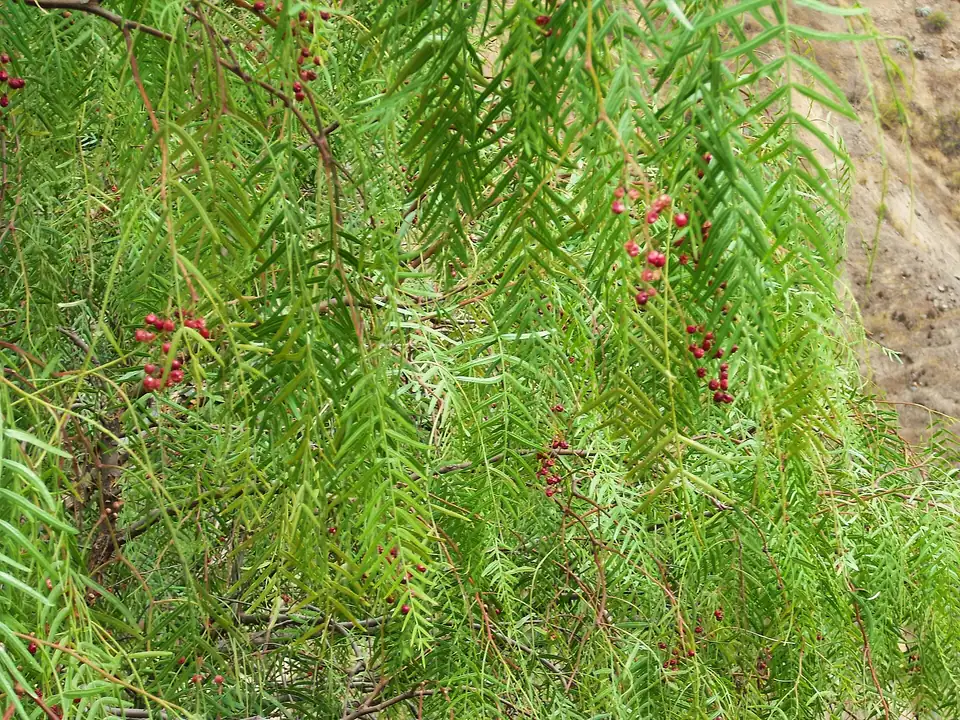
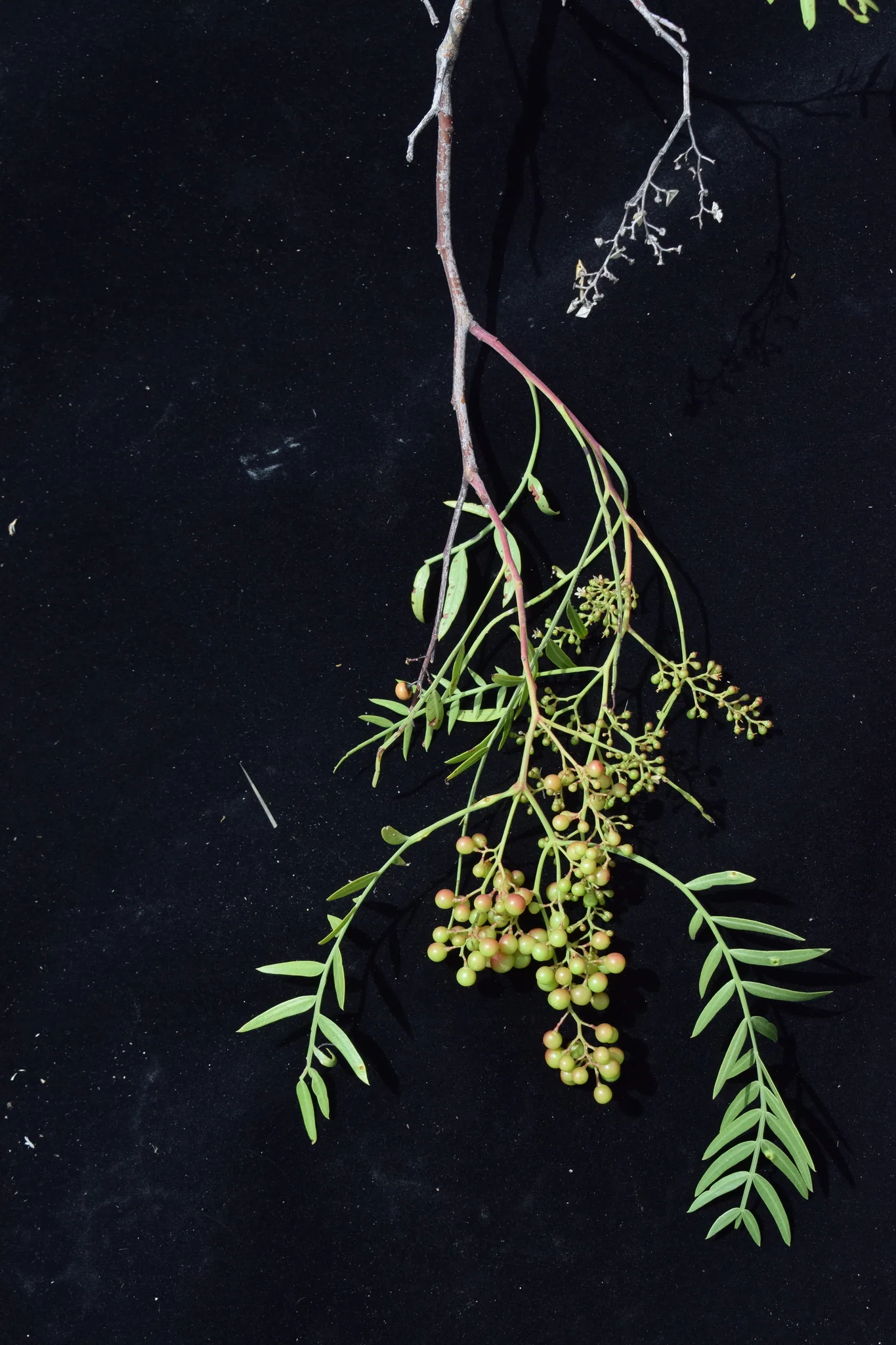
This attractive ornamental tree, with its hanging strings of little pink berries, is easy to please: it loves full sun or partial shade and needs little water once established. Water it regularly while young, but never leave the soil soggy, or the roots rot. Dried and roasted, its berries are even used as a pepper substitute.
- Sun
Full sun to partial shade
What the sources say (3)
Light: Full sun to partial shade
They prefer full sun and well-drained soils.
— Pepper Tree / Home and Landscape / UC Statewide IPM Program (UC IPM) [3] Sun Exposure : Full sun to partial shade. Schinus thrives best in sunny spots but can tolerate light shade.
— How to Grow Schinus - Pepper Tree - Harvest to Table [6] Prefers a well-drained soil in full sun, but also tolerates the light shade of other trees
— Schinus molle - Useful Tropical Plants [4] - Water
Regular water when young, little once established; soggy soil rots the roots
What the sources say (4)
Watering: Little water once established; regular watering when young, avoid overwatering
They need little water once established.
— Pepper Tree / Home and Landscape / UC Statewide IPM Program (UC IPM) [3] Drought-tolerant once established, but regular watering is needed when young. Overwatering should be avoided.
— How to Grow Schinus - Pepper Tree - Harvest to Table [6] Watering notes: Prone to root rot in soggy situations; plants grow best where some soil moisture is available during the warm season
in soggy situations it can be prone to root rot.
— Schinus molle [7] Plants grow best where some soil moisture is available during the warm season.
— A WEED REPORT from the book Weed Control in Natural Areas in the Western United States [2] - Soil
Soil pH 6.0–8.5, best between 6.5 and 7.5
- Harvest
Dried and roasted berries are used as a pepper substitute
- Pests
Scales, psyllids, thrips and caterpillars; root rot and verticillium wilt
What the sources say (2)
Pests: black scale, foliage-feeding caterpillars, psyllids, scales, thrips
Black Scale Foliage-feeding Caterpillars (Trees and Shrubs) Psyllids Scales Thrips
— Pepper Tree / Home and Landscape / UC Statewide IPM Program (UC IPM) [3] Diseases: armillaria root rot, verticillium wilt, wood decay fungi
Armillaria Root Rot Verticillium Wilt (Plants) Wood Decay Fungi in Landscape Trees
— Pepper Tree / Home and Landscape / UC Statewide IPM Program (UC IPM) [3] - Watch out
It can host black scale, a serious pest of citrus
- Propagation
Seed washed in running water for 24 hours, or cuttings from August to early September
What the sources say (2)
Propagation: Seed (washed in running water for 24 hours before sowing); cuttings of almost ripe wood, August to early September
it is important to wash the seeds thoroughly in running water for 24 hours before sowing
— Schinus molle - Useful Tropical Plants [4] Cuttings of almost ripe wood, 8cm with a heel, August to early September in a frame.
— Schinus molle - Useful Tropical Plants [4] - Containers
Can be grown indoors too
What the sources say (1)
Indoors: Yes
The tree has been grown as an indoor bonsai.
— Schinus molle [7] - Safety
Berries, especially the seeds, are mildly poisonous; pollen can cause skin rash and asthma
Overview
Schinus molle is an evergreen tree with weeping foliage, 3-15 m [9.8–49.2 ft] in height, widely planted as an ornamental and shade tree. [7] It prefers full sun and well-drained soil, needs little water once established, and has escaped cultivation in some regions. [3][2] The seed contains an allergenic substance, and the pollen, leaves and bark gum can cause dermatitis. [4]
This record is incomplete: the sources we read do not cover every field yet.
Not yet covered by our sources: Hardiness, warmest zone, Pruning
American pepper care
Measurements in square brackets are our conversion into the other unit system; the quoted text is unchanged.
How to water American pepper
Watering
Little water once established; regular watering when young, avoid overwatering
What the sources say (2)
They need little water
once established.Drought-tolerant once established, but regular watering is needed when young. Overwatering should be avoided.Watering notes
Prone to root rot in soggy situations; plants grow best where some soil moisture is available during the warm season
How much light American pepper needs
Full sun to partial shade
What the sources say (3)
They prefer full sun and well-drained soils.Sun Exposure : Full sun to partial shade. Schinus thrives best in sunny spots but can tolerate light shade.Prefers a well-drained soil in full sun, but also tolerates the light shade of other treesHow much cold American pepper can take
Hardiness, coldest zone
The sources give different values depending on region, zone or growing conditions.
What each source says
According to World Agroforestry Database: Resistant to frost and temperatures as low as -10 [winter low −1.1 to 4.4 °C (30 to 40 °F)] deg. C
According to Harvest to Table: Frost-sensitive, may require protection in colder regions
What the sources say (2)
According to World Agroforestry Database: S. molle tolerates high temperatures and once established is extremely drought resistant; resistant to frost and temperatures as low as -10 deg. C.According to Harvest to Table: Schinus is frost-sensitive, particularly S. molle , and may require protection in colder regions.Hardiness, warmest zone
Not stated in the sources we read.
Best soil for American pepper
Soil pH, minimum
6.0
What each source says
preferred range: 6.5
Where to grow American pepper
Yes
What the sources say (1)
The tree has been grown as an indoor bonsai.How to propagate American pepper
Seed (washed in running water for 24 hours before sowing); cuttings of almost ripe wood, August to early September
How to grow American pepper
The plant
Family
Anacardiaceae
What the sources say (1)
Pepper tree (California pepper tree) — Schinus molle *
- Family Anacardiaceae (Sumac family)Pests and diseases
Pests
black scale, foliage-feeding caterpillars, psyllids, scales, thrips
What the sources say (1)
Black Scale
Foliage-feeding Caterpillars (Trees and Shrubs)
Psyllids
Scales
ThripsDiseases
armillaria root rot, verticillium wilt, wood decay fungi
What the sources say (1)
Armillaria Root Rot
Verticillium Wilt (Plants)
Wood Decay Fungi in Landscape TreesAmerican pepper pests and problems
Root rot
Symptom: Root rot in soggy situations
What to do: Not given by the sources
What the sources say (1)
in soggy situations it can be prone to root rot.
— Schinus molle [7] Scale and psyllids
Symptom: Scale and psyllid damage; black scale, a serious pest of citrus, is harboured
What to do: Not given by the sources
What the sources say (1)
Susceptible to scale and psyllid damage; it harbours black scale, which is a serious pest of the Citrus species
— Schinus molle [7]
Remedies
Each remedy shows what official sources say about it; traditional remedies without an official source are marked as such. Harmful ones are listed so you know to avoid them.
First aid
First aid: not a substitute for a doctor
contact dermatitis
cool compress Official source, not independently tested
How: Cool compress
Avoid aggravating the problem with potentially irritating or allergenic topical applications - Cool compress
— dermnetnz.org [8]
Treating the plant
psyllids
insecticidal soap or neem oil spray Works
How: Nonresidual contact insecticides such as insecticidal soap and neem oil control psyllids where infested plant parts can be thoroughly sprayed.
These products can control psyllids where infested plant parts can be thoroughly sprayed.
— ipm.ucanr.edu [9] What the evidence says Nonresidual contact insecticides include azadirachtin, neem oil, insecticidal soap, and narrow-range oil
— ipm.ucanr.edu [9]
Is American pepper poisonous?
Reported by the source, quoted verbatim. This is not medical or veterinary advice: if a person or an animal may have eaten this plant, contact a poison control centre or a veterinarian.
The seed contains an allergenic substance that can irritate the mucus membrane
[4]The pollen, either on contact or when inhaled, can cause dermatitis and asthmatic reactions
[4]- Symptoms
The pollen, either on contact or when inhaled, can cause dermatitis and asthmatic reactions
[4]
The hanging strings of little pink berries of this attractive ornamental tree are reputed to be moderately poisonous, particularly the seed.
[7]- Poisonous parts
The hanging strings of little pink berries of this attractive ornamental tree are reputed to be moderately poisonous, particularly the seed.
[7]
Plants can cause dermatitis in sensitive individuals.
[2]- Symptoms
Plants can cause dermatitis in sensitive individuals.
[2]
Calendar
Pruning
Not stated in the sources we read.
Months as given by the sources, which are mostly from the United States (northern hemisphere). In the southern hemisphere they shift by about six months.
Edibility
Reported by the source, quoted verbatim. Do not eat a plant on the basis of this page alone: identification mistakes can be dangerous.
Similar plants
- Brazilian peppertree Schinus terebinthifolius
- American Smoketree Cotinus obovatus
- Chinese Pistache Pistacia chinensis
- Chinese Sumac Rhus chinensis
- Michaux's Sumac Rhus michauxii
- Poison oak Toxicodendron diversilobum
- Poison Oak Toxicodendron pubescens
- Poison Sumac Toxicodendron vernix
Sources
Every value above is quoted from these documents. Links lead to the original publisher.
- Schinus molle L. - Herbari Virtual del Mediterrani Occidental · herbarivirtual.uib.cat, consulted
- A WEED REPORT from the book Weed Control in Natural Areas in the Western United States · ccfruitandnuts.ucanr.edu, consulted
- Pepper Tree / Home and Landscape / UC Statewide IPM Program (UC IPM) · ipm.ucanr.edu, consulted
- Schinus molle - Useful Tropical Plants · tropical.theferns.info, consulted
- Schinus molle Profile – California Invasive Plant Council · cal-ipc.org, consulted
- How to Grow Schinus - Pepper Tree - Harvest to Table · harvesttotable.com, consulted
- Schinus molle · apps.worldagroforestry.org, consulted
- dermnetnz.org · dermnetnz.org
- ipm.ucanr.edu · ipm.ucanr.edu
Written by Emilio Marruso · last checked