How to Grow and Care for Poison Sumac
Toxicodendron vernix
Written by Emilio Marruso · last checked
Toxic to: Cats, Dogs, Horses, People · Why
At a glance
Poison sumac is a wild shrub or small tree of bogs, marshes and riverbanks, happy in wet soil and in full sun to partial shade. In winter its fruits feed bobwhites, pheasants and grouse. Admire it with care, though: every part of it causes an itchy, blistering rash, so wear protective clothing and never burn it.
- Sun
Full sun to partial shade
What the sources say (1)
Light: Full sun to partial shade
Found growing primarily in bogs, marshes, swamps, and thickets along river banks, it prefers acidic soil and full to partial sunlight.
— Toxicodendron vernix (Poison Sumac, Swamp Sumac, Thunderwood) | North Carolina Extension Gardener Plant Toolbox [1] - Water
Loves wet ground: it grows wild in bogs, marshes and along riverbanks
What the sources say (1)
Watering notes: Grows in bogs, marshes, swamps and thickets along river banks; tolerates wet soils
Found growing primarily in bogs, marshes, swamps, and thickets along river banks, it prefers acidic soil and full to partial sunlight.
— Toxicodendron vernix (Poison Sumac, Swamp Sumac, Thunderwood) | North Carolina Extension Gardener Plant Toolbox [1] - Cold
Survives winters down to −40 °F (−40 °C)
Very hardy · USDA 3a · RHS H7 · Z3
What the sources say (2)
Hardiness, coldest zone: 3a [winter low −40 to −37.2 °C (−40 to −35 °F)]
3a, 3b, 4a, 4b, 5a, 5b, 6a, 6b, 7a, 7b, 8a, 8b
— Toxicodendron vernix (Poison Sumac, Swamp Sumac, Thunderwood) | North Carolina Extension Gardener Plant Toolbox [1] Hardiness, warmest zone: 8b [winter low −9.4 to −6.7 °C (15 to 20 °F)]
3a, 3b, 4a, 4b, 5a, 5b, 6a, 6b, 7a, 7b, 8a, 8b
— Toxicodendron vernix (Poison Sumac, Swamp Sumac, Thunderwood) | North Carolina Extension Gardener Plant Toolbox [1] - Soil
Wet, acidic soil, pH up to 6.0
What the sources say (2)
Soil pH, maximum: 6.0
Soil pH: Acid (<6.0) Soil Drainage: Moist Occasional Flooding Occasionally Wet
— Toxicodendron vernix (Poison Sumac, Swamp Sumac, Thunderwood) | North Carolina Extension Gardener Plant Toolbox [1] Watering notes: Grows in bogs, marshes, swamps and thickets along river banks; tolerates wet soils
Found growing primarily in bogs, marshes, swamps, and thickets along river banks, it prefers acidic soil and full to partial sunlight.
— Toxicodendron vernix (Poison Sumac, Swamp Sumac, Thunderwood) | North Carolina Extension Gardener Plant Toolbox [1] - Harvest
Not for people: its fruits are winter food for wild birds like pheasants and grouse
- Watch out
Wear protective clothing; wash hands, clothes and tools with soap and water after touching it
- Size
A shrub or small tree up to 25 ft tall
What the sources say (2)
Mature height: 762 cm (25 ft)
It has an open crown and grows to 25 feet in height with a trunk 6 inches across.
— Toxicodendron vernix (Poison Sumac, Swamp Sumac, Thunderwood) | North Carolina Extension Gardener Plant Toolbox [1] Life cycle: perennial (woody shrub or small tree)
Plant Type: Native Plant Perennial Poisonous Shrub Tree
— Toxicodendron vernix (Poison Sumac, Swamp Sumac, Thunderwood) | North Carolina Extension Gardener Plant Toolbox [1] - Propagation
Grows from seed
What the sources say (1)
Propagation: Seed
Family: Anacardiaceae Life Cycle: Woody Recommended Propagation Strategy: Seed
— Toxicodendron vernix (Poison Sumac, Swamp Sumac, Thunderwood) | North Carolina Extension Gardener Plant Toolbox [1] - Safety
Every part causes an itchy, blistering rash; never burn it, the smoke can be deadly
Overview
Poison sumac is a deciduous shrub or small tree native to eastern Canada and the east-central and eastern United States. [1] It grows in bogs, marshes and swamps and prefers acidic soil. [1] All parts contain urushiol and cause contact dermatitis; the source says it is best left in the wild and not recommended for most gardens. [1]
This record is incomplete: the sources we read do not cover every field yet.
Not yet covered by our sources: Watering, Pruning
Poison Sumac care
How to water Poison Sumac
Watering
Not stated in the sources we read.
Watering notes
Grows in bogs, marshes, swamps and thickets along river banks; tolerates wet soils
What the sources say (1)
Found growing primarily in bogs, marshes, swamps, and thickets along river banks, it prefers acidic soil and full to partial sunlight.How much light Poison Sumac needs
Full sun to partial shade
What the sources say (1)
Found growing primarily in bogs, marshes, swamps, and thickets along river banks, it prefers acidic soil and full to partial sunlight.How much cold Poison Sumac can take
Hardiness, coldest zone
3a [winter low −40 to −37.2 °C (−40 to −35 °F)]
What the sources say (1)
3a, 3b, 4a, 4b, 5a, 5b, 6a, 6b, 7a, 7b, 8a, 8bHardiness, warmest zone
8b [winter low −9.4 to −6.7 °C (15 to 20 °F)]
What the sources say (1)
3a, 3b, 4a, 4b, 5a, 5b, 6a, 6b, 7a, 7b, 8a, 8bBest soil for Poison Sumac
6.0
What the sources say (1)
Soil pH:
Acid (<6.0)
Soil Drainage:
Moist
Occasional Flooding
Occasionally WetHow to propagate Poison Sumac
Seed
What the sources say (1)
Family:
Anacardiaceae
Life Cycle:
Woody
Recommended Propagation Strategy:
SeedHow to grow Poison Sumac
The plant
Life cycle
perennial (woody shrub or small tree)
What the sources say (1)
Plant Type:
Native Plant
Perennial
Poisonous
Shrub
TreeFamily
Anacardiaceae
What the sources say (1)
Poison sumac is a native, deciduous, erect shrub or small tree in the Anacardiaceae ( sumac) familyMature height
762 cm (25 ft)
What the sources say (1)
It has an open crown and grows to 25 feet in height with a trunk 6 inches across.Poison Sumac pests and problems
Contact dermatitis (urushiol)
Symptom: Itchy rash, redness, swelling, blisters, sores
What to do: Wear protective clothing; wash hands, clothing and tools with soap and water after exposure
What the sources say (1)
Always wear protective clothing to prevent contact with this plant. Thoroughly wash your hands, clothing, and tools with soap and water after exposure
— Toxicodendron vernix (Poison Sumac, Swamp Sumac, Thunderwood) | North Carolina Extension Gardener Plant Toolbox [1]
Remedies
Each remedy shows what official sources say about it; traditional remedies without an official source are marked as such. Harmful ones are listed so you know to avoid them.
First aid
First aid: not a substitute for a doctor
skin contact with urushiol
washing skin with soap and cool water Works
Do not use hot water, as this may make the problem worse by opening skin pores.
— aces.edu [6] Seek medical help if the rash becomes infected, covers a large part of the body, causes swelling of the face or other sensitive areas, or causes difficulty with swallowing or breathing.
— aces.edu [6] How: Skin should be washed with soap and cool water as quickly as possible, ideally within 10 to 20 minutes of exposure.
Skin should be washed with soap and cool water as quickly as possible, ideally within 10 to 20 minutes of exposure.
— ncbi.nlm.nih.gov [5] What the evidence says Wash skin with soap and water or rubbing alcohol within 10 to 20 minutes if contact is suspected. Rinse thoroughly.
— aces.edu [6] washing skin with rubbing alcohol Works
Do not use hot water, as this may make the problem worse by opening skin pores.
— aces.edu [6] Seek medical help if the rash becomes infected, covers a large part of the body, causes swelling of the face or other sensitive areas, or causes difficulty with swallowing or breathing.
— aces.edu [6] How: Wash skin with soap and water or rubbing alcohol within 10 to 20 minutes if contact is suspected. Rinse thoroughly.
Wash skin with soap and water or rubbing alcohol within 10 to 20 minutes if contact is suspected. Rinse thoroughly.
— aces.edu [6] What the evidence says Wash skin with soap and water or rubbing alcohol within 10 to 20 minutes if contact is suspected. Rinse thoroughly.
— aces.edu [6]
contaminated clothing and tools
washing clothes and tools after contact Works
The oil resists breakdown and may cling to clothing, tools, and pet fur for long periods of time, even a year or more.
— aces.edu [6] How: Clothing, footwear, tools, pets, and other contaminated objects should also be cleaned to prevent ongoing exposure.
Clothing, footwear, tools, pets, and other contaminated objects should also be cleaned to prevent ongoing exposure.
— ncbi.nlm.nih.gov [5] What the evidence says Wash clothes immediately upon return from outdoor recreation.
— aces.edu [6]
itchy rash
colloidal oatmeal bath Official source, not independently tested
Seek medical help if the rash becomes infected, covers a large part of the body, causes swelling of the face or other sensitive areas, or causes difficulty with swallowing or breathing.
— aces.edu [6] Patients should seek medical evaluation for extensive dermatitis, significant facial, hand, foot, or genital involvement, signs of secondary bacterial infection, or respiratory symptoms following smoke exposure.
— ncbi.nlm.nih.gov [5] How: Supportive therapy includes cool, moist compresses, colloidal oatmeal baths, calamine lotion, and aluminum acetate (Burow solution) soaks.
Supportive therapy includes cool, moist compresses, colloidal oatmeal baths, calamine lotion, and aluminum acetate (Burow solution) soaks, which are frequently recommended for symptomatic relief in patients with mild dermatitis
— ncbi.nlm.nih.gov [5] cold packs Official source, not independently tested
Seek medical help if the rash becomes infected, covers a large part of the body, causes swelling of the face or other sensitive areas, or causes difficulty with swallowing or breathing.
— aces.edu [6] How: Other suggestions include cold packs, oatmeal baths, and compresses containing Burow's solution, available over the counter.
Other suggestions include cold packs, oatmeal baths, and compresses containing Burow
— aces.edu [6]
Getting rid of it
unwanted plant
digging out the stump and roots Not verified
Traditional remedy, not verified by an official source.
Controlling infestations of poison ivy, poison oak, and poison sumac plants can be tricky because contact must be avoided.
— aces.edu [6] Before attempting to remove poison sumac plants be sure to wear the proper protective clothing; close-toed shoes or boots, long pants, long sleeved shirt, water proof gloves and ideally face and eye protection.
— horticultureforhomegardeners.ca [7] How: Cut the trunk down and dig the stump, collecting as much of the root as possible, then monitor the area for new sprouts and remove them. Wear protective clothing and bag the stems.
burn the cut stems Harmful
Urushiol will become airborne in the smoke, and inhalation may cause severe swelling of the esophagus and respiratory passages, resulting in difficulty breathing and potentially death.
— aces.edu [6] How: Burning the cut plant material.
Remove all the stems from the tree/shrub and black bag them. Label the bag poisonous plants material. As mentioned earlier do NOT burn them.
— horticultureforhomegardeners.ca [7] What the evidence says It may be tempting to burn a patch that intrudes in a backyard, but under no circumstances should you burn any part of these poisonous plants.
— aces.edu [6] mowing or trimming Harmful
How: Trimming or mowing patches or vines.
Likewise, trimming or mowing patches or vines can cause particles of the allergen to become airborne.
— aces.edu [6] What the evidence says Likewise, trimming or mowing patches or vines can cause particles of the allergen to become airborne.
— aces.edu [6]
Is Poison Sumac toxic to pets?
Reported by the source, quoted verbatim. This is not medical or veterinary advice: if a person or an animal may have eaten this plant, contact a poison control centre or a veterinarian.
Animals
#poisonous #non-toxic for cats #non-toxic for horses #non-toxic for dogs #contact dermatitis
[1]The source flags the risk for this animal but does not explain why.
People
Poison Sumac contains the toxin Urushiol, which is also found in Poison Ivy and Poison Oak and all parts of this plant are poisonous and will cause skin redness, itching, blistering, and swelling.
[1]- Poisonous parts
Poison Part: Bark Flowers Fruits Leaves Roots Sap/Juice Seeds Stems
[1]- Toxic principle
Poison Toxic Principle: Urushiol
[1]- Symptoms
Poison Symptoms: The possible symptoms include an itchy rash, redness, swelling, blisters, sores, fever, coughing, wheezing, and difficulty breathing.
[1]- Severity
Poison Severity: High
[1]
Inhaling burning poison sumac can potentially be fatal because it causes lung inflammation and fluid build-up in the lungs. Ingestion may cause gastrointestinal inflammation.
[1]- Poisonous parts
Poison Part: Bark Flowers Fruits Leaves Roots Sap/Juice Seeds Stems
[1]- Toxic principle
Poison Toxic Principle: Urushiol
[1]- Symptoms
Poison Symptoms: The possible symptoms include an itchy rash, redness, swelling, blisters, sores, fever, coughing, wheezing, and difficulty breathing.
[1]- Severity
Poison Severity: High
[1]
Calendar
Pruning
Not stated in the sources we read.
Months as given by the sources, which are mostly from the United States (northern hemisphere). In the southern hemisphere they shift by about six months.
Edibility
Reported by the source, quoted verbatim. Do not eat a plant on the basis of this page alone: identification mistakes can be dangerous.
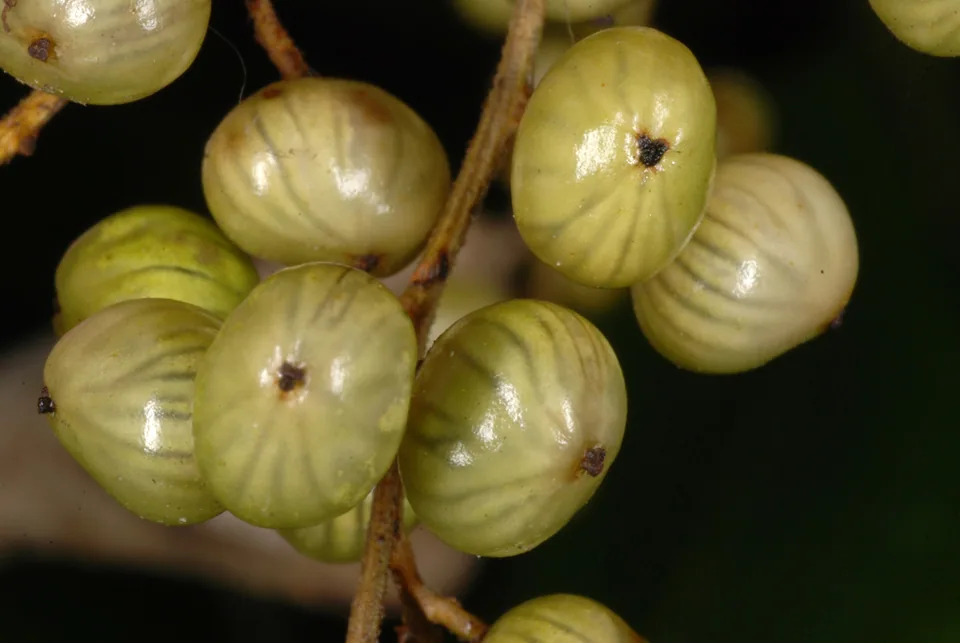
Bobwhites, Ring-necked pheasants, and Ruffled Grouse consume the fruits in winter.
[1]
Similar plants
- Poison oak Toxicodendron diversilobum
- Poison Oak Toxicodendron pubescens
- Poison Ivy Toxicodendron radicans
- American pepper Schinus molle
- Brazilian peppertree Schinus terebinthifolius
- Sicilian sumac Rhus coriaria
- American Smoketree Cotinus obovatus
- Chinese Pistache Pistacia chinensis
Sources
Every value above is quoted from these documents. Links lead to the original publisher.
- Toxicodendron vernix (Poison Sumac, Swamp Sumac, Thunderwood) | North Carolina Extension Gardener Plant Toolbox · plants.ces.ncsu.edu, consulted
- Swamp Sumac - Toxicodendron vernix | North Carolina Extension Gardener Plant Toolbox · plants.ces.ncsu.edu, consulted
- Thunderwood - Toxicodendron vernix | North Carolina Extension Gardener Plant Toolbox · plants.ces.ncsu.edu, consulted
- Poison Sumac - Toxicodendron vernix | North Carolina Extension Gardener Plant Toolbox · plants.ces.ncsu.edu, consulted
- ncbi.nlm.nih.gov · ncbi.nlm.nih.gov
- aces.edu · aces.edu
- horticultureforhomegardeners.ca · horticultureforhomegardeners.ca
Written by Emilio Marruso · last checked