
Cómo cultivar y cuidar Aguaribay
Schinus molle
Escrito por Emilio Marruso · última revisión
Tóxica para: Personas · Por qué
De un vistazo
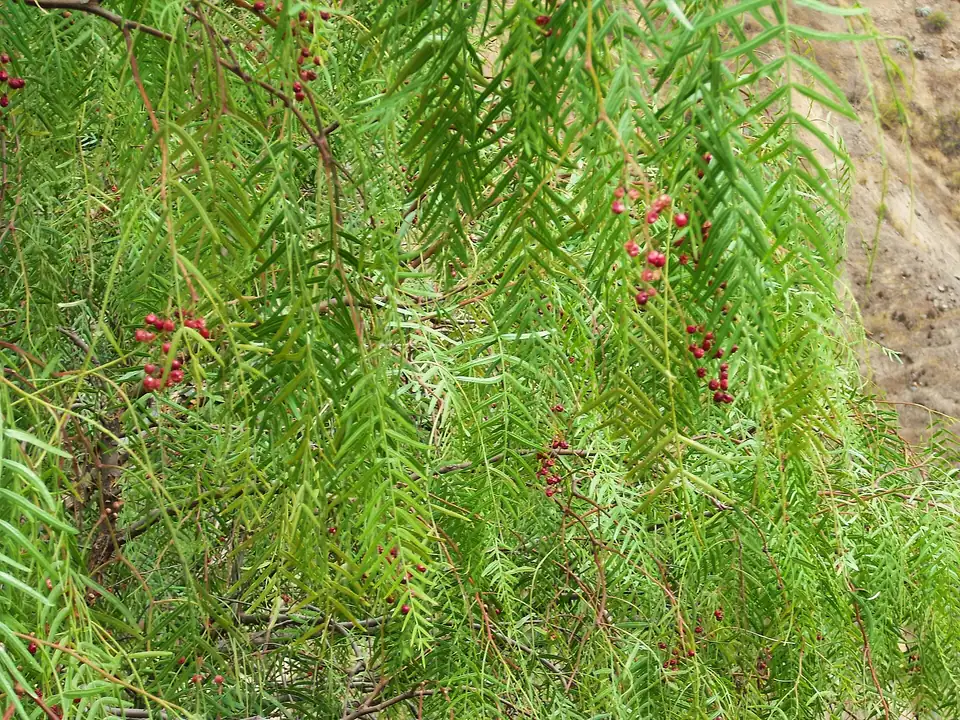
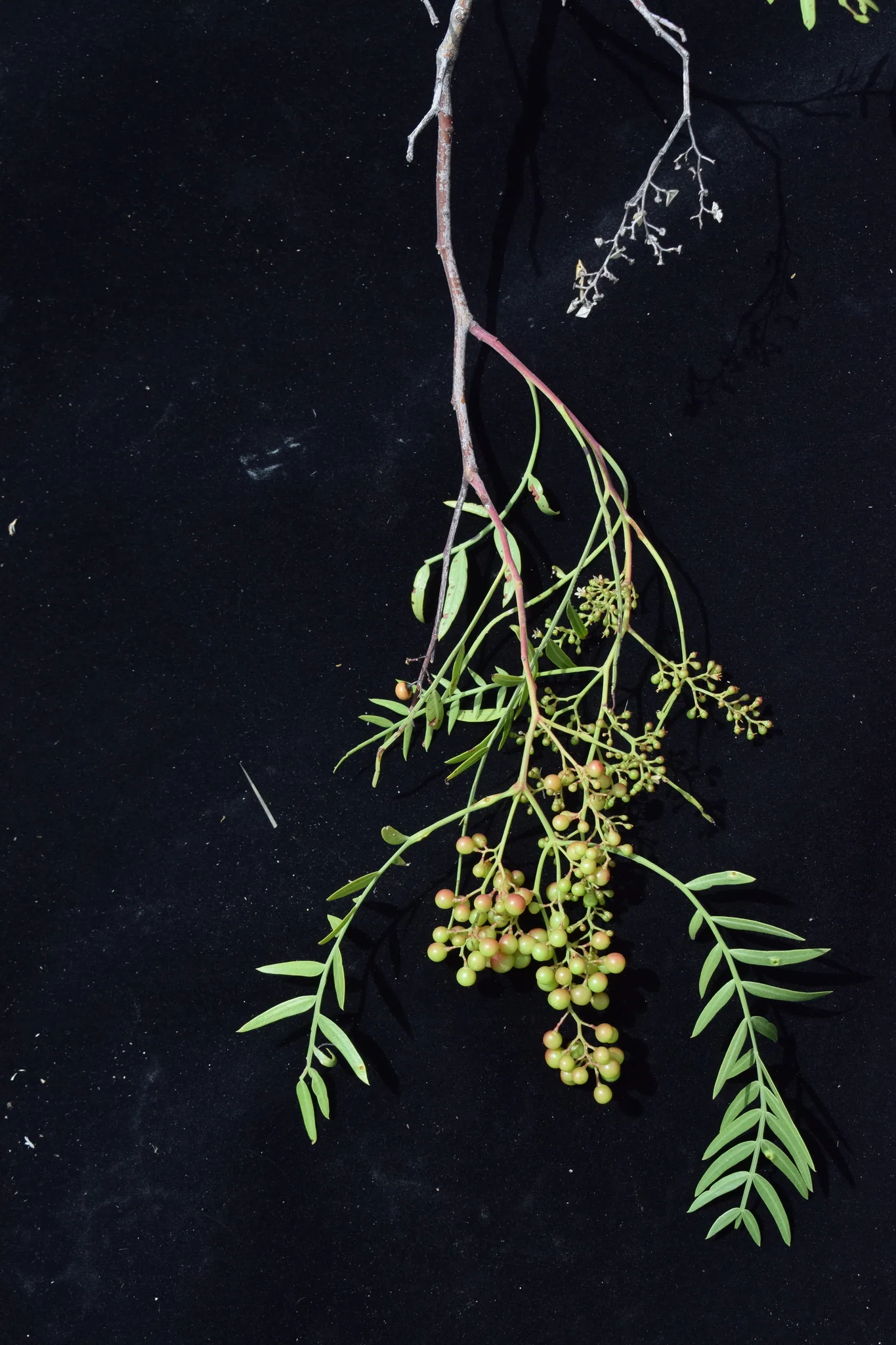
Este atractivo árbol ornamental, con sus racimos colgantes de pequeñas bayas rosadas, es fácil de contentar: le encanta el sol pleno o la semisombra y pide poca agua una vez establecido. Riégalo con regularidad mientras es joven, pero nunca dejes la tierra encharcada, o las raíces se pudren. Secas y tostadas, sus bayas incluso sustituyen a la pimienta.
- Sol
Sol pleno o semisombra
Qué dicen las fuentes (3)
Luz: Pleno sol a semisombra
They prefer full sun and well-drained soils.
— Pepper Tree / Home and Landscape / UC Statewide IPM Program (UC IPM) [3] Sun Exposure : Full sun to partial shade. Schinus thrives best in sunny spots but can tolerate light shade.
— How to Grow Schinus - Pepper Tree - Harvest to Table [6] Prefers a well-drained soil in full sun, but also tolerates the light shade of other trees
— Schinus molle - Useful Tropical Plants [4] - Riego
Riego regular de joven y poco una vez establecido; la tierra encharcada pudre las raíces
Qué dicen las fuentes (4)
Riego: Poca agua una vez establecida; riego regular cuando es joven, evita el exceso de riego
They need little water once established.
— Pepper Tree / Home and Landscape / UC Statewide IPM Program (UC IPM) [3] Drought-tolerant once established, but regular watering is needed when young. Overwatering should be avoided.
— How to Grow Schinus - Pepper Tree - Harvest to Table [6] Notas sobre el riego: Propensa a la pudrición de la raíz en situaciones de suelo empapado; las plantas crecen mejor donde hay algo de humedad en el suelo durante la temporada cálida
in soggy situations it can be prone to root rot.
— Schinus molle [7] Plants grow best where some soil moisture is available during the warm season.
— A WEED REPORT from the book Weed Control in Natural Areas in the Western United States [2] - Suelo
Suelo con pH 6,0–8,5, mejor entre 6,5 y 7,5
- Cosecha
Las bayas secas y tostadas se usan como sustituto de la pimienta
- Plagas
Cochinillas, psílidos, trips y orugas; podredumbre de raíz y verticilosis
Qué dicen las fuentes (2)
Plagas: cochinilla negra, orugas que se alimentan del follaje, psílidos, cochinillas, trips
Black Scale Foliage-feeding Caterpillars (Trees and Shrubs) Psyllids Scales Thrips
— Pepper Tree / Home and Landscape / UC Statewide IPM Program (UC IPM) [3] Enfermedades: podredumbre de la raíz por armillaria, marchitez por verticillium, hongos de descomposición de la madera
Armillaria Root Rot Verticillium Wilt (Plants) Wood Decay Fungi in Landscape Trees
— Pepper Tree / Home and Landscape / UC Statewide IPM Program (UC IPM) [3] - Atención
Puede albergar la cochinilla negra, una plaga grave de los cítricos
- Multiplicación
Semillas lavadas en agua corriente 24 horas, o esquejes de agosto a principios de septiembre
Qué dicen las fuentes (2)
Propagación: Semilla (lavada en agua corriente durante 24 horas antes de sembrar); esquejes de madera casi madura, de agosto a principios de septiembre
it is important to wash the seeds thoroughly in running water for 24 hours before sowing
— Schinus molle - Useful Tropical Plants [4] Cuttings of almost ripe wood, 8cm with a heel, August to early September in a frame.
— Schinus molle - Useful Tropical Plants [4] - Maceta
Se puede cultivar también en interior
Qué dicen las fuentes (1)
En interior: Sí
The tree has been grown as an indoor bonsai.
— Schinus molle [7] - Seguridad
Las bayas, sobre todo las semillas, son algo tóxicas; el polen puede causar dermatitis y asma
Resumen
El Schinus molle es un árbol perennifolio con follaje colgante, de 3 a 15 m [9,8–49,2 ft] de altura, muy plantado como ornamental y árbol de sombra. [7] Prefiere pleno sol y suelo bien drenado, necesita poca agua una vez establecido, y ha escapado del cultivo en algunas regiones. [3][2] La semilla contiene una sustancia alergénica, y el polen, las hojas y la goma de la corteza pueden causar dermatitis. [4]
Citado en inglés, como en la fuente.
Esta ficha está incompleta: las fuentes consultadas aún no cubren todos los campos.
Aún no cubierto por nuestras fuentes: Rusticidad, zona más cálida, Poda
Cuidados
Las medidas entre corchetes son nuestra conversión al otro sistema de unidades; el texto citado no cambia.
Riego
Riego
Poca agua una vez establecida; riego regular cuando es joven, evita el exceso de riego
Qué dicen las fuentes (2)
They need little water
once established.Drought-tolerant once established, but regular watering is needed when young. Overwatering should be avoided.Notas sobre el riego
Propensa a la pudrición de la raíz en situaciones de suelo empapado; las plantas crecen mejor donde hay algo de humedad en el suelo durante la temporada cálida
Luz
Pleno sol a semisombra
Qué dicen las fuentes (3)
They prefer full sun and well-drained soils.Sun Exposure : Full sun to partial shade. Schinus thrives best in sunny spots but can tolerate light shade.Prefers a well-drained soil in full sun, but also tolerates the light shade of other treesClima y frío
Rusticidad, zona más fría
Las fuentes dan valores distintos según la región, la zona o las condiciones de cultivo.
Lo que dice cada fuente
Según World Agroforestry Database: Resistente a las heladas y a temperaturas de hasta -10 [mínima invernal de −1,1 a 4,4 °C (de 30 a 40 °F)] grados C
Según Harvest to Table: Sensible a las heladas, puede requerir protección en regiones más frías
Qué dicen las fuentes (2)
Según World Agroforestry Database: S. molle tolerates high temperatures and once established is extremely drought resistant; resistant to frost and temperatures as low as -10 deg. C.Según Harvest to Table: Schinus is frost-sensitive, particularly S. molle , and may require protection in colder regions.Rusticidad, zona más cálida
No figura en las fuentes consultadas.
Suelo
pH del suelo, mínimo
6.0
Lo que dice cada fuente
rango preferido: 6.5
pH del suelo, máximo
8.5
Lo que dice cada fuente
rango preferido: 7.5
Dónde cultivarla
Sí
Qué dicen las fuentes (1)
The tree has been grown as an indoor bonsai.Propagación
Semilla (lavada en agua corriente durante 24 horas antes de sembrar); esquejes de madera casi madura, de agosto a principios de septiembre
Cultivo
La planta
Familia
Anacardiaceae
Qué dicen las fuentes (1)
Pepper tree (California pepper tree) — Schinus molle *
- Family Anacardiaceae (Sumac family)Plagas y enfermedades
Plagas
cochinilla negra, orugas que se alimentan del follaje, psílidos, cochinillas, trips
Qué dicen las fuentes (1)
Black Scale
Foliage-feeding Caterpillars (Trees and Shrubs)
Psyllids
Scales
ThripsEnfermedades
podredumbre de la raíz por armillaria, marchitez por verticillium, hongos de descomposición de la madera
Qué dicen las fuentes (1)
Armillaria Root Rot
Verticillium Wilt (Plants)
Wood Decay Fungi in Landscape TreesProblemas
Podredumbre de la raíz
Síntoma: Podredumbre de raíces en situaciones de suelo empapado
Qué hacer: No indicado por las fuentes
Qué dicen las fuentes (1)
in soggy situations it can be prone to root rot.
— Schinus molle [7] Cochinillas y psílidos
Síntoma: Daño por cochinillas y psílidos; la cochinilla negra, una plaga grave de los cítricos, se alberga
Qué hacer: No indicado por las fuentes
Qué dicen las fuentes (1)
Susceptible to scale and psyllid damage; it harbours black scale, which is a serious pest of the Citrus species
— Schinus molle [7]
Remedios
Cada remedio indica qué dicen las fuentes oficiales; los remedios tradicionales sin fuente oficial aparecen marcados. Los perjudiciales están para que sepas evitarlos.
Primeros auxilios
Primeros auxilios: no sustituyen al médico
dermatitis por contacto
compresa fría Fuente oficial, sin prueba independiente
Cómo: Compresa fría
Avoid aggravating the problem with potentially irritating or allergenic topical applications - Cool compress
— dermnetnz.org [8]
Cuidar la planta
psílidos
jabón insecticida o aceite de neem en aerosol Funciona
Cómo: Los insecticidas de contacto no residuales, como el jabón insecticida y el aceite de neem, controlan los psílidos cuando las partes infestadas de la planta se pueden rociar a fondo.
These products can control psyllids where infested plant parts can be thoroughly sprayed.
— ipm.ucanr.edu [9] Qué dicen las pruebas Nonresidual contact insecticides include azadirachtin, neem oil, insecticidal soap, and narrow-range oil
— ipm.ucanr.edu [9]
Toxicidad
Según la fuente, citada textualmente. No es un consejo médico ni veterinario: si una persona o un animal pudo haber ingerido esta planta, contacta con un centro de toxicología o con un veterinario.
The seed contains an allergenic substance that can irritate the mucus membrane
[4]The pollen, either on contact or when inhaled, can cause dermatitis and asthmatic reactions
[4]- Síntomas
The pollen, either on contact or when inhaled, can cause dermatitis and asthmatic reactions
[4]
The hanging strings of little pink berries of this attractive ornamental tree are reputed to be moderately poisonous, particularly the seed.
[7]- Partes venenosas
The hanging strings of little pink berries of this attractive ornamental tree are reputed to be moderately poisonous, particularly the seed.
[7]
Plants can cause dermatitis in sensitive individuals.
[2]- Síntomas
Plants can cause dermatitis in sensitive individuals.
[2]
Calendario
Poda
No figura en las fuentes consultadas.
Meses tal como los dan las fuentes, en su mayoría de Estados Unidos (hemisferio norte). En el hemisferio sur se desplazan unos seis meses.
Comestibilidad
Según la fuente, citada textualmente. No comas una planta basándote solo en esta página: los errores de identificación pueden ser peligrosos.
Plantas similares
- Brazilian peppertree Schinus terebinthifolius
- American Smoketree Cotinus obovatus
- Pistacho chino Pistacia chinensis
- Chinese Sumac Rhus chinensis
- Michaux's Sumac Rhus michauxii
- Roble venenoso del Pacífico Toxicodendron diversilobum
- Roble venenoso Toxicodendron pubescens
- Zumaque venenoso Toxicodendron vernix
Fuentes
Cada valor anterior se cita de estos documentos. Los enlaces llevan al editor original.
- Schinus molle L. - Herbari Virtual del Mediterrani Occidental · herbarivirtual.uib.cat, consultado
- A WEED REPORT from the book Weed Control in Natural Areas in the Western United States · ccfruitandnuts.ucanr.edu, consultado
- Pepper Tree / Home and Landscape / UC Statewide IPM Program (UC IPM) · ipm.ucanr.edu, consultado
- Schinus molle - Useful Tropical Plants · tropical.theferns.info, consultado
- Schinus molle Profile – California Invasive Plant Council · cal-ipc.org, consultado
- How to Grow Schinus - Pepper Tree - Harvest to Table · harvesttotable.com, consultado
- Schinus molle · apps.worldagroforestry.org, consultado
- dermnetnz.org · dermnetnz.org
- ipm.ucanr.edu · ipm.ucanr.edu
Escrito por Emilio Marruso · última revisión