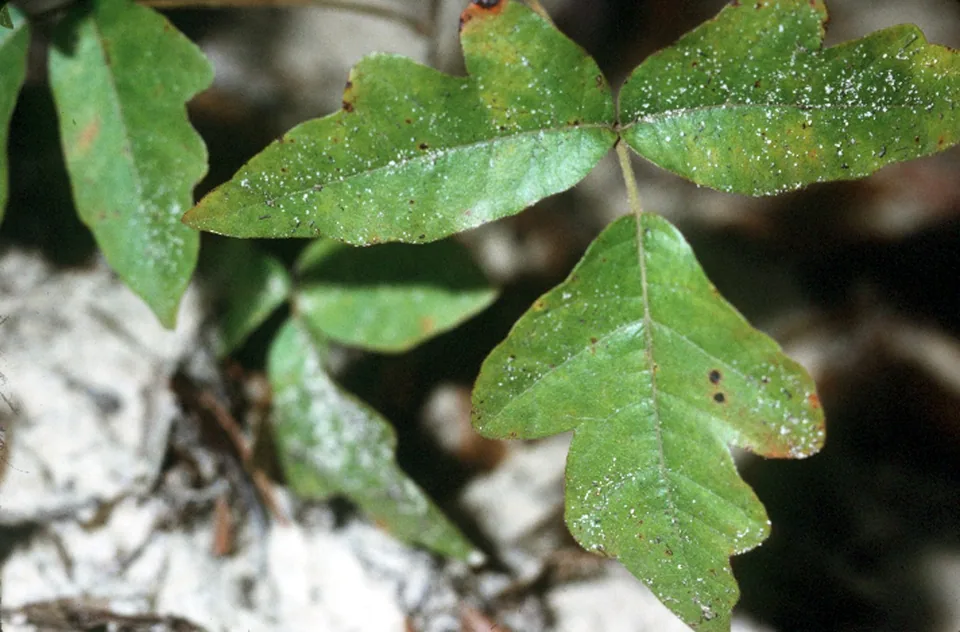


Cómo cultivar y cuidar Roble venenoso
Toxicodendron pubescens
Escrito por Emilio Marruso · última revisión
Tóxica para: Personas · Por qué
De un vistazo
Este arbusto es un auténtico imán para la fauna: los pájaros acuden a por sus bayas y los ciervos se comen sus hojas y frutos. Crece a pleno sol o en semisombra y suele quedarse entre 60 cm y 1,2 m de alto. Eso sí, trátalo con respeto: todas sus partes provocan picor intenso, enrojecimiento y ampollas, así que usa ropa protectora y lávate con agua y jabón tras tocarlo.
- Sol
De pleno sol a semisombra
Qué dicen las fuentes (1)
Luz: Pleno sol a semisombra
Light: Full sun (6 or more hours of direct sunlight a day) Partial Shade (Direct sunlight only part of the day, 2-6 hours)
— Toxicodendron pubescens (Atlantic Poison Oak, Eastern Poison Oak, Poison Oak) | North Carolina Extension Gardener Plant Toolbox [1] - Frío
Aguanta inviernos de hasta −28,9 °C (−20 °F)
Muy rústica · USDA 5a · RHS H7 · Z5
Qué dicen las fuentes (2)
Rusticidad, zona más fría: 5a [mínima invernal de −28,9 a −26,1 °C (de −20 a −15 °F)]
USDA Plant Hardiness Zone: 5a, 5b, 6a, 6b, 7a, 7b, 8a, 8b, 9a, 9b
— Toxicodendron pubescens (Atlantic Poison Oak, Eastern Poison Oak, Poison Oak) | North Carolina Extension Gardener Plant Toolbox [1] Rusticidad, zona más cálida: 9b [mínima invernal de −3,9 a −1,1 °C (de 25 a 30 °F)]
USDA Plant Hardiness Zone: 5a, 5b, 6a, 6b, 7a, 7b, 8a, 8b, 9a, 9b
— Toxicodendron pubescens (Atlantic Poison Oak, Eastern Poison Oak, Poison Oak) | North Carolina Extension Gardener Plant Toolbox [1] - Cosecha
No es para personas: los pájaros comen las bayas y los ciervos, las hojas y los frutos
- Atención
Usa ropa protectora; lava manos, ropa y herramientas con agua y jabón. No lo quemes: el humo también daña
- Tamaño
Suele medir de 60 cm a 1,2 m de alto, y hasta 3 m
Qué dicen las fuentes (1)
Altura adulta: 61-122 cm (2-4 pies) en promedio, hasta 305 cm (10 pies)
The shrub can grow up to 10 feet tall but usually averages 2-4 feet in height.
— Toxicodendron pubescens (Atlantic Poison Oak, Eastern Poison Oak, Poison Oak) | North Carolina Extension Gardener Plant Toolbox [1] - Multiplicación
Se multiplica por semilla
Qué dicen las fuentes (1)
Propagación: Semilla
Recommended Propagation Strategy: Seed Country Or Region Of Origin: central and eastern United States
— Toxicodendron pubescens (Atlantic Poison Oak, Eastern Poison Oak, Poison Oak) | North Carolina Extension Gardener Plant Toolbox [1] - Seguridad
Toda la planta es venenosa para las personas: al tocarla causa ampollas y picor, y es tóxica si se come
Resumen
El roble venenoso del Atlántico es un arbusto nativo, caducifolio, erecto, de bajo crecimiento, de la familia de los zumaques. [1] Se encuentra en áreas secas y arenosas en bosques, áreas naturales o matorrales, a menudo forma grandes colonias y no se recomienda para la mayoría de los jardines. [1] Todas las partes de la planta contienen la toxina urushiol y causan enrojecimiento severo de la piel, picazón, ampollas e hinchazón. [1]
Citado en inglés, como en la fuente.
Esta ficha está incompleta: las fuentes consultadas aún no cubren todos los campos.
Aún no cubierto por nuestras fuentes: Riego, Poda
Cuidados
Riego
No figura en las fuentes consultadas.
Luz
Pleno sol a semisombra
Qué dicen las fuentes (1)
Light:
Full sun (6 or more hours of direct sunlight a day)
Partial Shade (Direct sunlight only part of the day, 2-6 hours)Clima y frío
Rusticidad, zona más fría
5a [mínima invernal de −28,9 a −26,1 °C (de −20 a −15 °F)]
Qué dicen las fuentes (1)
USDA Plant Hardiness Zone:
5a, 5b, 6a, 6b, 7a, 7b, 8a, 8b, 9a, 9bRusticidad, zona más cálida
9b [mínima invernal de −3,9 a −1,1 °C (de 25 a 30 °F)]
Qué dicen las fuentes (1)
USDA Plant Hardiness Zone:
5a, 5b, 6a, 6b, 7a, 7b, 8a, 8b, 9a, 9bPropagación
Semilla
Qué dicen las fuentes (1)
Recommended Propagation Strategy:
Seed
Country Or Region Of Origin:
central and eastern United StatesCultivo
La planta
Ciclo de vida
perenne
Qué dicen las fuentes (1)
Life Cycle:
Perennial
Woody
Recommended Propagation Strategy:
SeedFamilia
Anacardiaceae
Qué dicen las fuentes (1)
It is a member of the Anacardiaceae or Sumac family.Altura adulta
61-122 cm (2-4 pies) en promedio, hasta 305 cm (10 pies)
Qué dicen las fuentes (1)
The shrub can grow up to 10 feet tall but usually averages 2-4 feet in height.Problemas
Dermatitis por contacto con urushiol
Síntoma: Enrojecimiento severo de la piel, picazón, ampollas e hinchazón, por contacto directo o por la ropa y herramientas que tocaron la planta; el humo de un arbusto quemado también puede causar síntomas
Qué hacer: Usa ropa protectora y lava bien las manos, la ropa y las herramientas con agua y jabón después de la exposición
Qué dicen las fuentes (2)
Symptoms may occur through direct contact or by cross-contamination of clothing/tools that have been in contact with the plant.
— Toxicodendron pubescens (Atlantic Poison Oak, Eastern Poison Oak, Poison Oak) | North Carolina Extension Gardener Plant Toolbox [1] Always wear protective clothing to prevent contact with this plant. Thoroughly wash your hands, clothing, and tools with soap and water after exposure.
— Toxicodendron pubescens (Atlantic Poison Oak, Eastern Poison Oak, Poison Oak) | North Carolina Extension Gardener Plant Toolbox [1]
Remedios
Cada remedio indica qué dicen las fuentes oficiales; los remedios tradicionales sin fuente oficial aparecen marcados. Los perjudiciales están para que sepas evitarlos.
Primeros auxilios
Primeros auxilios: no sustituyen al médico
dermatitis por contacto con urushiol
Lava con jabón y agua fría. Funciona
Seek medical help if the rash becomes infected, covers a large part of the body, causes swelling of the face or other sensitive areas, or causes difficulty with swallowing or breathing.
— aces.edu [6] Do not use hot water, as this may make the problem worse by opening skin pores.
— aces.edu [6] Cómo: La piel debe lavarse con jabón y agua fría lo antes posible, idealmente dentro de los 10 a 20 minutos de la exposición.
Skin should be washed with soap and cool water as quickly as possible, ideally within 10 to 20 minutes of exposure.
— ncbi.nlm.nih.gov [5] Qué dicen las pruebas Wash skin with soap and water or rubbing alcohol within 10 to 20 minutes if contact is suspected. Rinse thoroughly.
— aces.edu [6] lavado con alcohol isopropílico Funciona
Seek medical help if the rash becomes infected, covers a large part of the body, causes swelling of the face or other sensitive areas, or causes difficulty with swallowing or breathing.
— aces.edu [6] Cómo: Lava la piel con jabón y agua o alcohol isopropílico dentro de 10 a 20 minutos si se sospecha contacto. Enjuaga bien.
Wash skin with soap and water or rubbing alcohol within 10 to 20 minutes if contact is suspected. Rinse thoroughly.
— aces.edu [6] Qué dicen las pruebas Tip: Rubbing alcohol is a better solvent for the oil than water.
— hgic.clemson.edu [7] baño de avena coloidal Funciona en parte
Seek medical help if the rash becomes infected, covers a large part of the body, causes swelling of the face or other sensitive areas, or causes difficulty with swallowing or breathing.
— aces.edu [6] Cómo: La terapia de apoyo incluye compresas frías y húmedas, baños de avena coloidal, loción de calamina y remojos con acetato de aluminio (solución de Burow)
Supportive therapy includes cool, moist compresses, colloidal oatmeal baths, calamine lotion, and aluminum acetate (Burow solution) soaks, which are frequently recommended for symptomatic relief in patients with mild dermatitis
— ncbi.nlm.nih.gov [5] Qué dicen las pruebas Calamine lotion and oral antihistamines also can provide some relief. Other suggestions include cold packs, oatmeal baths, and compresses containing Burow
— aces.edu [6]
Cómo eliminarla
infestación de roble venenoso
Corta las plantas repetidamente Funciona
Always wear a long-sleeved shirt and long pants. Use protective gloves. Launder the clothing separately from the family laundry.
— hgic.clemson.edu [7] Likewise, trimming or mowing patches or vines can cause particles of the allergen to become airborne.
— aces.edu [6] Cómo: Para infestaciones leves, desentierra las plantas pequeñas. Corta las plantas repetidamente a ras del suelo hasta que finalmente se mueran de hambre.
For light infestations, dig up small plants. Repeatedly cut the plants back to ground level until they eventually starve.
— hgic.clemson.edu [7] Qué dicen las pruebas Repeatedly cut the plants back to ground level until they eventually starve. Start cutting early in the spring
— hgic.clemson.edu [7] Arranca a mano cuando el suelo esté húmedo No verificado
Remedio tradicional, no verificado por una fuente oficial.
Always wear a long-sleeved shirt and long pants. Use protective gloves. Launder the clothing separately from the family laundry.
— hgic.clemson.edu [7] Caution: Dead poison ivy plants can still cause rashes and must be handled with care, since the urushiol oil can stay active on any surface for up to 5 years.
— horticultureforhomegardeners.ca [8] Cómo: Cava y arranca a mano cuando el suelo está húmedo para ayudar a eliminar plantas pequeñas. Ten cuidado de remover todo el sistema de raíces.
sofocación con plástico negro No verificado
Remedio tradicional, no verificado por una fuente oficial.
Caution: Dead poison ivy plants can still cause rashes and must be handled with care, since the urushiol oil can stay active on any surface for up to 5 years.
— horticultureforhomegardeners.ca [8] Cómo: Cubre el área afectada con plástico negro pesado sujeto con mantillo durante un año o más.
Quema el parche. Perjudicial
Patients should be instructed never to burn Toxicodendron plants, as inhalation of aerosolized urushiol can cause severe respiratory tract inflammation and systemic allergic reactions requiring emergency medical care.
— ncbi.nlm.nih.gov [5] Cómo: Puede ser tentador quemar un parche que invade un jardín trasero
It may be tempting to burn a patch that intrudes in a backyard, but under no circumstances should you burn any part of these poisonous plants.
— aces.edu [6] Qué dicen las pruebas It may be tempting to burn a patch that intrudes in a backyard, but under no circumstances should you burn any part of these poisonous plants.
— aces.edu [6]
Toxicidad
Según la fuente, citada textualmente. No es un consejo médico ni veterinario: si una persona o un animal pudo haber ingerido esta planta, contacta con un centro de toxicología o con un veterinario.
Animales
#non-toxic for cats #non-toxic for horses #non-toxic for dogs
[1]La fuente señala el riesgo para este animal pero no explica por qué.
Personas
All parts of this plant are poisonous and will cause severe skin redness, itching, blistering, and swelling.
[1]- Partes venenosas
Poison Toxic Principle: Urishiol Causes Contact Dermatitis: Yes Poison Part: Bark Flowers Fruits Leaves Roots Sap/Juice Seeds Stems
[1]- Principio tóxico
contains the toxin Urushiol, which is also found in Poison Ivy and Poison Sumac.
[1]- Síntomas
Symptoms may occur through direct contact or by cross-contamination of clothing/tools that have been in contact with the plant.
[1]- Gravedad
This plant has high severity poison characteristics. See below
[1]
Poison Severity: High Poison Symptoms: Skin redness, itching, swelling and blisters.
[1]- Partes venenosas
Poison Toxic Principle: Urishiol Causes Contact Dermatitis: Yes Poison Part: Bark Flowers Fruits Leaves Roots Sap/Juice Seeds Stems
[1]- Principio tóxico
contains the toxin Urushiol, which is also found in Poison Ivy and Poison Sumac.
[1]- Gravedad
Poison Severity: High Poison Symptoms: Skin redness, itching, swelling and blisters.
[1]
Edibility: toxic if ingested. - Whole Plant Traits:
[1]- Partes venenosas
Poison Toxic Principle: Urishiol Causes Contact Dermatitis: Yes Poison Part: Bark Flowers Fruits Leaves Roots Sap/Juice Seeds Stems
[1]- Principio tóxico
contains the toxin Urushiol, which is also found in Poison Ivy and Poison Sumac.
[1]- Síntomas
Poison Severity: High Poison Symptoms: Skin redness, itching, swelling and blisters.
[1]
Calendario
Poda
No figura en las fuentes consultadas.
Meses tal como los dan las fuentes, en su mayoría de Estados Unidos (hemisferio norte). En el hemisferio sur se desplazan unos seis meses.
Comestibilidad
Según la fuente, citada textualmente. No comas una planta basándote solo en esta página: los errores de identificación pueden ser peligrosos.
Birds are attracted to the berries. Deer will eat the leaves and fruits.
[1]
Plantas similares
- Roble venenoso del Pacífico Toxicodendron diversilobum
- Zumaque venenoso Toxicodendron vernix
- Hiedra venenosa Toxicodendron radicans
- Aguaribay Schinus molle
- Brazilian peppertree Schinus terebinthifolius
- Rus Rhus coriaria
- American Smoketree Cotinus obovatus
- Pistacho chino Pistacia chinensis
Fuentes
Cada valor anterior se cita de estos documentos. Los enlaces llevan al editor original.
- Toxicodendron pubescens (Atlantic Poison Oak, Eastern Poison Oak, Poison Oak) | North Carolina Extension Gardener Plant Toolbox · plants.ces.ncsu.edu, consultado
- Poison Oak - Toxicodendron pubescens | North Carolina Extension Gardener Plant Toolbox · plants.ces.ncsu.edu, consultado
- Eastern Poison Oak - Toxicodendron pubescens | North Carolina Extension Gardener Plant Toolbox · plants.ces.ncsu.edu, consultado
- Atlantic Poison Oak - Toxicodendron pubescens | North Carolina Extension Gardener Plant Toolbox · plants.ces.ncsu.edu, consultado
- ncbi.nlm.nih.gov · ncbi.nlm.nih.gov
- aces.edu · aces.edu
- hgic.clemson.edu · hgic.clemson.edu
- horticultureforhomegardeners.ca · horticultureforhomegardeners.ca
Escrito por Emilio Marruso · última revisión