

How to Grow and Care for Skunkbush
Rhus trilobata
Written by Emilio Marruso · last checked
At a glance
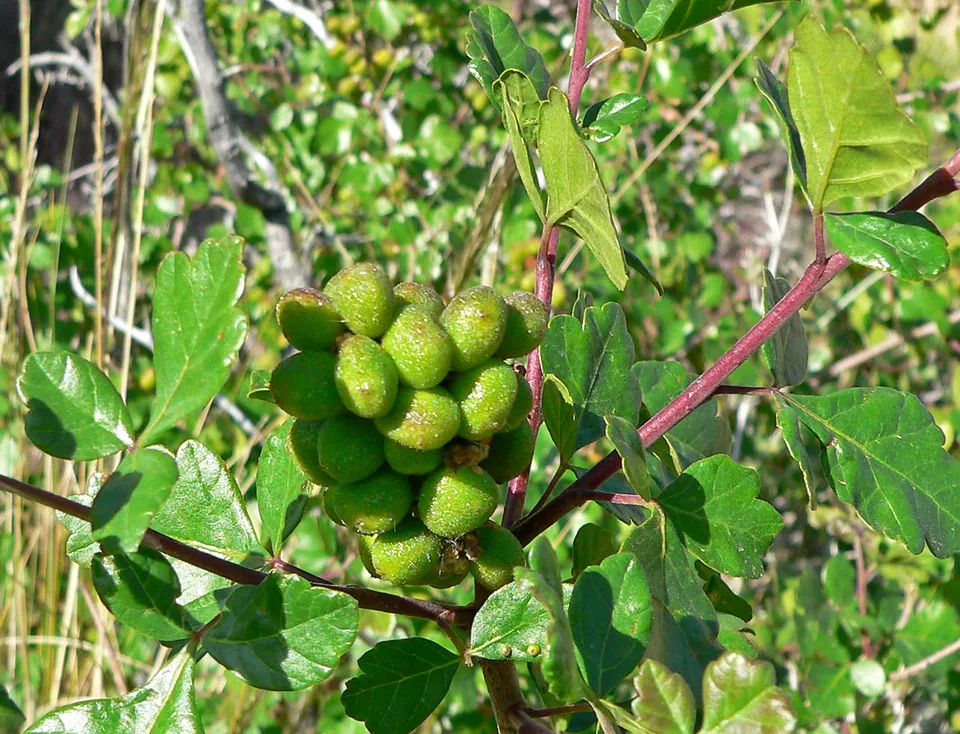
This tough sumac shrugs off drought and grows happily in full sun or partial shade, spreading 3 to 8 feet wide. Its fruits have a story to tell: early pioneers ate them salted like popcorn, and they were used to make drinks much like lemonade. Just give it ground that never floods, and this perennial will stay with you for years.
- Sun
Full sun to partial shade
What the sources say (2)
Light: Full sun to partial shade
Plant in the full or dappled sun in well-drained soil.
— Rhus trilobata (Aromatic Sumac, Basketbush, Fragrant Sumac, Ill-scented Sumac, Skunkbush, Skunkbush Sumac) | North Carolina Extension Gardener Plant Toolbox [1] Skunkbrush grows well in sun or partial shade.
— Skunkbush Sumac | USU [3] - Water
Handles drought well; never let the soil flood or stay soggy
What the sources say (1)
Watering notes: Drought resistant; intolerant of flooding and high water tables
It is drought resistant; it is intolerant of flooding and high water tables.
— Skunkbush Sumac | USU [3] - Cold
Survives winters down to −30 °F (−34.4 °C)
Very hardy · USDA 4a · RHS H7 · Z4
What the sources say (2)
Hardiness, coldest zone: 4a [winter low −34.4 to −31.7 °C (−30 to −25 °F)]
USDA Plant Hardiness Zone: 4a, 4b, 5a, 5b, 6a, 6b
— Rhus trilobata (Aromatic Sumac, Basketbush, Fragrant Sumac, Ill-scented Sumac, Skunkbush, Skunkbush Sumac) | North Carolina Extension Gardener Plant Toolbox [1] Hardiness, warmest zone: 6b [winter low −20.6 to −17.8 °C (−5 to 0 °F)]
USDA Plant Hardiness Zone: 4a, 4b, 5a, 5b, 6a, 6b
— Rhus trilobata (Aromatic Sumac, Basketbush, Fragrant Sumac, Ill-scented Sumac, Skunkbush, Skunkbush Sumac) | North Carolina Extension Gardener Plant Toolbox [1] - Harvest
Its fruits were used for lemonade-like drinks; pioneers ate them salted like popcorn
- Size
Spreads 3 to 8 ft wide
What the sources say (1)
Mature width: 91.44-243.84 cm (3-8 ft)
Width: 3 ft. 0 in. - 8 ft. 0
— Rhus trilobata (Aromatic Sumac, Basketbush, Fragrant Sumac, Ill-scented Sumac, Skunkbush, Skunkbush Sumac) | North Carolina Extension Gardener Plant Toolbox [1] - Propagation
Grow new plants from seed or from its underground runners
What the sources say (1)
Propagation: Seed and rhizomes
Reproduction of skunkbrush is by seed and rhizomes.
— Skunkbush Sumac | USU [3]
Overview
Skunkbush is a low spreading deciduous shrub that tolerates dry rocky soils. [1] It grows well in sun or partial shade and is drought resistant. [3] Its drupes and other parts were used by Native Americans for food and medicine. [3]
This record is incomplete: the sources we read do not cover every field yet.
Not yet covered by our sources: Watering, Pruning
Skunkbush care
How to water Skunkbush
Watering
Not stated in the sources we read.
Watering notes
Drought resistant; intolerant of flooding and high water tables
What the sources say (1)
It is drought resistant; it is intolerant of flooding and high water tables.How much light Skunkbush needs
Full sun to partial shade
What the sources say (2)
Plant in the full or dappled sun in well-drained soil.Skunkbrush grows well in sun or partial shade.How much cold Skunkbush can take
Hardiness, coldest zone
4a [winter low −34.4 to −31.7 °C (−30 to −25 °F)]
What the sources say (1)
USDA Plant Hardiness Zone:
4a, 4b, 5a, 5b, 6a, 6bHardiness, warmest zone
6b [winter low −20.6 to −17.8 °C (−5 to 0 °F)]
What the sources say (1)
USDA Plant Hardiness Zone:
4a, 4b, 5a, 5b, 6a, 6bHow to propagate Skunkbush
Seed and rhizomes
What the sources say (1)
Reproduction of skunkbrush is by seed and rhizomes.How to grow Skunkbush
The plant
Life cycle
perennial
What the sources say (1)
Life Span: Perennial
Origin: Native
Season: Cool
GrowthFamily
Anacardiaceae
What the sources say (1)
Genus:
Rhus
Species:
trilobata
Family:
Anacardiaceae
Uses (Ethnobotany):
NativeMature height
The sources disagree:
Skunkbrush grows 2 to 8 feet (0.5-2.5 m) in height. Height as
[3]
Mature width
91.44-243.84 cm (3-8 ft)
What the sources say (1)
Width: 3 ft. 0 in. - 8 ft. 0Remedies
Each remedy shows what official sources say about it; traditional remedies without an official source are marked as such. Harmful ones are listed so you know to avoid them.
Getting rid of it
root suckers
cutting stems twice in one summer Not verified
Traditional remedy, not verified by an official source.
However, double mowing does not eradicate the clone, although it will set it back.
— pleasantvalleyconservancy.org [5] How: Cut the clone twice in the same summer, once in mid-summer and again in late summer.
Calendar
Pruning
Not stated in the sources we read.
Months as given by the sources, which are mostly from the United States (northern hemisphere). In the southern hemisphere they shift by about six months.
Edibility
Reported by the source, quoted verbatim. Do not eat a plant on the basis of this page alone: identification mistakes can be dangerous.
Similar plants
- Chinese Sumac Rhus chinensis
- Michaux's Sumac Rhus michauxii
- Sicilian sumac Rhus coriaria
- Sumac Rhus aromatica
- Winged Sumac Rhus copallinum
- Smooth Sumac Rhus glabra
- Staghorn Sumac Rhus typhina
- American pepper Schinus molle
Sources
Every value above is quoted from these documents. Links lead to the original publisher.
- Rhus trilobata (Aromatic Sumac, Basketbush, Fragrant Sumac, Ill-scented Sumac, Skunkbush, Skunkbush Sumac) | North Carolina Extension Gardener Plant Toolbox · plants.ces.ncsu.edu, consulted
- Skunkbush Sumac - Rhus trilobata | North Carolina Extension Gardener Plant Toolbox · plants.ces.ncsu.edu, consulted
- Skunkbush Sumac | USU · extension.usu.edu, consulted
- Fragrant Sumac - Rhus trilobata | North Carolina Extension Gardener Plant Toolbox · plants.ces.ncsu.edu, consulted
- pleasantvalleyconservancy.org · pleasantvalleyconservancy.org
Written by Emilio Marruso · last checked