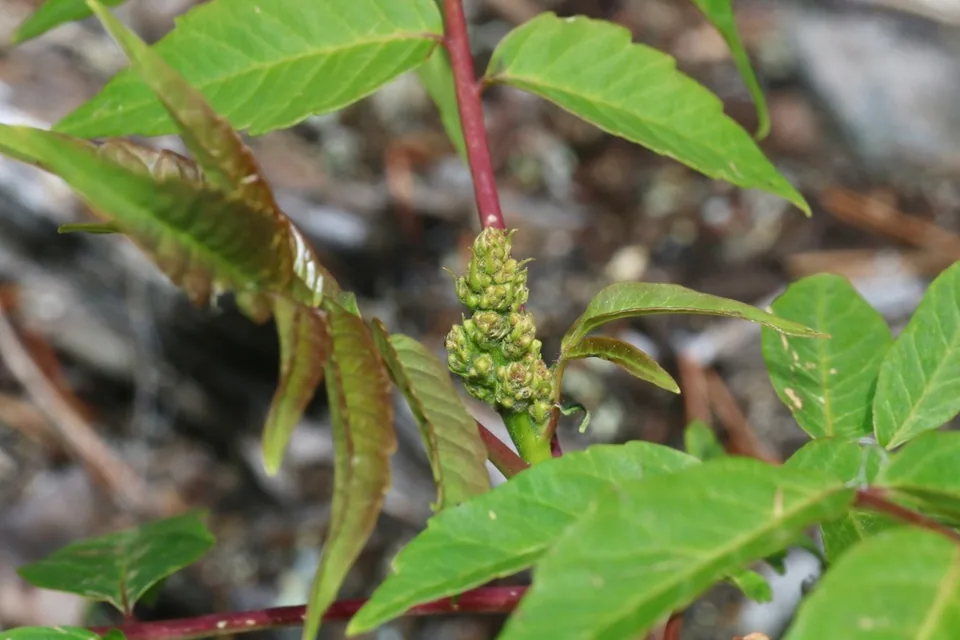
How to Grow and Care for Smooth Sumac
Rhus glabra
Written by Emilio Marruso · last checked
At a glance
Smooth sumac is an easygoing plant for natural corners: once settled in, it shrugs off drought and needs no extra watering. In summer and fall it carries edible fruit that songbirds, wild turkeys and quail enjoy too. Give it room, though: it spreads by suckers and forms large colonies, so it shines where mowing or paving keeps it in check.
- Water
Drought tolerant once established; water only during long dry spells
What the sources say (5)
Watering: Drought tolerant once established; further watering is not necessary unless there are extended periods of drought
According to NC State Extension: It is extremely drought-tolerant and is often found in disturbed areas
— Rhus glabra (Smooth Sumac) | North Carolina Extension Gardener Plant Toolbox [1] According to University of Maine Extension: Once plants are established, further watering should not be necessary unless there are extended periods of drought.
— Bulletin #2578, Native Trees and Shrubs for Maine Landscapes: Smooth Sumac (Rhus glabra) - Cooperative Extension Publications - University of Maine Cooperative Extension [2] According to University of Illinois Extension: moist, well-drained soil is best, but tolerates dryness
— Smooth Sumac (Rhus glabra) - Selecting Shrubs for Your Home - University of Illinois Extension [3] Once plants are established, further watering should not be necessary unless there are extended periods of drought.
— Bulletin #2578, Native Trees and Shrubs for Maine Landscapes: Smooth Sumac (Rhus glabra) - Cooperative Extension Publications - University of Maine Cooperative Extension [2] It is extremely drought-tolerant and is often found in disturbed areas
— Rhus glabra (Smooth Sumac) | North Carolina Extension Gardener Plant Toolbox [1] - Feeding
Feed only if a soil test shows a need; no nitrogen at planting or in its first season
What the sources say (3)
How often: Only when a soil test indicates a need
Fertilization: Landscape trees and shrubs should not be fertilized unless a soil test indicates a need.
— Bulletin #2578, Native Trees and Shrubs for Maine Landscapes: Smooth Sumac (Rhus glabra) - Cooperative Extension Publications - University of Maine Cooperative Extension [2] Avoid: Fertilizing without a soil test showing a need; nitrogen fertilizer at planting or during the first growing season
Fertilization: Landscape trees and shrubs should not be fertilized unless a soil test indicates a need.
— Bulletin #2578, Native Trees and Shrubs for Maine Landscapes: Smooth Sumac (Rhus glabra) - Cooperative Extension Publications - University of Maine Cooperative Extension [2] No nitrogen fertilizer should be added at planting or during the first growing season.
— Bulletin #2578, Native Trees and Shrubs for Maine Landscapes: Smooth Sumac (Rhus glabra) - Cooperative Extension Publications - University of Maine Cooperative Extension [2] - Harvest
Edible fruit in summer and fall; songbirds, turkeys and quail eat it too
What the sources say (1)
Harvest: Summer, fall (fruit)
Fruit Value To Gardener: Edible Display/Harvest Time: Fall Summer
— Rhus glabra (Smooth Sumac) | North Carolina Extension Gardener Plant Toolbox [1] - Pests
Scale, aphids and mites; leaf spot and rust, rarely serious
What the sources say (3)
Pests: scale, aphids, mites
It has some susceptibility to leaf spot, rust, scale, aphids and mites.
— Rhus glabra (Smooth Sumac) | North Carolina Extension Gardener Plant Toolbox [1] Diseases: leaf spot, rust, Verticillium wilt, wood rots and decays
It has some susceptibility to leaf spot, rust, scale, aphids and mites.
— Rhus glabra (Smooth Sumac) | North Carolina Extension Gardener Plant Toolbox [1] Fungal Disease - Verticillium Wilt [Shrubs and Trees] ( Verticillium albo-atrum and V. dahliae ) - Wood Rots and Decays ( Many genus and species involved )
— Smooth Sumac (Rhus glabra) - Selecting Shrubs for Your Home - University of Illinois Extension [3] - Watch out
Spreads by suckers into large colonies: plant it where mowing or paving can stop it
- Propagation
By division or from seed
What the sources say (1)
Propagation: Division, seed
Recommended Propagation Strategy: Division Seed Country Or Region
— Rhus glabra (Smooth Sumac) | North Carolina Extension Gardener Plant Toolbox [1]
Overview
Smooth sumac is a native deciduous shrub that spreads by suckers and forms dense colonies. [1] Plants are male or female, and only female plants bear the red fruit clusters. [2]
This record is incomplete: the sources we read do not cover every field yet.
Not yet covered by our sources: Pruning
Smooth Sumac care
How to water Smooth Sumac
Watering
Drought tolerant once established; further watering is not necessary unless there are extended periods of drought
What each source says
According to NC State Extension: Extremely drought-tolerant
According to University of Maine Extension: No further watering unless extended periods of drought, once established
According to University of Illinois Extension: Moist, well-drained soil is best, but tolerates dryness
What the sources say (5)
According to NC State Extension: It is extremely drought-tolerant and is often found in disturbed areasAccording to University of Maine Extension: Once plants are established, further watering should not be necessary unless there are extended periods of drought.According to University of Illinois Extension: moist, well-drained soil is best, but tolerates drynessOnce plants are established, further watering should not be necessary unless there are extended periods of drought.It is extremely drought-tolerant and is often found in disturbed areasWatering notes
The sources give different values depending on region, zone or growing conditions.
What each source says
According to NC State Extension: Adaptable to most soil types except wet ones
According to University of Maine Extension: Intolerant of seasonal flooding; avoid wet areas
According to University of Illinois Extension: Tolerates wet sites
What the sources say (4)
According to NC State Extension: It is adaptable to most soil types except wet ones and tolerates sun to partial shade.According to University of Maine Extension: seasonal flooding — intolerantAccording to University of Illinois Extension: Tolerance:
|
Alkaline Soil
Dry Sites
Salt
Soil Compaction
Wet Sites
WindWater shrubs regularly for at least one year after planting. Apply 1 inch of water over the root zone once a week until leaves fall in autumnHow much light Smooth Sumac needs
The sources give different values depending on region, zone or growing conditions.
What each source says
According to NC State Extension: Full sun to partial shade
According to University of Maine Extension: Full sun
According to University of Illinois Extension: Full shade, full sun or partial sun/shade
What the sources say (5)
According to NC State Extension: It is adaptable to most soil types except wet ones and tolerates sun to partial shade.According to University of Maine Extension: Light requirements: full sunAccording to University of Illinois Extension: Exposure/ Light Requirements:
Full Shade
Full Sun
Partial Sun/ShadeIt is adaptable to most soil types except wet ones and tolerates sun to partial shade.Light requirements: full sun
Stress tolerances:
soil compactionHow much cold Smooth Sumac can take
Hardiness, coldest zone
The sources give different values depending on region, zone or growing conditions.
What each source says
According to NC State Extension: 3a [winter low −40 to −37.2 °C (−40 to −35 °F)]
According to University of Maine Extension: 2 [winter low −45.6 to −40 °C (−50 to −40 °F)]
According to University of Illinois Extension: 3 [winter low −40 to −34.4 °C (−40 to −30 °F)]
What the sources say (3)
According to NC State Extension: USDA Plant Hardiness Zone:
3a, 3b, 4a, 4b, 5a, 5b, 6a, 6b, 7a, 7b, 8a, 8b, 9a, 9bAccording to University of Maine Extension: Hardiness: USDA zone 2According to University of Illinois Extension: Hardiness Zone:
|
3 - 8Hardiness, warmest zone
The sources give different values depending on region, zone or growing conditions.
What each source says
According to NC State Extension: 9b [winter low −3.9 to −1.1 °C (25 to 30 °F)]
According to University of Illinois Extension: 8 [winter low −12.2 to −6.7 °C (10 to 20 °F)]
What the sources say (2)
According to NC State Extension: USDA Plant Hardiness Zone:
3a, 3b, 4a, 4b, 5a, 5b, 6a, 6b, 7a, 7b, 8a, 8b, 9a, 9bAccording to University of Illinois Extension: Hardiness Zone:
|
3 - 8How to propagate Smooth Sumac
Division, seed
What the sources say (1)
Recommended Propagation Strategy:
Division
Seed
Country Or RegionHow to grow Smooth Sumac
The plant
Life cycle
perennial
What the sources say (1)
Plant Type:
Native Plant
Perennial
Shrub
Tree
Weed
Woody Plant Leaf Characteristics:Family
Anacardiaceae
What the sources say (1)
Genus:
Rhus
Species:
glabra
Family:
Anacardiaceae
Uses (Ethnobotany):Mature height
Mature width
Pests and diseases
Pests
scale, aphids, mites
What the sources say (1)
It has some susceptibility to leaf spot, rust, scale, aphids and mites.Diseases
leaf spot, rust, Verticillium wilt, wood rots and decays
What the sources say (2)
It has some susceptibility to leaf spot, rust, scale, aphids and mites.Fungal Disease
- Verticillium Wilt [Shrubs and Trees] ( Verticillium albo-atrum and V. dahliae )
- Wood Rots and Decays ( Many genus and species involved )Fertilizing
How often
Only when a soil test indicates a need
What the sources say (1)
Fertilization: Landscape trees and shrubs should not be fertilized unless a soil test indicates a need.Avoid
Fertilizing without a soil test showing a need; nitrogen fertilizer at planting or during the first growing season
What the sources say (2)
Fertilization: Landscape trees and shrubs should not be fertilized unless a soil test indicates a need.No nitrogen fertilizer should be added at planting or during the first growing season.Smooth Sumac pests and problems
Aggressive suckering spread
Symptom: Tends to spread aggressively and form large colonies
What to do: Use in naturalized settings, or where frequent mowing or existing paving will control the spread
What the sources say (1)
both are best used in naturalized settings, along the woodland edge or roadside, or in any location where frequent mowing or existing paving will control their spread.
— Bulletin #2578, Native Trees and Shrubs for Maine Landscapes: Smooth Sumac (Rhus glabra) - Cooperative Extension Publications - University of Maine Cooperative Extension [2] Leaf spot, rust, scale, aphids and mites
Symptom: Some susceptibility; no serious insect or disease problems
What the sources say (1)
It has some susceptibility to leaf spot, rust, scale, aphids and mites.
— Rhus glabra (Smooth Sumac) | North Carolina Extension Gardener Plant Toolbox [1]
Remedies
Each remedy shows what official sources say about it; traditional remedies without an official source are marked as such. Harmful ones are listed so you know to avoid them.
Getting rid of it
sumac clone
cutting the clone twice in summer Not verified
Traditional remedy, not verified by an official source.
How: Cut the clone twice in the same summer, once in mid-summer and again in late summer. The source adds that double mowing does not eradicate the clone, although it will set it back.
Calendar
Harvest
Summer, fall (fruit)
What the sources say (1)
Fruit Value To Gardener:
Edible
Display/Harvest Time:
Fall
SummerPruning
Not stated in the sources we read.
Months as given by the sources, which are mostly from the United States (northern hemisphere). In the southern hemisphere they shift by about six months.
Edibility
Reported by the source, quoted verbatim. Do not eat a plant on the basis of this page alone: identification mistakes can be dangerous.
Indicative values
Values from a secondary source, not checked word for word like the rest of this page. Use them as a starting point.
- Hours of sun
- 6-8 hoursIndicative value, adapt it to your climate · Secondary source
- Drought tolerant
- yesIndicative value, adapt it to your climate · Secondary source
- Soil
- Sandy Loamy RockyIndicative value, adapt it to your climate · Secondary source
- Soil pH
- 4.5-6.5Indicative value, adapt it to your climate · Secondary source
- Care level
- LowIndicative value, adapt it to your climate · Secondary source
- Growth rate
- ModerateIndicative value, adapt it to your climate · Secondary source
- Pruning
- February, March, AprilIndicative value, adapt it to your climate · Secondary source
Similar plants
- Chinese Sumac Rhus chinensis
- Michaux's Sumac Rhus michauxii
- Sicilian sumac Rhus coriaria
- Skunkbush Rhus trilobata
- Staghorn Sumac Rhus typhina
- Sumac Rhus aromatica
- Winged Sumac Rhus copallinum
- American pepper Schinus molle
Sources
Every value above is quoted from these documents. Links lead to the original publisher.
- Rhus glabra (Smooth Sumac) | North Carolina Extension Gardener Plant Toolbox · plants.ces.ncsu.edu, consulted
- Bulletin #2578, Native Trees and Shrubs for Maine Landscapes: Smooth Sumac (Rhus glabra) - Cooperative Extension Publications - University of Maine Cooperative Extension · extension.umaine.edu, consulted
- Smooth Sumac (Rhus glabra) - Selecting Shrubs for Your Home - University of Illinois Extension · web.extension.illinois.edu, consulted
Written by Emilio Marruso · last checked