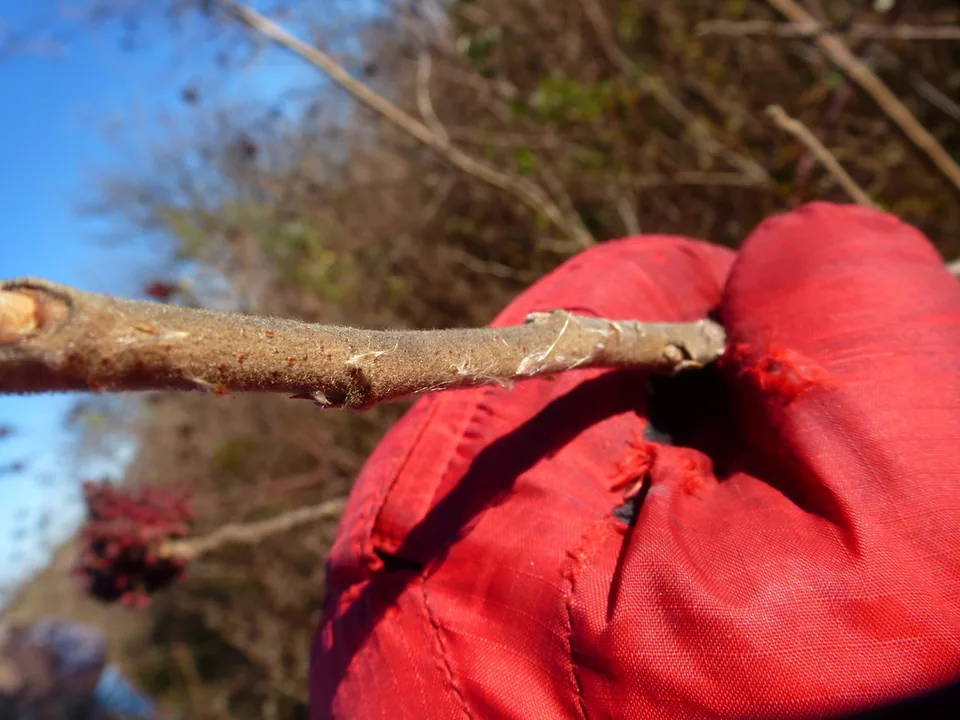
How to Grow and Care for Winged Sumac
Rhus copallinum
Written by Emilio Marruso · last checked
At a glance
This tough shrub shrugs off heat and drought and thrives in full sun, though it also accepts partial shade. It grows 7–15 ft tall and 10–20 ft wide, sending up root suckers that form large colonies, which makes it a natural choice for a hedge or a wild corner of the yard. No serious pest or disease problems trouble it.
- Sun
Full sun is best; it also grows in partial shade
What the sources say (2)
Light: Full sun to partial shade; full sun is best
Full sun is best as it is not very shade tolerant.
— Rhus copallinum (Dwarf Sumac, Flameleaf Sumac, Shining Sumac, Winged Sumac) | North Carolina Extension Gardener Plant Toolbox [1] Light: Full sun (6 or more hours of direct sunlight a day) Partial Shade (Direct sunlight only part of the day, 2-6 hours)
— Rhus copallinum (Dwarf Sumac, Flameleaf Sumac, Shining Sumac, Winged Sumac) | North Carolina Extension Gardener Plant Toolbox [1] - Water
Handles heat and drought well
What the sources say (1)
Watering: Heat and drought tolerant
fire in the landscape. Heat and drought tolerant.
— Rhus copallinum (Dwarf Sumac, Flameleaf Sumac, Shining Sumac, Winged Sumac) | North Carolina Extension Gardener Plant Toolbox [1] - Cold
Survives winters down to −30 °F (−34.4 °C)
Very hardy · USDA 4a · RHS H7 · Z4
What the sources say (2)
Hardiness, coldest zone: 4a [winter low −34.4 to −31.7 °C (−30 to −25 °F)]
USDA Plant Hardiness Zone: 4a, 4b, 5a, 5b, 6a, 6b, 7a, 7b, 8a, 8b, 9a, 9b
— Rhus copallinum (Dwarf Sumac, Flameleaf Sumac, Shining Sumac, Winged Sumac) | North Carolina Extension Gardener Plant Toolbox [1] Hardiness, warmest zone: 9b [winter low −3.9 to −1.1 °C (25 to 30 °F)]
USDA Plant Hardiness Zone: 4a, 4b, 5a, 5b, 6a, 6b, 7a, 7b, 8a, 8b, 9a, 9b
— Rhus copallinum (Dwarf Sumac, Flameleaf Sumac, Shining Sumac, Winged Sumac) | North Carolina Extension Gardener Plant Toolbox [1] - Soil
Rich soil, moist to dry; avoid wet spots
What the sources say (1)
Watering notes: Does best in moist to dry fertile soils; not suited to wet sites
Winged Sumac does best in moist to dry fertile soils but is tolerant of a wide range of soil types including poor ones except for wet sites.
— Rhus copallinum (Dwarf Sumac, Flameleaf Sumac, Shining Sumac, Winged Sumac) | North Carolina Extension Gardener Plant Toolbox [1] - Pests
Sometimes scale, aphids, mites, leaf spots or rust, but nothing serious
What the sources say (2)
Pests: scale, aphids, mites
There is some susceptibility to leaf spots, rusts, scale, aphids, and mites.
— Rhus copallinum (Dwarf Sumac, Flameleaf Sumac, Shining Sumac, Winged Sumac) | North Carolina Extension Gardener Plant Toolbox [1] Diseases: leaf spots, rusts
There is some susceptibility to leaf spots, rusts, scale, aphids, and mites.
— Rhus copallinum (Dwarf Sumac, Flameleaf Sumac, Shining Sumac, Winged Sumac) | North Carolina Extension Gardener Plant Toolbox [1] - Watch out
Spreads by root suckers into large colonies: use it as a hedge or in wild areas
- Size
7–15 ft tall and 10–20 ft wide
What the sources say (2)
Mature height: 213-457 cm (7-15 ft)
Dimensions: Height: 7 ft. 0 in. - 15 ft. 0 in. Width: 10 ft. 0 in. - 20 ft. 0 in.
— Rhus copallinum (Dwarf Sumac, Flameleaf Sumac, Shining Sumac, Winged Sumac) | North Carolina Extension Gardener Plant Toolbox [1] Mature width: 305-610 cm (10-20 ft)
Dimensions: Height: 7 ft. 0 in. - 15 ft. 0 in. Width: 10 ft. 0 in. - 20 ft. 0 in.
— Rhus copallinum (Dwarf Sumac, Flameleaf Sumac, Shining Sumac, Winged Sumac) | North Carolina Extension Gardener Plant Toolbox [1] - Propagation
Grow new plants from pieces of root
What the sources say (1)
Propagation: Root cutting
Life Cycle: Woody Recommended Propagation Strategy: Root Cutting
— Rhus copallinum (Dwarf Sumac, Flameleaf Sumac, Shining Sumac, Winged Sumac) | North Carolina Extension Gardener Plant Toolbox [1]
Overview
Rhus copallinum is a native deciduous shrub or small tree with red fall color that spreads by root suckers into large colonies. [1] It does best in full sun in moist to dry fertile soils and tolerates poor soils except wet sites. [1]
This record is incomplete: the sources we read do not cover every field yet.
Not yet covered by our sources: Pruning
Winged Sumac care
How to water Winged Sumac
Watering
Heat and drought tolerant
What the sources say (1)
fire in the landscape. Heat and drought tolerant.Watering notes
Does best in moist to dry fertile soils; not suited to wet sites
What the sources say (1)
Winged Sumac does best in moist to dry fertile soils but is tolerant of a wide range of soil types including poor ones except for wet sites.How much light Winged Sumac needs
Full sun to partial shade; full sun is best
What the sources say (2)
Full sun is best as it is not very shade tolerant.Light:
Full sun (6 or more hours of direct sunlight a day)
Partial Shade (Direct sunlight only part of the day, 2-6 hours)How much cold Winged Sumac can take
Hardiness, coldest zone
4a [winter low −34.4 to −31.7 °C (−30 to −25 °F)]
What the sources say (1)
USDA Plant Hardiness Zone:
4a, 4b, 5a, 5b, 6a, 6b, 7a, 7b, 8a, 8b, 9a, 9bHardiness, warmest zone
9b [winter low −3.9 to −1.1 °C (25 to 30 °F)]
What the sources say (1)
USDA Plant Hardiness Zone:
4a, 4b, 5a, 5b, 6a, 6b, 7a, 7b, 8a, 8b, 9a, 9bHow to propagate Winged Sumac
Root cutting
What the sources say (1)
Life Cycle:
Woody
Recommended Propagation Strategy:
Root CuttingHow to grow Winged Sumac
The plant
Family
Anacardiaceae
What the sources say (1)
Winged sumac is a native deciduous shrub or small tree in the Anacardiaceae family that is found in Central and Eastern USA and all areas of NC.Mature height
213-457 cm (7-15 ft)
What the sources say (1)
Dimensions:
Height: 7 ft. 0 in. - 15 ft. 0 in.
Width: 10 ft. 0 in. - 20 ft. 0 in.Mature width
305-610 cm (10-20 ft)
What the sources say (1)
Dimensions:
Height: 7 ft. 0 in. - 15 ft. 0 in.
Width: 10 ft. 0 in. - 20 ft. 0 in.Pests and diseases
Pests
scale, aphids, mites
What the sources say (1)
There is some susceptibility to leaf spots, rusts, scale, aphids, and mites.Diseases
leaf spots, rusts
What the sources say (1)
There is some susceptibility to leaf spots, rusts, scale, aphids, and mites.Winged Sumac pests and problems
Leaf spots, rusts, scale, aphids and mites
Symptom: Some susceptibility to these problems; no serious insect or disease problems.
What to do: No control given.
What the sources say (1)
No serious insect or disease problems. There is some susceptibility to leaf spots, rusts, scale, aphids, and mites.
— Rhus copallinum (Dwarf Sumac, Flameleaf Sumac, Shining Sumac, Winged Sumac) | North Carolina Extension Gardener Plant Toolbox [1] Aggressive spread by root suckers
Symptom: Spreads by root suckers to form large colonies.
What to do: Use as a hedge or in naturalized areas where it can spread.
What the sources say (2)
It tends to spread aggressively by root suckers
— Rhus copallinum (Dwarf Sumac, Flameleaf Sumac, Shining Sumac, Winged Sumac) | North Carolina Extension Gardener Plant Toolbox [1] This shrub could be used as a hedge in an area where it can spread. Otherwise, it is best used in naturalized areas for wildlife value but where the fall color can be enjoyed
— Rhus copallinum (Dwarf Sumac, Flameleaf Sumac, Shining Sumac, Winged Sumac) | North Carolina Extension Gardener Plant Toolbox [1]
Remedies
Each remedy shows what official sources say about it; traditional remedies without an official source are marked as such. Harmful ones are listed so you know to avoid them.
Getting rid of it
root suckers
digging out suckers and cutting the root back to the parent plant Not verified
Traditional remedy, not verified by an official source.
This will remove the existing bud point that would have formed suckers, but temporarily
— ehow.com [3] How: Identify the suckers and dig down until you find the root, follow the root back to the plant and cut it out. The control has to be done annually.
mowing off the suckers Not verified
Traditional remedy, not verified by an official source.
How: Mow off the suckers when they invade the lawn; over several seasons constant mowing reduces the vigor of the sprout.
spread by seed
cutting off the flower and berry clusters Not verified
Traditional remedy, not verified by an official source.
How: Cut off the flowers in spring, or wait until summer and cut the clusters of berries off before they begin to ripen, back to the next growing point.
sumac clones
double mowing in one summer Not verified
Traditional remedy, not verified by an official source.
However, double mowing does not eradicate the clone, although it will set it back.
— pleasantvalleyconservancy.org [4] How: Cut the clone twice in the same summer, once in mid-summer and again in late summer.
Calendar
Pruning
Not stated in the sources we read.
Months as given by the sources, which are mostly from the United States (northern hemisphere). In the southern hemisphere they shift by about six months.
Indicative values
Values from a secondary source, not checked word for word like the rest of this page. Use them as a starting point.
- Life cycle
- PerennialIndicative value, adapt it to your climate · Secondary source
- Drought tolerant
- yesIndicative value, adapt it to your climate · Secondary source
- Soil pH
- 4.5-6.5Indicative value, adapt it to your climate · Secondary source
- Care level
- MediumIndicative value, adapt it to your climate · Secondary source
- Growth rate
- HighIndicative value, adapt it to your climate · Secondary source
- Pruning
- March, April, May, June, JulyIndicative value, adapt it to your climate · Secondary source
Similar plants
- Chinese Sumac Rhus chinensis
- Michaux's Sumac Rhus michauxii
- Sicilian sumac Rhus coriaria
- Skunkbush Rhus trilobata
- Sumac Rhus aromatica
- Smooth Sumac Rhus glabra
- Staghorn Sumac Rhus typhina
- American pepper Schinus molle
Sources
Every value above is quoted from these documents. Links lead to the original publisher.
- Rhus copallinum (Dwarf Sumac, Flameleaf Sumac, Shining Sumac, Winged Sumac) | North Carolina Extension Gardener Plant Toolbox · plants.ces.ncsu.edu, consulted
- Dwarf Sumac - Rhus copallinum | North Carolina Extension Gardener Plant Toolbox · plants.ces.ncsu.edu, consulted
- ehow.com · ehow.com
- pleasantvalleyconservancy.org · pleasantvalleyconservancy.org
Written by Emilio Marruso · last checked