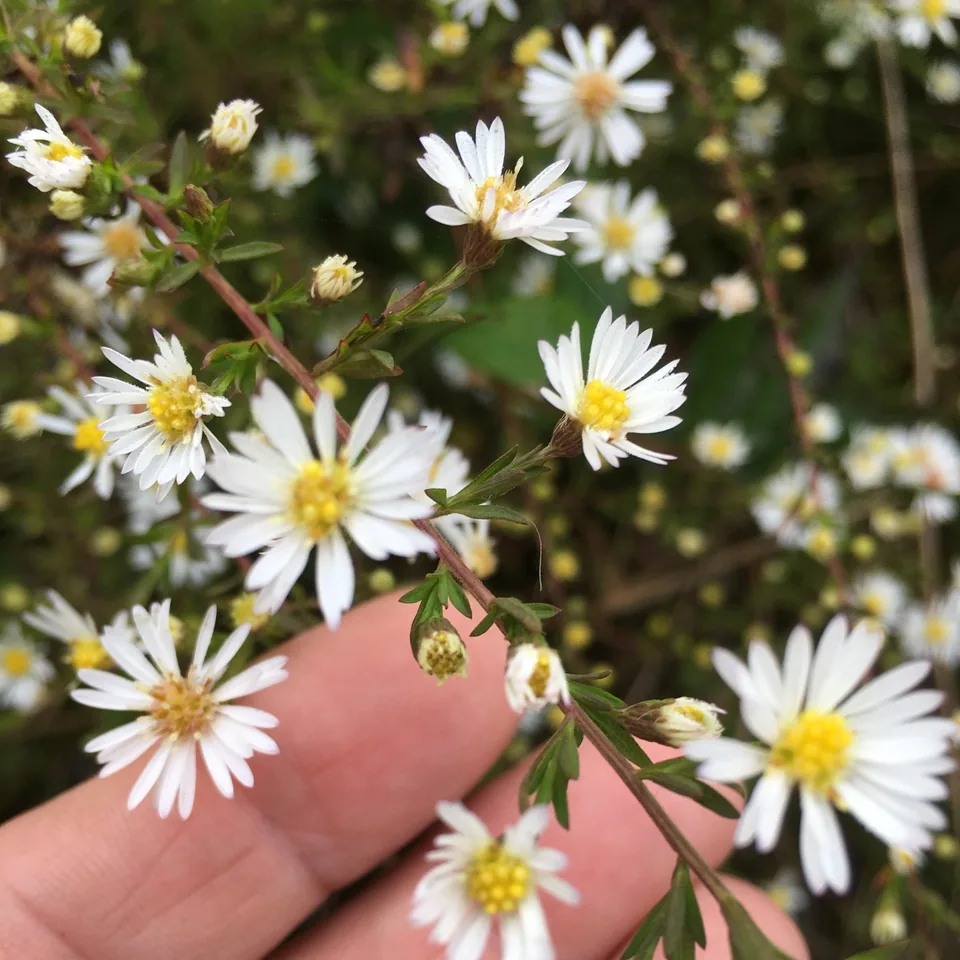


How to Grow and Care for Bushy Aster
Symphyotrichum dumosum
Written by Emilio Marruso · last checked
At a glance
Bushy aster is a perennial that comes back every year and is happy in full sun or partial shade. It grows in well-drained sandy soil, whether dry or moist, and forms a plant 1 to 3 feet tall. You can start it from seed or divide a clump to get more plants for your garden.
- Sun
Full sun to partial shade
What the sources say (1)
Light: Full sun to partial shade
They prefer full sun to partial shade in dry to moist, well-drained sandy soils. Propagation is by seed or division.
— Symphyotrichum dumosum (Bushy American-aster, Bushy Aster, Long-stalked Aster, Rice Button Aster) | North Carolina Extension Gardener Plant Toolbox [1] - Water
Copes with soil from dry to moist, as long as water drains away
What the sources say (1)
Watering notes: Grows in dry to moist, well-drained sandy soils
They prefer full sun to partial shade in dry to moist, well-drained sandy soils. Propagation is by seed or division.
— Symphyotrichum dumosum (Bushy American-aster, Bushy Aster, Long-stalked Aster, Rice Button Aster) | North Carolina Extension Gardener Plant Toolbox [1] - Cold
Survives winters down to −40 °F (−40 °C)
Very hardy · USDA 3a · RHS H7 · Z3
What the sources say (2)
Hardiness, coldest zone: 3a [winter low −40 to −37.2 °C (−40 to −35 °F)]
USDA Plant Hardiness Zone: 3a, 3b, 4a, 4b, 5a, 5b, 6a, 6b, 7a, 7b, 8a, 8b, 9a, 9b
— Symphyotrichum dumosum (Bushy American-aster, Bushy Aster, Long-stalked Aster, Rice Button Aster) | North Carolina Extension Gardener Plant Toolbox [1] Hardiness, warmest zone: 9b [winter low −3.9 to −1.1 °C (25 to 30 °F)]
USDA Plant Hardiness Zone: 3a, 3b, 4a, 4b, 5a, 5b, 6a, 6b, 7a, 7b, 8a, 8b, 9a, 9b
— Symphyotrichum dumosum (Bushy American-aster, Bushy Aster, Long-stalked Aster, Rice Button Aster) | North Carolina Extension Gardener Plant Toolbox [1] - Soil
Sandy soil that drains well
What the sources say (1)
Watering notes: Grows in dry to moist, well-drained sandy soils
They prefer full sun to partial shade in dry to moist, well-drained sandy soils. Propagation is by seed or division.
— Symphyotrichum dumosum (Bushy American-aster, Bushy Aster, Long-stalked Aster, Rice Button Aster) | North Carolina Extension Gardener Plant Toolbox [1] - Pests
Deer may nibble it; watch for powdery mildew and leaf spot
What the sources say (2)
Pests: deer
Insects, Diseases, and Other Plant Problems: Deer browsing, powdery mildew, and leaf spot can occur.
— Symphyotrichum dumosum (Bushy American-aster, Bushy Aster, Long-stalked Aster, Rice Button Aster) | North Carolina Extension Gardener Plant Toolbox [1] Diseases: powdery mildew, leaf spot
Insects, Diseases, and Other Plant Problems: Deer browsing, powdery mildew, and leaf spot can occur.
— Symphyotrichum dumosum (Bushy American-aster, Bushy Aster, Long-stalked Aster, Rice Button Aster) | North Carolina Extension Gardener Plant Toolbox [1] - Size
1 to 3 ft tall and 1 to 1.5 ft wide
What the sources say (2)
Mature height: 30-91 cm (1 ft - 3 ft)
Dimensions: Height: 1 ft. 0 in. - 3 ft. 0 in. Width: 1 ft. 0 in. - 1 ft. 6 in.
— Symphyotrichum dumosum (Bushy American-aster, Bushy Aster, Long-stalked Aster, Rice Button Aster) | North Carolina Extension Gardener Plant Toolbox [1] Mature width: 30-46 cm (1 ft - 1 ft 6 in)
Dimensions: Height: 1 ft. 0 in. - 3 ft. 0 in. Width: 1 ft. 0 in. - 1 ft. 6 in.
— Symphyotrichum dumosum (Bushy American-aster, Bushy Aster, Long-stalked Aster, Rice Button Aster) | North Carolina Extension Gardener Plant Toolbox [1] - Propagation
Grow new plants from seed or by dividing a clump
What the sources say (1)
Propagation: Seed, division
They prefer full sun to partial shade in dry to moist, well-drained sandy soils. Propagation is by seed or division. The plant spreads by rhizomes.
— Symphyotrichum dumosum (Bushy American-aster, Bushy Aster, Long-stalked Aster, Rice Button Aster) | North Carolina Extension Gardener Plant Toolbox [1]
Overview
Bushy aster is a native perennial wildflower of the daisy family that blooms from late summer through fall. [1] It prefers full sun to partial shade in dry to moist, well-drained sandy soils. [1] It is propagated by seed or division and spreads by rhizomes. [1]
This record is incomplete: the sources we read do not cover every field yet.
Not yet covered by our sources: Watering, Pruning
Bushy Aster care
How to water Bushy Aster
Watering
Not stated in the sources we read.
Watering notes
Grows in dry to moist, well-drained sandy soils
What the sources say (1)
They prefer full sun to partial shade in dry to moist, well-drained sandy soils. Propagation is by seed or division.How much light Bushy Aster needs
Full sun to partial shade
What the sources say (1)
They prefer full sun to partial shade in dry to moist, well-drained sandy soils. Propagation is by seed or division.How much cold Bushy Aster can take
Hardiness, coldest zone
3a [winter low −40 to −37.2 °C (−40 to −35 °F)]
What the sources say (1)
USDA Plant Hardiness Zone:
3a, 3b, 4a, 4b, 5a, 5b, 6a, 6b, 7a, 7b, 8a, 8b, 9a, 9bHardiness, warmest zone
9b [winter low −3.9 to −1.1 °C (25 to 30 °F)]
What the sources say (1)
USDA Plant Hardiness Zone:
3a, 3b, 4a, 4b, 5a, 5b, 6a, 6b, 7a, 7b, 8a, 8b, 9a, 9bHow to propagate Bushy Aster
Seed, division
What the sources say (1)
They prefer full sun to partial shade in dry to moist, well-drained sandy soils. Propagation is by seed or division. The plant spreads by rhizomes.How to grow Bushy Aster
The plant
Life cycle
perennial
What the sources say (1)
Species: dumosum Family: Asteraceae Life Cycle: Perennial Recommended Propagation Strategy: SeedFamily
Asteraceae
What the sources say (1)
Species: dumosum Family: Asteraceae Life Cycle: Perennial Recommended Propagation Strategy: SeedMature height
30-91 cm (1 ft - 3 ft)
What the sources say (1)
Dimensions: Height: 1 ft. 0 in. - 3 ft. 0 in. Width: 1 ft. 0 in. - 1 ft. 6 in.Mature width
30-46 cm (1 ft - 1 ft 6 in)
What the sources say (1)
Dimensions: Height: 1 ft. 0 in. - 3 ft. 0 in. Width: 1 ft. 0 in. - 1 ft. 6 in.Pests and diseases
Pests
deer
What the sources say (1)
Insects, Diseases, and Other Plant Problems: Deer browsing, powdery mildew, and leaf spot can occur.Diseases
powdery mildew, leaf spot
What the sources say (1)
Insects, Diseases, and Other Plant Problems: Deer browsing, powdery mildew, and leaf spot can occur.Bushy Aster pests and problems
Deer browsing, powdery mildew and leaf spot
Symptom: Deer browsing, powdery mildew and leaf spot can occur
What the sources say (1)
Insects, Diseases, and Other Plant Problems: Deer browsing, powdery mildew, and leaf spot can occur.
— Symphyotrichum dumosum (Bushy American-aster, Bushy Aster, Long-stalked Aster, Rice Button Aster) | North Carolina Extension Gardener Plant Toolbox [1]
Remedies
Each remedy shows what official sources say about it; traditional remedies without an official source are marked as such. Harmful ones are listed so you know to avoid them.
Treating the plant
powdery mildew
removing affected leaves Partly works
Symptomatic leaves can be placed into a plastic bag in order to avoid spreading the spores of the fungus to other plants.
— portal.ct.gov [7] How: Remove and destroy any foliage that is affected by powdery mildew as soon as you see signs of it.
Remove and destroy any foliage that is affected by powdery mildew as soon as you see signs of it.
— gardeningknowhow.com [6] What the evidence says Disease can be minimized by avoiding overcrowded spacing of plants and by carefully picking off affected leaves as soon as symptoms are evident.
— portal.ct.gov [7] watering at the roots only Not verified
Traditional remedy, not verified by an official source.
How: Water only at the roots to minimize humidity around the plants.
potassium bicarbonate spray Partly works
Do not mix with acidifying agents.
— pnwhandbooks.org [8] How: Bicarbonate-based products (85% potassium bicarbonate) might supplement a normal program when powdery mildew is first observed; thorough coverage is essential.
Bicarbonate-based products (85% potassium bicarbonate). Might supplement a normal program when powdery mildew is first observed. Do not mix with acidifying agents.
— pnwhandbooks.org [8] What the evidence says Bicarbonate-based products (85% potassium bicarbonate). Might supplement a normal program when powdery mildew is first observed. Do not mix with acidifying agents.
— pnwhandbooks.org [8]
chrysanthemum lace bugs
heavy water spray Official source, not independently tested
How: Spray nymphs and adults with heavy streams of water, directing the spray to the upper and the underside of leaves.
The first approach is to spray nymphs and adults with heavy streams of water. To remove Chrysanthemum lace bugs, direct the spray to the upper AND underside of leaves.
— bygl.osu.edu [9] insecticidal soap or horticultural oil spray Official source, not independently tested
Be aware that these methods will not impact eggs, only nymphs and adults, and will likely need to be repeated for effective control.
— bygl.osu.edu [9] How: Insecticidal soaps and horticultural oils that control insects through direct contact can be applied.
insecticidal soaps and horticultural oils that control insects through direct contact can also be applied. These are generally safer on natural enemies and beneficial insects.
— bygl.osu.edu [9]
leaf spot
picking off symptomatic leaves Official source, not independently tested
How: Pick and remove symptomatic leaves as soon as they develop; water early in the day to give the foliage a chance to dry before nighttime.
It is also helpful to pick and remove symptomatic leaves as soon as they develop.
— portal.ct.gov [7]
rust
fall cleanup of plant debris and wider spacing Partly works
How: Clean up plant refuse in the fall and space the plants adequately to promote good air circulation.
These diseases can be minimized by cleaning up plant refuse in the fall and by adequate spacing of the plants to promote good air circulation.
— portal.ct.gov [7] What the evidence says These diseases can be minimized by cleaning up plant refuse in the fall and by adequate spacing of the plants to promote good air circulation.
— portal.ct.gov [7]
Calendar
Pruning
Not stated in the sources we read.
Months as given by the sources, which are mostly from the United States (northern hemisphere). In the southern hemisphere they shift by about six months.
Indicative values
Values from a secondary source, not checked word for word like the rest of this page. Use them as a starting point.
- Watering
- FrequentIndicative value, adapt it to your climate · Secondary source · Data for the variety Symphyotrichum dumosum (incl. hybrids)
- Soil pH
- 5.5-7.5Indicative value, adapt it to your climate · Secondary source · Data for the variety Symphyotrichum dumosum (incl. hybrids)
- Care level
- MediumIndicative value, adapt it to your climate · Secondary source · Data for the variety Symphyotrichum dumosum (incl. hybrids)
- Growth rate
- HighIndicative value, adapt it to your climate · Secondary source · Data for the variety Symphyotrichum dumosum (incl. hybrids)
- Pruning
- March, April, AugustIndicative value, adapt it to your climate · Secondary source · Data for the variety Symphyotrichum dumosum (incl. hybrids)
Similar plants
- Aromatic Aster Symphyotrichum oblongifolium
- Aster Symphyotrichum lateriflorum
- Barrens Silky Aster Symphyotrichum pratense
- Blue Wood Aster Symphyotrichum cordifolium
- Crooked-stemmed Aster Symphyotrichum prenanthoides
- Eastern Silvery Aster Symphyotrichum concolor
- Frost Aster Symphyotrichum pilosum
- Georgia Aster Symphyotrichum georgianum
Sources
Every value above is quoted from these documents. Links lead to the original publisher.
- Symphyotrichum dumosum (Bushy American-aster, Bushy Aster, Long-stalked Aster, Rice Button Aster) | North Carolina Extension Gardener Plant Toolbox · plants.ces.ncsu.edu, consulted
- Bushy American-aster - Symphyotrichum dumosum | North Carolina Extension Gardener Plant Toolbox · plants.ces.ncsu.edu, consulted
- Long-stalked Aster - Symphyotrichum dumosum | North Carolina Extension Gardener Plant Toolbox · plants.ces.ncsu.edu, consulted
- Rice Button Aster - Symphyotrichum dumosum | North Carolina Extension Gardener Plant Toolbox · plants.ces.ncsu.edu, consulted
- Symphyotrichum (Aster, Michaelmas daisy) | North Carolina Extension Gardener Plant Toolbox · plants.ces.ncsu.edu, consulted
- gardeningknowhow.com · gardeningknowhow.com
- portal.ct.gov · portal.ct.gov
- pnwhandbooks.org · pnwhandbooks.org
- bygl.osu.edu · bygl.osu.edu
Written by Emilio Marruso · last checked