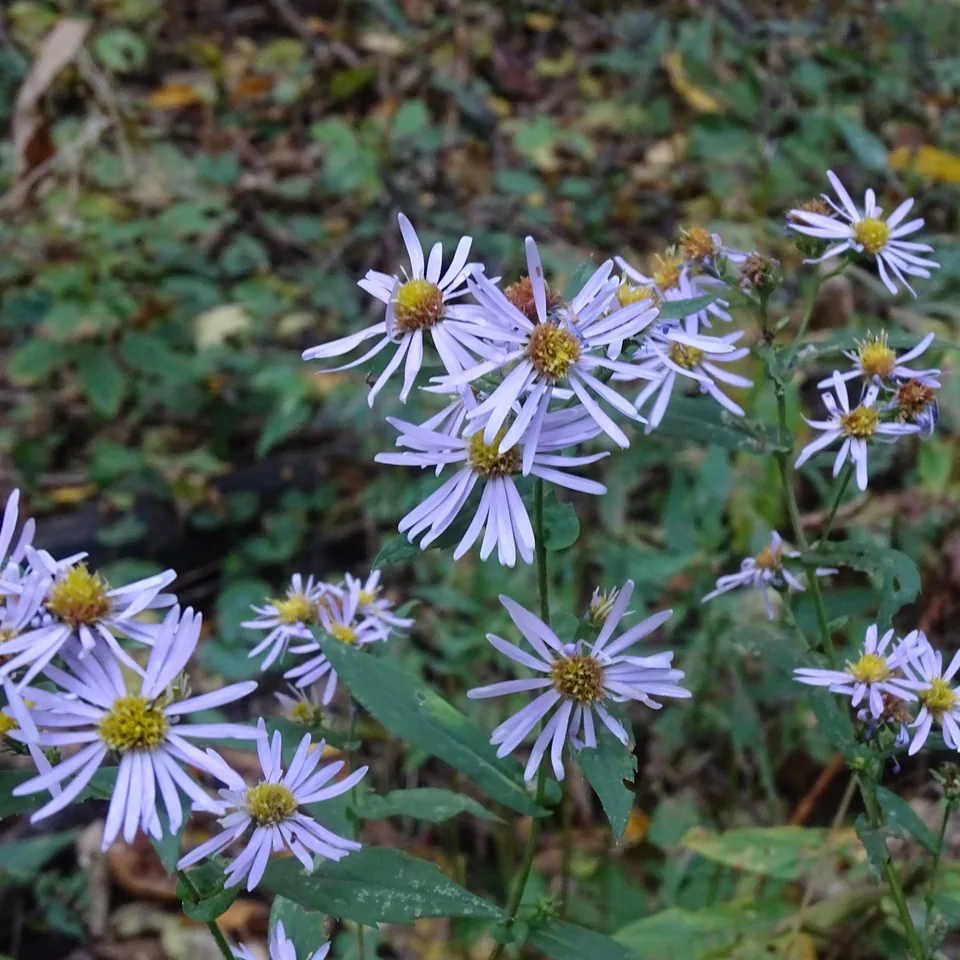


How to Grow and Care for Crooked-stemmed Aster
Symphyotrichum prenanthoides
Written by Emilio Marruso · last checked
At a glance
This aster is a perennial that comes back year after year, happy in full sun or partial shade. It grows 2 to 4 feet tall and 2 feet wide, and you can start new plants by dividing it or from seed. The only problem to watch for is powdery mildew, which makes it a friendly, rewarding choice for a beginner's garden.
- Sun
Full sun to partial shade
What the sources say (1)
Light: Full sun to partial shade
Light: Full sun (6 or more hours of direct sunlight a day) Partial Shade (Direct sunlight only part of the day, 2-6 hours)
— Symphyotrichum prenanthoides (Crooked-stemmed Aster) | North Carolina Extension Gardener Plant Toolbox [1] - Cold
Survives winters down to −30 °F (−34.4 °C)
Very hardy · USDA 4a · RHS H7 · Z4
What the sources say (2)
Hardiness, coldest zone: 4a [winter low −34.4 to −31.7 °C (−30 to −25 °F)]
USDA Plant Hardiness Zone: 4a, 4b, 5a, 5b, 6a, 6b, 7a, 7b
— Symphyotrichum prenanthoides (Crooked-stemmed Aster) | North Carolina Extension Gardener Plant Toolbox [1] Hardiness, warmest zone: 7b [winter low −15 to −12.2 °C (5 to 10 °F)]
USDA Plant Hardiness Zone: 4a, 4b, 5a, 5b, 6a, 6b, 7a, 7b
— Symphyotrichum prenanthoides (Crooked-stemmed Aster) | North Carolina Extension Gardener Plant Toolbox [1] - Pests
Watch for powdery mildew; no other big problems
What the sources say (1)
Diseases: powdery mildew
Insects, Diseases, and Other Plant Problems: No significant problems. Watch for powdery mildew.
— Symphyotrichum prenanthoides (Crooked-stemmed Aster) | North Carolina Extension Gardener Plant Toolbox [1] - Size
2 to 4 ft tall and 2 ft wide
What the sources say (2)
Mature height: 60.96-121.92 cm (2-4 ft)
Crooked-stemmed aster grows 2 to 4 feet tall with a rounded habit
— Symphyotrichum prenanthoides (Crooked-stemmed Aster) | North Carolina Extension Gardener Plant Toolbox [1] Mature width: 60.96 cm (2 ft)
Width: 2 ft. 0 in. - 2 ft. 0 in.
— Symphyotrichum prenanthoides (Crooked-stemmed Aster) | North Carolina Extension Gardener Plant Toolbox [1] - Propagation
Divide the clump or grow new plants from seed
What the sources say (1)
Propagation: Division; seed
It will readily reseed and can form colonies by creeping rhizomes. Propagation is by division and seed.
— Symphyotrichum prenanthoides (Crooked-stemmed Aster) | North Carolina Extension Gardener Plant Toolbox [1]
Overview
Crooked-stemmed aster is a native perennial wildflower of northcentral and northeastern North America. [1] It grows in full sun to partial shade and is recommended for borders and pollinator or native gardens. [1]
This record is incomplete: the sources we read do not cover every field yet.
Not yet covered by our sources: Watering, Pruning
Crooked-stemmed Aster care
How to water Crooked-stemmed Aster
Not stated in the sources we read.
How much light Crooked-stemmed Aster needs
Full sun to partial shade
What the sources say (1)
Light:
Full sun (6 or more hours of direct sunlight a day)
Partial Shade (Direct sunlight only part of the day, 2-6 hours)How much cold Crooked-stemmed Aster can take
Hardiness, coldest zone
4a [winter low −34.4 to −31.7 °C (−30 to −25 °F)]
What the sources say (1)
USDA Plant Hardiness Zone:
4a, 4b, 5a, 5b, 6a, 6b, 7a, 7bHardiness, warmest zone
7b [winter low −15 to −12.2 °C (5 to 10 °F)]
What the sources say (1)
USDA Plant Hardiness Zone:
4a, 4b, 5a, 5b, 6a, 6b, 7a, 7bHow to propagate Crooked-stemmed Aster
Division; seed
What the sources say (1)
It will readily reseed and can form colonies by creeping rhizomes. Propagation is by division and seed.How to grow Crooked-stemmed Aster
The plant
Life cycle
perennial
What the sources say (1)
Crooked-stemmed aster is a native perennial wildflower in the daisy family (Asteraceae)Family
Asteraceae
What the sources say (1)
Crooked-stemmed aster is a native perennial wildflower in the daisy family (Asteraceae)Mature height
60.96-121.92 cm (2-4 ft)
What the sources say (1)
Crooked-stemmed aster grows 2 to 4 feet tall with a rounded habitMature width
60.96 cm (2 ft)
What the sources say (1)
Width: 2 ft. 0 in. - 2 ft. 0 in.Pests and diseases
Diseases
powdery mildew
What the sources say (1)
Insects, Diseases, and Other Plant Problems: No significant problems. Watch for powdery mildew.Crooked-stemmed Aster pests and problems
Powdery mildew
Symptom: Powdery mildew may occur; the source reports no other significant problems
What to do: Watch for powdery mildew
What the sources say (1)
Insects, Diseases, and Other Plant Problems: No significant problems. Watch for powdery mildew.
— Symphyotrichum prenanthoides (Crooked-stemmed Aster) | North Carolina Extension Gardener Plant Toolbox [1]
Remedies
Each remedy shows what official sources say about it; traditional remedies without an official source are marked as such. Harmful ones are listed so you know to avoid them.
Treating the plant
powdery mildew
neem oil spray Partly works
Do not use oils if you have applied sulfur or the temperature is above 90°F.
— ipm.ucanr.edu [4] How: Neem is an organic fungicide; follow the instructions on the label.
Neem is an organic fungicide. Follow the instructions on the label.
— almanac.com [3] What the evidence says Control mild to moderate infections with horticultural oil or with plant-based oils, such as neem oil.
— ipm.ucanr.edu [4] baking soda spray Not verified
Traditional remedy, not verified by an official source.
Just be aware that baking soda can burn plants, and it can build up in your soil, potentially causing deficiencies in calcium, magnesium, and iron.
— almanac.com [3] Test these sprays on a small area first to ensure they do not damage your plants.
— almanac.com [3] How: Mix 1 tablespoon baking soda with 1 tablespoon vegetable oil and 1 teaspoon dish soap in 1 gallon of water.
milk spray Not verified
Traditional remedy, not verified by an official source.
Test these sprays on a small area first to ensure they do not damage your plants.
— almanac.com [3] How: Mix 1 part milk with 10 parts water; alternate with another remedy each week and spray early in the day.
plain water spray Not verified
Traditional remedy, not verified by an official source.
How: Spray the plants with plain water weekly.
removing infected plant debris Not verified
Traditional remedy, not verified by an official source.
How: Remove plant debris and dispose of infected plants; keep the area around the asters free from weeds and volunteer plants.
Calendar
Pruning
Not stated in the sources we read.
Months as given by the sources, which are mostly from the United States (northern hemisphere). In the southern hemisphere they shift by about six months.
Similar plants
- Aromatic Aster Symphyotrichum oblongifolium
- Aster Symphyotrichum lateriflorum
- Barrens Silky Aster Symphyotrichum pratense
- Blue Wood Aster Symphyotrichum cordifolium
- Bushy Aster Symphyotrichum dumosum
- Eastern Silvery Aster Symphyotrichum concolor
- Frost Aster Symphyotrichum pilosum
- Georgia Aster Symphyotrichum georgianum
Sources
Every value above is quoted from these documents. Links lead to the original publisher.
- Symphyotrichum prenanthoides (Crooked-stemmed Aster) | North Carolina Extension Gardener Plant Toolbox · plants.ces.ncsu.edu, consulted
- Symphyotrichum (Aster, Michaelmas daisy) | North Carolina Extension Gardener Plant Toolbox · plants.ces.ncsu.edu, consulted
- almanac.com · almanac.com
- ipm.ucanr.edu · ipm.ucanr.edu
Written by Emilio Marruso · last checked