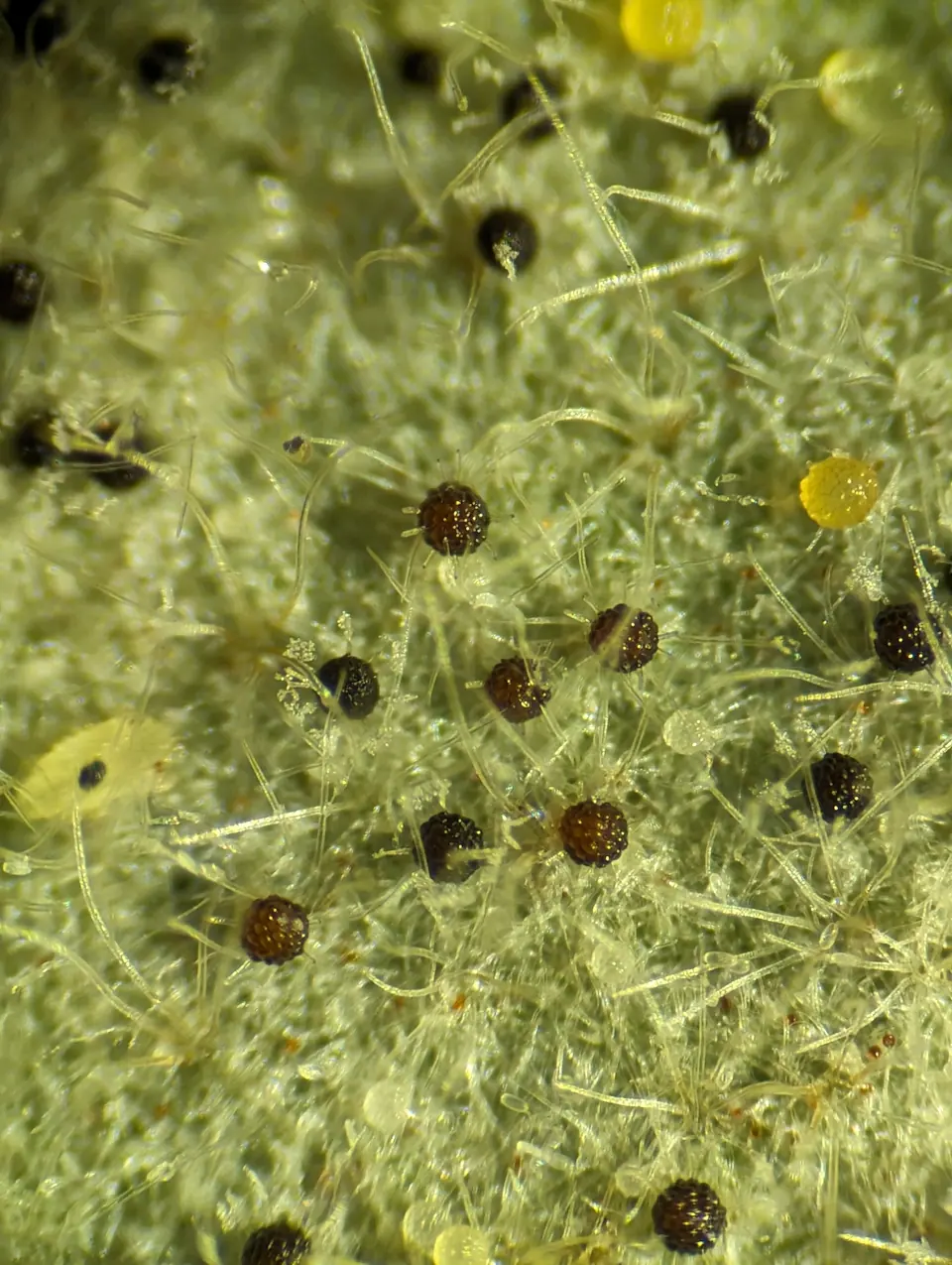
Fungus
Powdery mildew
Erysiphaceae
Written by Emilio Marruso
Classification: Ascomycota › Pezizomycotina › Leotiomycetes › Erysiphales
Plants it attacks
Plants in our guide where this problem is reported. Open a plant to see the sources.
- Bear's Breeches
Symptom: Occasional disease
- Fernleaf Yarrow
Symptom: Diseases listed for the plant
- Yarrow
Symptom: Short life span in areas that remain wet.
- Woolly Yarrow
Symptom: Susceptible to these diseases
- Buckeye
Symptom: Listed as insect, disease and plant problems
- Horsechestnut
Symptom: Leaves often die in early fall
- Bottlebrush Buckeye
Symptom: Listed among fungal diseases
- Hyssop
Symptom: Rust, powdery mildew and leaf spots; powdery mildew and leaf spots in humid climates
- Hyssop
Symptom: Root rot develops in too-wet soils; rust, powdery mildew and leaf spots may occur.
- Ageratum
Symptom: Susceptible to powdery mildew; botrytis and root rots also listed.
- Black Alder
Symptom: Possible diseases
- Serviceberry
Symptom: No serious problems; rust, leaf spot, blight and powdery mildew can occur, with sawfly, leaf miner, borers and scale among the insects.
Also reported on: African Marigold, African Spear, Alkanet, Allegheny Serviceberry, Alpine Currant, Alternate-leaf Dogwood, Aluminum plant, Alumroot, American Barberry, American Butterfly Bush, American chestnut, Amethyst Flower, Angelonia, Anise Sage, Annual Candytuft, Anthurium, Appalachian Bellflower, Appalachian Ironweed, Appalachian Sunflower, Aromatic Aster, Arrow-wood Viburnum, Artillery Plant, Ashy Hydrangea, Asparagus, Aspen Fleabane, Autumn Sage, Baby Blue Eyes, Bacopa, Barberton Daisy, Barren Strawberry, Barrens Silky Aster, Bear's Breeches, Beebalm, Bellflower, Betony, Big-leaf Aster, Bigleaf Hydrangea, Bird-Foot Violet, Bishop's Weed, Bitter Fleabane, Bittersweet, Black-eyed Susan, Black-eyed Susan, Blanketflower, Blood-twig Dogwood, Bloody Dock, Blue Haw, Blue Jasmine, Blue Showers, Blue Wood Aster, Bluebells, Bog White Viola, Boltonia, Boneset, Borage, Boston Ivy, Brazilian Verbena, Breath of Spring Spiraea, Broad-Leaved Thyme, Brown-Eyed Susan, Burnet Rose, Burning Bush, Bush Clematis, Bush Clematis, Bush Clover, Bush Honeysuckle, Bushy Aster, Butter and Eggs, Buttonbush, Calamint, Calendula, California Poppy, California Tickseed, California Tree Poppy, Canadian Violet, Canterbury Bells, Cape Marigold, Caraway, Cardoon, Carob Tree, Carolina Allspice, Carolina Doll's Daisy, Carolina Larkspur, Carolina Phlox, Carpathian Bellflower, Carpet Sedum, Chamomile, Chamomile, Chandelier Plant, Cherokee Rose, Cherry Laurel, Chinese catalpa, Chinese Fringetree, Chinese Hawthorn, Chinese Hydrangea-vine, Chinese Photinia, Chinese Quinine, Chinese Trumpet Creeper, Clary Sage, Climbing Hydrangea, Climbing Hydrangea, Climbing Prairie Rose, Clover, Coastal Plain Tickseed, Cockscomb, Columbine, Columbine, Comfrey, Common Burdock, Common flax, Common hop, Common Jasmine, Common Lilac, Common Morning Glory, Coneflower, Coneflower, Coral Bells, Coriander, Corn Poppy, Cornflower, Cowpea, Cranberry Viburnum, Crape Myrtle, Creeping Cucumber, Creeping Phlox, Creeping Raspberry, Creeping Thyme, Creeping Zinnia, Crooked-stemmed Aster, Crossandra, Cumin, Cup and Saucer, Curlyhead, Curry tree, Dame's Rocket, Decurrent False Aster, Desert Rose, Desert Zinnia, Dill, Dogfennel, Donkey's Ears, Doublefile Viburnum, Downy Arrowwood, Downy Phlox, Downy Skullcap, Drummond's Phlox, Dusty Miller, Dwarf Dandelion, Dwarf Larkspur, Dwarf Larkspur, Dwarf Umbrella Tree, Early Lilac, Early Meadowrue, Elecampane, Elephant-Ear Begonia, English Oak, European Honeysuckle, European Hornbeam, European White Birch, Evening Primrose, False Rosemary, False Violet, Field pumpkin, Fireweed, Flat-Topped White Aster, Flowering Currant, Flowering Dogwood, Flowering Quince, Forget-me-not, Forget-me-not, Foxglove Beardtongue, Fraser Magnolia, Fringed Willowherb, Frost Aster, Garden chervil, Garden cucumber, Garden lettuce, Garden pea, Garden Phlox, Gardenia, Gayfeather, Georgia Aster, Germander, Giant Coneflower, Giant Crape Myrtle, Globe Amaranth, Globe Thistle, Golden Chain Tree, Golden tickseed, Goldenrod, Goldenrod, Goldenrod, Goldenrod, Goldenrod, Goldenrod, Grape Honysuckle, Great Burdock, Green Hawthorn, Green-and-Gold, Green-Head Coneflower, Gunnison's Mariposa Lily, Haage Zinnia, Hairy Alumroot, Hall Crabapple, Hardy Begonia, Hawthorn, Hawthorn, Hawthorn, Hawthorn, Hawthorn, Hawthorn, Hawthorn, Hawthorn, Hoary Vervain, Hobblebush, Honeysuckle, Honeysuckle Azalea, Hungarian Oak, Hydrangea, Hyssop, Indian Quassiawood, Iron Cross Begonia, Ironweed, Ironweed, Italian Clematis, Jacob's Ladder, Jade Plant, Japanese Aster, Japanese Aster, Japanese Euonymus, Japanese Flowering Cherry, Japanese Hornbeam, Japanese Hydrangea Vine, Japanese Maple, Japanese Photinia, Japanese Spiraea, Japanese Tree Lilac, Jerusalem Artichoke, Jewel Orchid, Joe-Pye weed, Kalanchoe, Kangaroo Paw, Kidneyleaf Violet, Korean Mint, Korean Viburnum, Lady Banks, Lady Lupine, Lady's Mantle, Lance-leaf Azara, Lanceleaf Blanket Flower, Lanceleaf Coreopsis, Lantana, Lantana Lavender Popcorn, Late Lilac, Lead Plant, Leatherleaf Mahonia, Lemon balm, Lemon Beebalm, Leopard's-Bane, Limber Honeysuckle, Lipstick Plant, Loofah, Lungwort, Lungwort, Lungwort, Lyreleaf Sage, Marjoram, Maroon Cucumber, Marsh Marigold, Maryland Golden-Aster, Maximilian Sunflower, Meadow Phlox, Meadowrue, Meadowsweet, Meadowsweet, Melampodium, Melampodium, Mespilus germanica, Metallic Leaf Begonia, Mexican groundcherry, Mexican Sunflower, Michaux's Sumac, Mimosa, Mind-Your-Own-Business, Mistflower, Mock Orange, Money Tree, Monkshood, Moonflower, Morning Glory, Moss Phlox, Mother of Thousands, Mountain Bluet, Mountain Clematis, Mountain Hydrangea, Mouseear Chickweed, Muck Sunflower, Mulberry, Multiflora Rose, Naked-stem Sunflower, Nannyberry, Nettle-leaved Bellflower, New Jersey Tea, Ninebark, Northern Catalpa, Norway Maple, Oakleaf Hydrangea, Ohio Horsemint, Okra, Oregon ash, Ornamental Oregano, Oxeye Sunflower, Pale Violet, Panda Plant, Panicle Hydrangea, Papaya, Paradise apple, Parsley, Partridge Pea, Pawpaw, Peach-leaved Bellflower, Pear, Peppermint, Perennial Wallrocket, Persian Buttercup, Persian Ivy, Persian lilac, Piedmont Rhododendron, Pincushion Flower, Pincushion Flower, Plains Zinnia, Plumbago, Polka Dot Plant, Portugal Laurel, Possumhaw, Potato Dwarf Dandelion, Prairie Blazing Star, Prairie purple coneflower, Purple Goat's Beard, Purple Meadowrue, Purple Osier Willow, Pussy Willow, Quaking Aspen, Queen of the Night, Quinoa, Raspberry, Red Clover, Red-Twig Dogwood, Resinous Sunflower, Ribwort Plantain, Rigid Verbena, Rigid Whitetop Aster, Robin's Plantain, Rocketsalad, Rose Verbena, Rosemary, Rough Hawkweed, Roughleaf Dogwood, Royal Azalea, Rugosa Rose, Sage, Salt Cedar, Sargent Viburnum, Scarlet Sage, Scarlet Sage, Scarlet Star, Schweinitz's Sunflower, Sea Thrift, Service Viburnum, Serviceberry, Shortray Zinnia, Shrubby Cinquefoil, Sierra Snapdragon, Silkyleaf Broom, Silver Buffaloberry, Silver Maple, Silverleaf, Skyblue Aster, Skyblue Lupine, Small Woodland Sunflower, Smoketree, Smooth Aster, Smooth Phlox, Smooth Purple Coneflower, Smooth Witherod, Snapdragon Vine, Sneezeweed, Snowrose, Soapberry, Southern Magnolia, Southern Sneezeweed, Southernwood, Soybean, Spearleaf Violet, Speedwell, Spindle Tree, Spotted Beebalm, Spotted Bellflower, Spreading Aster, Squash, Squash, St. Andrew's Cross, Steeplebush, Stock, Stonecrop, Strawberry, Sugarberry, Sulphur Buckwheat, Sunflower, Sunflower, Swamp Rose, Swamp Tickseed, Sweet Autumn Clematis, Sweet bay, Sweet chestnut, Sweet Coneflower, Sweet White Violet, Sweet Woodruff, Tall Anemone, Tall Boneset, Tall Coreopsis, Tall Cosmos, Tall Verbena, Tansy, Tea Camellia, Ten-petaled Sunflower, Tennessee Coneflower, Texas Clematis, Threelobe Spirea, Thyme, Toadflax, Tomato, Trailing Lantana, Trailing Phlox, Tree tomato, Trumpet Vine, Turtlehead, Turtlehead, Twinspur, Utah Columbine, Veronica, Vine Honeysuckle, Violet, Virgin's-Bower, Virginia Creeper, Virginia Rose, Wahoo, Walter's Viburnum, Warty Barberry, Watermelon, Wavy Leaf Aster, Wayfaringtree Viburnum, White Ash, White Leaf Leather Flower, White Turtlehead, White Wild Indigo, White Wood Aster, Wild Bergamot, Wild Indigo, Wild Lupine, Wild White Violet, Willowleaf Sunflower, Winged Elm, Wingstem, Winter Honeysuckle, Winter Squash, Winterberry, Wintercreeper, Wintergreen, Wood Anemone, Woodland phlox, Woodland Sage, Woodland Sunflower, Wooly Thyme, X heucherella, Yellow Coneflower, Yellow Cosmos, Yellow Crownbeard, Yellow Honeysuckle, Zinnia, Zinnia, ZZ Plant
Remedies
What our plant sheets report, with the outcome checked against official sources. Traditional remedies without an official source are flagged.
Treat
baking soda and horticultural oil spray Works
How: Baking soda (1½ tablespoons) and a light weight (paraffin-based) horticultural oil (3 tablespoons) in water (1 gallon), every seven to 14 days.
Reported for 11 plants: Alkanet, Lance-leaf Azara, Sweet Autumn Clematis, False Rosemary, Prairie Blazing Star, Grape Honysuckle
neem oil spray Works
How: Spray neem oil, following the label instructions and not spraying until evening so as not to burn the leaves.
Reported for 8 plants: American Barberry, Sweet Woodruff, Globe Amaranth, Garden pea, Money Tree, Royal Azalea
baking soda spray Works
How: In a Vermont trial, 0.5% baking soda (1.5 tablespoons per gallon of water) was sprayed weekly.
Reported for 6 plants: Wild Bergamot, Evening Primrose, Carolina Phlox, Meadow Phlox, Downy Phlox, Black-eyed Susan
picking off affected leaves Works
How: avoid overcrowded spacing of plants and carefully pick off affected leaves as soon as symptoms are evident
Reported for 5 plants: Peach-leaved Bellflower, Chinese Trumpet Creeper, Trumpet Vine, Sweet White Violet, Violet
horticultural oil Works
How: Horticultural oils are available to control powdery mildew; chemical control is unnecessary except in severe cases.
Reported for 4 plants: Japanese Hydrangea Vine, Carolina Phlox, Meadow Phlox, Downy Phlox
horticultural oil and baking soda spray Works
How: Add 3 tablespoons of horticultural oil to a gallon of water with 3 tablespoons of baking soda.
Reported for 3 plants: Mountain Clematis, Virgin's-Bower, Gardenia
picking off affected leaves Partly works
How: Carefully pick off affected leaves as soon as symptoms are evident and rake and remove fallen leaves
Reported for 27 plants: Serviceberry, Carpathian Bellflower, Bellflower, Canterbury Bells, Spotted Bellflower, Nettle-leaved Bellflower
neem oil spray Partly works
How: Apply neem oil every 7-10 days during humid periods, early in the morning or late evening.
Reported for 19 plants: Mimosa, Carolina Allspice, Cornflower, Bush Clematis, Red-Twig Dogwood, Garden cucumber
neem oil Partly works
How: Coat the leaves with neem oil; the powdery mildew spores then either fail to germinate or cannot penetrate the leaf.
Reported for 16 plants: Boltonia, Caraway, Chinese Fringetree, Winter Squash, Squash, Cumin
baking soda spray Partly works
How: 1 tablespoon baking soda with 1 tablespoon vegetable oil and 1 teaspoon dish soap in 1 gallon of water
Reported for 5 plants: Woodland phlox, Ninebark, Climbing Prairie Rose, Smooth Aster, Meadowrue
baking soda in water Partly works
How: baking soda in water
Reported for 4 plants: Alumroot, Coral Bells, Hairy Alumroot, X heucherella
horticultural oil Partly works
How: Spray horticultural oil on the foliage; it has been reported to control powdery mildew on several ornamentals.
Reported for 3 plants: Boltonia, Silverleaf, Bird-Foot Violet
picking off affected leaves Official source, not independently tested
How: Carefully pick off affected leaves as soon as symptoms are evident.
Reported for 17 plants: Japanese Aster, Metallic Leaf Begonia, Appalachian Bellflower, Ten-petaled Sunflower, Small Woodland Sunflower, Naked-stem Sunflower
horticultural oil Official source, not independently tested
How: Horticultural oil is a low-toxicity option for treating powdery mildew.
Reported for 5 plants: Iron Cross Begonia, Naked-stem Sunflower, Ashy Hydrangea, Melampodium, Appalachian Ironweed
potassium bicarbonate Official source, not independently tested
How: Potassium bicarbonate is among the products available to control powdery mildew; chemical control is unnecessary except in severe cases.
Reported for 5 plants: Ashy Hydrangea, Japanese Hydrangea Vine, Mountain Hydrangea, Japanese Aster, Sweet Coneflower
removing affected leaves Official source, not independently tested
How: Remove the few leaves where powdery mildew is noticed.
Reported for 5 plants: Blue Jasmine, White Leaf Leather Flower, Mountain Clematis, Curlyhead, Sweet Autumn Clematis
neem oil Official source, not independently tested
How: Neem seed oil has been reported to control powdery mildew on other ornamentals; a leaf coated with neem oil may stop spores germinating or penetrating.
Reported for 4 plants: Monkshood, Iron Cross Begonia, Melampodium, Shortray Zinnia
pruning out affected new growth Official source, not independently tested
How: prune out the affected new growth and remove it from the premises
Reported for 4 plants: Hawthorn, Hawthorn, Hawthorn, Hawthorn
milk spray Not verified
How: Prepare a homemade milk spray solution; the sun acting on the milk fat is said to make a natural fungicide.
Reported for 53 plants: Bear's Breeches, Japanese Maple, Bishop's Weed, Columbine, Warty Barberry, Ohio Horsemint
baking soda spray Not verified
How: Spray plants with 1 teaspoon baking soda dissolved in 1 quart water.
Reported for 51 plants: Okra, Ageratum, Bishop's Weed, Columbine, Leatherleaf Mahonia, Warty Barberry
plain water spray Not verified
How: Spraying with plain water weekly; the spores cannot germinate or grow if the leaves are wet.
Reported for 10 plants: Bishop's Weed, Blue Showers, Elecampane, Melampodium, Woodland phlox, Garden Phlox
diluted milk spray Not verified
How: Weekly applications of diluted milk (1 part skim milk to 9 parts water) starting at first bloom.
Reported for 8 plants: Ageratum, Tea Camellia, European Hornbeam, Japanese Hornbeam, Alternate-leaf Dogwood, Golden Chain Tree
milk and water spray Not verified
How: A 40% solution of cow's milk and water on mild or early infections: drench the leaves on a warm sunny day and retreat every 10 days.
Reported for 7 plants: Winter Squash, Squash, Squash, Spindle Tree, Tall Boneset, Dusty Miller
neem oil Not verified
How: Apply horticultural oil like neem oil.
Reported for 7 plants: Field pumpkin, Twinspur, Scarlet Star, Bigleaf Hydrangea, Honeysuckle Azalea, Clary Sage
baking soda and horticultural oil spray Not proven
How: One tablespoon baking soda plus 2.5 tablespoons of a lightweight horticultural oil in 1 gallon of water; the source calls it experimental.
Reported for 3 plants: Robin's Plantain, Aspen Fleabane, Beebalm
baking soda spray Not proven
How: Mix 5 mL (1 tsp.) of baking soda into 1 quart/1 liter of water and spray on plants susceptible to powdery mildew; a few drops of insecticidal soap or dish soap help it stick. It only helps prevent the disease.
Reported for 2 plants: Boltonia, Silverleaf
baking soda mixed with vegetable oil and dishwashing detergent Not proven
How: Baking soda mixed with vegetable oils and dishwashing detergent has been used against powdery mildew.
Reported for 1 plant: Monkshood
baking soda spray with vegetable oil and dish soap Not proven
How: Baking soda mixed with vegetable oils and dishwashing detergent.
Reported for 1 plant: Wood Anemone
baking soda with oil and dish soap Not proven
How: Baking soda mixed with vegetable oils and dishwashing detergent has been used against powdery mildew.
Reported for 1 plant: Japanese Hydrangea Vine
baking soda, vegetable oil and dish soap spray Not proven
How: baking soda mixed with vegetable oils and dishwashing detergent has been used against powdery mildew.
Reported for 1 plant: Carolina Doll's Daisy
baking soda, dish detergent and olive oil spray Harmful
How: Mix one tablespoon of baking soda, 1/2 teaspoon of a mild dish detergent, and 2 1/2 tablespoons of olive oil in a gallon of water. Shake it well in your bottle before spraying, and repeat every week.
epsom salts Harmful
How: sprinkle the powder around the base of the tree, then water deeply
Reported for 1 plant: Pawpaw
sulfur Harmful
How: Sulfur is sometimes used against powdery mildew but is not suitable for viburnums.
Reported for 1 plant: Arrow-wood Viburnum
305 more remedies are reported in single plant sheets.
Where it is found
No distribution data.