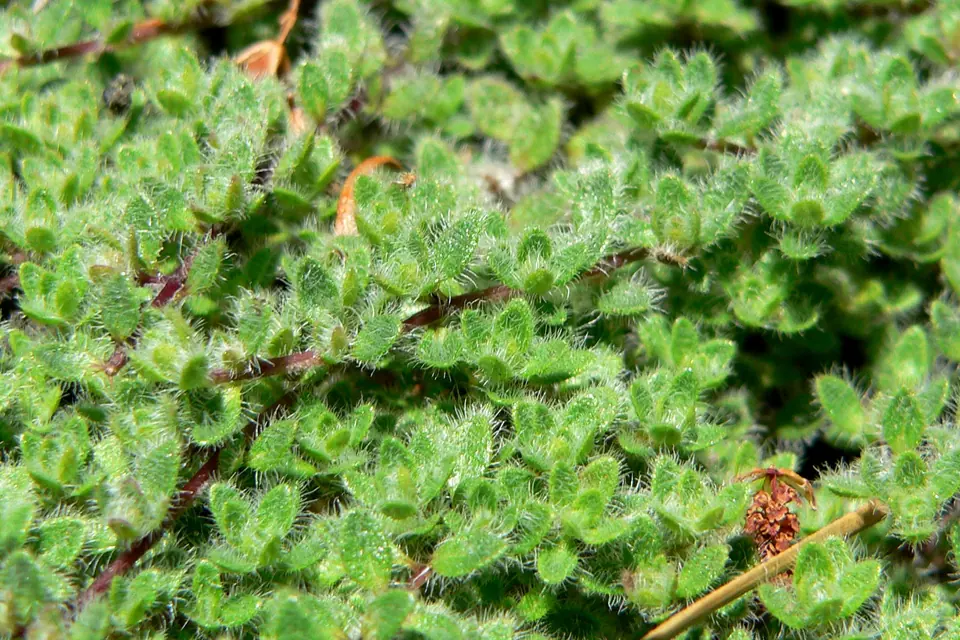

How to Grow and Care for Wooly Thyme
Thymus pseudolanuginosus
Written by Emilio Marruso · last checked
At a glance
This perennial thyme asks for very little: give it full sun and dry, well-drained soil, and it shrugs off drought. It spreads 12 to 18 inches wide or more, grows happily in containers too, and established plants need no fertilizer at all. Just keep it away from wet spots, where its roots and crown can rot.
- Sun
Full sun
What the sources say (1)
Light: Full sun
It grows well in dry well-drained soils in the full sun.
— Thymus pseudolanuginosus (Wooly Thyme) | North Carolina Extension Gardener Plant Toolbox [1] - Water
Handles drought well; never let the soil stay wet
What the sources say (2)
Watering notes: Grows well in dry well-drained soils; withstands drought; will not tolerate wet sites (wet soils cause root and crown rot)
It grows well in dry well-drained soils in the full sun. It withstands poor rocky soils, drought, deer browsing, foot traffic and air pollution well. This plant will not tolerate clay soils or wet sites.
— Thymus pseudolanuginosus (Wooly Thyme) | North Carolina Extension Gardener Plant Toolbox [1] No serious problems though wet soils will cause root and crown rot.
— Thymus pseudolanuginosus (Wooly Thyme) | North Carolina Extension Gardener Plant Toolbox [1] - Cold
Survives winters down to −20 °F (−28.9 °C)
Very hardy · USDA 5a · RHS H7 · Z5
What the sources say (2)
Hardiness, coldest zone: 5a [winter low −28.9 to −26.1 °C (−20 to −15 °F)]
USDA Plant Hardiness Zone: 5a, 5b, 6a, 6b, 7a, 7b, 8a, 8b
— Thymus pseudolanuginosus (Wooly Thyme) | North Carolina Extension Gardener Plant Toolbox [1] Hardiness, warmest zone: 8b [winter low −9.4 to −6.7 °C (15 to 20 °F)]
USDA Plant Hardiness Zone: 5a, 5b, 6a, 6b, 7a, 7b, 8a, 8b
— Thymus pseudolanuginosus (Wooly Thyme) | North Carolina Extension Gardener Plant Toolbox [1] - Soil
Dry, well-drained soil
What the sources say (2)
Watering notes: Grows well in dry well-drained soils; withstands drought; will not tolerate wet sites (wet soils cause root and crown rot)
It grows well in dry well-drained soils in the full sun. It withstands poor rocky soils, drought, deer browsing, foot traffic and air pollution well. This plant will not tolerate clay soils or wet sites.
— Thymus pseudolanuginosus (Wooly Thyme) | North Carolina Extension Gardener Plant Toolbox [1] No serious problems though wet soils will cause root and crown rot.
— Thymus pseudolanuginosus (Wooly Thyme) | North Carolina Extension Gardener Plant Toolbox [1] - Feeding
Little or no fertilizer; too much gives weak, sprawling growth and less scent
What the sources say (4)
How often: Sparingly, if at all; established plants need no fertilizer
Apply fertilizer sparingly, if at all. Excess fertility can produce weak, sprawling growth and diminish the concentration of aromatic oils.
— All About Thyme | Yard and Garden [3] When propagated by seed, it may take several years to mature enough to harvest. Once well established, thyme does not require much watering or any fertilizer.
— Herb Garden Plants: Thyme [4] Avoid: Excess fertility
Apply fertilizer sparingly, if at all. Excess fertility can produce weak, sprawling growth and diminish the concentration of aromatic oils.
— All About Thyme | Yard and Garden [3] Signs of excess: Weak, sprawling growth and fewer aromatic oils
Apply fertilizer sparingly, if at all. Excess fertility can produce weak, sprawling growth and diminish the concentration of aromatic oils.
— All About Thyme | Yard and Garden [3] - Pests
Spider mites and aphids; wet soil rots the roots and crown
What the sources say (2)
Pests: spider mites, aphids
Spider mites can occasionally become a problem during hot, dry weather. Aphids are occasional pests.
— All About Thyme | Yard and Garden [3] Diseases: root and crown rot
No serious problems though wet soils will cause root and crown rot.
— Thymus pseudolanuginosus (Wooly Thyme) | North Carolina Extension Gardener Plant Toolbox [1] - Size
12 to 18 inches wide or more
What the sources say (1)
Mature width: 30-46 cm [12–18 in] or more (12 to 18 in or more)
Woolly thyme ( Thymus pseudolanuginosus ) is grown almost exclusively for its dense, silvery-gray foliage. This low-growing perennial typically reaches less than 1 inch tall and spreads 12 to 18 inches or more,
— All About Thyme | Yard and Garden [3] - Containers
Grows in containers too
What the sources say (1)
In containers: Yes
Landscape Location: Container Patio Rock Wall Small Space Walkways
— Thymus pseudolanuginosus (Wooly Thyme) | North Carolina Extension Gardener Plant Toolbox [1]
Overview
Thymus pseudolanuginosus is a very short prostrate herb of the mint family from Europe. [1] It grows well in dry well-drained soils in full sun and does not tolerate clay soils or wet sites. [1] Unlike other thymes it is not fragrant and not good for culinary purposes. [1]
This record is incomplete: the sources we read do not cover every field yet.
Not yet covered by our sources: Watering, Pruning, Propagation
Wooly Thyme care
How to water Wooly Thyme
Watering
Not stated in the sources we read.
Watering notes
Grows well in dry well-drained soils; withstands drought; will not tolerate wet sites (wet soils cause root and crown rot)
What the sources say (2)
It grows well in dry well-drained soils in the full sun. It withstands poor rocky soils, drought, deer browsing, foot traffic and air pollution well. This plant will not tolerate clay soils or wet sites.No serious problems though wet soils will cause root and crown rot.How much light Wooly Thyme needs
Full sun
What the sources say (1)
It grows well in dry well-drained soils in the full sun.How much cold Wooly Thyme can take
Hardiness, coldest zone
5a [winter low −28.9 to −26.1 °C (−20 to −15 °F)]
What the sources say (1)
USDA Plant Hardiness Zone:
5a, 5b, 6a, 6b, 7a, 7b, 8a, 8bHardiness, warmest zone
8b [winter low −9.4 to −6.7 °C (15 to 20 °F)]
What the sources say (1)
USDA Plant Hardiness Zone:
5a, 5b, 6a, 6b, 7a, 7b, 8a, 8bWhere to grow Wooly Thyme
Yes
What the sources say (1)
Landscape Location:
Container
Patio
Rock Wall
Small Space
WalkwaysHow to propagate Wooly Thyme
Not stated in the sources we read.
How to grow Wooly Thyme
The plant
Life cycle
perennial
What the sources say (1)
Genus:
Thymus
Species:
pseudolanuginosus
Family:
Lamiaceae
Life Cycle:
PerennialFamily
Lamiaceae
What the sources say (1)
Genus:
Thymus
Species:
pseudolanuginosus
Family:
Lamiaceae
Life Cycle:
PerennialMature height
The sources disagree:
Mature width
30-46 cm [12–18 in] or more (12 to 18 in or more)
What the sources say (1)
Woolly thyme ( Thymus pseudolanuginosus ) is grown almost exclusively for its dense, silvery-gray foliage. This low-growing perennial typically reaches less than 1 inch tall and spreads 12 to 18 inches or more,Pests and diseases
Pests
spider mites, aphids
What the sources say (1)
Spider mites can occasionally become a problem during hot, dry weather. Aphids are occasional pests.Diseases
root and crown rot
What the sources say (1)
No serious problems though wet soils will cause root and crown rot.Fertilizing
How often
Sparingly, if at all; established plants need no fertilizer
What the sources say (2)
Apply fertilizer sparingly, if at all. Excess fertility can produce weak, sprawling growth and diminish the concentration of aromatic oils.When propagated by seed, it may take several years to mature enough to harvest. Once well established, thyme does not require much watering or any fertilizer.Avoid
Excess fertility
What the sources say (1)
Apply fertilizer sparingly, if at all. Excess fertility can produce weak, sprawling growth and diminish the concentration of aromatic oils.Signs of excess
Weak, sprawling growth and fewer aromatic oils
What the sources say (1)
Apply fertilizer sparingly, if at all. Excess fertility can produce weak, sprawling growth and diminish the concentration of aromatic oils.Wooly Thyme pests and problems
Root and crown rot
Symptom: Rot of roots and crown
What to do: Avoid wet soils; grow in dry well-drained soil
What the sources say (1)
No serious problems though wet soils will cause root and crown rot.
— Thymus pseudolanuginosus (Wooly Thyme) | North Carolina Extension Gardener Plant Toolbox [1]
Remedies
Each remedy shows what official sources say about it; traditional remedies without an official source are marked as such. Harmful ones are listed so you know to avoid them.
Treating the plant
spider mites
insecticidal soap Works
How: If a treatment for mites is necessary, use selective materials, preferably insecticidal soap or insecticidal oil
If a treatment for mites is necessary, use selective materials, preferably insecticidal soap or insecticidal oil . Both petroleum-based horticultural oils and plant-based oils such as neem, canola, or cottonseed oils are acceptable.
— ask.extension.org [5] What the evidence says If a treatment for mites is necessary, use selective materials, preferably insecticidal soap or insecticidal oil . Both petroleum-based horticultural oils and plant-based oils such as neem, canola, or cottonseed oils are acceptable.
— ask.extension.org [5]
Calendar
Pruning
Not stated in the sources we read.
Months as given by the sources, which are mostly from the United States (northern hemisphere). In the southern hemisphere they shift by about six months.
Indicative values
Values from a secondary source, not checked word for word like the rest of this page. Use them as a starting point.
- Hours of sun
- 6-8 hoursIndicative value, adapt it to your climate · Secondary source
- Watering
- MinimumIndicative value, adapt it to your climate · Secondary source
- Soil
- Rocky, gravelly, dry, Well-drainedIndicative value, adapt it to your climate · Secondary source
- Soil pH
- 6-8Indicative value, adapt it to your climate · Secondary source
- Care level
- MediumIndicative value, adapt it to your climate · Secondary source
- Growth rate
- LowIndicative value, adapt it to your climate · Secondary source
- Pruning
- March, April, AugustIndicative value, adapt it to your climate · Secondary source
- Propagation
- Seed PropagationIndicative value, adapt it to your climate · Secondary source
Similar plants
- Broad-Leaved Thyme Thymus pulegioides
- Creeping Thyme Thymus praecox
- Creeping Thyme Thymus serpyllum
- Thymus longicaulis Thymus longicaulis
- Thyme Thymus vulgaris
- Anise Sage Salvia guaranitica
- Apple mint Mentha suaveolens
- Arrowleaf Sage Salvia sagittata
Sources
Every value above is quoted from these documents. Links lead to the original publisher.
- Thymus pseudolanuginosus (Wooly Thyme) | North Carolina Extension Gardener Plant Toolbox · plants.ces.ncsu.edu, consulted
- Thymus (Thyme) | North Carolina Extension Gardener Plant Toolbox · plants.ces.ncsu.edu, consulted
- All About Thyme | Yard and Garden · yardandgarden.extension.iastate.edu, consulted
- Herb Garden Plants: Thyme · extension.psu.edu, consulted
- ask.extension.org · ask.extension.org
Written by Emilio Marruso · last checked