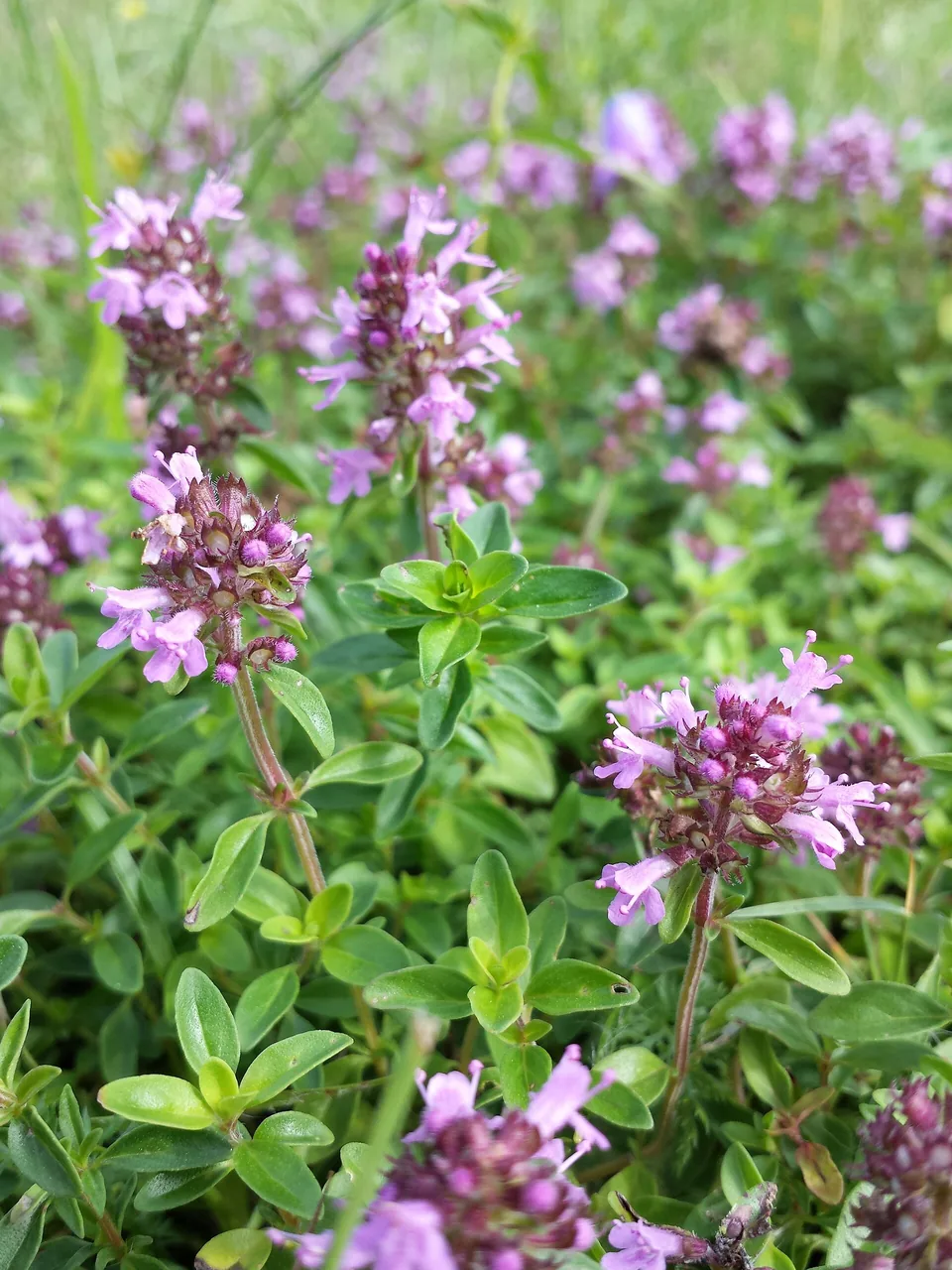


How to Grow and Care for Broad-Leaved Thyme
Thymus pulegioides
Written by Emilio Marruso · last checked
At a glance
This perennial thyme asks for very little: full sun, little water and soil that drains well. It stays a tidy 8–12 inches tall and wide, so it fits even in a pot. Pick the leaves before the flowers open and use them to flavor chicken and fish, fresh from your own garden.
- Sun
Full sun
What the sources say (2)
Light: Full sun
Light: Full sun (6 or more hours of direct sunlight a day)
— Thymus pulegioides (Broad-Leaved Thyme, Larger Wild Thyme, Large Thyme, Lemon Thyme) | North Carolina Extension Gardener Plant Toolbox [1] performs best in well-drained sandy or loamy soils and prefers full sun
— Thymus pulegioides (Broad-Leaved Thyme, Larger Wild Thyme, Large Thyme, Lemon Thyme) | North Carolina Extension Gardener Plant Toolbox [1] - Water
Handles dry spells; don't overwater and avoid soil that stays soggy
What the sources say (2)
Watering: Drought tolerant
Particularly Resistant To (Insects/Diseases/Other Problems): Deer and rabbit resistant. Drought tolerant.
— Thymus pulegioides (Broad-Leaved Thyme, Larger Wild Thyme, Large Thyme, Lemon Thyme) | North Carolina Extension Gardener Plant Toolbox [1] Watering notes: Avoid overwatering and poorly drained soil
No serious insect or disease problems provided that the plant is not overwatered or in poorly drained soil.
— Thymus pulegioides (Broad-Leaved Thyme, Larger Wild Thyme, Large Thyme, Lemon Thyme) | North Carolina Extension Gardener Plant Toolbox [1] - Cold
Survives winters down to −30 °F (−34.4 °C)
Very hardy · USDA 4a · RHS H7 · Z4
What the sources say (2)
Hardiness, coldest zone: 4a [winter low −34.4 to −31.7 °C (−30 to −25 °F)]
USDA Plant Hardiness Zone: 4a, 4b, 5a, 5b, 6a, 6b, 7a, 7b, 8a, 8b
— Thymus pulegioides (Broad-Leaved Thyme, Larger Wild Thyme, Large Thyme, Lemon Thyme) | North Carolina Extension Gardener Plant Toolbox [1] Hardiness, warmest zone: 8b [winter low −9.4 to −6.7 °C (15 to 20 °F)]
USDA Plant Hardiness Zone: 4a, 4b, 5a, 5b, 6a, 6b, 7a, 7b, 8a, 8b
— Thymus pulegioides (Broad-Leaved Thyme, Larger Wild Thyme, Large Thyme, Lemon Thyme) | North Carolina Extension Gardener Plant Toolbox [1] - Harvest
Pick the leaves before the flowers open; they flavor chicken and fish
What the sources say (2)
Harvest: Before the flowers open (leaves, for culinary use)
it is best to harvest the leaves before the flowers open
— Thymus pulegioides (Broad-Leaved Thyme, Larger Wild Thyme, Large Thyme, Lemon Thyme) | North Carolina Extension Gardener Plant Toolbox [1] How to harvest: Harvest the leaves before the flowers open (for culinary use).
If used for culinary purposes, it is best to harvest the leaves before the flowers open.
— Thymus pulegioides (Broad-Leaved Thyme, Larger Wild Thyme, Large Thyme, Lemon Thyme) | North Carolina Extension Gardener Plant Toolbox [1] - Size
8–12 in tall and 8–12 in wide
What the sources say (2)
Mature height: 20.3-30.5 cm (8-12 in)
It measures 8-12 inches tall and 8-12 inches wide and is commonly used as an ornamental groundcover or as an herb.
— Thymus pulegioides (Broad-Leaved Thyme, Larger Wild Thyme, Large Thyme, Lemon Thyme) | North Carolina Extension Gardener Plant Toolbox [1] Mature width: 20.3-30.5 cm (8-12 in)
It measures 8-12 inches tall and 8-12 inches wide and is commonly used as an ornamental groundcover or as an herb.
— Thymus pulegioides (Broad-Leaved Thyme, Larger Wild Thyme, Large Thyme, Lemon Thyme) | North Carolina Extension Gardener Plant Toolbox [1] - Propagation
Divide it in spring, take cuttings in mid to late summer, or grow it from seed
What the sources say (2)
Propagation: Division in spring; semi-hard cuttings in mid to late summer; seed
The common method of propagation is by division in the spring or semi-hard cuttings in the mid to late summer.
— Thymus pulegioides (Broad-Leaved Thyme, Larger Wild Thyme, Large Thyme, Lemon Thyme) | North Carolina Extension Gardener Plant Toolbox [1] Life Cycle: Perennial Woody Recommended Propagation Strategy: Division Seed Stem Cutting
— Thymus pulegioides (Broad-Leaved Thyme, Larger Wild Thyme, Large Thyme, Lemon Thyme) | North Carolina Extension Gardener Plant Toolbox [1] - Containers
Grows in containers too
What the sources say (1)
In containers: Yes
It is perfect as a border or container gardening.
— Thymus pulegioides (Broad-Leaved Thyme, Larger Wild Thyme, Large Thyme, Lemon Thyme) | North Carolina Extension Gardener Plant Toolbox [1]
Overview
Broad-leaved thyme is a fragrant, dwarf, woody evergreen used as an ornamental groundcover or as an herb. [1] It prefers full sun and well-drained soil and is drought tolerant. [1] Its leaves may be used as a flavoring in foods such as chicken and fish. [1]
This record is incomplete: the sources we read do not cover every field yet.
Not yet covered by our sources: Sowing / Planting
Broad-Leaved Thyme care
How to water Broad-Leaved Thyme
Watering
Drought tolerant
What the sources say (1)
Particularly Resistant To (Insects/Diseases/Other Problems):
Deer and rabbit resistant. Drought tolerant.Watering notes
Avoid overwatering and poorly drained soil
What the sources say (1)
No serious insect or disease problems provided that the plant is not overwatered or in poorly drained soil.How much light Broad-Leaved Thyme needs
Full sun
What the sources say (2)
Light:
Full sun (6 or more hours of direct sunlight a day)performs best in well-drained sandy or loamy soils and prefers full sunHow much cold Broad-Leaved Thyme can take
Hardiness, coldest zone
4a [winter low −34.4 to −31.7 °C (−30 to −25 °F)]
What the sources say (1)
USDA Plant Hardiness Zone:
4a, 4b, 5a, 5b, 6a, 6b, 7a, 7b, 8a, 8bHardiness, warmest zone
8b [winter low −9.4 to −6.7 °C (15 to 20 °F)]
What the sources say (1)
USDA Plant Hardiness Zone:
4a, 4b, 5a, 5b, 6a, 6b, 7a, 7b, 8a, 8bWhere to grow Broad-Leaved Thyme
Yes
What the sources say (1)
It is perfect as a border or container gardening.How to propagate Broad-Leaved Thyme
Division in spring; semi-hard cuttings in mid to late summer; seed
What the sources say (2)
The common method of propagation is by division in the spring or semi-hard cuttings in the mid to late summer.Life Cycle:
Perennial
Woody
Recommended Propagation Strategy:
Division
Seed
Stem CuttingHow to grow Broad-Leaved Thyme
The plant
Life cycle
perennial
What the sources say (1)
This woody perennial would be a wonderful addition to a patio garden, rock garden, or cottage garden.Family
Lamiaceae
What the sources say (1)
Broad-leaved thyme is a fragrant, dwarf, woody evergreen in the Lamiaceae (mint) family.Mature height
20.3-30.5 cm (8-12 in)
What the sources say (1)
It measures 8-12 inches tall and 8-12 inches wide and is commonly used as an ornamental groundcover or as an herb.Mature width
20.3-30.5 cm (8-12 in)
What the sources say (1)
It measures 8-12 inches tall and 8-12 inches wide and is commonly used as an ornamental groundcover or as an herb.Harvest and storage
How to harvest
Harvest the leaves before the flowers open (for culinary use).
What the sources say (1)
If used for culinary purposes, it is best to harvest the leaves before the flowers open.Fertilizing
When
The sources give different values depending on region, zone or growing conditions.
What each source says
Thymus in general (garden thyme): Before planting, as compost worked into the soil
What the sources say (1)
Thymus in general (garden thyme): Amend the soil with compost prior to planting to improve drainage and provide some nutrients.How often
The sources give different values depending on region, zone or growing conditions.
What each source says
Thymus in general (garden thyme): Sparingly, if at all; occasional applications
What the sources say (1)
Thymus in general (garden thyme): Apply fertilizer sparingly, if at all. Excess fertility can produce weak, sprawling growth and diminish the concentration of aromatic oils.Natural fertilizers
The sources give different values depending on region, zone or growing conditions.
What each source says
Thymus in general (garden thyme): Compost before planting; occasional well-aged manure
What the sources say (1)
Thymus in general (garden thyme): Thyme does not require much fertilizer, especially if you amend your soil with compost prior to planting.Mineral fertilizers
The sources give different values depending on region, zone or growing conditions.
What each source says
Thymus in general (garden thyme): Occasional balanced fertilizer
What the sources say (1)
Thymus in general (garden thyme): Once planted, thyme will grow adequately without fertilization, but will benefit from the occasional application of well aged manure or a balanced fertilizer.Avoid
The sources give different values depending on region, zone or growing conditions.
What each source says
Thymus in general (garden thyme): Over-fertilizing; thyme prefers low-fertility soils
What the sources say (1)
Thymus in general (garden thyme): Thyme prefers low fertility soils, over-fertilizing can lead to reduced flavor in the leaves.Signs of excess
The sources give different values depending on region, zone or growing conditions.
What each source says
Thymus in general (garden thyme): Weak, sprawling growth, fewer aromatic oils and reduced leaf flavor
What the sources say (1)
Thymus in general (garden thyme): Apply fertilizer sparingly, if at all. Excess fertility can produce weak, sprawling growth and diminish the concentration of aromatic oils.Remedies
Each remedy shows what official sources say about it; traditional remedies without an official source are marked as such. Harmful ones are listed so you know to avoid them.
Treating the plant
spider mites
insecticidal soap Works
While insecticidal soap is less apt to affect other organisms, certain plants might be sensitive to the soap and can suffer leaf burn.
— foodgardening.mequoda.com [8] How: Mix the soap with water and apply directly to the insects.
Insecticidal soaps are particularly effective on smaller pests such as aphids and spider mites.
— foodgardening.mequoda.com [8] What the evidence says If a treatment for mites is necessary, use selective materials, preferably insecticidal soap or insecticidal oil .
— ask.extension.org [9] neem oil Works
Warning: Risky ingredient
Like insecticidal soaps, horticultural oils can cause plant injury if not properly diluted.
— foodgardening.mequoda.com [8] How: Combine plant- or petroleum-based oils with water to produce horticultural sprays; neem oil is derived from seed extracts of the neem plant.
Combine plant- or petroleum-based oils with water to produce horticultural sprays. Neem oil, for instance, is derived from seed extracts of the neem plant.
— foodgardening.mequoda.com [8] What the evidence says Both petroleum-based horticultural oils and plant-based oils such as neem, canola, or cottonseed oils are acceptable.
— ask.extension.org [9]
aphids
insecticidal soap Not verified
Traditional remedy, not verified by an official source.
While insecticidal soap is less apt to affect other organisms, certain plants might be sensitive to the soap and can suffer leaf burn.
— foodgardening.mequoda.com [8] How: Mix the soap with water and apply directly to the insects.
pests and mildew
baking soda, dish detergent and olive oil spray Not verified
Traditional remedy, not verified by an official source.
For example, spraying home remedies that contain dish detergent on plants on a sunny day can injure the plant, essentially burning it.
— extension.psu.edu [10] How: Mix one tablespoon of baking soda, 1/2 teaspoon of a mild dish detergent, and 2 1/2 tablespoons of olive oil in a gallon of water; shake well and repeat every week.
Calendar
Sowing
Not stated in the sources we read.
Planting
Not stated in the sources we read.
Harvest
Before the flowers open (leaves, for culinary use)
What the sources say (1)
it is best to harvest the leaves before the flowers openMonths as given by the sources, which are mostly from the United States (northern hemisphere). In the southern hemisphere they shift by about six months.
Edibility
Reported by the source, quoted verbatim. Do not eat a plant on the basis of this page alone: identification mistakes can be dangerous.
The leaves may be used as a flavoring in foods such as chicken and fish.
[1]
Indicative values
Values from a secondary source, not checked word for word like the rest of this page. Use them as a starting point.
- Drought tolerant
- yesIndicative value, adapt it to your climate · Secondary source · Data for the variety Thymus pulegioides 'Foxley'
- Soil pH
- 6-8Indicative value, adapt it to your climate · Secondary source · Data for the variety Thymus pulegioides 'Foxley'
- Growth rate
- HighIndicative value, adapt it to your climate · Secondary source · Data for the variety Thymus pulegioides 'Foxley'
- Pruning
- February, March, April, MayIndicative value, adapt it to your climate · Secondary source · Data for the variety Thymus pulegioides 'Foxley'
Similar plants
- Creeping Thyme Thymus praecox
- Creeping Thyme Thymus serpyllum
- Thymus longicaulis Thymus longicaulis
- Wooly Thyme Thymus pseudolanuginosus
- Thyme Thymus vulgaris
- Anise Sage Salvia guaranitica
- Apple mint Mentha suaveolens
- Arrowleaf Sage Salvia sagittata
Sources
Every value above is quoted from these documents. Links lead to the original publisher.
- Thymus pulegioides (Broad-Leaved Thyme, Larger Wild Thyme, Large Thyme, Lemon Thyme) | North Carolina Extension Gardener Plant Toolbox · plants.ces.ncsu.edu, consulted
- Broad-Leaved Thyme - Thymus pulegioides | North Carolina Extension Gardener Plant Toolbox · plants.ces.ncsu.edu, consulted
- Thymus (Thyme) | North Carolina Extension Gardener Plant Toolbox · plants.ces.ncsu.edu, consulted
- Lemon Thyme - Thymus pulegioides | North Carolina Extension Gardener Plant Toolbox · plants.ces.ncsu.edu, consulted
- blogs.ifas.ufl.edu · blogs.ifas.ufl.edu
- yardandgarden.extension.iastate.edu · yardandgarden.extension.iastate.edu
- plantvillage.psu.edu · plantvillage.psu.edu
- foodgardening.mequoda.com · foodgardening.mequoda.com
- ask.extension.org · ask.extension.org
- extension.psu.edu · extension.psu.edu
Written by Emilio Marruso · last checked