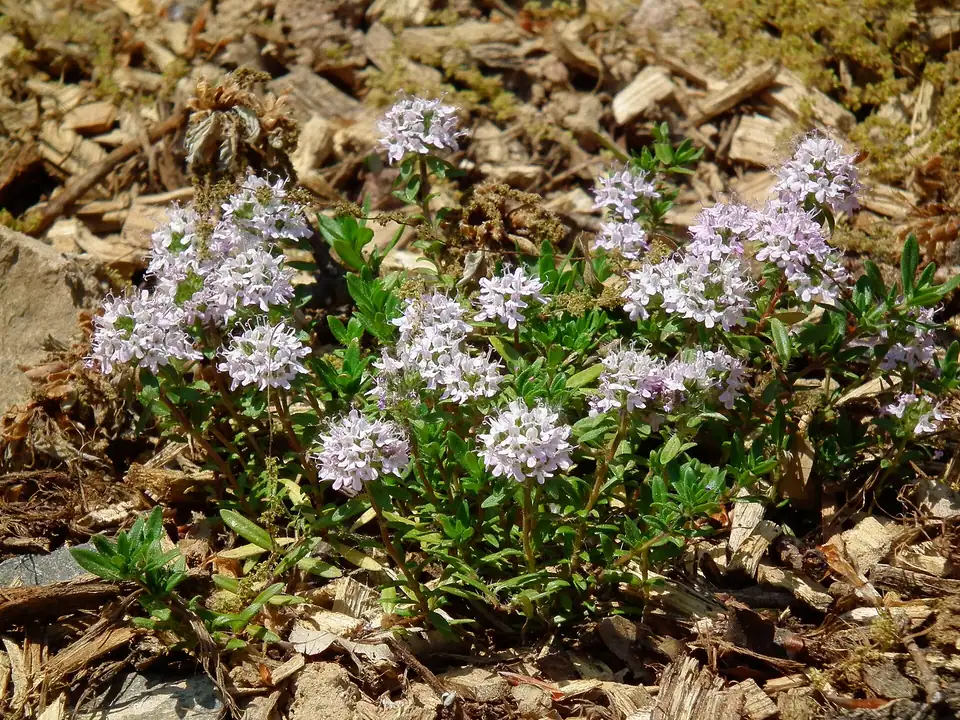


How to Grow and Care for Thymus longicaulis
Thymus longicaulis
Written by Emilio Marruso · last checked
At a glance
This thyme is an easygoing plant for a sunny spot: give it full sun, six or more hours a day, and once settled it needs water only during long dry spells. Set plants 9 inches apart, trim them in spring, and when you want more, simply divide the plants you already have.
- Sun
Full sun: six or more hours a day
What the sources say (1)
Light: Full sun (six or more hours of sunlight a day)
Grow creeping thyme in sandy or stony loose soils in areas that receive six or more hours of sunlight every day.
— How To Grow Creeping Thyme [4] - Water
First season: water when the top 1 inch of soil is dry; later only in long dry spells
What the sources say (2)
Watering: Established plants need water only during prolonged dry weather
Established creeping thyme plants only need water during prolonged dry weather.
— How To Grow Creeping Thyme [4] Watering notes: Newly planted plants need water during the first growing season when the soil is dry to a depth of 1 inch [2.5 cm]
Newly planted creeping thyme should be watered during the first growing season when the soil is dry to a depth of 1 inch.
— How To Grow Creeping Thyme [4] - Cold
Survives winters down to −10 °F (−23.3 °C)
Very hardy · USDA 6a · RHS H7 · Z6
What the sources say (2)
Hardiness, coldest zone: 6a [winter low −23.3 to −20.6 °C (−10 to −5 °F)]
Thymus longicaulis grows in U.S. Department of Agriculture plant hardiness zones 6a through 9b
— How To Grow Creeping Thyme [4] Hardiness, warmest zone: 9b [winter low −3.9 to −1.1 °C (25 to 30 °F)]
Thymus longicaulis grows in U.S. Department of Agriculture plant hardiness zones 6a through 9b
— How To Grow Creeping Thyme [4] - Spacing
9 in between plants
What the sources say (1)
Spacing: 22.9 cm (9 in)
Space creeping thyme plants about 9 inches apart, or according to the variety's final growing width.
— How To Grow Creeping Thyme [4] - Pruning
Prune in spring
What the sources say (1)
Pruning: Spring
Trim plants back in spring to control their spread and to remove woody growth.
— How To Grow Creeping Thyme [4] - Propagation
Make new plants by dividing old ones
What the sources say (1)
Propagation: Division
When the centers of creeping thyme plants die back or become woody, divide the plants to renew them.
— How To Grow Creeping Thyme [4]
Overview
Thymus longicaulis is an accepted subshrub species native from south-central and southeast Europe to Turkey. [1] As a creeping thyme it is grown in dry, gritty, well-drained soil in full sun. [4]
Thymus longicaulis care
Measurements in square brackets are our conversion into the other unit system; the quoted text is unchanged.
How to water Thymus longicaulis
Watering
Established plants need water only during prolonged dry weather
What the sources say (1)
Established creeping thyme plants only need water during prolonged dry weather.Watering notes
Newly planted plants need water during the first growing season when the soil is dry to a depth of 1 inch [2.5 cm]
What the sources say (1)
Newly planted creeping thyme should be watered during the first growing season when the soil is dry to a depth of 1 inch.How much light Thymus longicaulis needs
Full sun (six or more hours of sunlight a day)
What the sources say (1)
Grow creeping thyme in sandy or stony loose soils in areas that receive six or more hours of sunlight every day.How much cold Thymus longicaulis can take
Hardiness, coldest zone
6a [winter low −23.3 to −20.6 °C (−10 to −5 °F)]
What the sources say (1)
Thymus longicaulis grows in U.S. Department of Agriculture plant hardiness zones 6a through 9bHardiness, warmest zone
9b [winter low −3.9 to −1.1 °C (25 to 30 °F)]
What the sources say (1)
Thymus longicaulis grows in U.S. Department of Agriculture plant hardiness zones 6a through 9bWhere to grow Thymus longicaulis
22.9 cm (9 in)
What the sources say (1)
Space creeping thyme plants about 9 inches apart, or according to the variety's final growing width.How to propagate Thymus longicaulis
Division
What the sources say (1)
When the centers of creeping thyme plants die back or become woody, divide the plants to renew them.How to grow Thymus longicaulis
The plant
Family
Lamiaceae
What the sources say (1)
Family
Lamiaceae
View Family Tree opens in a new tabFertilizing
When
The sources give different values depending on region, zone or growing conditions.
What each source says
Thymus in general: Before planting, as compost worked into the soil
What the sources say (1)
Thymus in general: Amend the soil with compost prior to planting to improve drainage and provide some nutrients.How often
The sources give different values depending on region, zone or growing conditions.
What each source says
Thymus in general: Sparingly, if at all
What the sources say (1)
Thymus in general: Apply fertilizer sparingly, if at all. Excess fertility can produce weak, sprawling growth and diminish the concentration of aromatic oils.Natural fertilizers
The sources give different values depending on region, zone or growing conditions.
What each source says
Thymus in general: Compost before planting; occasional well-aged manure
What the sources say (1)
Thymus in general: Once planted, thyme will grow adequately without fertilization, but will benefit from the occasional application of well aged manure or a balanced fertilizer.Mineral fertilizers
The sources give different values depending on region, zone or growing conditions.
What each source says
Thymus in general: Occasional balanced fertilizer
What the sources say (1)
Thymus in general: Once planted, thyme will grow adequately without fertilization, but will benefit from the occasional application of well aged manure or a balanced fertilizer.Avoid
The sources give different values depending on region, zone or growing conditions.
What each source says
Thymus in general: Over-fertilizing
What the sources say (1)
Thymus in general: Thyme prefers low fertility soils, over-fertilizing can lead to reduced flavor in the leaves.Signs of excess
The sources give different values depending on region, zone or growing conditions.
What each source says
Thymus in general: Weak, sprawling growth and fewer aromatic oils
What the sources say (1)
Thymus in general: Apply fertilizer sparingly, if at all. Excess fertility can produce weak, sprawling growth and diminish the concentration of aromatic oils.Remedies
Each remedy shows what official sources say about it; traditional remedies without an official source are marked as such. Harmful ones are listed so you know to avoid them.
Treating the plant
aphids
insecticidal soap spray Works
To test for plant sensitivity, spray a small area and wait 24 hours to see if any damage occurs. Plants under water stress should not be sprayed.
— caswell.ces.ncsu.edu [9] How: Mix the soap with water to create your solution and apply directly to insects on any plants.
Mix the soap with water to create your solution and apply directly to insects on any plants. While insecticidal soap is less apt to affect other organisms, certain plants might be sensitive to the soap and can suffer leaf burn.
— foodgardening.mequoda.com [8] What the evidence says Small, soft-bodied insects such as aphids, mealybugs, thrips, scale crawlers, and spider mites are most susceptible to the soaps.
— caswell.ces.ncsu.edu [9]
spider mites
neem oil on eggs Not verified
Traditional remedy, not verified by an official source.
Like insecticidal soaps, horticultural oils can cause plant injury if not properly diluted.
— foodgardening.mequoda.com [8] How: Apply neem oil on eggs; remove affected foliage or plants.
mildew
baking soda, dish detergent and olive oil spray Not verified
Traditional remedy, not verified by an official source.
How: Mix one tablespoon of baking soda, 1/2 teaspoon of a mild dish detergent, and 2 1/2 tablespoons of olive oil in a gallon of water.
Calendar
Pruning
Spring
What the sources say (1)
Trim plants back in spring to control their spread and to remove woody growth.Months as given by the sources, which are mostly from the United States (northern hemisphere). In the southern hemisphere they shift by about six months.
Similar plants
- Broad-Leaved Thyme Thymus pulegioides
- Creeping Thyme Thymus praecox
- Creeping Thyme Thymus serpyllum
- Wooly Thyme Thymus pseudolanuginosus
- Thyme Thymus vulgaris
- Anise Sage Salvia guaranitica
- Apple mint Mentha suaveolens
- Arrowleaf Sage Salvia sagittata
Sources
Every value above is quoted from these documents. Links lead to the original publisher.
- Thymus longicaulis C.Presl | Plants of the World Online | Kew Science · powo.science.kew.org, consulted
- Thymus longicaulis | Euro+Med-Plantbase · europlusmed.org, consulted
- Ann. Bot. Fennici 51: 54–62 Helsinki 31 January 2014 ISSN 0003-3847 (print) ISSN 1797-2442 (online) · sekj.org, consulted
- How To Grow Creeping Thyme · gardenguides.com, consulted
- blogs.ifas.ufl.edu · blogs.ifas.ufl.edu
- yardandgarden.extension.iastate.edu · yardandgarden.extension.iastate.edu
- plantvillage.psu.edu · plantvillage.psu.edu
- foodgardening.mequoda.com · foodgardening.mequoda.com
- caswell.ces.ncsu.edu · caswell.ces.ncsu.edu
Written by Emilio Marruso · last checked