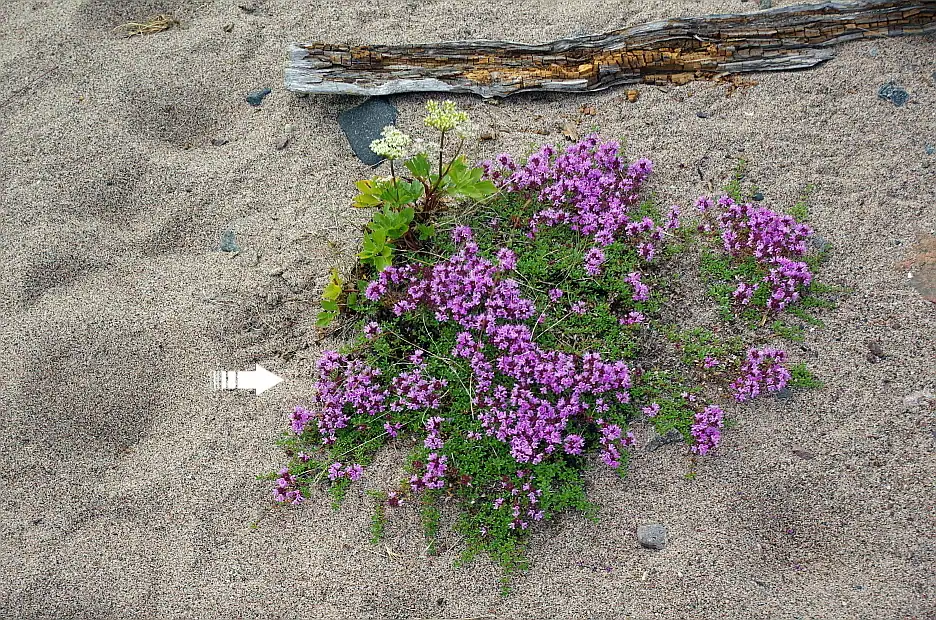
How to Grow and Care for Creeping Thyme
Thymus serpyllum
Written by Emilio Marruso · last checked
At a glance
Creeping thyme is a tough little perennial that stays just 2–3 inches tall. Give it full sun and keep it on the dry side, since too much water makes it rot: it tolerates drought and needs no fertilizer once established. It grows happily in containers too, and starting it from seed is the usual way to begin.
- Sun
Full sun
What the sources say (1)
Light: Full sun
It prefers full sun and tolerates poor soil while thriving in sandy, gritty, or rocky soil. It is drought tolerant and prefers average to dry medium moisture.
— Thymus serpyllum (Breckland Thyme, Creeping Thyme, Mother of Thyme, Wild Thyme) | North Carolina Extension Gardener Plant Toolbox [1] - Water
Handles drought; keep it on the dry side, as too much water makes it rot
What the sources say (2)
Watering: Drought tolerant; prefers average to dry medium moisture
It is drought tolerant and prefers average to dry medium moisture.
— Thymus serpyllum (Breckland Thyme, Creeping Thyme, Mother of Thyme, Wild Thyme) | North Carolina Extension Gardener Plant Toolbox [1] Watering notes: Susceptible to rot if overwatered or if the soil is poorly drained
The plant is susceptible to rot if overwatered or if the soil is poorly drained.
— Thymus serpyllum (Breckland Thyme, Creeping Thyme, Mother of Thyme, Wild Thyme) | North Carolina Extension Gardener Plant Toolbox [1] - Cold
Survives winters down to −30 °F (−34.4 °C)
Very hardy · USDA 4a · RHS H7 · Z4
What the sources say (2)
Hardiness, coldest zone: 4a [winter low −34.4 to −31.7 °C (−30 to −25 °F)]
4a, 4b, 5a, 5b, 6a, 6b, 7a, 7b, 8a, 8b, 9a, 9b
— Thymus serpyllum (Breckland Thyme, Creeping Thyme, Mother of Thyme, Wild Thyme) | North Carolina Extension Gardener Plant Toolbox [1] Hardiness, warmest zone: 9b [winter low −3.9 to −1.1 °C (25 to 30 °F)]
4a, 4b, 5a, 5b, 6a, 6b, 7a, 7b, 8a, 8b, 9a, 9b
— Thymus serpyllum (Breckland Thyme, Creeping Thyme, Mother of Thyme, Wild Thyme) | North Carolina Extension Gardener Plant Toolbox [1] - Soil
Poor soil that drains well
What the sources say (2)
Avoid: Over-fertilizing; thyme prefers low-fertility soils
Thyme prefers low fertility soils, over-fertilizing can lead to reduced flavor in the leaves.
— Spice Up Your Life: A Beginners Guide to Growing Thyme - UF/IFAS Extension Pasco County [5] Watering notes: Susceptible to rot if overwatered or if the soil is poorly drained
The plant is susceptible to rot if overwatered or if the soil is poorly drained.
— Thymus serpyllum (Breckland Thyme, Creeping Thyme, Mother of Thyme, Wild Thyme) | North Carolina Extension Gardener Plant Toolbox [1] - Feeding
Mix compost in before planting, then none; too much feeding makes the leaves less tasty
What the sources say (4)
Natural fertilizers: Compost worked into the soil before planting
Thyme does not require much fertilizer, especially if you amend your soil with compost prior to planting.
— Spice Up Your Life: A Beginners Guide to Growing Thyme - UF/IFAS Extension Pasco County [5] How often: Little fertilizer; established plants need none
Thyme does not require much fertilizer, especially if you amend your soil with compost prior to planting.
— Spice Up Your Life: A Beginners Guide to Growing Thyme - UF/IFAS Extension Pasco County [5] When propagated by seed, it may take several years to mature enough to harvest. Once well established, thyme does not require much watering or any fertilizer.
— Herb Garden Plants: Thyme [6] Signs of excess: Reduced flavor in the leaves
Thyme prefers low fertility soils, over-fertilizing can lead to reduced flavor in the leaves.
— Spice Up Your Life: A Beginners Guide to Growing Thyme - UF/IFAS Extension Pasco County [5] - Harvest
Mostly grown for looks; rarely used in cooking
- Pests
Spider mites in hot, dry summers; rot from too much water or soggy soil
What the sources say (2)
Pests: spider mites
Spider mites may occur during a hot, dry summer.
— Thymus serpyllum (Breckland Thyme, Creeping Thyme, Mother of Thyme, Wild Thyme) | North Carolina Extension Gardener Plant Toolbox [1] Diseases: rot (when overwatered or in poorly drained soil)
The plant is susceptible to rot if overwatered or if the soil is poorly drained.
— Thymus serpyllum (Breckland Thyme, Creeping Thyme, Mother of Thyme, Wild Thyme) | North Carolina Extension Gardener Plant Toolbox [1] - Size
2–3 in tall
What the sources say (2)
Mature height: 5-8 cm (2-3 in)
cultivar 'Elfin': 3-5 cm (1-2 in): Elfin thyme ( T. serpyllum 'Elfin') grows only 1 to 2 inches.
— Herb Garden Plants: Thyme [6] Dimensions: Height: 0 ft. 2 in. - 0 ft. 3 in. Width: 0 ft. 3 in. - 0 ft. 10 in.
— Thymus serpyllum (Breckland Thyme, Creeping Thyme, Mother of Thyme, Wild Thyme) | North Carolina Extension Gardener Plant Toolbox [1] - Propagation
Most often grown from seed
What the sources say (1)
Propagation: Seed (most common method)
The most common method of propagation is by seed.
— Thymus serpyllum (Breckland Thyme, Creeping Thyme, Mother of Thyme, Wild Thyme) | North Carolina Extension Gardener Plant Toolbox [1] - Containers
Grows in containers too
What the sources say (1)
In containers: Yes
The plant will fill in crevices of stepping stones or sprawl over rocks. It may also be grown in containers.
— Thymus serpyllum (Breckland Thyme, Creeping Thyme, Mother of Thyme, Wild Thyme) | North Carolina Extension Gardener Plant Toolbox [1]
Overview
Creeping thyme is a dwarf, low-growing, creeping, woody evergreen grown primarily as an ornamental groundcover. [1] It prefers full sun, tolerates poor soil and is drought tolerant. [1] It is susceptible to rot if overwatered or if the soil is poorly drained. [1]
This record is incomplete: the sources we read do not cover every field yet.
Not yet covered by our sources: Pruning
Creeping Thyme care
How to water Creeping Thyme
Watering
Drought tolerant; prefers average to dry medium moisture
What the sources say (1)
It is drought tolerant and prefers average to dry medium moisture.Watering notes
Susceptible to rot if overwatered or if the soil is poorly drained
What the sources say (1)
The plant is susceptible to rot if overwatered or if the soil is poorly drained.How much light Creeping Thyme needs
Full sun
What the sources say (1)
It prefers full sun and tolerates poor soil while thriving in sandy, gritty, or rocky soil. It is drought tolerant and prefers average to dry medium moisture.How much cold Creeping Thyme can take
Hardiness, coldest zone
4a [winter low −34.4 to −31.7 °C (−30 to −25 °F)]
What the sources say (1)
4a, 4b, 5a, 5b, 6a, 6b, 7a, 7b, 8a, 8b, 9a, 9bHardiness, warmest zone
9b [winter low −3.9 to −1.1 °C (25 to 30 °F)]
What the sources say (1)
4a, 4b, 5a, 5b, 6a, 6b, 7a, 7b, 8a, 8b, 9a, 9bBest soil for Creeping Thyme
The sources give different values depending on region, zone or growing conditions.
What each source says
According to NC State Extension (Thymus serpyllum): Alkaline (>8.0), Neutral (6.0-8.0)
According to NC State Extension (genus Thymus): Acid (<6.0), Alkaline (>8.0), Neutral (6.0-8.0)
alkaline soils (Florida): pH between 6.0 and 8.0
What the sources say (3)
According to NC State Extension (Thymus serpyllum): Soil Texture:
Loam (Silt)
Sand
Shallow Rocky
Soil pH:
Alkaline (>8.0)
Neutral (6.0-8.0)According to NC State Extension (genus Thymus): Soil pH:
Acid (<6.0)
Alkaline (>8.0)
Neutral (6.0-8.0)alkaline soils (Florida): Thyme does well in alkaline soils with a pH between 6.0 and 8.0.Where to grow Creeping Thyme
Yes
What the sources say (1)
The plant will fill in crevices of stepping stones or sprawl over rocks. It may also be grown in containers.How to propagate Creeping Thyme
Seed (most common method)
What the sources say (1)
The most common method of propagation is by seed.How to grow Creeping Thyme
The plant
Life cycle
perennial
What the sources say (1)
Genus: Thymus Species: serpyllum Family: Lamiaceae Life Cycle: Perennial Woody Recommended Propagation Strategy: SeedFamily
Lamiaceae
What the sources say (1)
Genus: Thymus Species: serpyllum Family: Lamiaceae Life Cycle: Perennial Woody Recommended Propagation Strategy: SeedMature height
5-8 cm (2-3 in)
What each source says
cultivar 'Elfin': 3-5 cm (1-2 in):
What the sources say (2)
cultivar 'Elfin': 3-5 cm (1-2 in): Elfin thyme ( T. serpyllum 'Elfin') grows only 1 to 2 inches.Dimensions: Height: 0 ft. 2 in. - 0 ft. 3 in. Width: 0 ft. 3 in. - 0 ft. 10 in.Pests and diseases
Pests
spider mites
What the sources say (1)
Spider mites may occur during a hot, dry summer.Diseases
rot (when overwatered or in poorly drained soil)
What the sources say (1)
The plant is susceptible to rot if overwatered or if the soil is poorly drained.Fertilizing
When
Before planting, as a compost amendment
What the sources say (1)
Thyme does not require much fertilizer, especially if you amend your soil with compost prior to planting.How often
Little fertilizer; established plants need none
What the sources say (2)
Thyme does not require much fertilizer, especially if you amend your soil with compost prior to planting.When propagated by seed, it may take several years to mature enough to harvest. Once well established, thyme does not require much watering or any fertilizer.Natural fertilizers
Compost worked into the soil before planting
What the sources say (1)
Thyme does not require much fertilizer, especially if you amend your soil with compost prior to planting.Avoid
Over-fertilizing; thyme prefers low-fertility soils
What the sources say (1)
Thyme prefers low fertility soils, over-fertilizing can lead to reduced flavor in the leaves.Signs of excess
Reduced flavor in the leaves
What the sources say (1)
Thyme prefers low fertility soils, over-fertilizing can lead to reduced flavor in the leaves.Creeping Thyme pests and problems
Rot
Symptom: Rot of the plant in overwatered or poorly drained soil
What to do: Avoid overwatering and poorly drained soil
What the sources say (1)
The plant is susceptible to rot if overwatered or if the soil is poorly drained.
— Thymus serpyllum (Breckland Thyme, Creeping Thyme, Mother of Thyme, Wild Thyme) | North Carolina Extension Gardener Plant Toolbox [1] Spider mites
Symptom: Spider mites may occur during a hot, dry summer
What to do: Not stated in the sources.
What the sources say (1)
Spider mites may occur during a hot, dry summer.
— Thymus serpyllum (Breckland Thyme, Creeping Thyme, Mother of Thyme, Wild Thyme) | North Carolina Extension Gardener Plant Toolbox [1]
Remedies
Each remedy shows what official sources say about it; traditional remedies without an official source are marked as such. Harmful ones are listed so you know to avoid them.
Treating the plant
aphids
strong jet of water Works
How: Use a strong jet of water to dislodge aphids from the plant.
Treatment : Use a strong jet of water to dislodge aphids from the plant.
— Spice Up Your Life: A Beginners Guide to Growing Thyme - UF/IFAS Extension Pasco County [5] What the evidence says Treatment : Use a strong jet of water to dislodge aphids from the plant.
— Spice Up Your Life: A Beginners Guide to Growing Thyme - UF/IFAS Extension Pasco County [5] neem oil spray Works
Always follow the label instructions on the product you use to prevent plant injury.
— Spice Up Your Life: A Beginners Guide to Growing Thyme - UF/IFAS Extension Pasco County [5] How: Spraying insecticidal soap or neem oil will help control their numbers.
Spraying insecticidal soap or neem oil will help control their numbers.
— Spice Up Your Life: A Beginners Guide to Growing Thyme - UF/IFAS Extension Pasco County [5] What the evidence says Spraying insecticidal soap or neem oil will help control their numbers.
— Spice Up Your Life: A Beginners Guide to Growing Thyme - UF/IFAS Extension Pasco County [5] pinching off infested shoot tips Not verified
Traditional remedy, not verified by an official source.
How: Remove small aphid colonies by pinching off heavily infested shoot tips or washing the insects away with a gentle spray of water.
spider mites
gentle spray of water Not verified
Traditional remedy, not verified by an official source.
How: Wash affected foliage with a gentle spray of water to dislodge mites; repeat as necessary, allowing the foliage to dry promptly afterwards.
insecticidal soap spray Works
Always follow the label instructions on the product you use to prevent plant injury.
— Spice Up Your Life: A Beginners Guide to Growing Thyme - UF/IFAS Extension Pasco County [5] How: Use insecticidal soap or oils to control spider mite populations.
Treatment : Use insecticidal soap or oils to control spider mite populations.
— Spice Up Your Life: A Beginners Guide to Growing Thyme - UF/IFAS Extension Pasco County [5] What the evidence says Treatment : Use insecticidal soap or oils to control spider mite populations.
— Spice Up Your Life: A Beginners Guide to Growing Thyme - UF/IFAS Extension Pasco County [5]
root rot
removing affected plants and improving drainage Official source, not independently tested
How: There is no saving a plant with root rot: remove the affected plants and improve soil drainage for the other plants.
There is no saving a plant with root rot, remove the affected plants and improve soil drainage for the other plants if root rot is detected.
— Spice Up Your Life: A Beginners Guide to Growing Thyme - UF/IFAS Extension Pasco County [5]
Calendar
Planting
The sources give different values depending on region, zone or growing conditions.
What each source says
Central Florida: Late fall or early spring
What the sources say (1)
Central Florida: You can plant thyme by seed or transplant in late fall or early spring.Pruning
Not stated in the sources we read.
Months as given by the sources, which are mostly from the United States (northern hemisphere). In the southern hemisphere they shift by about six months.
Edibility
Reported by the source, quoted verbatim. Do not eat a plant on the basis of this page alone: identification mistakes can be dangerous.
This plant is primarily ornamental and is rarely used in cooking.
[1]
Indicative values
Values from a secondary source, not checked word for word like the rest of this page. Use them as a starting point.
- Hours of sun
- 6-8 hoursIndicative value, adapt it to your climate · Secondary source
- Drought tolerant
- yesIndicative value, adapt it to your climate · Secondary source
- Soil
- Well-drainedIndicative value, adapt it to your climate · Secondary source
- Growth rate
- LowIndicative value, adapt it to your climate · Secondary source
- Pruning
- February, March, April, March, April, May, June, July, August, SeptemberIndicative value, adapt it to your climate · Secondary source
Similar plants
- Broad-Leaved Thyme Thymus pulegioides
- Creeping Thyme Thymus praecox
- Thymus longicaulis Thymus longicaulis
- Wooly Thyme Thymus pseudolanuginosus
- Thyme Thymus vulgaris
- Anise Sage Salvia guaranitica
- Apple mint Mentha suaveolens
- Arrowleaf Sage Salvia sagittata
Sources
Every value above is quoted from these documents. Links lead to the original publisher.
- Thymus serpyllum (Breckland Thyme, Creeping Thyme, Mother of Thyme, Wild Thyme) | North Carolina Extension Gardener Plant Toolbox · plants.ces.ncsu.edu, consulted
- Creeping Thyme - Thymus serpyllum | North Carolina Extension Gardener Plant Toolbox · plants.ces.ncsu.edu, consulted
- Wild Thyme - Thymus serpyllum | North Carolina Extension Gardener Plant Toolbox · plants.ces.ncsu.edu, consulted
- Thymus (Thyme) | North Carolina Extension Gardener Plant Toolbox · plants.ces.ncsu.edu, consulted
- Spice Up Your Life: A Beginners Guide to Growing Thyme - UF/IFAS Extension Pasco County · blogs.ifas.ufl.edu, consulted
- Herb Garden Plants: Thyme · extension.psu.edu, consulted
Written by Emilio Marruso · last checked