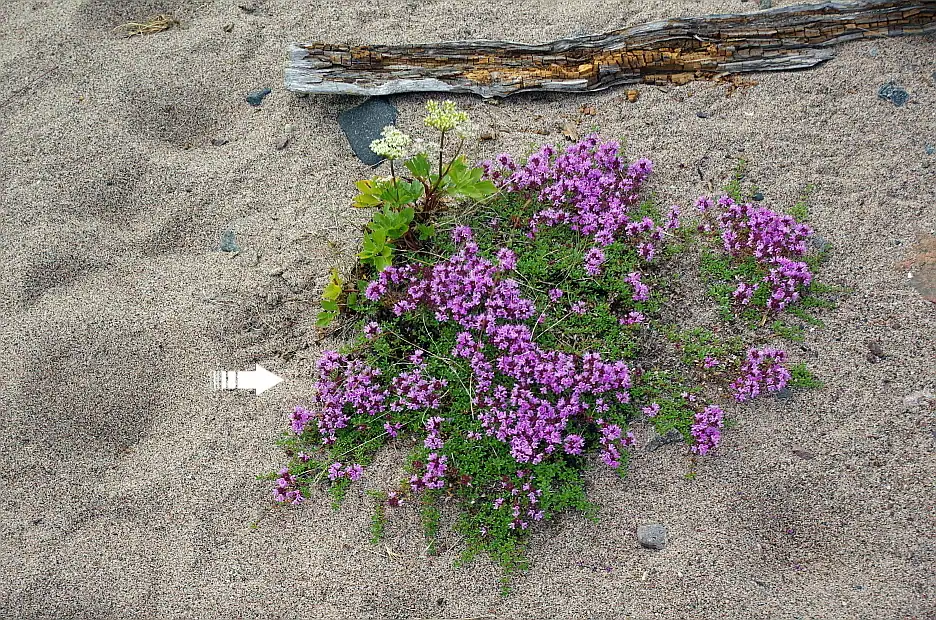
Cómo cultivar y cuidar Serpol
Thymus serpyllum
Escrito por Emilio Marruso · última revisión
De un vistazo
El serpol es una vivaz resistente y diminuta que solo alcanza 5–8 cm de altura. Dale sol pleno y no lo riegues de más, que el exceso de agua lo pudre: tolera la sequía y, una vez establecido, no necesita abono. También crece feliz en maceta, y lo más habitual es empezar a partir de semilla.
- Sol
Sol pleno
Qué dicen las fuentes (1)
Luz: Pleno sol
It prefers full sun and tolerates poor soil while thriving in sandy, gritty, or rocky soil. It is drought tolerant and prefers average to dry medium moisture.
— Thymus serpyllum (Breckland Thyme, Creeping Thyme, Mother of Thyme, Wild Thyme) | North Carolina Extension Gardener Plant Toolbox [1] - Riego
Tolera la sequía; mantenlo más bien seco, porque el exceso de agua lo pudre
Qué dicen las fuentes (2)
Riego: Tolerante a la sequía; prefiere humedad media de seca a moderada
It is drought tolerant and prefers average to dry medium moisture.
— Thymus serpyllum (Breckland Thyme, Creeping Thyme, Mother of Thyme, Wild Thyme) | North Carolina Extension Gardener Plant Toolbox [1] Notas sobre el riego: Susceptible a pudrirse si se riega en exceso o si el suelo tiene mal drenaje
The plant is susceptible to rot if overwatered or if the soil is poorly drained.
— Thymus serpyllum (Breckland Thyme, Creeping Thyme, Mother of Thyme, Wild Thyme) | North Carolina Extension Gardener Plant Toolbox [1] - Frío
Aguanta inviernos de hasta −34,4 °C (−30 °F)
Muy rústica · USDA 4a · RHS H7 · Z4
Qué dicen las fuentes (2)
Rusticidad, zona más fría: 4a [mínima invernal de −34,4 a −31,7 °C (de −30 a −25 °F)]
4a, 4b, 5a, 5b, 6a, 6b, 7a, 7b, 8a, 8b, 9a, 9b
— Thymus serpyllum (Breckland Thyme, Creeping Thyme, Mother of Thyme, Wild Thyme) | North Carolina Extension Gardener Plant Toolbox [1] Rusticidad, zona más cálida: 9b [mínima invernal de −3,9 a −1,1 °C (de 25 a 30 °F)]
4a, 4b, 5a, 5b, 6a, 6b, 7a, 7b, 8a, 8b, 9a, 9b
— Thymus serpyllum (Breckland Thyme, Creeping Thyme, Mother of Thyme, Wild Thyme) | North Carolina Extension Gardener Plant Toolbox [1] - Suelo
Suelo pobre y que drene bien
Qué dicen las fuentes (2)
Evitar: Exceso de fertilización; el tomillo prefiere suelos de baja fertilidad
Thyme prefers low fertility soils, over-fertilizing can lead to reduced flavor in the leaves.
— Spice Up Your Life: A Beginners Guide to Growing Thyme - UF/IFAS Extension Pasco County [5] Notas sobre el riego: Susceptible a pudrirse si se riega en exceso o si el suelo tiene mal drenaje
The plant is susceptible to rot if overwatered or if the soil is poorly drained.
— Thymus serpyllum (Breckland Thyme, Creeping Thyme, Mother of Thyme, Wild Thyme) | North Carolina Extension Gardener Plant Toolbox [1] - Abonado
Mezcla compost antes de plantar y luego nada; con demasiado abono las hojas pierden sabor
Qué dicen las fuentes (4)
Abonos naturales: Compost incorporado al suelo antes de plantar
Thyme does not require much fertilizer, especially if you amend your soil with compost prior to planting.
— Spice Up Your Life: A Beginners Guide to Growing Thyme - UF/IFAS Extension Pasco County [5] Frecuencia: Poco fertilizante; las plantas establecidas no necesitan ninguno
Thyme does not require much fertilizer, especially if you amend your soil with compost prior to planting.
— Spice Up Your Life: A Beginners Guide to Growing Thyme - UF/IFAS Extension Pasco County [5] When propagated by seed, it may take several years to mature enough to harvest. Once well established, thyme does not require much watering or any fertilizer.
— Herb Garden Plants: Thyme [6] Signos de exceso: Sabor reducido en las hojas
Thyme prefers low fertility soils, over-fertilizing can lead to reduced flavor in the leaves.
— Spice Up Your Life: A Beginners Guide to Growing Thyme - UF/IFAS Extension Pasco County [5] - Cosecha
Se cultiva sobre todo como planta ornamental; rara vez se usa en la cocina
- Plagas
Araña roja en veranos calurosos y secos; podredumbre por exceso de riego o suelo encharcado
Qué dicen las fuentes (2)
Plagas: ácaros araña
Spider mites may occur during a hot, dry summer.
— Thymus serpyllum (Breckland Thyme, Creeping Thyme, Mother of Thyme, Wild Thyme) | North Carolina Extension Gardener Plant Toolbox [1] Enfermedades: pudrición (cuando se riega en exceso o en suelo con mal drenaje)
The plant is susceptible to rot if overwatered or if the soil is poorly drained.
— Thymus serpyllum (Breckland Thyme, Creeping Thyme, Mother of Thyme, Wild Thyme) | North Carolina Extension Gardener Plant Toolbox [1] - Tamaño
5–8 cm de alto
Qué dicen las fuentes (2)
Altura adulta: 5-8 cm (2-3 pulgadas)
cultivar 'Elfin': 3-5 cm (1-2 pulgadas): Elfin thyme ( T. serpyllum 'Elfin') grows only 1 to 2 inches.
— Herb Garden Plants: Thyme [6] Dimensions: Height: 0 ft. 2 in. - 0 ft. 3 in. Width: 0 ft. 3 in. - 0 ft. 10 in.
— Thymus serpyllum (Breckland Thyme, Creeping Thyme, Mother of Thyme, Wild Thyme) | North Carolina Extension Gardener Plant Toolbox [1] - Multiplicación
Lo más habitual es multiplicarlo por semilla
Qué dicen las fuentes (1)
Propagación: Semilla (método más común)
The most common method of propagation is by seed.
— Thymus serpyllum (Breckland Thyme, Creeping Thyme, Mother of Thyme, Wild Thyme) | North Carolina Extension Gardener Plant Toolbox [1] - Maceta
Crece también en maceta
Qué dicen las fuentes (1)
En maceta: Sí
The plant will fill in crevices of stepping stones or sprawl over rocks. It may also be grown in containers.
— Thymus serpyllum (Breckland Thyme, Creeping Thyme, Mother of Thyme, Wild Thyme) | North Carolina Extension Gardener Plant Toolbox [1]
Resumen
El tomillo rastrero es una planta enana, de bajo crecimiento, rastrera, leñosa y siempreverde, cultivada principalmente como cubresuelos ornamental. [1] Prefiere pleno sol, tolera suelos pobres y es resistente a la sequía. [1] Es susceptible a la pudrición si se riega en exceso o si el suelo tiene mal drenaje. [1]
Citado en inglés, como en la fuente.
Esta ficha está incompleta: las fuentes consultadas aún no cubren todos los campos.
Aún no cubierto por nuestras fuentes: Poda
Cuidados
Riego
Riego
Tolerante a la sequía; prefiere humedad media de seca a moderada
Qué dicen las fuentes (1)
It is drought tolerant and prefers average to dry medium moisture.Notas sobre el riego
Susceptible a pudrirse si se riega en exceso o si el suelo tiene mal drenaje
Qué dicen las fuentes (1)
The plant is susceptible to rot if overwatered or if the soil is poorly drained.Luz
Pleno sol
Qué dicen las fuentes (1)
It prefers full sun and tolerates poor soil while thriving in sandy, gritty, or rocky soil. It is drought tolerant and prefers average to dry medium moisture.Clima y frío
Rusticidad, zona más fría
4a [mínima invernal de −34,4 a −31,7 °C (de −30 a −25 °F)]
Qué dicen las fuentes (1)
4a, 4b, 5a, 5b, 6a, 6b, 7a, 7b, 8a, 8b, 9a, 9bRusticidad, zona más cálida
9b [mínima invernal de −3,9 a −1,1 °C (de 25 a 30 °F)]
Qué dicen las fuentes (1)
4a, 4b, 5a, 5b, 6a, 6b, 7a, 7b, 8a, 8b, 9a, 9bSuelo
Las fuentes dan valores distintos según la región, la zona o las condiciones de cultivo.
Lo que dice cada fuente
Según NC State Extension (Thymus serpyllum): Alcalino (>8.0), Neutro (6.0-8.0)
Según NC State Extension (genus Thymus): Ácido (<6.0), Alcalino (>8.0), Neutro (6.0-8.0)
suelos alcalinos (Florida): pH entre 6.0 y 8.0
Qué dicen las fuentes (3)
Según NC State Extension (Thymus serpyllum): Soil Texture:
Loam (Silt)
Sand
Shallow Rocky
Soil pH:
Alkaline (>8.0)
Neutral (6.0-8.0)Según NC State Extension (genus Thymus): Soil pH:
Acid (<6.0)
Alkaline (>8.0)
Neutral (6.0-8.0)suelos alcalinos (Florida): Thyme does well in alkaline soils with a pH between 6.0 and 8.0.Dónde cultivarla
Sí
Qué dicen las fuentes (1)
The plant will fill in crevices of stepping stones or sprawl over rocks. It may also be grown in containers.Propagación
Semilla (método más común)
Qué dicen las fuentes (1)
The most common method of propagation is by seed.Cultivo
La planta
Ciclo de vida
perenne
Qué dicen las fuentes (1)
Genus: Thymus Species: serpyllum Family: Lamiaceae Life Cycle: Perennial Woody Recommended Propagation Strategy: SeedFamilia
Lamiaceae
Qué dicen las fuentes (1)
Genus: Thymus Species: serpyllum Family: Lamiaceae Life Cycle: Perennial Woody Recommended Propagation Strategy: SeedAltura adulta
5-8 cm (2-3 pulgadas)
Lo que dice cada fuente
cultivar 'Elfin': 3-5 cm (1-2 pulgadas):
Qué dicen las fuentes (2)
cultivar 'Elfin': 3-5 cm (1-2 pulgadas): Elfin thyme ( T. serpyllum 'Elfin') grows only 1 to 2 inches.Dimensions: Height: 0 ft. 2 in. - 0 ft. 3 in. Width: 0 ft. 3 in. - 0 ft. 10 in.Plagas y enfermedades
Plagas
ácaros araña
Qué dicen las fuentes (1)
Spider mites may occur during a hot, dry summer.Enfermedades
pudrición (cuando se riega en exceso o en suelo con mal drenaje)
Qué dicen las fuentes (1)
The plant is susceptible to rot if overwatered or if the soil is poorly drained.Abonado
Cuándo
Antes de plantar, como enmienda de compost
Qué dicen las fuentes (1)
Thyme does not require much fertilizer, especially if you amend your soil with compost prior to planting.Frecuencia
Poco fertilizante; las plantas establecidas no necesitan ninguno
Qué dicen las fuentes (2)
Thyme does not require much fertilizer, especially if you amend your soil with compost prior to planting.When propagated by seed, it may take several years to mature enough to harvest. Once well established, thyme does not require much watering or any fertilizer.Abonos naturales
Compost incorporado al suelo antes de plantar
Qué dicen las fuentes (1)
Thyme does not require much fertilizer, especially if you amend your soil with compost prior to planting.Evitar
Exceso de fertilización; el tomillo prefiere suelos de baja fertilidad
Qué dicen las fuentes (1)
Thyme prefers low fertility soils, over-fertilizing can lead to reduced flavor in the leaves.Signos de exceso
Sabor reducido en las hojas
Qué dicen las fuentes (1)
Thyme prefers low fertility soils, over-fertilizing can lead to reduced flavor in the leaves.Problemas
Pudrición
Síntoma: Pudrición de la planta en suelo con exceso de riego o con mal drenaje
Qué hacer: Evita el riego excesivo y el suelo con mal drenaje
Qué dicen las fuentes (1)
The plant is susceptible to rot if overwatered or if the soil is poorly drained.
— Thymus serpyllum (Breckland Thyme, Creeping Thyme, Mother of Thyme, Wild Thyme) | North Carolina Extension Gardener Plant Toolbox [1] Arañitas rojas
Síntoma: Las arañitas rojas pueden aparecer durante un verano caluroso y seco
Qué hacer: No se indica en las fuentes.
Qué dicen las fuentes (1)
Spider mites may occur during a hot, dry summer.
— Thymus serpyllum (Breckland Thyme, Creeping Thyme, Mother of Thyme, Wild Thyme) | North Carolina Extension Gardener Plant Toolbox [1]
Remedios
Cada remedio indica qué dicen las fuentes oficiales; los remedios tradicionales sin fuente oficial aparecen marcados. Los perjudiciales están para que sepas evitarlos.
Cuidar la planta
pulgones
fuerte chorro de agua Funciona
Cómo: Usa un chorro fuerte de agua para desprender los pulgones de la planta.
Treatment : Use a strong jet of water to dislodge aphids from the plant.
— Spice Up Your Life: A Beginners Guide to Growing Thyme - UF/IFAS Extension Pasco County [5] Qué dicen las pruebas Treatment : Use a strong jet of water to dislodge aphids from the plant.
— Spice Up Your Life: A Beginners Guide to Growing Thyme - UF/IFAS Extension Pasco County [5] spray de aceite de neem Funciona
Always follow the label instructions on the product you use to prevent plant injury.
— Spice Up Your Life: A Beginners Guide to Growing Thyme - UF/IFAS Extension Pasco County [5] Cómo: Rocía jabón insecticida o aceite de neem; esto ayudará a controlar su número.
Spraying insecticidal soap or neem oil will help control their numbers.
— Spice Up Your Life: A Beginners Guide to Growing Thyme - UF/IFAS Extension Pasco County [5] Qué dicen las pruebas Spraying insecticidal soap or neem oil will help control their numbers.
— Spice Up Your Life: A Beginners Guide to Growing Thyme - UF/IFAS Extension Pasco County [5] Corta las puntas de los brotes infestados. No verificado
Remedio tradicional, no verificado por una fuente oficial.
Cómo: Elimina las pequeñas colonias de pulgones pellizcando las puntas de los brotes muy infestadas o lavando los insectos con un suave chorro de agua.
ácaros araña
rocío suave de agua No verificado
Remedio tradicional, no verificado por una fuente oficial.
Cómo: Lava el follaje afectado con un rocío suave de agua para desprender los ácaros; repite según sea necesario, dejando que el follaje se seque rápidamente después.
spray de jabón insecticida Funciona
Always follow the label instructions on the product you use to prevent plant injury.
— Spice Up Your Life: A Beginners Guide to Growing Thyme - UF/IFAS Extension Pasco County [5] Cómo: Usa jabón insecticida o aceites para controlar las poblaciones de arañitas rojas.
Treatment : Use insecticidal soap or oils to control spider mite populations.
— Spice Up Your Life: A Beginners Guide to Growing Thyme - UF/IFAS Extension Pasco County [5] Qué dicen las pruebas Treatment : Use insecticidal soap or oils to control spider mite populations.
— Spice Up Your Life: A Beginners Guide to Growing Thyme - UF/IFAS Extension Pasco County [5]
pudrición de la raíz
Elimina las plantas afectadas y mejora el drenaje del suelo Fuente oficial, sin prueba independiente
Cómo: No hay manera de salvar una planta con podredumbre de raíz: retira las plantas afectadas y mejora el drenaje del suelo para las demás plantas.
There is no saving a plant with root rot, remove the affected plants and improve soil drainage for the other plants if root rot is detected.
— Spice Up Your Life: A Beginners Guide to Growing Thyme - UF/IFAS Extension Pasco County [5]
Calendario
Plantación
Las fuentes dan valores distintos según la región, la zona o las condiciones de cultivo.
Lo que dice cada fuente
Florida central: Finales de otoño o principios de primavera
Qué dicen las fuentes (1)
Florida central: You can plant thyme by seed or transplant in late fall or early spring.Poda
No figura en las fuentes consultadas.
Meses tal como los dan las fuentes, en su mayoría de Estados Unidos (hemisferio norte). En el hemisferio sur se desplazan unos seis meses.
Comestibilidad
Según la fuente, citada textualmente. No comas una planta basándote solo en esta página: los errores de identificación pueden ser peligrosos.
This plant is primarily ornamental and is rarely used in cooking.
[1]
Valores orientativos
Valores de una fuente secundaria, no comprobados palabra por palabra como el resto de esta página. Úselos como punto de partida.
- Horas de sol
- 6-8 horasValor orientativo, adáptalo a tu clima · Fuente secundaria
- Resiste la sequía
- SíValor orientativo, adáptalo a tu clima · Fuente secundaria
- Suelo
- Bien drenadoValor orientativo, adáptalo a tu clima · Fuente secundaria
- Crecimiento
- BajoValor orientativo, adáptalo a tu clima · Fuente secundaria
- Poda
- Febrero, marzo, abril, marzo, abril, mayo, junio, julio, agosto, septiembreValor orientativo, adáptalo a tu clima · Fuente secundaria
Plantas similares
- Serpillo Thymus pulegioides
- Serpol serrano Thymus praecox
- Thymus longicaulis Thymus longicaulis
- Wooly Thyme Thymus pseudolanuginosus
- Tomillo común Thymus vulgaris
- Anise Sage Salvia guaranitica
- Mastranzo Mentha suaveolens
- Salvia real Salvia sagittata
Fuentes
Cada valor anterior se cita de estos documentos. Los enlaces llevan al editor original.
- Thymus serpyllum (Breckland Thyme, Creeping Thyme, Mother of Thyme, Wild Thyme) | North Carolina Extension Gardener Plant Toolbox · plants.ces.ncsu.edu, consultado
- Creeping Thyme - Thymus serpyllum | North Carolina Extension Gardener Plant Toolbox · plants.ces.ncsu.edu, consultado
- Wild Thyme - Thymus serpyllum | North Carolina Extension Gardener Plant Toolbox · plants.ces.ncsu.edu, consultado
- Thymus (Thyme) | North Carolina Extension Gardener Plant Toolbox · plants.ces.ncsu.edu, consultado
- Spice Up Your Life: A Beginners Guide to Growing Thyme - UF/IFAS Extension Pasco County · blogs.ifas.ufl.edu, consultado
- Herb Garden Plants: Thyme · extension.psu.edu, consultado
Escrito por Emilio Marruso · última revisión