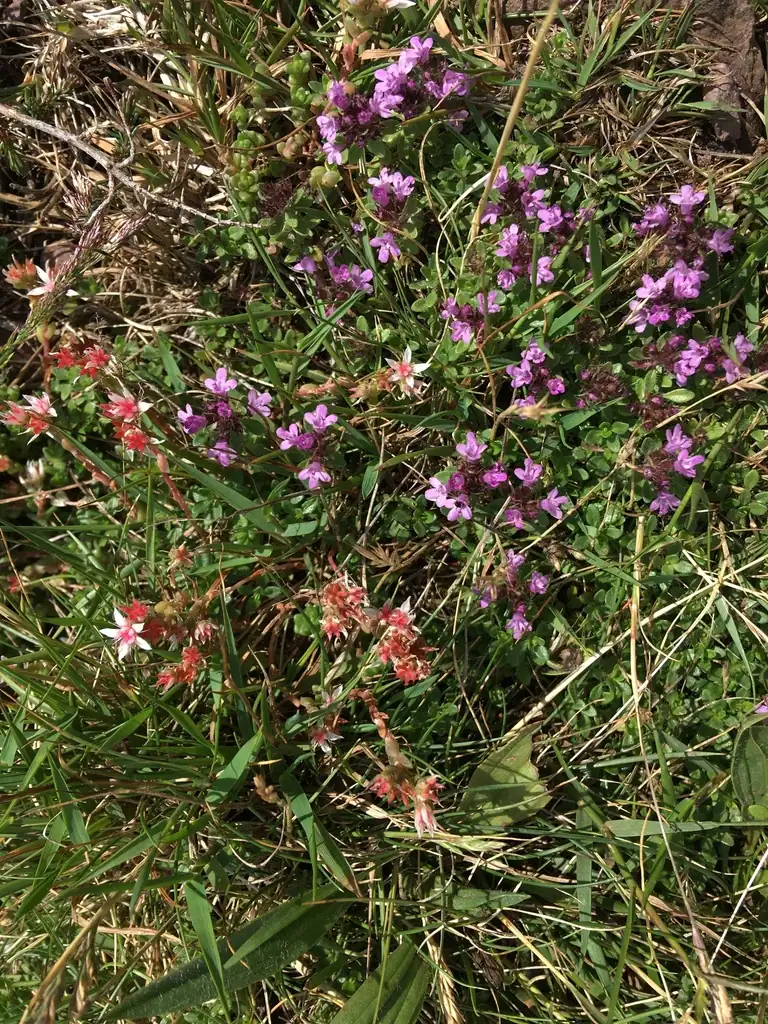
Cómo cultivar y cuidar Serpol serrano
Thymus praecox
Escrito por Emilio Marruso · última revisión
De un vistazo
El tomillo rastrero es una vivaz resistente que adora el sol pleno y pide muy poco a cambio. Se extiende de 8 a 30 cm de ancho, no necesita abono una vez asentado y también crece feliz en maceta. Dale un suelo con buen drenaje, corta los tallos con hojas justo antes de la floración y sécalos en manojos pequeños.
- Sol
Sol pleno
Qué dicen las fuentes (1)
Luz: Pleno sol
Creeping thyme performs best in full sun and well-drained soils. The plant does well in sandy or rocky soils. It is intolerant of wet or poorly drained soils.
— Thymus praecox (Creeping Thyme, Early Thyme) | North Carolina Extension Gardener Plant Toolbox [1] - Riego
No soporta el suelo encharcado: el exceso de agua pudre las raíces
Qué dicen las fuentes (2)
Notas sobre el riego: No tolera suelos húmedos o mal drenados; puede desarrollar pudrición de raíz donde el drenaje es deficiente
The plant does well in sandy or rocky soils. It is intolerant of wet or poorly drained soils.
— Thymus praecox (Creeping Thyme, Early Thyme) | North Carolina Extension Gardener Plant Toolbox [1] It may be affected by root rot when planted in areas with poor drainage.
— Thymus praecox (Creeping Thyme, Early Thyme) | North Carolina Extension Gardener Plant Toolbox [1] - Frío
Aguanta inviernos de hasta −28,9 °C (−20 °F)
Muy rústica · USDA 5a · RHS H7 · Z5
Qué dicen las fuentes (2)
Rusticidad, zona más fría: 5a [mínima invernal de −28,9 a −26,1 °C (de −20 a −15 °F)]
USDA Plant Hardiness Zone: 5a, 5b, 6a, 6b, 7a, 7b, 8a, 8b
— Thymus praecox (Creeping Thyme, Early Thyme) | North Carolina Extension Gardener Plant Toolbox [1] Rusticidad, zona más cálida: 8b [mínima invernal de −9,4 a −6,7 °C (de 15 a 20 °F)]
USDA Plant Hardiness Zone: 5a, 5b, 6a, 6b, 7a, 7b, 8a, 8b
— Thymus praecox (Creeping Thyme, Early Thyme) | North Carolina Extension Gardener Plant Toolbox [1] - Suelo
Solo suelo con buen drenaje
Qué dicen las fuentes (2)
Notas sobre el riego: No tolera suelos húmedos o mal drenados; puede desarrollar pudrición de raíz donde el drenaje es deficiente
The plant does well in sandy or rocky soils. It is intolerant of wet or poorly drained soils.
— Thymus praecox (Creeping Thyme, Early Thyme) | North Carolina Extension Gardener Plant Toolbox [1] It may be affected by root rot when planted in areas with poor drainage.
— Thymus praecox (Creeping Thyme, Early Thyme) | North Carolina Extension Gardener Plant Toolbox [1] - Abonado
Poco o nada; el exceso da plantas débiles, desparramadas y con menos aroma
Qué dicen las fuentes (4)
Frecuencia: Escasamente, si acaso; las plantas establecidas no necesitan fertilizante
Apply fertilizer sparingly, if at all. Excess fertility can produce weak, sprawling growth and diminish the concentration of aromatic oils.
— All About Thyme | Yard and Garden [5] When propagated by seed, it may take several years to mature enough to harvest. Once well established, thyme does not require much watering or any fertilizer.
— Herb Garden Plants: Thyme [6] Evitar: Exceso de fertilidad
Apply fertilizer sparingly, if at all. Excess fertility can produce weak, sprawling growth and diminish the concentration of aromatic oils.
— All About Thyme | Yard and Garden [5] Signos de exceso: Crecimiento débil y extendido, y menos aceites aromáticos
Apply fertilizer sparingly, if at all. Excess fertility can produce weak, sprawling growth and diminish the concentration of aromatic oils.
— All About Thyme | Yard and Garden [5] - Cosecha
Corta los tallos con hojas justo antes de la floración; sécalos en manojos pequeños
Qué dicen las fuentes (2)
Cómo cosechar: Cosecha según sea necesario durante la temporada de crecimiento; corta los tallos con hojas poco antes de la floración o cuando las primeras flores comiencen a abrirse.
Harvest thyme as needed throughout the growing season. For the best flavor, cut leafy stems shortly before flowering or when the first blossoms begin to open.
— All About Thyme | Yard and Garden [5] Conservación: Seca al aire en manojos pequeños; una vez seco, deshoja y guarda en recipientes herméticos lejos del calor y la luz.
Once dry, strip the leaves from the stems and store them in airtight containers away from heat and light. Properly dried thyme maintains good flavor for many months.
— All About Thyme | Yard and Garden [5] - Plagas
Babosas, araña roja y pulgón; podredumbre de raíz en suelo encharcado
Qué dicen las fuentes (3)
Plagas: babosas, arañitas rojas, pulgones
Insects, Diseases, and Other Plant Problems: No significant insect or disease problems except for possible slugs.
— Thymus praecox (Creeping Thyme, Early Thyme) | North Carolina Extension Gardener Plant Toolbox [1] Spider mites can occasionally become a problem during hot, dry weather. Aphids are occasional pests.
— All About Thyme | Yard and Garden [5] Enfermedades: pudrición de la raíz
It may be affected by root rot when planted in areas with poor drainage.
— Thymus praecox (Creeping Thyme, Early Thyme) | North Carolina Extension Gardener Plant Toolbox [1] - Tamaño
Se extiende de 8 a 30 cm de ancho
Qué dicen las fuentes (1)
Anchura adulta: 7.62-30.48 cm (0 pies 3 pulg - 1 pie 0 pulg)
Dimensions: Height: 0 ft. 3 in. - 0 ft. 6 in. Width: 0 ft. 3 in. - 1 ft. 0 in.
— Thymus praecox (Creeping Thyme, Early Thyme) | North Carolina Extension Gardener Plant Toolbox [1] - Multiplicación
Divide la mata en primavera o a finales de otoño; haz esquejes de mediados a finales de verano
Qué dicen las fuentes (1)
Propagación: División (primavera o finales de otoño); esquejes semiduros (mediados a finales del verano)
The common method of propagation is by division in the spring or late fall. Semi-hard cuttings may be obtained in mid to late summer.
— Thymus praecox (Creeping Thyme, Early Thyme) | North Carolina Extension Gardener Plant Toolbox [1] - Maceta
Crece también en maceta
Qué dicen las fuentes (1)
En maceta: Sí
It may be used as a container plant, groundcover, or as a border for patios or sidewalks.
— Thymus praecox (Creeping Thyme, Early Thyme) | North Carolina Extension Gardener Plant Toolbox [1]
Resumen
El tomillo rastrero es una planta perenne de base leñosa, de bajo crecimiento y rastrera, nativa de Groenlandia, Europa y Turquía. [1] Se desarrolla mejor a pleno sol y en suelos bien drenados, y no tolera suelos húmedos o con mal drenaje. [1] Rara vez se usa como hierba culinaria; atrae abejas y mariposas. [1]
Citado en inglés, como en la fuente.
Esta ficha está incompleta: las fuentes consultadas aún no cubren todos los campos.
Aún no cubierto por nuestras fuentes: Riego, Poda
Cuidados
Riego
Riego
No figura en las fuentes consultadas.
Notas sobre el riego
No tolera suelos húmedos o mal drenados; puede desarrollar pudrición de raíz donde el drenaje es deficiente
Qué dicen las fuentes (2)
The plant does well in sandy or rocky soils. It is intolerant of wet or poorly drained soils.It may be affected by root rot when planted in areas with poor drainage.Luz
Pleno sol
Qué dicen las fuentes (1)
Creeping thyme performs best in full sun and well-drained soils. The plant does well in sandy or rocky soils. It is intolerant of wet or poorly drained soils.Clima y frío
Rusticidad, zona más fría
5a [mínima invernal de −28,9 a −26,1 °C (de −20 a −15 °F)]
Qué dicen las fuentes (1)
USDA Plant Hardiness Zone:
5a, 5b, 6a, 6b, 7a, 7b, 8a, 8bRusticidad, zona más cálida
8b [mínima invernal de −9,4 a −6,7 °C (de 15 a 20 °F)]
Qué dicen las fuentes (1)
USDA Plant Hardiness Zone:
5a, 5b, 6a, 6b, 7a, 7b, 8a, 8bDónde cultivarla
Sí
Qué dicen las fuentes (1)
It may be used as a container plant, groundcover, or as a border for patios or sidewalks.Propagación
División (primavera o finales de otoño); esquejes semiduros (mediados a finales del verano)
Qué dicen las fuentes (1)
The common method of propagation is by division in the spring or late fall. Semi-hard cuttings may be obtained in mid to late summer.Cultivo
La planta
Ciclo de vida
perenne
Qué dicen las fuentes (1)
Creeping thyme is a low-growing, creeping, woody-based perennial.in the Lamiaceae (mint) family native to Greenland, Europe, and Turkey.Familia
Lamiaceae
Qué dicen las fuentes (1)
Creeping thyme is a low-growing, creeping, woody-based perennial.in the Lamiaceae (mint) family native to Greenland, Europe, and Turkey.Altura adulta
Anchura adulta
7.62-30.48 cm (0 pies 3 pulg - 1 pie 0 pulg)
Qué dicen las fuentes (1)
Dimensions:
Height: 0 ft. 3 in. - 0 ft. 6 in.
Width: 0 ft. 3 in. - 1 ft. 0 in.Cosecha y conservación
Cómo cosechar
Cosecha según sea necesario durante la temporada de crecimiento; corta los tallos con hojas poco antes de la floración o cuando las primeras flores comiencen a abrirse.
Qué dicen las fuentes (1)
Harvest thyme as needed throughout the growing season. For the best flavor, cut leafy stems shortly before flowering or when the first blossoms begin to open.Conservación
Seca al aire en manojos pequeños; una vez seco, deshoja y guarda en recipientes herméticos lejos del calor y la luz.
Qué dicen las fuentes (1)
Once dry, strip the leaves from the stems and store them in airtight containers away from heat and light. Properly dried thyme maintains good flavor for many months.Plagas y enfermedades
Plagas
babosas, arañitas rojas, pulgones
Qué dicen las fuentes (2)
Insects, Diseases, and Other Plant Problems: No significant insect or disease problems except for possible slugs.Spider mites can occasionally become a problem during hot, dry weather. Aphids are occasional pests.Enfermedades
pudrición de la raíz
Qué dicen las fuentes (1)
It may be affected by root rot when planted in areas with poor drainage.Abonado
Frecuencia
Escasamente, si acaso; las plantas establecidas no necesitan fertilizante
Qué dicen las fuentes (2)
Apply fertilizer sparingly, if at all. Excess fertility can produce weak, sprawling growth and diminish the concentration of aromatic oils.When propagated by seed, it may take several years to mature enough to harvest. Once well established, thyme does not require much watering or any fertilizer.Evitar
Exceso de fertilidad
Qué dicen las fuentes (1)
Apply fertilizer sparingly, if at all. Excess fertility can produce weak, sprawling growth and diminish the concentration of aromatic oils.Signos de exceso
Crecimiento débil y extendido, y menos aceites aromáticos
Qué dicen las fuentes (1)
Apply fertilizer sparingly, if at all. Excess fertility can produce weak, sprawling growth and diminish the concentration of aromatic oils.Problemas
Pudrición de raíz y babosas
Síntoma: Posibles babosas; pudrición de raíz donde el drenaje es deficiente
Qué hacer: Planta en suelo bien drenado
Qué dicen las fuentes (1)
No significant insect or disease problems except for possible slugs. It may be affected by root rot when planted in areas with poor drainage.
— Thymus praecox (Creeping Thyme, Early Thyme) | North Carolina Extension Gardener Plant Toolbox [1]
Remedios
Cada remedio indica qué dicen las fuentes oficiales; los remedios tradicionales sin fuente oficial aparecen marcados. Los perjudiciales están para que sepas evitarlos.
Cuidar la planta
pulgones
spray de jabón insecticida Funciona
While insecticidal soap is less apt to affect other organisms, certain plants might be sensitive to the soap and can suffer leaf burn.
— foodgardening.mequoda.com [7] Cómo: mezcla el jabón con agua y aplícalo directamente sobre los insectos
Insecticidal soaps are particularly effective on smaller pests such as aphids and spider mites.
— foodgardening.mequoda.com [7] Qué dicen las pruebas For example, insecticidal soap is a safe, effective organic insecticide with minimal environmental impact.
— extension.psu.edu [8]
ácaros araña
spray de jabón insecticida Funciona
While insecticidal soap is less apt to affect other organisms, certain plants might be sensitive to the soap and can suffer leaf burn.
— foodgardening.mequoda.com [7] Cómo: mezcla el jabón con agua y aplícalo directamente sobre los insectos
Mix the soap with water to create your solution and apply directly to insects on any plants.
— foodgardening.mequoda.com [7] Qué dicen las pruebas For example, insecticidal soap is a safe, effective organic insecticide with minimal environmental impact.
— extension.psu.edu [8]
tizón y mildiu
bicarbonato de sodio, jabón para platos suave y aceite de oliva en spray No verificado
Remedio tradicional, no verificado por una fuente oficial.
Be aware that the products suggested to be combined in these home remedies may include additives that could harm the environment.
— extension.psu.edu [9] Cómo: una cucharada de bicarbonato de sodio, 1/2 cucharadita de jabón suave para platos y 2 1/2 cucharadas de aceite de oliva en un galón de agua, repetido cada semana
Calendario
Poda
No figura en las fuentes consultadas.
Meses tal como los dan las fuentes, en su mayoría de Estados Unidos (hemisferio norte). En el hemisferio sur se desplazan unos seis meses.
Comestibilidad
Según la fuente, citada textualmente. No comas una planta basándote solo en esta página: los errores de identificación pueden ser peligrosos.
This species is rarely used as a culinary herb. Dimensions:
[1]
Valores orientativos
Valores de una fuente secundaria, no comprobados palabra por palabra como el resto de esta página. Úselos como punto de partida.
- Horas de sol
- 6-8 horasValor orientativo, adáptalo a tu clima · Fuente secundaria
- Riego
- MínimoValor orientativo, adáptalo a tu clima · Fuente secundaria
- Resiste la sequía
- SíValor orientativo, adáptalo a tu clima · Fuente secundaria
- pH del suelo
- 6-8Valor orientativo, adáptalo a tu clima · Fuente secundaria
- Nivel de cuidado
- MedioValor orientativo, adáptalo a tu clima · Fuente secundaria
- Crecimiento
- BajoValor orientativo, adáptalo a tu clima · Fuente secundaria
- Poda
- Febrero, Marzo, Abril, Marzo, Abril, Mayo, AgostoValor orientativo, adáptalo a tu clima · Fuente secundaria
Plantas similares
- Serpillo Thymus pulegioides
- Serpol Thymus serpyllum
- Thymus longicaulis Thymus longicaulis
- Wooly Thyme Thymus pseudolanuginosus
- Tomillo común Thymus vulgaris
- Anise Sage Salvia guaranitica
- Mastranzo Mentha suaveolens
- Salvia real Salvia sagittata
Fuentes
Cada valor anterior se cita de estos documentos. Los enlaces llevan al editor original.
- Thymus praecox (Creeping Thyme, Early Thyme) | North Carolina Extension Gardener Plant Toolbox · plants.ces.ncsu.edu, consultado
- Thymus (Thyme) | North Carolina Extension Gardener Plant Toolbox · plants.ces.ncsu.edu, consultado
- Early Thyme - Thymus praecox | North Carolina Extension Gardener Plant Toolbox · plants.ces.ncsu.edu, consultado
- Creeping Thyme - Thymus praecox | North Carolina Extension Gardener Plant Toolbox · plants.ces.ncsu.edu, consultado
- All About Thyme | Yard and Garden · yardandgarden.extension.iastate.edu, consultado
- Herb Garden Plants: Thyme · extension.psu.edu, consultado
- foodgardening.mequoda.com · foodgardening.mequoda.com
- extension.psu.edu · extension.psu.edu
- extension.psu.edu · extension.psu.edu
Escrito por Emilio Marruso · última revisión