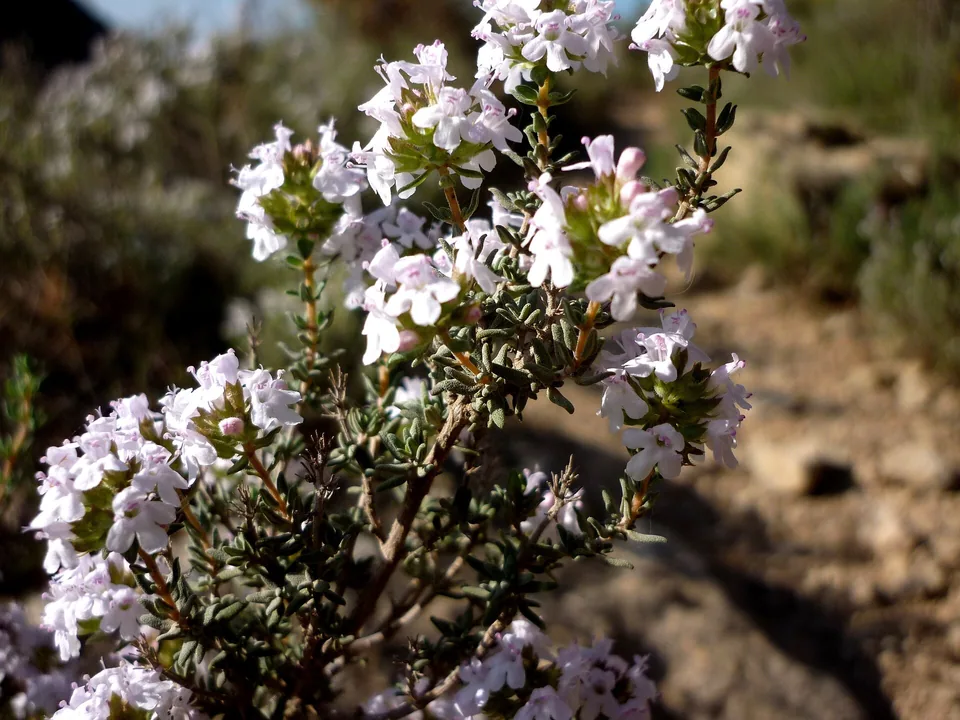
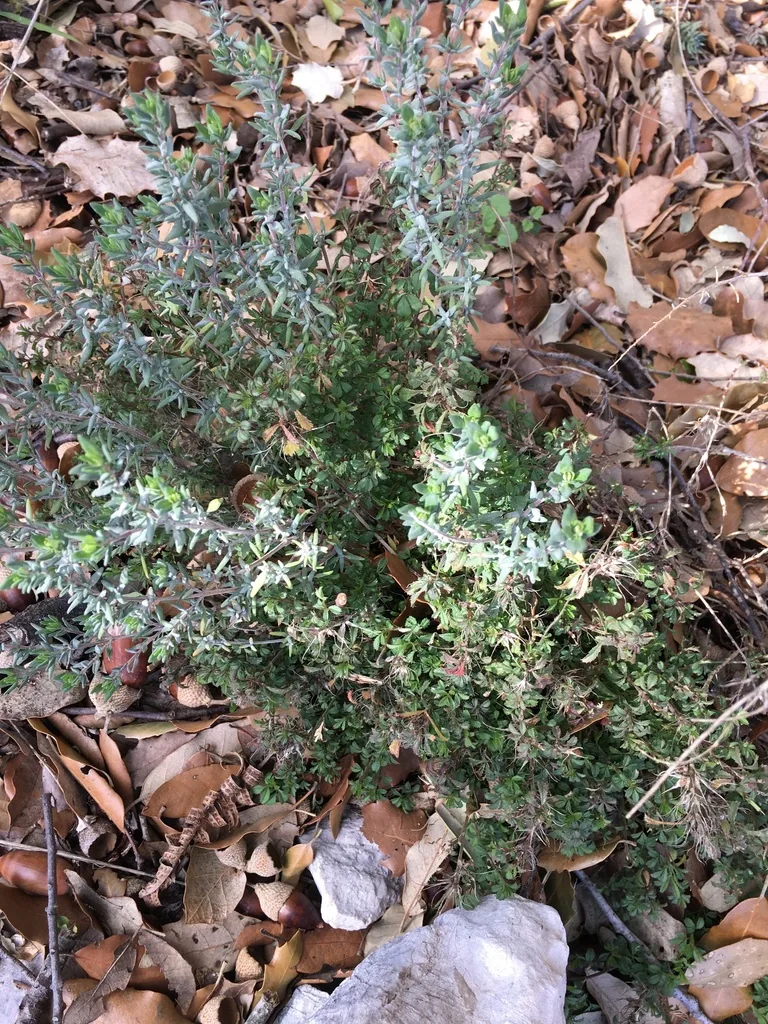

Cómo cultivar y cuidar Tomillo común
Thymus vulgaris
Escrito por Emilio Marruso · última revisión
No tóxica para gatos y perros, según las fuentes · Fuentes
De un vistazo
El tomillo es una pequeña vivaz leñosa que llena tu cocina de sabor: sus hojas, frescas o secas, aromatizan sopas, guisos, salsas, carnes y pescados. Dale sol pleno o semisombra y un suelo bien drenado, y no te pases con el abono, porque prefiere suelos pobres. Crece feliz en maceta e incluso en interior, listo para cortar cada vez que cocines.
- Sol
Sol pleno o semisombra
Qué dicen las fuentes (4)
Luz: Pleno sol a semisombra
Florida central: In Central Florida’s hot subtropical climate, providing some afternoon shade can help prevent the plants from becoming stressed.
— Spice Up Your Life: A Beginners Guide to Growing Thyme - UF/IFAS Extension Pasco County [7] Según Penn State Extension: Light and Soil: Full sun to partial shade; light, dry, well-drained soil with a pH of 6.3.
— Herb Garden Plants: Thyme [6] It performs best in dry, sandy, or rocky soils, prefers full sun, requires good drainage, and a neutral to alkaline pH.
— Thymus vulgaris (Common Thyme, Garden Thyme, German Thyme, Thyme) | North Carolina Extension Gardener Plant Toolbox [1] Light and Soil: Full sun to partial shade; light, dry, well-drained soil with a pH of 6.3.
— Herb Garden Plants: Thyme [6] - Riego
Necesita buen drenaje, porque la tierra encharcada pudre las raíces; mantén húmedas las plantas jóvenes
Qué dicen las fuentes (2)
Notas sobre el riego: Necesita buen drenaje; el suelo húmedo o mal drenado provoca enfermedades en las raíces; mantén las plantas húmedas mientras son jóvenes
Wet or poorly drained locations should be avoided because thyme is susceptible to root diseases in saturated soils.
— All About Thyme | Yard and Garden [8] Keep plants moist while young. Thin to about 12 inches apart.
— Herb Garden Plants: Thyme [6] - Frío
Aguanta inviernos de hasta −28,9 °C (−20 °F)
Muy rústica · USDA 5a · RHS H7 · Z5
Qué dicen las fuentes (2)
Rusticidad, zona más fría: 5a [mínima invernal de −28,9 a −26,1 °C (de −20 a −15 °F)]
USDA Plant Hardiness Zone: 5a, 5b, 6a, 6b, 7a, 7b, 8a, 8b, 9a, 9b
— Thymus vulgaris (Common Thyme, Garden Thyme, German Thyme, Thyme) | North Carolina Extension Gardener Plant Toolbox [1] Rusticidad, zona más cálida: 9b [mínima invernal de −3,9 a −1,1 °C (de 25 a 30 °F)]
USDA Plant Hardiness Zone: 5a, 5b, 6a, 6b, 7a, 7b, 8a, 8b, 9a, 9b
— Thymus vulgaris (Common Thyme, Garden Thyme, German Thyme, Thyme) | North Carolina Extension Gardener Plant Toolbox [1] - Suelo
Suelo con pH 6,0–8,0; le va bien la tierra pobre
Qué dicen las fuentes (4)
pH del suelo, mínimo: 6.0
Thyme does well in alkaline soils with a pH between 6.0 and 8.0.
— Spice Up Your Life: A Beginners Guide to Growing Thyme - UF/IFAS Extension Pasco County [7] pH del suelo, máximo: 8.0
Thyme does well in alkaline soils with a pH between 6.0 and 8.0.
— Spice Up Your Life: A Beginners Guide to Growing Thyme - UF/IFAS Extension Pasco County [7] Evitar: Exceso de fertilización y fertilidad excesiva; el tomillo prefiere suelos de baja fertilidad
Thyme prefers low fertility soils, over-fertilizing can lead to reduced flavor in the leaves.
— Spice Up Your Life: A Beginners Guide to Growing Thyme - UF/IFAS Extension Pasco County [7] Apply fertilizer sparingly, if at all. Excess fertility can produce weak, sprawling growth and diminish the concentration of aromatic oils.
— All About Thyme | Yard and Garden [8] - Distancia
20–30 cm entre plantas
Qué dicen las fuentes (4)
Distancia de plantación: 20.3-30.5 cm (8-12 pulgadas)
Según University of Maryland Extension: Thin plants 8-12” apart.
— Thyme | University of Maryland Extension [5] Según Penn State Extension: Thin to about 12 inches apart.
— Herb Garden Plants: Thyme [6] This plant grows best in light, well-drained soil. Thin plants 8-12” apart.
— Thyme | University of Maryland Extension [5] Keep plants moist while young. Thin to about 12 inches apart.
— Herb Garden Plants: Thyme [6] - Plantación
A principios de primavera; en climas cálidos, a finales de otoño o principios de primavera
Qué dicen las fuentes (4)
Plantación: Principios de primavera; en Florida Central, finales de otoño o principios de primavera
Según NC State Extension: Transplanting or dividing is best done in the early spring.
— Thymus vulgaris (Common Thyme, Garden Thyme, German Thyme, Thyme) | North Carolina Extension Gardener Plant Toolbox [1] Florida central: You can plant thyme by seed or transplant in late fall or early spring.
— Spice Up Your Life: A Beginners Guide to Growing Thyme - UF/IFAS Extension Pasco County [7] Transplanting or dividing is best done in the early spring.
— Thymus vulgaris (Common Thyme, Garden Thyme, German Thyme, Thyme) | North Carolina Extension Gardener Plant Toolbox [1] You can plant thyme by seed or transplant in late fall or early spring.
— Spice Up Your Life: A Beginners Guide to Growing Thyme - UF/IFAS Extension Pasco County [7] - Abonado
Poco o nada: compost antes de plantar; el exceso de abono le quita aroma y sabor
Qué dicen las fuentes (6)
Abonos naturales: Compost incorporado al suelo antes de plantar
Thyme does not require much fertilizer, especially if you amend your soil with compost prior to planting.
— Spice Up Your Life: A Beginners Guide to Growing Thyme - UF/IFAS Extension Pasco County [7] Frecuencia: Escasamente, si acaso; las plantas establecidas no necesitan fertilizante
Apply fertilizer sparingly, if at all. Excess fertility can produce weak, sprawling growth and diminish the concentration of aromatic oils.
— All About Thyme | Yard and Garden [8] When propagated by seed, it may take several years to mature enough to harvest. Once well established, thyme does not require much watering or any fertilizer.
— Herb Garden Plants: Thyme [6] Thyme does not require much fertilizer, especially if you amend your soil with compost prior to planting.
— Spice Up Your Life: A Beginners Guide to Growing Thyme - UF/IFAS Extension Pasco County [7] Signos de exceso: Crecimiento débil y extendido, menos aceites aromáticos y menos sabor en las hojas
Apply fertilizer sparingly, if at all. Excess fertility can produce weak, sprawling growth and diminish the concentration of aromatic oils.
— All About Thyme | Yard and Garden [8] Thyme prefers low fertility soils, over-fertilizing can lead to reduced flavor in the leaves.
— Spice Up Your Life: A Beginners Guide to Growing Thyme - UF/IFAS Extension Pasco County [7] - Poda
Recórtalo un poco tras la floración; poda fuerte las plantas viejas en primavera
Qué dicen las fuentes (3)
Poda: Principios de primavera y verano; ligeramente después de la floración; las plantas más viejas se podan severamente en primavera
Cut it back in early spring and summer to reduce its woody growth.
— Thymus vulgaris (Common Thyme, Garden Thyme, German Thyme, Thyme) | North Carolina Extension Gardener Plant Toolbox [1] Prune or shear plants lightly after flowering to maintain a compact habit and encourage new growth.
— All About Thyme | Yard and Garden [8] it can become woody and should be renewed every few years by cutting it back severely in the spring.
— Thyme | Herbs | Illinois Extension | Illinois [3] - Cosecha
Corta 13–15 cm de las puntas justo antes de la floración, dejando al menos 13 cm
Qué dicen las fuentes (2)
Cómo cosechar: Corta los tallos con hojas justo antes de que la planta florezca, cuando el contenido de aceite esencial de las hojas está en su punto máximo; corta 13-15 cm (5 a 6 pulgadas) del crecimiento superior y deja los tallos leñosos, manteniendo al menos 13 cm (5 pulgadas) de crecimiento
Harvest it just before it flowers when the essential oil content of the leaves is at its peak. It is recommended to cut five to six inches off the top growth and leave the woody stems.
— Thymus vulgaris (Common Thyme, Garden Thyme, German Thyme, Thyme) | North Carolina Extension Gardener Plant Toolbox [1] A good rule of thumb is to keep at least 5 inches of the plant intact.
— Spice Up Your Life: A Beginners Guide to Growing Thyme - UF/IFAS Extension Pasco County [7] - Plagas
Pulgón y araña roja; el exceso de agua causa podredumbre de raíz y la falta de aire, oídio
Qué dicen las fuentes (5)
Plagas: pulgones, arañitas rojas
Spider mites can occasionally become a problem during hot, dry weather. Aphids are occasional pests.
— All About Thyme | Yard and Garden [8] Aphids: These small, soft-bodied insects can cluster on the undersides of leaves, sucking sap and causing wilting.
— Spice Up Your Life: A Beginners Guide to Growing Thyme - UF/IFAS Extension Pasco County [7] Pests and Diseases: Root rot, fungal diseases, and spider mites.
— Herb Garden Plants: Thyme [6] Enfermedades: Podredumbre de raíz, mildiu polvoriento, otras enfermedades fúngicas
Thyme is prone to fungal diseases such as powdery mildew and root rot, especially in humid conditions.
— Spice Up Your Life: A Beginners Guide to Growing Thyme - UF/IFAS Extension Pasco County [7] Pests and Diseases: Root rot, fungal diseases, and spider mites.
— Herb Garden Plants: Thyme [6] - Tamaño
15–30 cm de alto y 15–41 cm de ancho
Qué dicen las fuentes (3)
Altura adulta: 15-30 cm (6 a 12 pulgadas)
common thyme forms a mound about 6 to 12 inches high and 6 to 16 inches wide.
— Thymus vulgaris (Common Thyme, Garden Thyme, German Thyme, Thyme) | North Carolina Extension Gardener Plant Toolbox [1] Thyme is a low growing (6-12 inches tall) to almost prostrate
— Thyme | Herbs | Illinois Extension | Illinois [3] Anchura adulta: 15-41 cm (6 a 16 pulgadas)
common thyme forms a mound about 6 to 12 inches high and 6 to 16 inches wide.
— Thymus vulgaris (Common Thyme, Garden Thyme, German Thyme, Thyme) | North Carolina Extension Gardener Plant Toolbox [1] - Siembra
Siembra en primavera; en climas cálidos, a finales de otoño o principios de primavera
Qué dicen las fuentes (4)
Siembra: Primavera; en Florida Central, finales de otoño o principios de primavera
Primavera (fuente: Penn State Extension): In spring, sow seeds in a seed tray or scatter directly onto the ground.
— Herb Garden Plants: Thyme [6] Florida central: You can plant thyme by seed or transplant in late fall or early spring.
— Spice Up Your Life: A Beginners Guide to Growing Thyme - UF/IFAS Extension Pasco County [7] Cultivation: In spring, sow seeds in a seed tray or scatter directly onto the ground.
— Herb Garden Plants: Thyme [6] You can plant thyme by seed or transplant in late fall or early spring.
— Spice Up Your Life: A Beginners Guide to Growing Thyme - UF/IFAS Extension Pasco County [7] - Maceta
Crece en maceta e incluso en interior
Qué dicen las fuentes (2)
En maceta: Sí
Some species are used as landscape ornamentals, in rock gardens and walkways, or as border plants in herb gardens. Thyme can be grown in containers.
— Herb Garden Plants: Thyme [6] En interior: Sí
Plants can be potted in the fall and grown all winter in a bright, sunny location. Use a well prepared soil mix in a pot with ample drainage.
— Thyme | Herbs | Illinois Extension | Illinois [3] - Seguridad
No es tóxico para gatos, perros ni caballos
Resumen
El tomillo común es una hierba perenne leñosa y de hoja perenne cultivada principalmente como planta culinaria aromática. [1] Necesita pleno sol y suelo bien drenado, tolera la sequía una vez establecido y es resistente en las zonas 5 a 9. [1][7] Se puede propagar por esquejes de tallo, acodo, división o semilla, y se poda cuando se vuelve larguirucho. [1][8]
Citado en inglés, como en la fuente.
Cuidados
Riego
Riego
Las fuentes dan valores distintos según la región, la zona o las condiciones de cultivo.
Lo que dice cada fuente
Florida central: Riega para mantener el suelo uniformemente húmedo y evita el riego excesivo
Plantas en maceta cultivadas todo el invierno: Riega según sea necesario, pero mantén el suelo en el lado seco
Según Iowa State Extension: Riega durante períodos secos prolongados, evita el riego frecuente
Qué dicen las fuentes (6)
Florida central: Water to keep the soil evenly moist and avoid over watering, as thyme plants are susceptible to root rot in waterlogged soil.Plantas en maceta cultivadas todo el invierno: Water as needed but keep the soil on the dry side.Según Iowa State Extension: Water plants during prolonged dry periods, but avoid frequent irrigation.Once established, thyme requires relatively little maintenance. Water plants during prolonged dry periods, but avoid frequent irrigation.Thyme is drought-tolerant and relatively low maintenance once established.Once well established, thyme does not require much watering or any fertilizer.Notas sobre el riego
Necesita buen drenaje; el suelo húmedo o mal drenado provoca enfermedades en las raíces; mantén las plantas húmedas mientras son jóvenes
Luz
Pleno sol a semisombra
Lo que dice cada fuente
Florida central: Pleno sol, al menos 6-8 horas al día; algo de sombra por la tarde puede ayudar a prevenir el estrés
Según Penn State Extension: Pleno sol a semisombra
Qué dicen las fuentes (4)
Florida central: In Central Florida’s hot subtropical climate, providing some afternoon shade can help prevent the plants from becoming stressed.Según Penn State Extension: Light and Soil: Full sun to partial shade; light, dry, well-drained soil with a pH of 6.3.It performs best in dry, sandy, or rocky soils, prefers full sun, requires good drainage, and a neutral to alkaline pH.Light and Soil: Full sun to partial shade; light, dry, well-drained soil with a pH of 6.3.Clima y frío
Rusticidad, zona más fría
5a [mínima invernal de −28,9 a −26,1 °C (de −20 a −15 °F)]
Qué dicen las fuentes (1)
USDA Plant Hardiness Zone:
5a, 5b, 6a, 6b, 7a, 7b, 8a, 8b, 9a, 9bRusticidad, zona más cálida
9b [mínima invernal de −3,9 a −1,1 °C (de 25 a 30 °F)]
Qué dicen las fuentes (1)
USDA Plant Hardiness Zone:
5a, 5b, 6a, 6b, 7a, 7b, 8a, 8b, 9a, 9bSuelo
pH del suelo, mínimo
6.0
Qué dicen las fuentes (1)
Thyme does well in alkaline soils with a pH between 6.0 and 8.0.pH del suelo, máximo
8.0
Qué dicen las fuentes (1)
Thyme does well in alkaline soils with a pH between 6.0 and 8.0.Dónde cultivarla
En interior
Sí
Qué dicen las fuentes (1)
Plants can be potted in the fall and grown all winter in a bright, sunny location. Use a well prepared soil mix in a pot with ample drainage.En maceta
Sí
Qué dicen las fuentes (1)
Some species are used as landscape ornamentals, in rock gardens and walkways, or as border plants in herb gardens. Thyme can be grown in containers.Distancia de plantación
20.3-30.5 cm (8-12 pulgadas)
Lo que dice cada fuente
Según University of Maryland Extension: 20.3-30.5 cm (8-12 pulgadas)
Según Penn State Extension: Aproximadamente 30.5 cm (12 pulgadas)
Qué dicen las fuentes (4)
Según University of Maryland Extension: Thin plants 8-12” apart.Según Penn State Extension: Thin to about 12 inches apart.This plant grows best in light, well-drained soil. Thin plants 8-12” apart.Keep plants moist while young. Thin to about 12 inches apart.Propagación
Las fuentes no coinciden:
Qué dicen las fuentes (2)
The best methods of propagation are stem cuttings, layering, or division. Due to uneven germination, it is difficult to propagate common thyme from seeds.Thyme is easy to propagate from seed , stem cuttings , layering , or division .Cultivo
La planta
Ciclo de vida
perenne (leñosa)
Qué dicen las fuentes (2)
Life Cycle: Perennial Woody Recommended Propagation Strategy: DivisionThyme is a low growing (6-12 inches tall) to almost prostrate, wiry stemmed perennial.Familia
Lamiaceae (familia de la menta)
Altura adulta
15-30 cm (6 a 12 pulgadas)
Qué dicen las fuentes (2)
common thyme forms a mound about 6 to 12 inches high and 6 to 16 inches wide.Thyme is a low growing (6-12 inches tall) to almost prostrateAnchura adulta
15-41 cm (6 a 16 pulgadas)
Qué dicen las fuentes (1)
common thyme forms a mound about 6 to 12 inches high and 6 to 16 inches wide.Cosecha y conservación
Cómo cosechar
Corta los tallos con hojas justo antes de que la planta florezca, cuando el contenido de aceite esencial de las hojas está en su punto máximo; corta 13-15 cm (5 a 6 pulgadas) del crecimiento superior y deja los tallos leñosos, manteniendo al menos 13 cm (5 pulgadas) de crecimiento
Qué dicen las fuentes (2)
Harvest it just before it flowers when the essential oil content of the leaves is at its peak. It is recommended to cut five to six inches off the top growth and leave the woody stems.A good rule of thumb is to keep at least 5 inches of the plant intact.Conservación
Seco: cuelga los tallos cortados en pequeños manojos en un lugar oscuro, cálido y bien ventilado, luego deshoja y guarda las hojas en recipientes sellados. Fresco: tallos en un recipiente con agua para uso inmediato, o hojas envueltas en toallas de papel húmedas en el refrigerador; los esquejes también se pueden congelar
Qué dicen las fuentes (3)
Hang the cut stems in small bunches in a dark, warm, well-ventilated area to dry. Once dry, the leaves can be stripped from the stems and stored in sealed containers.place the stems in a container of water away from direct sunlight for immediate use. For longer storage of this hardy herb, wrap the leaves with moist paper towels and store them in the refrigerator.Alternatively, you can freeze the cuttings or dry them to create your own seasoning.Plagas y enfermedades
Plagas
pulgones, arañitas rojas
Qué dicen las fuentes (3)
Spider mites can occasionally become a problem during hot, dry weather. Aphids are occasional pests.Aphids: These small, soft-bodied insects can cluster on the undersides of leaves, sucking sap and causing wilting.Pests and Diseases: Root rot, fungal diseases, and spider mites.Enfermedades
Podredumbre de raíz, mildiu polvoriento, otras enfermedades fúngicas
Qué dicen las fuentes (2)
Thyme is prone to fungal diseases such as powdery mildew and root rot, especially in humid conditions.Pests and Diseases: Root rot, fungal diseases, and spider mites.Abonado
Cuándo
Antes de plantar, como enmienda de compost
Qué dicen las fuentes (1)
Thyme does not require much fertilizer, especially if you amend your soil with compost prior to planting.Frecuencia
Escasamente, si acaso; las plantas establecidas no necesitan fertilizante
Qué dicen las fuentes (3)
Apply fertilizer sparingly, if at all. Excess fertility can produce weak, sprawling growth and diminish the concentration of aromatic oils.When propagated by seed, it may take several years to mature enough to harvest. Once well established, thyme does not require much watering or any fertilizer.Thyme does not require much fertilizer, especially if you amend your soil with compost prior to planting.Abonos naturales
Compost incorporado al suelo antes de plantar
Qué dicen las fuentes (1)
Thyme does not require much fertilizer, especially if you amend your soil with compost prior to planting.Evitar
Exceso de fertilización y fertilidad excesiva; el tomillo prefiere suelos de baja fertilidad
Qué dicen las fuentes (2)
Thyme prefers low fertility soils, over-fertilizing can lead to reduced flavor in the leaves.Apply fertilizer sparingly, if at all. Excess fertility can produce weak, sprawling growth and diminish the concentration of aromatic oils.Signos de exceso
Crecimiento débil y extendido, menos aceites aromáticos y menos sabor en las hojas
Qué dicen las fuentes (2)
Apply fertilizer sparingly, if at all. Excess fertility can produce weak, sprawling growth and diminish the concentration of aromatic oils.Thyme prefers low fertility soils, over-fertilizing can lead to reduced flavor in the leaves.Problemas
Podredumbre de la raíz
Síntoma: Las raíces se pudren en condiciones excesivamente húmedas y la planta muere
Qué hacer: Evita el riego excesivo y asegura un drenaje adecuado; retira las plantas afectadas
Qué dicen las fuentes (2)
Root Rot: Root rot is exactly what it sounds like. When plants grow in excessively wet conditions, the roots don’t have enough air, and they begin to rot.
— Spice Up Your Life: A Beginners Guide to Growing Thyme - UF/IFAS Extension Pasco County [7] Avoid overwatering and ensure proper drainage around plants.
— Spice Up Your Life: A Beginners Guide to Growing Thyme - UF/IFAS Extension Pasco County [7] Arañitas rojas
Síntoma: Picaduras y telarañas en las hojas
Qué hacer: Usa jabón insecticida o aceites
Qué dicen las fuentes (2)
Spider mites are tiny pests that feed on plant sap, causing stippling and webbing on leaves.
— Spice Up Your Life: A Beginners Guide to Growing Thyme - UF/IFAS Extension Pasco County [7] Use insecticidal soap or oils to control spider mite populations.
— Spice Up Your Life: A Beginners Guide to Growing Thyme - UF/IFAS Extension Pasco County [7] Pulgones
Síntoma: Grupos en el envés de las hojas, marchitamiento, crecimiento deforme y residuos pegajosos
Qué hacer: Desaloja con un chorro fuerte de agua; jabón insecticida o aceite de neem
Qué dicen las fuentes (2)
These small, soft-bodied insects can cluster on the undersides of leaves, sucking sap and causing wilting.
— Spice Up Your Life: A Beginners Guide to Growing Thyme - UF/IFAS Extension Pasco County [7] Use a strong jet of water to dislodge aphids from the plant.
— Spice Up Your Life: A Beginners Guide to Growing Thyme - UF/IFAS Extension Pasco County [7] Mildiu polvoriento
Síntoma: Capa blanca y polvorienta en las hojas, deformación de las hojas y caída prematura de las hojas
Qué hacer: Separa las plantas y cultiva en suelo con buen drenaje para la circulación del aire
Qué dicen las fuentes (1)
Powdery mildew appears as a white, powdery coating on leaves. It can cause leaf distortion and premature leaf drop.
— Spice Up Your Life: A Beginners Guide to Growing Thyme - UF/IFAS Extension Pasco County [7]
Remedios
Cada remedio indica qué dicen las fuentes oficiales; los remedios tradicionales sin fuente oficial aparecen marcados. Los perjudiciales están para que sepas evitarlos.
Cuidar la planta
pulgones
fuerte chorro de agua Funciona
Cómo: Una fuerte ráfaga de agua o un lavado completo desaloja insectos de cuerpo blando como pulgones y arañitas rojas; repite cada pocos días para brotes persistentes.
For soft-bodied bugs like aphids and spider mites, a strong blast of water or thorough washing can dislodge them from plants
— cultivatedearth.com [9] Qué dicen las pruebas Use a strong jet of water to dislodge aphids from the plant.
— Spice Up Your Life: A Beginners Guide to Growing Thyme - UF/IFAS Extension Pasco County [7] spray de jabón insecticida Funciona
Always follow the label instructions on the product you use to prevent plant injury.
— Spice Up Your Life: A Beginners Guide to Growing Thyme - UF/IFAS Extension Pasco County [7] we are referring to commercially available oils and soaps that are formulated specifically for use as pesticides
— ucanr.edu [10] Cómo: Rocía cada siete a diez días, cubriendo el envés de las hojas donde se esconden los insectos, y vuelve a aplicar después de la lluvia.
When it comes to organic treatments, neem oil and insecticidal soap are gentle on beneficial insects but tough on most soft-bodied and sucking pests.
— cultivatedearth.com [9] Qué dicen las pruebas Spraying insecticidal soap or neem oil will help control their numbers.
— Spice Up Your Life: A Beginners Guide to Growing Thyme - UF/IFAS Extension Pasco County [7] spray de aceite de neem Funciona
Always follow the label instructions on the product you use to prevent plant injury.
— Spice Up Your Life: A Beginners Guide to Growing Thyme - UF/IFAS Extension Pasco County [7] Cómo: Rocía cada siete a diez días, cubriendo el envés de las hojas donde se esconden los insectos, y vuelve a aplicar después de la lluvia.
When it comes to organic treatments, neem oil and insecticidal soap are gentle on beneficial insects but tough on most soft-bodied and sucking pests.
— cultivatedearth.com [9] Qué dicen las pruebas Spraying insecticidal soap or neem oil will help control their numbers.
— Spice Up Your Life: A Beginners Guide to Growing Thyme - UF/IFAS Extension Pasco County [7]
mildiu polvoriento
bicarbonato de sodio, jabón para platos suave y aceite de oliva en spray No verificado
Remedio tradicional, no verificado por una fuente oficial.
spraying home remedies that contain dish detergent on plants on a sunny day can injure the plant, essentially burning it.
— extension.psu.edu [11] homemade pesticides generally have not been studied in replicated research trials and therefore have not been scientifically proven to effectively control pests.
— ucanr.edu [10] Cómo: Mezcla una cucharada de bicarbonato de sodio, 1/2 cucharadita de jabón para platos suave y 2 1/2 cucharadas de aceite de oliva en un galón de agua; agita bien antes de rociar y repite cada semana.
Poda y desecha las partes enfermas de la planta. Funciona
Cómo: Si la planta tiene un caso grave, retira y desecha las partes enfermas de la planta para evitar la propagación de la enfermedad.
If the plant has a severe case, remove, and dispose of the sick plant parts to prevent the spread of the disease.
— Spice Up Your Life: A Beginners Guide to Growing Thyme - UF/IFAS Extension Pasco County [7] Qué dicen las pruebas Many insect and disease issues can be solved in the home garden by hand-picking insects or clipping and disposing of diseased plant parts.
— extension.unh.edu [12]
babosas
trampa de cerveza No verificado
Remedio tradicional, no verificado por una fuente oficial.
Cómo: Las babosas y los caracoles se alejan cuando se usan trampas de cerveza alrededor de la base de las plantas.
tierra de diatomeas No verificado
Remedio tradicional, no verificado por una fuente oficial.
Cómo: Las babosas y los caracoles se alejan cuando se usa tierra de diatomeas alrededor de la base de las plantas.
plagas de insectos
plantación complementaria con romero o salvia No verificado
Remedio tradicional, no verificado por una fuente oficial.
Cómo: Cultiva tomillo junto a hierbas que repelen plagas como romero o salvia.
Toxicidad
Según la fuente, citada textualmente. No es un consejo médico ni veterinario: si una persona o un animal pudo haber ingerido esta planta, contacta con un centro de toxicología o con un veterinario.
#attractive leaves #non-toxic for cats #non-toxic for horses #non-toxic for dogs #subshrub
[1]La fuente señala el riesgo para este animal pero no explica por qué.
Calendario
Siembra
Primavera; en Florida Central, finales de otoño o principios de primavera
Lo que dice cada fuente
Primavera (fuente: Penn State Extension): Primavera
Florida central: Finales de otoño o principios de primavera
Qué dicen las fuentes (4)
Primavera (fuente: Penn State Extension): In spring, sow seeds in a seed tray or scatter directly onto the ground.Florida central: You can plant thyme by seed or transplant in late fall or early spring.Cultivation: In spring, sow seeds in a seed tray or scatter directly onto the ground.You can plant thyme by seed or transplant in late fall or early spring.Plantación
Principios de primavera; en Florida Central, finales de otoño o principios de primavera
Lo que dice cada fuente
Según NC State Extension: Principios de primavera
Florida central: Finales de otoño o principios de primavera
Qué dicen las fuentes (4)
Según NC State Extension: Transplanting or dividing is best done in the early spring.Florida central: You can plant thyme by seed or transplant in late fall or early spring.Transplanting or dividing is best done in the early spring.You can plant thyme by seed or transplant in late fall or early spring.Cosecha
Las fuentes dan valores distintos según la región, la zona o las condiciones de cultivo.
Lo que dice cada fuente
Según University of Maryland Extension: Cuando se abren las primeras flores
Según Penn State Extension: Justo antes de que la planta florezca
Qué dicen las fuentes (4)
Según University of Maryland Extension: Cut leafy tops and flower clusters when first blossoms open and dry.Según Penn State Extension: Harvest the leafy branches just before the plant flowers.Harvest thyme leaves as needed throughout the growing season, being careful not to over-harvest.For the best flavor, cut leafy stems shortly before flowering or when the first blossoms begin to open.Poda
Principios de primavera y verano; ligeramente después de la floración; las plantas más viejas se podan severamente en primavera
Qué dicen las fuentes (3)
Cut it back in early spring and summer to reduce its woody growth.Prune or shear plants lightly after flowering to maintain a compact habit and encourage new growth.it can become woody and should be renewed every few years by cutting it back severely in the spring.Meses tal como los dan las fuentes, en su mayoría de Estados Unidos (hemisferio norte). En el hemisferio sur se desplazan unos seis meses.
Comestibilidad
Según la fuente, citada textualmente. No comas una planta basándote solo en esta página: los errores de identificación pueden ser peligrosos.
Valores orientativos
Valores de una fuente secundaria, no comprobados palabra por palabra como el resto de esta página. Úselos como punto de partida.
- Horas de sol
- 8-10 horasValor orientativo, adáptalo a tu clima · Fuente secundaria
- Resiste la sequía
- SíValor orientativo, adáptalo a tu clima · Fuente secundaria
- Suelo
- Bien drenadoValor orientativo, adáptalo a tu clima · Fuente secundaria
- Nivel de cuidado
- MedioValor orientativo, adáptalo a tu clima · Fuente secundaria
- Crecimiento
- ModeradoValor orientativo, adáptalo a tu clima · Fuente secundaria
Plantas similares
- Serpillo Thymus pulegioides
- Serpol serrano Thymus praecox
- Serpol Thymus serpyllum
- Thymus longicaulis Thymus longicaulis
- Wooly Thyme Thymus pseudolanuginosus
- Abeto de Vancuver Abies grandis
- Abraham Trachystemon orientalis
- Bananero de Etiopía Ensete ventricosum
Fuentes
Cada valor anterior se cita de estos documentos. Los enlaces llevan al editor original.
- Thymus vulgaris (Common Thyme, Garden Thyme, German Thyme, Thyme) | North Carolina Extension Gardener Plant Toolbox · plants.ces.ncsu.edu, consultado
- Thymus (Thyme) | North Carolina Extension Gardener Plant Toolbox · plants.ces.ncsu.edu, consultado
- Thyme | Herbs | Illinois Extension | Illinois · extension.illinois.edu, consultado
- Thyme - Thymus vulgaris | North Carolina Extension Gardener Plant Toolbox · plants.ces.ncsu.edu, consultado
- Thyme | University of Maryland Extension · extension.umd.edu, consultado
- Herb Garden Plants: Thyme · extension.psu.edu, consultado
- Spice Up Your Life: A Beginners Guide to Growing Thyme - UF/IFAS Extension Pasco County · blogs.ifas.ufl.edu, consultado
- All About Thyme | Yard and Garden · yardandgarden.extension.iastate.edu, consultado
- cultivatedearth.com · cultivatedearth.com
- ucanr.edu · ucanr.edu
- extension.psu.edu · extension.psu.edu
- extension.unh.edu · extension.unh.edu
Escrito por Emilio Marruso · última revisión