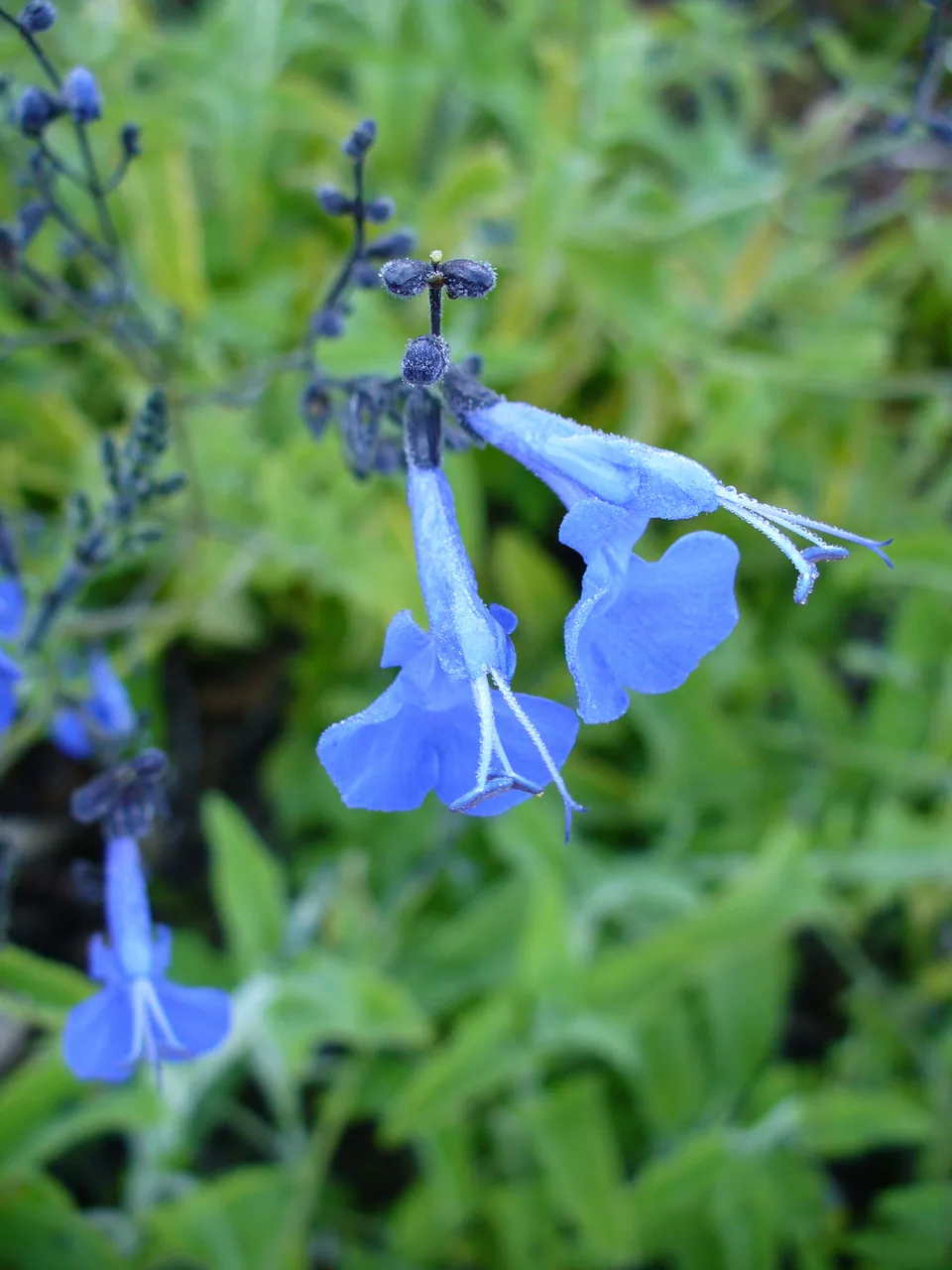


Cómo cultivar y cuidar Salvia real
Salvia sagittata
Escrito por Emilio Marruso · última revisión
De un vistazo
Esta salvia forma una planta generosa de 0,9–1,5 m de alto y 0,9–1,2 m de ancho, y le basta con al menos medio día de sol pleno. Dale un suelo rico y bien drenado, riego regular en épocas secas y acolchado alrededor de las raíces, y abónala una vez cada primavera. También crece en maceta, y puedes multiplicarla por semilla o por esquejes de tallo.
- Sol
Al menos medio día de sol pleno
Qué dicen las fuentes (1)
Luz: Al menos medio día de pleno sol.
Plant in well-drained, highly organic soils where this sage will get at least half a day of full sun, and you will enjoy the flowers from early summer until frost.
— Salvia sagittata (Arrowleaf Sage) | North Carolina Extension Gardener Plant Toolbox [1] - Riego
Riega con regularidad, sobre todo en épocas secas; acolcha alrededor de las raíces
Qué dicen las fuentes (3)
Riego: Riega regularmente, especialmente durante los períodos secos
Water regularly, especially during dry spells, and mulch around the roots.
— Salvia sagittata (Arrowleaf Sage) | North Carolina Extension Gardener Plant Toolbox [1] Notas sobre el riego: Aplica mantillo alrededor de las raíces; suelo bien drenado y muy orgánico
Water regularly, especially during dry spells, and mulch around the roots.
— Salvia sagittata (Arrowleaf Sage) | North Carolina Extension Gardener Plant Toolbox [1] Plant in well-drained, highly organic soils where this sage will get at least half a day of full sun, and you will enjoy the flowers from early summer until frost.
— Salvia sagittata (Arrowleaf Sage) | North Carolina Extension Gardener Plant Toolbox [1] - Frío
Aguanta inviernos de hasta −12,2 °C (10 °F)
Rústica en inviernos fríos · USDA 8a · RHS H5 · Z8
Qué dicen las fuentes (2)
Rusticidad, zona más fría: 8a [mínima invernal de −12,2 a −9,4 °C (de 10 a 15 °F)]
USDA Plant Hardiness Zone: 8a, 8b, 9a, 9b, 10a, 10b, 11a, 11b
— Salvia sagittata (Arrowleaf Sage) | North Carolina Extension Gardener Plant Toolbox [1] Rusticidad, zona más cálida: 11b [mínima invernal de 7,2 a 10 °C (de 45 a 50 °F)]
USDA Plant Hardiness Zone: 8a, 8b, 9a, 9b, 10a, 10b, 11a, 11b
— Salvia sagittata (Arrowleaf Sage) | North Carolina Extension Gardener Plant Toolbox [1] - Suelo
Suelo bien drenado y rico en materia orgánica, pH 6,0–8,0
Qué dicen las fuentes (4)
pH del suelo, mínimo: 6.0
Soil pH: Neutral (6.0-8.0)
— Salvia sagittata (Arrowleaf Sage) | North Carolina Extension Gardener Plant Toolbox [1] pH del suelo, máximo: 8.0
Soil pH: Neutral (6.0-8.0)
— Salvia sagittata (Arrowleaf Sage) | North Carolina Extension Gardener Plant Toolbox [1] Notas sobre el riego: Aplica mantillo alrededor de las raíces; suelo bien drenado y muy orgánico
Water regularly, especially during dry spells, and mulch around the roots.
— Salvia sagittata (Arrowleaf Sage) | North Carolina Extension Gardener Plant Toolbox [1] Plant in well-drained, highly organic soils where this sage will get at least half a day of full sun, and you will enjoy the flowers from early summer until frost.
— Salvia sagittata (Arrowleaf Sage) | North Carolina Extension Gardener Plant Toolbox [1] - Plantación
Planta en primavera; en zonas frías, usa esquejes de tallo ya enraizados
Qué dicen las fuentes (1)
Plantación: Primavera (esquejes de tallo enraizados, en áreas más frías)
In colder areas, stem cuttings can be taken, rooted on a sunny windowsill and planted out in spring.
— Salvia sagittata (Arrowleaf Sage) | North Carolina Extension Gardener Plant Toolbox [1] - Abonado
Una vez al año en primavera, con un abono equilibrado de liberación lenta
Qué dicen las fuentes (3)
Cuándo: Primavera
Additionally, salvia will do best with an application of a balanced, slow-release fertilizer each spring.
— [5] Frecuencia: Una vez al año, cada primavera
Additionally, salvia will do best with an application of a balanced, slow-release fertilizer each spring.
— [5] Abonos minerales: Fertilizante equilibrado de liberación lenta
Additionally, salvia will do best with an application of a balanced, slow-release fertilizer each spring.
— [5] - Plagas
Mosca blanca, pulgón, cochinilla algodonosa y araña roja; roya, oídio y podredumbre del tallo
Qué dicen las fuentes (2)
Plagas: mosca blanca, pulgones, cochinillas harinosas, arañitas rojas
Insects, Diseases, and Other Plant Problems: Whitefly, aphids, mealybugs, and spider mites are insect problems. Rust, powdery mildew, stem rot, and fungal leaf spot are disease problems.
— Salvia sagittata (Arrowleaf Sage) | North Carolina Extension Gardener Plant Toolbox [1] Enfermedades: roya, mildiu polvoriento, pudrición del tallo, mancha foliar fúngica
Insects, Diseases, and Other Plant Problems: Whitefly, aphids, mealybugs, and spider mites are insect problems. Rust, powdery mildew, stem rot, and fungal leaf spot are disease problems.
— Salvia sagittata (Arrowleaf Sage) | North Carolina Extension Gardener Plant Toolbox [1] - Atención
Puede sufrir con el calor y la humedad
- Tamaño
0,9–1,5 m de alto y 0,9–1,2 m de ancho
Qué dicen las fuentes (2)
Altura adulta: 91.44-152.4 cm (3-5 pies)
Dimensions: Height: 3 ft. 0 in. - 5 ft. 0 in. Width: 3 ft. 0 in. - 4 ft. 0 in.
— Salvia sagittata (Arrowleaf Sage) | North Carolina Extension Gardener Plant Toolbox [1] Anchura adulta: 91.44-121.92 cm (3-4 pies)
Dimensions: Height: 3 ft. 0 in. - 5 ft. 0 in. Width: 3 ft. 0 in. - 4 ft. 0 in.
— Salvia sagittata (Arrowleaf Sage) | North Carolina Extension Gardener Plant Toolbox [1] - Multiplicación
Por semilla o por esquejes de tallo
Qué dicen las fuentes (2)
Propagación: Semilla; esquejes de tallo
Recommended Propagation Strategy: Seed Stem Cutting
— Salvia sagittata (Arrowleaf Sage) | North Carolina Extension Gardener Plant Toolbox [1] In colder areas, stem cuttings can be taken, rooted on a sunny windowsill and planted out in spring.
— Salvia sagittata (Arrowleaf Sage) | North Carolina Extension Gardener Plant Toolbox [1] - Maceta
Crece también en maceta
Qué dicen las fuentes (1)
En maceta: Sí
It is suitable for container culture.
— Salvia sagittata (Arrowleaf Sage) | North Carolina Extension Gardener Plant Toolbox [1]
Resumen
La salvia de hoja de flecha es una herbácea perenne de flores azules de los altos Andes, que crece de 3 a 5 pies [0,9–1,5 m] de altura. [1] Requiere suelo bien drenado y muy orgánico, riego regular y al menos medio día de pleno sol. [1] Es apta para cultivo en contenedor y atrae polinizadores. [1]
Citado en inglés, como en la fuente.
Esta ficha está incompleta: las fuentes consultadas aún no cubren todos los campos.
Aún no cubierto por nuestras fuentes: Poda
Cuidados
Las medidas entre corchetes son nuestra conversión al otro sistema de unidades; el texto citado no cambia.
Riego
Riego
Riega regularmente, especialmente durante los períodos secos
Qué dicen las fuentes (1)
Water regularly, especially during dry spells, and mulch around the roots.Notas sobre el riego
Aplica mantillo alrededor de las raíces; suelo bien drenado y muy orgánico
Qué dicen las fuentes (2)
Water regularly, especially during dry spells, and mulch around the roots.Plant in well-drained, highly organic soils where this sage will get at least half a day of full sun, and you will enjoy the flowers from early summer until frost.Luz
Al menos medio día de pleno sol.
Qué dicen las fuentes (1)
Plant in well-drained, highly organic soils where this sage will get at least half a day of full sun, and you will enjoy the flowers from early summer until frost.Clima y frío
Rusticidad, zona más fría
8a [mínima invernal de −12,2 a −9,4 °C (de 10 a 15 °F)]
Qué dicen las fuentes (1)
USDA Plant Hardiness Zone:
8a, 8b, 9a, 9b, 10a, 10b, 11a, 11bRusticidad, zona más cálida
11b [mínima invernal de 7,2 a 10 °C (de 45 a 50 °F)]
Qué dicen las fuentes (1)
USDA Plant Hardiness Zone:
8a, 8b, 9a, 9b, 10a, 10b, 11a, 11bSuelo
pH del suelo, mínimo
6.0
Qué dicen las fuentes (1)
Soil pH:
Neutral (6.0-8.0)pH del suelo, máximo
8.0
Qué dicen las fuentes (1)
Soil pH:
Neutral (6.0-8.0)Dónde cultivarla
Sí
Qué dicen las fuentes (1)
It is suitable for container culture.Propagación
Semilla; esquejes de tallo
Qué dicen las fuentes (2)
Recommended Propagation Strategy:
Seed
Stem CuttingIn colder areas, stem cuttings can be taken, rooted on a sunny windowsill and planted out in spring.Cultivo
La planta
Ciclo de vida
anual, perenne
Qué dicen las fuentes (1)
Life Cycle:
Annual
Perennial
Recommended Propagation Strategy:
Seed
Stem CuttingFamilia
Lamiaceae
Qué dicen las fuentes (1)
Species:
sagittata
Family:
Lamiaceae
Uses (Ethnobotany):
Used in herbal medicineAltura adulta
91.44-152.4 cm (3-5 pies)
Qué dicen las fuentes (1)
Dimensions:
Height: 3 ft. 0 in. - 5 ft. 0 in.
Width: 3 ft. 0 in. - 4 ft. 0 in.Anchura adulta
91.44-121.92 cm (3-4 pies)
Qué dicen las fuentes (1)
Dimensions:
Height: 3 ft. 0 in. - 5 ft. 0 in.
Width: 3 ft. 0 in. - 4 ft. 0 in.Plagas y enfermedades
Plagas
mosca blanca, pulgones, cochinillas harinosas, arañitas rojas
Qué dicen las fuentes (1)
Insects, Diseases, and Other Plant Problems: Whitefly, aphids, mealybugs, and spider mites are insect problems. Rust, powdery mildew, stem rot, and fungal leaf spot are disease problems.Enfermedades
roya, mildiu polvoriento, pudrición del tallo, mancha foliar fúngica
Qué dicen las fuentes (1)
Insects, Diseases, and Other Plant Problems: Whitefly, aphids, mealybugs, and spider mites are insect problems. Rust, powdery mildew, stem rot, and fungal leaf spot are disease problems.Abonado
Cuándo
Primavera
Qué dicen las fuentes (1)
Additionally, salvia will do best with an application of a balanced, slow-release fertilizer each spring.Frecuencia
Una vez al año, cada primavera
Qué dicen las fuentes (1)
Additionally, salvia will do best with an application of a balanced, slow-release fertilizer each spring.Abonos minerales
Fertilizante equilibrado de liberación lenta
Qué dicen las fuentes (1)
Additionally, salvia will do best with an application of a balanced, slow-release fertilizer each spring.Problemas
Problemas de insectos y enfermedades
Síntoma: Mosca blanca, pulgones, cochinillas harinosas y arañitas rojas; roya, mildiu polvoriento, pudrición del tallo y mancha foliar fúngica; puede tener problemas con el calor y la humedad.
Qué dicen las fuentes (1)
Insects, Diseases, and Other Plant Problems: Whitefly, aphids, mealybugs, and spider mites are insect problems. Rust, powdery mildew, stem rot, and fungal leaf spot are disease problems.
— Salvia sagittata (Arrowleaf Sage) | North Carolina Extension Gardener Plant Toolbox [1]
Remedios
Cada remedio indica qué dicen las fuentes oficiales; los remedios tradicionales sin fuente oficial aparecen marcados. Los perjudiciales están para que sepas evitarlos.
Cuidar la planta
moscas blancas
jabón insecticida Fuente oficial, sin prueba independiente
Cómo: Rocía en el envés de las hojas; probablemente se necesitarán aplicaciones repetidas.
Insecticidal soap or ultra-fine horticultural oil, which are among the compounds registered for control of this pest in Connecticut, sprayed on the undersides of leaves, can be used against whiteflies in the greenhouse or the field.
— portal.ct.gov [6] aceite hortícola ultrafino Fuente oficial, sin prueba independiente
Cómo: Rocía en el envés de las hojas; probablemente se necesitarán aplicaciones repetidas.
Insecticidal soap or ultra-fine horticultural oil, which are among the compounds registered for control of this pest in Connecticut, sprayed on the undersides of leaves, can be used against whiteflies in the greenhouse or the field.
— portal.ct.gov [6] neem Fuente oficial, sin prueba independiente
Cómo: Dirige el spray de neem al envés de las hojas.
Azadiractin (neem), also directed to the undersides of the leaves, can also be used.
— portal.ct.gov [6] trampas amarillas pegajosas Fuente oficial, sin prueba independiente
Cómo: Las trampas amarillas adhesivas monitorean las poblaciones de mosca blanca y pueden reducir infestaciones menores.
Yellow sticky traps are an effective way to monitor populations of whiteflies, and may even be attractive enough to reduce minor infestations.
— portal.ct.gov [6]
arañuela de dos manchas
jabón insecticida Fuente oficial, sin prueba independiente
Cómo: Rocía al menos dos veces con intervalos de 7 a 10 días y con una cobertura completa.
Spraying with insecticidal soap will give sufficient control if applied at least twice at 7-10 day intervals.
— portal.ct.gov [6]
orugas de oso lanudo amarillas
recolección manual Fuente oficial, sin prueba independiente
Cómo: Recoge y destruye las orugas a mano.
Control is seldom needed. Handpicking and destroying caterpillars is easily done.
— portal.ct.gov [6]
Calendario
Plantación
Primavera (esquejes de tallo enraizados, en áreas más frías)
Qué dicen las fuentes (1)
In colder areas, stem cuttings can be taken, rooted on a sunny windowsill and planted out in spring.Poda
No figura en las fuentes consultadas.
Meses tal como los dan las fuentes, en su mayoría de Estados Unidos (hemisferio norte). En el hemisferio sur se desplazan unos seis meses.
Plantas similares
- Anise Sage Salvia guaranitica
- Autumn Sage Salvia greggii
- Blue Sage Salvia azurea
- Bog Sage Salvia uliginosa
- Cedar Sage Salvia roemeriana
- Esclarea Salvia sclarea
- Little Leaf Sage Salvia microphylla
- Lyreleaf Sage Salvia lyrata
Fuentes
Cada valor anterior se cita de estos documentos. Los enlaces llevan al editor original.
- Salvia sagittata (Arrowleaf Sage) | North Carolina Extension Gardener Plant Toolbox · plants.ces.ncsu.edu, consultado
- Salvia (Sage, Salvia) | North Carolina Extension Gardener Plant Toolbox · plants.ces.ncsu.edu, consultado
- Salvia - Salvia | North Carolina Extension Gardener Plant Toolbox · plants.ces.ncsu.edu, consultado
- Colorful Borders | North Carolina Extension Gardener Plant Toolbox · plants.ces.ncsu.edu, consultado
- gardeningsolutions.ifas.ufl.edu · gardeningsolutions.ifas.ufl.edu
- portal.ct.gov · portal.ct.gov
Escrito por Emilio Marruso · última revisión