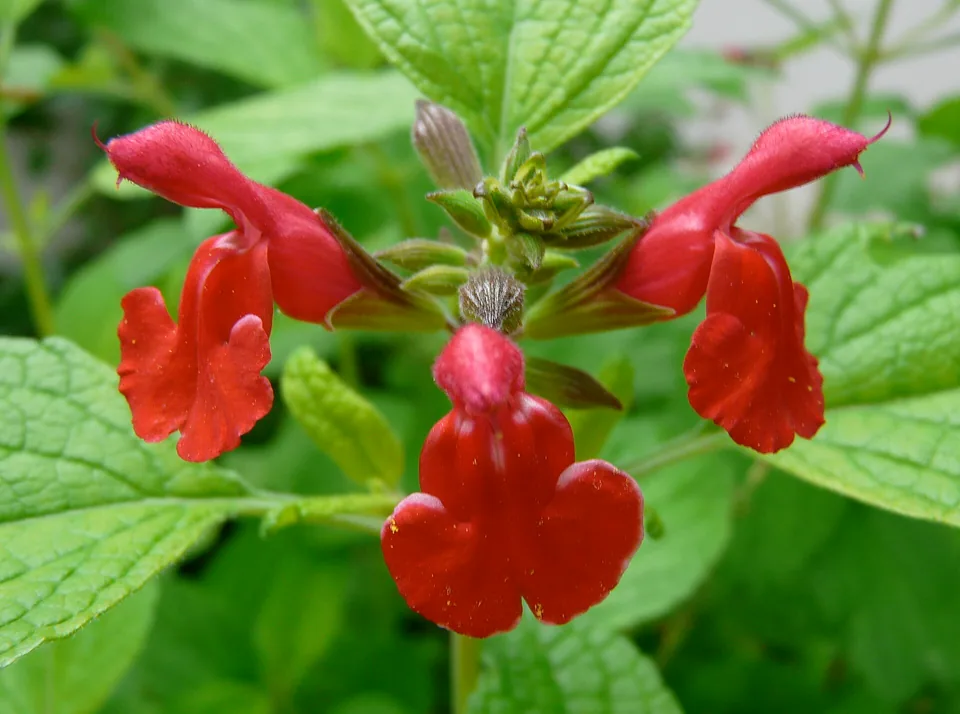


Cómo cultivar y cuidar Little Leaf Sage
Salvia microphylla
Escrito por Emilio Marruso · última revisión
De un vistazo
Esta salvia es una vivaz muy agradecida: dale sol pleno y un suelo con buen drenaje y aguantará bien la sequía. Sus hojas huelen a grosella negra y sirven, frescas o secas, para preparar una infusión deliciosa. También crece en maceta, y con un poco de compost en la tierra normalmente no necesita más abono.
- Sol
Sol pleno
Qué dicen las fuentes (2)
Luz: Pleno sol
This plant needs to be planted in full sun and in well-drained soil.
— Salvia microphylla (Baby Sage, Blackcurrant Sage, Graham's Sage, Little Leaf Sage) | North Carolina Extension Gardener Plant Toolbox [1] Plants reach 3 to 4 feet wide and high, are very heat tolerant, and prefer full sun.
— Salvia | Home & Garden Information Center [4] - Riego
Resiste bien la sequía; necesita un suelo con buen drenaje
Qué dicen las fuentes (2)
Riego: Tolerante a la sequía.
It is drought- and heat-tolerant and slightly salt-tolerant. Propagate by seeds or stem cuttings.
— Salvia microphylla (Baby Sage, Blackcurrant Sage, Graham's Sage, Little Leaf Sage) | North Carolina Extension Gardener Plant Toolbox [1] Notas sobre el riego: Necesita suelo bien drenado
This plant needs to be planted in full sun and in well-drained soil.
— Salvia microphylla (Baby Sage, Blackcurrant Sage, Graham's Sage, Little Leaf Sage) | North Carolina Extension Gardener Plant Toolbox [1] - Frío
Aguanta inviernos de hasta −17,8 °C (0 °F)
Rústica en inviernos muy fríos · USDA 7a · RHS H6 · Z7
Qué dicen las fuentes (2)
Rusticidad, zona más fría: 7a [mínima invernal de −17,8 a −15 °C (de 0 a 5 °F)]
USDA Plant Hardiness Zone: 7a, 7b, 8a, 8b, 9a, 9b, 10a, 10b
— Salvia microphylla (Baby Sage, Blackcurrant Sage, Graham's Sage, Little Leaf Sage) | North Carolina Extension Gardener Plant Toolbox [1] Rusticidad, zona más cálida: 10b [mínima invernal de 1,7 a 4,4 °C (de 35 a 40 °F)]
USDA Plant Hardiness Zone: 7a, 7b, 8a, 8b, 9a, 9b, 10a, 10b
— Salvia microphylla (Baby Sage, Blackcurrant Sage, Graham's Sage, Little Leaf Sage) | North Carolina Extension Gardener Plant Toolbox [1] - Suelo
Suelo de ligeramente ácido a alcalino, pH 6,0–8,0
Qué dicen las fuentes (2)
pH del suelo, mínimo: 6.0
Soil pH: Neutral (6.0-8.0) Soil Drainage: Good Drainage
— Salvia microphylla (Baby Sage, Blackcurrant Sage, Graham's Sage, Little Leaf Sage) | North Carolina Extension Gardener Plant Toolbox [1] pH del suelo, máximo: 8.0
Soil pH: Neutral (6.0-8.0) Soil Drainage: Good Drainage
— Salvia microphylla (Baby Sage, Blackcurrant Sage, Graham's Sage, Little Leaf Sage) | North Carolina Extension Gardener Plant Toolbox [1] - Abonado
Con compost en la tierra suele bastar; el exceso de abono favorece los hongos
Qué dicen las fuentes (2)
Abonos naturales: Compost en un suelo bien preparado; muchas salvias perennes no necesitan fertilizante adicional
Many perennial salvias will grow well without supplemental fertility if sited in a well-prepared soil containing compost.
— Salvia | Home & Garden Information Center [4] Evitar: Exceso de fertilizante, que puede aumentar los problemas de enfermedades fúngicas
Excessive water and fertilizer can increase fungal disease problems for salvias.
— Salvia | Home & Garden Information Center [4] - Cosecha
Las hojas huelen a grosella negra; úsalas frescas o secas en infusión
- Plagas
Mosca blanca, pulgón, cochinilla algodonosa y araña roja; roya, oídio y podredumbre del tallo
Qué dicen las fuentes (2)
Plagas: mosca blanca, pulgones, cochinillas harinosas, arañitas rojas
Insect, Diseases, and Other Plant Problems: Whitefly, aphids, mealybugs, and spider mites are insect problems. Rust, powdery mildew, stem rot, and fungal leaf spot are disease problems.
— Salvia microphylla (Baby Sage, Blackcurrant Sage, Graham's Sage, Little Leaf Sage) | North Carolina Extension Gardener Plant Toolbox [1] Enfermedades: roya, mildiu polvoriento, pudrición del tallo, mancha foliar fúngica
Insect, Diseases, and Other Plant Problems: Whitefly, aphids, mealybugs, and spider mites are insect problems. Rust, powdery mildew, stem rot, and fungal leaf spot are disease problems.
— Salvia microphylla (Baby Sage, Blackcurrant Sage, Graham's Sage, Little Leaf Sage) | North Carolina Extension Gardener Plant Toolbox [1] - Multiplicación
Por semilla, esquejes de tallo o división de la mata
Qué dicen las fuentes (2)
Propagación: Semilla; esquejes de tallo; división
It is drought- and heat-tolerant and slightly salt-tolerant. Propagate by seeds or stem cuttings.
— Salvia microphylla (Baby Sage, Blackcurrant Sage, Graham's Sage, Little Leaf Sage) | North Carolina Extension Gardener Plant Toolbox [1] Recommended Propagation Strategy: Division Stem Cutting Country Or Region Of Origin:
— Salvia microphylla (Baby Sage, Blackcurrant Sage, Graham's Sage, Little Leaf Sage) | North Carolina Extension Gardener Plant Toolbox [1] - Maceta
Crece también en maceta
Qué dicen las fuentes (1)
En maceta: Sí
Landscape Location: Coastal Container Naturalized Area Landscape Theme:
— Salvia microphylla (Baby Sage, Blackcurrant Sage, Graham's Sage, Little Leaf Sage) | North Carolina Extension Gardener Plant Toolbox [1]
Resumen
La salvia de hoja pequeña es un arbusto de hoja perenne que necesita pleno sol y suelo bien drenado. [1] Es tolerante a la sequía y al calor y se puede propagar por semillas o esquejes de tallo. [1] Se utiliza en bordes perennes y en jardines de mariposas, de casas de campo, rocosos o de polinizadores. [1]
Citado en inglés, como en la fuente.
Esta ficha está incompleta: las fuentes consultadas aún no cubren todos los campos.
Aún no cubierto por nuestras fuentes: Poda
Cuidados
Riego
Riego
Tolerante a la sequía.
Qué dicen las fuentes (1)
It is drought- and heat-tolerant and slightly salt-tolerant. Propagate by seeds or stem cuttings.Notas sobre el riego
Necesita suelo bien drenado
Qué dicen las fuentes (1)
This plant needs to be planted in full sun and in well-drained soil.Luz
Pleno sol
Qué dicen las fuentes (2)
This plant needs to be planted in full sun and in well-drained soil.Plants reach 3 to 4 feet wide and high, are very heat tolerant, and prefer full sun.Clima y frío
Rusticidad, zona más fría
7a [mínima invernal de −17,8 a −15 °C (de 0 a 5 °F)]
Qué dicen las fuentes (1)
USDA Plant Hardiness Zone:
7a, 7b, 8a, 8b, 9a, 9b, 10a, 10bRusticidad, zona más cálida
10b [mínima invernal de 1,7 a 4,4 °C (de 35 a 40 °F)]
Qué dicen las fuentes (1)
USDA Plant Hardiness Zone:
7a, 7b, 8a, 8b, 9a, 9b, 10a, 10bSuelo
pH del suelo, mínimo
6.0
Qué dicen las fuentes (1)
Soil pH:
Neutral (6.0-8.0)
Soil Drainage:
Good DrainagepH del suelo, máximo
8.0
Qué dicen las fuentes (1)
Soil pH:
Neutral (6.0-8.0)
Soil Drainage:
Good DrainageDónde cultivarla
Sí
Qué dicen las fuentes (1)
Landscape Location:
Coastal
Container
Naturalized Area
Landscape Theme:Propagación
Semilla; esquejes de tallo; división
Qué dicen las fuentes (2)
It is drought- and heat-tolerant and slightly salt-tolerant. Propagate by seeds or stem cuttings.Recommended Propagation Strategy:
Division
Stem Cutting
Country Or Region Of Origin:Cultivo
La planta
Ciclo de vida
perenne
Qué dicen las fuentes (1)
Life Cycle: Perennial Recommended Propagation Strategy: Division Stem Cutting Country Or Region Of Origin: Arizona to GuatemalaFamilia
Lamiaceae
Qué dicen las fuentes (1)
Little leaf sage is an evergreen shrub in the mint (Lamiaceae) family, found in southeastern Arizona and the mountains of eastern, western, and southern Mexico.Plagas y enfermedades
Plagas
mosca blanca, pulgones, cochinillas harinosas, arañitas rojas
Qué dicen las fuentes (1)
Insect, Diseases, and Other Plant Problems: Whitefly, aphids, mealybugs, and spider mites are insect problems. Rust, powdery mildew, stem rot, and fungal leaf spot are disease problems.Enfermedades
roya, mildiu polvoriento, pudrición del tallo, mancha foliar fúngica
Qué dicen las fuentes (1)
Insect, Diseases, and Other Plant Problems: Whitefly, aphids, mealybugs, and spider mites are insect problems. Rust, powdery mildew, stem rot, and fungal leaf spot are disease problems.Abonado
Abonos naturales
Compost en un suelo bien preparado; muchas salvias perennes no necesitan fertilizante adicional
Qué dicen las fuentes (1)
Many perennial salvias will grow well without supplemental fertility if sited in a well-prepared soil containing compost.Evitar
Exceso de fertilizante, que puede aumentar los problemas de enfermedades fúngicas
Qué dicen las fuentes (1)
Excessive water and fertilizer can increase fungal disease problems for salvias.Problemas
Insectos plaga
Síntoma: La mosca blanca, los pulgones, las cochinillas harinosas y las arañitas rojas son problemas de insectos
Qué dicen las fuentes (1)
Insect, Diseases, and Other Plant Problems: Whitefly, aphids, mealybugs, and spider mites are insect problems.
— Salvia microphylla (Baby Sage, Blackcurrant Sage, Graham's Sage, Little Leaf Sage) | North Carolina Extension Gardener Plant Toolbox [1] Enfermedades
Síntoma: La roya, el mildiu polvoriento, la pudrición del tallo y la mancha foliar fúngica son problemas de enfermedades
Qué dicen las fuentes (1)
Rust, powdery mildew, stem rot, and fungal leaf spot are disease problems.
— Salvia microphylla (Baby Sage, Blackcurrant Sage, Graham's Sage, Little Leaf Sage) | North Carolina Extension Gardener Plant Toolbox [1]
Remedios
Las fuentes consultadas no dan remedios para esta planta.
Calendario
Poda
No figura en las fuentes consultadas.
Meses tal como los dan las fuentes, en su mayoría de Estados Unidos (hemisferio norte). En el hemisferio sur se desplazan unos seis meses.
Comestibilidad
Según la fuente, citada textualmente. No comas una planta basándote solo en esta página: los errores de identificación pueden ser peligrosos.
Leaves have a scent of blackcurrant and can be used fresh or dried as a flavoring in an herbal tea,
[1]
Valores orientativos
Valores de una fuente secundaria, no comprobados palabra por palabra como el resto de esta página. Úselos como punto de partida.
- Horas de sol
- 6-8 horasValor orientativo, adáptalo a tu clima · Fuente secundaria
- Nivel de cuidado
- MedioValor orientativo, adáptalo a tu clima · Fuente secundaria
- Crecimiento
- AltaValor orientativo, adáptalo a tu clima · Fuente secundaria
- Poda
- Mayo, junio, julioValor orientativo, adáptalo a tu clima · Fuente secundaria
Plantas similares
- Anise Sage Salvia guaranitica
- Salvia real Salvia sagittata
- Autumn Sage Salvia greggii
- Blue Sage Salvia azurea
- Bog Sage Salvia uliginosa
- Cedar Sage Salvia roemeriana
- Esclarea Salvia sclarea
- Lyreleaf Sage Salvia lyrata
Fuentes
Cada valor anterior se cita de estos documentos. Los enlaces llevan al editor original.
- Salvia microphylla (Baby Sage, Blackcurrant Sage, Graham's Sage, Little Leaf Sage) | North Carolina Extension Gardener Plant Toolbox · plants.ces.ncsu.edu, consultado
- Little Leaf Sage - Salvia microphylla | North Carolina Extension Gardener Plant Toolbox · plants.ces.ncsu.edu, consultado
- Salvia (Sage, Salvia) | North Carolina Extension Gardener Plant Toolbox · plants.ces.ncsu.edu, consultado
- Salvia | Home & Garden Information Center · hgic.clemson.edu, consultado
Escrito por Emilio Marruso · última revisión