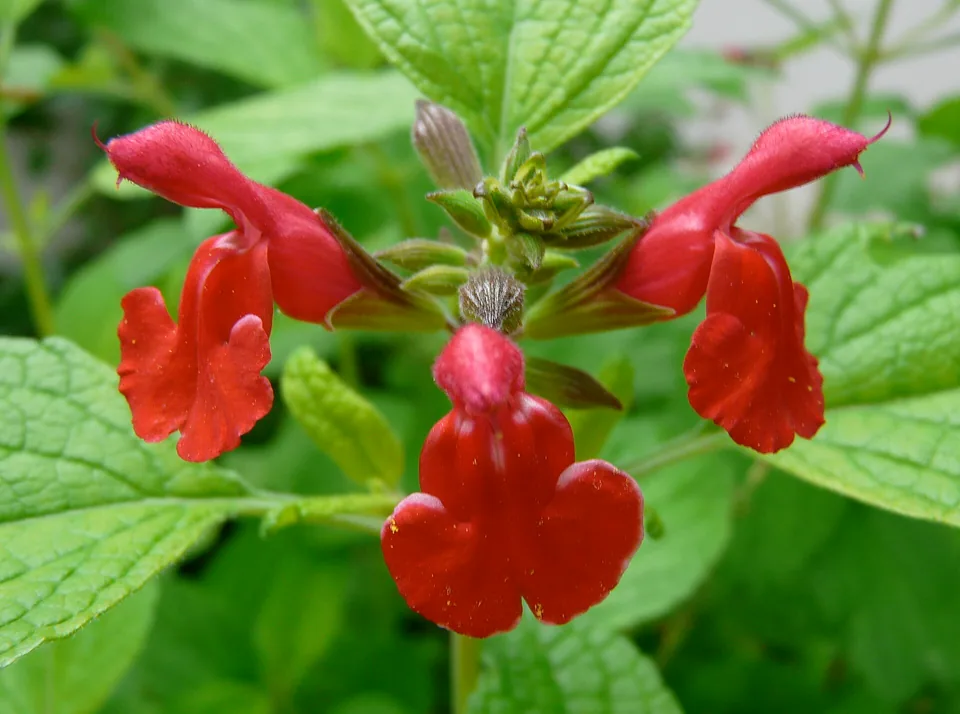


How to Grow and Care for Little Leaf Sage
Salvia microphylla
Written by Emilio Marruso · last checked
At a glance
This sage is an easy, forgiving perennial: give it full sun and well-drained soil and it shrugs off dry spells. Its leaves smell of blackcurrant and make a lovely herbal tea, fresh or dried. It grows happily in containers too, and a little compost worked into the soil is usually all the feeding it needs.
- Sun
Full sun
What the sources say (2)
Light: Full sun
This plant needs to be planted in full sun and in well-drained soil.
— Salvia microphylla (Baby Sage, Blackcurrant Sage, Graham's Sage, Little Leaf Sage) | North Carolina Extension Gardener Plant Toolbox [1] Plants reach 3 to 4 feet wide and high, are very heat tolerant, and prefer full sun.
— Salvia | Home & Garden Information Center [4] - Water
Handles drought well; needs soil that drains well
What the sources say (2)
Watering: Drought tolerant
It is drought- and heat-tolerant and slightly salt-tolerant. Propagate by seeds or stem cuttings.
— Salvia microphylla (Baby Sage, Blackcurrant Sage, Graham's Sage, Little Leaf Sage) | North Carolina Extension Gardener Plant Toolbox [1] Watering notes: Needs well-drained soil
This plant needs to be planted in full sun and in well-drained soil.
— Salvia microphylla (Baby Sage, Blackcurrant Sage, Graham's Sage, Little Leaf Sage) | North Carolina Extension Gardener Plant Toolbox [1] - Cold
Survives winters down to 0 °F (−17.8 °C)
Hardy in very cold winters · USDA 7a · RHS H6 · Z7
What the sources say (2)
Hardiness, coldest zone: 7a [winter low −17.8 to −15 °C (0 to 5 °F)]
USDA Plant Hardiness Zone: 7a, 7b, 8a, 8b, 9a, 9b, 10a, 10b
— Salvia microphylla (Baby Sage, Blackcurrant Sage, Graham's Sage, Little Leaf Sage) | North Carolina Extension Gardener Plant Toolbox [1] Hardiness, warmest zone: 10b [winter low 1.7 to 4.4 °C (35 to 40 °F)]
USDA Plant Hardiness Zone: 7a, 7b, 8a, 8b, 9a, 9b, 10a, 10b
— Salvia microphylla (Baby Sage, Blackcurrant Sage, Graham's Sage, Little Leaf Sage) | North Carolina Extension Gardener Plant Toolbox [1] - Soil
Slightly acidic to alkaline soil, pH 6.0–8.0
What the sources say (2)
Soil pH, minimum: 6.0
Soil pH: Neutral (6.0-8.0) Soil Drainage: Good Drainage
— Salvia microphylla (Baby Sage, Blackcurrant Sage, Graham's Sage, Little Leaf Sage) | North Carolina Extension Gardener Plant Toolbox [1] Soil pH, maximum: 8.0
Soil pH: Neutral (6.0-8.0) Soil Drainage: Good Drainage
— Salvia microphylla (Baby Sage, Blackcurrant Sage, Graham's Sage, Little Leaf Sage) | North Carolina Extension Gardener Plant Toolbox [1] - Feeding
Compost in the soil is usually enough; too much fertilizer invites fungal diseases
What the sources say (2)
Natural fertilizers: Compost in a well-prepared soil; many perennial salvias then need no supplemental fertilizer
Many perennial salvias will grow well without supplemental fertility if sited in a well-prepared soil containing compost.
— Salvia | Home & Garden Information Center [4] Avoid: Excessive fertilizer, which can increase fungal disease problems
Excessive water and fertilizer can increase fungal disease problems for salvias.
— Salvia | Home & Garden Information Center [4] - Harvest
Leaves smell of blackcurrant; use them fresh or dried for herbal tea
- Pests
Whiteflies, aphids, mealybugs and spider mites; rust, powdery mildew and stem rot
What the sources say (2)
Pests: whitefly, aphids, mealybugs, spider mites
Insect, Diseases, and Other Plant Problems: Whitefly, aphids, mealybugs, and spider mites are insect problems. Rust, powdery mildew, stem rot, and fungal leaf spot are disease problems.
— Salvia microphylla (Baby Sage, Blackcurrant Sage, Graham's Sage, Little Leaf Sage) | North Carolina Extension Gardener Plant Toolbox [1] Diseases: rust, powdery mildew, stem rot, fungal leaf spot
Insect, Diseases, and Other Plant Problems: Whitefly, aphids, mealybugs, and spider mites are insect problems. Rust, powdery mildew, stem rot, and fungal leaf spot are disease problems.
— Salvia microphylla (Baby Sage, Blackcurrant Sage, Graham's Sage, Little Leaf Sage) | North Carolina Extension Gardener Plant Toolbox [1] - Propagation
From seed, stem cuttings or by dividing the plant
What the sources say (2)
Propagation: Seed; stem cuttings; division
It is drought- and heat-tolerant and slightly salt-tolerant. Propagate by seeds or stem cuttings.
— Salvia microphylla (Baby Sage, Blackcurrant Sage, Graham's Sage, Little Leaf Sage) | North Carolina Extension Gardener Plant Toolbox [1] Recommended Propagation Strategy: Division Stem Cutting Country Or Region Of Origin:
— Salvia microphylla (Baby Sage, Blackcurrant Sage, Graham's Sage, Little Leaf Sage) | North Carolina Extension Gardener Plant Toolbox [1] - Containers
Grows in containers too
What the sources say (1)
In containers: Yes
Landscape Location: Coastal Container Naturalized Area Landscape Theme:
— Salvia microphylla (Baby Sage, Blackcurrant Sage, Graham's Sage, Little Leaf Sage) | North Carolina Extension Gardener Plant Toolbox [1]
Overview
Little leaf sage is an evergreen shrub that needs full sun and well-drained soil. [1] It is drought- and heat-tolerant and can be propagated by seeds or stem cuttings. [1] It is used in perennial borders and in butterfly, cottage, rock or pollinator gardens. [1]
This record is incomplete: the sources we read do not cover every field yet.
Not yet covered by our sources: Pruning
Little Leaf Sage care
How to water Little Leaf Sage
Watering
Drought tolerant
What the sources say (1)
It is drought- and heat-tolerant and slightly salt-tolerant. Propagate by seeds or stem cuttings.Watering notes
Needs well-drained soil
What the sources say (1)
This plant needs to be planted in full sun and in well-drained soil.How much light Little Leaf Sage needs
Full sun
What the sources say (2)
This plant needs to be planted in full sun and in well-drained soil.Plants reach 3 to 4 feet wide and high, are very heat tolerant, and prefer full sun.How much cold Little Leaf Sage can take
Hardiness, coldest zone
7a [winter low −17.8 to −15 °C (0 to 5 °F)]
What the sources say (1)
USDA Plant Hardiness Zone:
7a, 7b, 8a, 8b, 9a, 9b, 10a, 10bHardiness, warmest zone
10b [winter low 1.7 to 4.4 °C (35 to 40 °F)]
What the sources say (1)
USDA Plant Hardiness Zone:
7a, 7b, 8a, 8b, 9a, 9b, 10a, 10bBest soil for Little Leaf Sage
Soil pH, minimum
6.0
What the sources say (1)
Soil pH:
Neutral (6.0-8.0)
Soil Drainage:
Good DrainageSoil pH, maximum
8.0
What the sources say (1)
Soil pH:
Neutral (6.0-8.0)
Soil Drainage:
Good DrainageWhere to grow Little Leaf Sage
Yes
What the sources say (1)
Landscape Location:
Coastal
Container
Naturalized Area
Landscape Theme:How to propagate Little Leaf Sage
Seed; stem cuttings; division
What the sources say (2)
It is drought- and heat-tolerant and slightly salt-tolerant. Propagate by seeds or stem cuttings.Recommended Propagation Strategy:
Division
Stem Cutting
Country Or Region Of Origin:How to grow Little Leaf Sage
The plant
Life cycle
perennial
What the sources say (1)
Life Cycle: Perennial Recommended Propagation Strategy: Division Stem Cutting Country Or Region Of Origin: Arizona to GuatemalaFamily
Lamiaceae
What the sources say (1)
Little leaf sage is an evergreen shrub in the mint (Lamiaceae) family, found in southeastern Arizona and the mountains of eastern, western, and southern Mexico.Pests and diseases
Pests
whitefly, aphids, mealybugs, spider mites
What the sources say (1)
Insect, Diseases, and Other Plant Problems: Whitefly, aphids, mealybugs, and spider mites are insect problems. Rust, powdery mildew, stem rot, and fungal leaf spot are disease problems.Diseases
rust, powdery mildew, stem rot, fungal leaf spot
What the sources say (1)
Insect, Diseases, and Other Plant Problems: Whitefly, aphids, mealybugs, and spider mites are insect problems. Rust, powdery mildew, stem rot, and fungal leaf spot are disease problems.Fertilizing
Natural fertilizers
Compost in a well-prepared soil; many perennial salvias then need no supplemental fertilizer
What the sources say (1)
Many perennial salvias will grow well without supplemental fertility if sited in a well-prepared soil containing compost.Avoid
Excessive fertilizer, which can increase fungal disease problems
What the sources say (1)
Excessive water and fertilizer can increase fungal disease problems for salvias.Little Leaf Sage pests and problems
Insect pests
Symptom: Whitefly, aphids, mealybugs and spider mites are insect problems
What the sources say (1)
Insect, Diseases, and Other Plant Problems: Whitefly, aphids, mealybugs, and spider mites are insect problems.
— Salvia microphylla (Baby Sage, Blackcurrant Sage, Graham's Sage, Little Leaf Sage) | North Carolina Extension Gardener Plant Toolbox [1] Diseases
Symptom: Rust, powdery mildew, stem rot and fungal leaf spot are disease problems
What the sources say (1)
Rust, powdery mildew, stem rot, and fungal leaf spot are disease problems.
— Salvia microphylla (Baby Sage, Blackcurrant Sage, Graham's Sage, Little Leaf Sage) | North Carolina Extension Gardener Plant Toolbox [1]
Remedies
The sources we checked give no remedies for this plant.
Calendar
Pruning
Not stated in the sources we read.
Months as given by the sources, which are mostly from the United States (northern hemisphere). In the southern hemisphere they shift by about six months.
Edibility
Reported by the source, quoted verbatim. Do not eat a plant on the basis of this page alone: identification mistakes can be dangerous.
Leaves have a scent of blackcurrant and can be used fresh or dried as a flavoring in an herbal tea,
[1]
Indicative values
Values from a secondary source, not checked word for word like the rest of this page. Use them as a starting point.
- Hours of sun
- 6-8 hoursIndicative value, adapt it to your climate · Secondary source
- Care level
- MediumIndicative value, adapt it to your climate · Secondary source
- Growth rate
- HighIndicative value, adapt it to your climate · Secondary source
- Pruning
- May, June, JulyIndicative value, adapt it to your climate · Secondary source
Similar plants
- Anise Sage Salvia guaranitica
- Arrowleaf Sage Salvia sagittata
- Autumn Sage Salvia greggii
- Blue Sage Salvia azurea
- Bog Sage Salvia uliginosa
- Cedar Sage Salvia roemeriana
- Clary Sage Salvia sclarea
- Lyreleaf Sage Salvia lyrata
Sources
Every value above is quoted from these documents. Links lead to the original publisher.
- Salvia microphylla (Baby Sage, Blackcurrant Sage, Graham's Sage, Little Leaf Sage) | North Carolina Extension Gardener Plant Toolbox · plants.ces.ncsu.edu, consulted
- Little Leaf Sage - Salvia microphylla | North Carolina Extension Gardener Plant Toolbox · plants.ces.ncsu.edu, consulted
- Salvia (Sage, Salvia) | North Carolina Extension Gardener Plant Toolbox · plants.ces.ncsu.edu, consulted
- Salvia | Home & Garden Information Center · hgic.clemson.edu, consulted
Written by Emilio Marruso · last checked