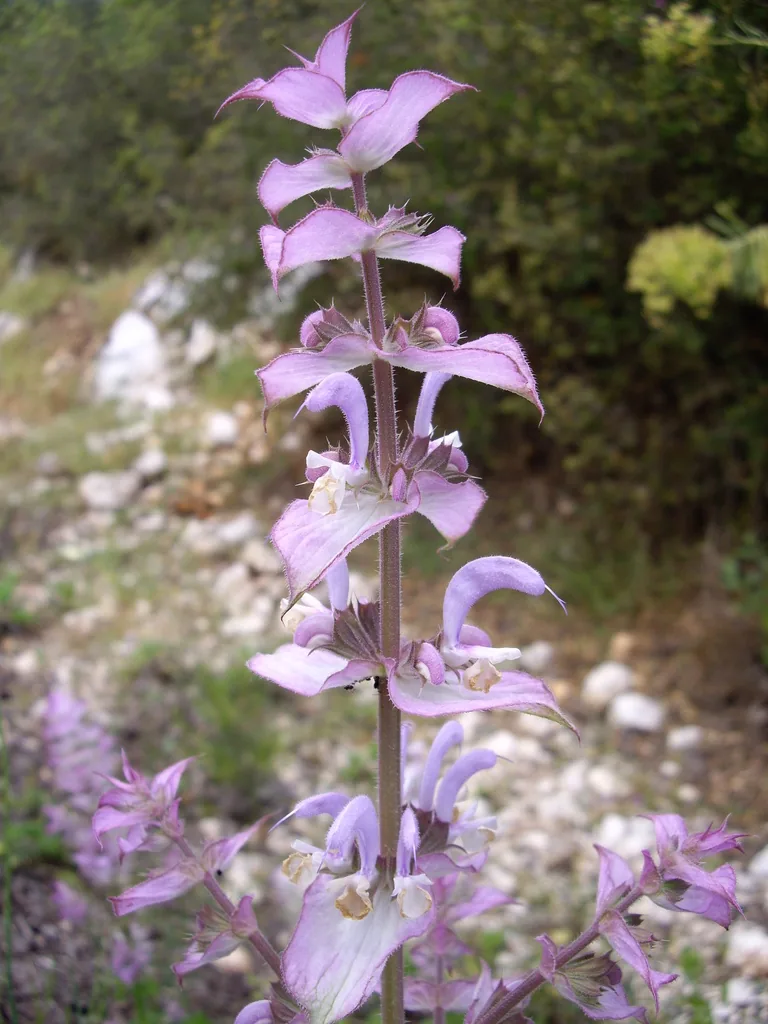
How to Grow and Care for Clary Sage
Salvia sclarea
Written by Emilio Marruso · last checked
At a glance
Clary sage is a sun lover that shrugs off drought and thrives in light, gravelly or sandy soil. Growing 2 to 5 feet tall, it gives you leaves that are delicious in omelets, fritters and stews, plus edible flowers. Cut the stalks back once the flowers fade and it rewards you with a second round of growth and blooms.
- Sun
Full sun
What the sources say (1)
Light: Full sun
Plant in average, well-drained soils in full sun.
— Salvia sclarea (Clary Sage, Clear Eye, Europe Sage, Eyebright) | North Carolina Extension Gardener Plant Toolbox [1] - Water
Handles drought well; keep the soil from staying wet in winter
What the sources say (2)
Watering: Drought-tolerant; does well in light, gravelly, dry or sandy soils
Clary sage does well in light, gravelly, dry or sandy soils. Wet soil in winter should be avoided. It is drought-tolerant.
— Salvia sclarea (Clary Sage, Clear Eye, Europe Sage, Eyebright) | North Carolina Extension Gardener Plant Toolbox [1] Watering notes: Avoid wet soil in winter
Wet soil in winter should be avoided. It is drought-tolerant. Rich, excessively fertilized soils produce tall plants with few flowers.
— Salvia sclarea (Clary Sage, Clear Eye, Europe Sage, Eyebright) | North Carolina Extension Gardener Plant Toolbox [1] - Cold
Survives winters down to −20 °F (−28.9 °C)
Very hardy · USDA 5a · RHS H7 · Z5
What the sources say (2)
Hardiness, coldest zone: 5a [winter low −28.9 to −26.1 °C (−20 to −15 °F)]
5a, 5b, 6a, 6b, 7a, 7b, 8a, 8b, 9a, 9b
— Salvia sclarea (Clary Sage, Clear Eye, Europe Sage, Eyebright) | North Carolina Extension Gardener Plant Toolbox [1] Hardiness, warmest zone: 9b [winter low −3.9 to −1.1 °C (25 to 30 °F)]
5a, 5b, 6a, 6b, 7a, 7b, 8a, 8b, 9a, 9b
— Salvia sclarea (Clary Sage, Clear Eye, Europe Sage, Eyebright) | North Carolina Extension Gardener Plant Toolbox [1] - Soil
Light, gravelly, dry or sandy soil; avoid soil that is too rich
What the sources say (2)
Watering: Drought-tolerant; does well in light, gravelly, dry or sandy soils
Clary sage does well in light, gravelly, dry or sandy soils. Wet soil in winter should be avoided. It is drought-tolerant.
— Salvia sclarea (Clary Sage, Clear Eye, Europe Sage, Eyebright) | North Carolina Extension Gardener Plant Toolbox [1] Avoid: Excessive fertilizing and overly rich soil
Rich, excessively fertilized soils produce tall plants with few flowers.
— Salvia sclarea (Clary Sage, Clear Eye, Europe Sage, Eyebright) | North Carolina Extension Gardener Plant Toolbox [1] - Feeding
Feed regularly, especially in pots, but don't overdo it: too much gives tall plants with few flowers
What the sources say (3)
How often: Regularly, especially plants in containers
Water and fertilize regularly, especially plants in containers.
— Annual Salvias or Sages | Yard and Garden [3] Avoid: Excessive fertilizing and overly rich soil
Rich, excessively fertilized soils produce tall plants with few flowers.
— Salvia sclarea (Clary Sage, Clear Eye, Europe Sage, Eyebright) | North Carolina Extension Gardener Plant Toolbox [1] Signs of excess: Tall plants with few flowers
Rich, excessively fertilized soils produce tall plants with few flowers.
— Salvia sclarea (Clary Sage, Clear Eye, Europe Sage, Eyebright) | North Carolina Extension Gardener Plant Toolbox [1] - Pruning
After the flowers fade, cut the stalks near the ground for a second round of blooms
What the sources say (1)
Pruning: After flowers fade: cut stalks back to near the ground to encourage a second flush of growth and flowering
As flowers fade, cut stalks back to near the ground to encourage a second flush of growth and flowering.
— Salvia sclarea (Clary Sage, Clear Eye, Europe Sage, Eyebright) | North Carolina Extension Gardener Plant Toolbox [1] - Harvest
Leaves are tasty in omelets, fritters and stews; the flowers are edible too
- Size
2 to 5 ft tall and 2 to 3 ft wide
What the sources say (2)
Mature height: 61-152 cm (2-5 ft)
This easy-to-grow plant reaches 2 to 5 feet tall and 2 to 3 feet wide
— Salvia sclarea (Clary Sage, Clear Eye, Europe Sage, Eyebright) | North Carolina Extension Gardener Plant Toolbox [1] Mature width: 61-91 cm (2-3 ft)
This easy-to-grow plant reaches 2 to 5 feet tall and 2 to 3 feet wide
— Salvia sclarea (Clary Sage, Clear Eye, Europe Sage, Eyebright) | North Carolina Extension Gardener Plant Toolbox [1] - Propagation
Grows from seed
What the sources say (1)
Propagation: Seed (nutlets)
Propagate clary sage by seeds (nutlets), which, as with many sage species, produce mucilage when exposed to water
— Salvia sclarea (Clary Sage, Clear Eye, Europe Sage, Eyebright) | North Carolina Extension Gardener Plant Toolbox [1]
Overview
Clary sage is a biennial or short-lived herbaceous perennial in the mint family, native to the Mediterranean region of southern Europe and central Asia. [1] It is grown in full sun in well-drained soil and is drought-tolerant. [1] The leaves and flowers are edible. [1]
This record is incomplete: the sources we read do not cover every field yet.
Not yet covered by our sources: Sowing / Planting, Harvest
Clary Sage care
How to water Clary Sage
Watering
Drought-tolerant; does well in light, gravelly, dry or sandy soils
What the sources say (1)
Clary sage does well in light, gravelly, dry or sandy soils. Wet soil in winter should be avoided. It is drought-tolerant.Watering notes
Avoid wet soil in winter
What the sources say (1)
Wet soil in winter should be avoided. It is drought-tolerant. Rich, excessively fertilized soils produce tall plants with few flowers.How much light Clary Sage needs
Full sun
What the sources say (1)
Plant in average, well-drained soils in full sun.How much cold Clary Sage can take
Hardiness, coldest zone
5a [winter low −28.9 to −26.1 °C (−20 to −15 °F)]
What the sources say (1)
5a, 5b, 6a, 6b, 7a, 7b, 8a, 8b, 9a, 9bHardiness, warmest zone
9b [winter low −3.9 to −1.1 °C (25 to 30 °F)]
What the sources say (1)
5a, 5b, 6a, 6b, 7a, 7b, 8a, 8b, 9a, 9bHow to propagate Clary Sage
Seed (nutlets)
What the sources say (1)
Propagate clary sage by seeds (nutlets), which, as with many sage species, produce mucilage when exposed to waterHow to grow Clary Sage
The plant
Life cycle
biennial or short-lived perennial
What the sources say (1)
Clary sage is a biennial or short-lived herbaceous perennial in the mint family (Lamiaceae)Family
Lamiaceae
What the sources say (1)
Clary sage is a biennial or short-lived herbaceous perennial in the mint family (Lamiaceae)Mature height
61-152 cm (2-5 ft)
What the sources say (1)
This easy-to-grow plant reaches 2 to 5 feet tall and 2 to 3 feet wideMature width
61-91 cm (2-3 ft)
What the sources say (1)
This easy-to-grow plant reaches 2 to 5 feet tall and 2 to 3 feet wideFertilizing
How often
Regularly, especially plants in containers
What the sources say (1)
Water and fertilize regularly, especially plants in containers.Avoid
Excessive fertilizing and overly rich soil
What the sources say (1)
Rich, excessively fertilized soils produce tall plants with few flowers.Signs of excess
Tall plants with few flowers
What the sources say (1)
Rich, excessively fertilized soils produce tall plants with few flowers.Remedies
Each remedy shows what official sources say about it; traditional remedies without an official source are marked as such. Harmful ones are listed so you know to avoid them.
Getting rid of it
invasive clary sage
hand-pulling or digging Official source, not independently tested
How: Pull or dig small infestations before the plant goes to seed; dispose of plants properly and put all flowerheads in the trash.
Hand-pulling or digging can be effective, especially for small infestations. Be sure to dispose of plants properly and make sure all flowerheads go in the trash to prevent new infestations.
— nwcb.wa.gov [4] tillage Official source, not independently tested
How: Regular tillage of large patches in fields or pastures.
Regular tillage of large clary sage patches can be effective in fields or pastures.
— kingcounty.gov [5]
Calendar
Sowing
Not stated in the sources we read.
Planting
Not stated in the sources we read.
Harvest
Not stated in the sources we read.
Pruning
After flowers fade: cut stalks back to near the ground to encourage a second flush of growth and flowering
What the sources say (1)
As flowers fade, cut stalks back to near the ground to encourage a second flush of growth and flowering.Months as given by the sources, which are mostly from the United States (northern hemisphere). In the southern hemisphere they shift by about six months.
Edibility
Reported by the source, quoted verbatim. Do not eat a plant on the basis of this page alone: identification mistakes can be dangerous.
Indicative values
Values from a secondary source, not checked word for word like the rest of this page. Use them as a starting point.
- Hours of sun
- 6-8 hoursIndicative value, adapt it to your climate · Secondary source
- Drought tolerant
- yesIndicative value, adapt it to your climate · Secondary source
- Soil pH
- 6-7.5Indicative value, adapt it to your climate · Secondary source
- Care level
- MediumIndicative value, adapt it to your climate · Secondary source
- Growth rate
- LowIndicative value, adapt it to your climate · Secondary source
Similar plants
- Anise Sage Salvia guaranitica
- Arrowleaf Sage Salvia sagittata
- Autumn Sage Salvia greggii
- Blue Sage Salvia azurea
- Bog Sage Salvia uliginosa
- Cedar Sage Salvia roemeriana
- Little Leaf Sage Salvia microphylla
- Lyreleaf Sage Salvia lyrata
Sources
Every value above is quoted from these documents. Links lead to the original publisher.
- Salvia sclarea (Clary Sage, Clear Eye, Europe Sage, Eyebright) | North Carolina Extension Gardener Plant Toolbox · plants.ces.ncsu.edu, consulted
- Salvia (Sage, Salvia) | North Carolina Extension Gardener Plant Toolbox · plants.ces.ncsu.edu, consulted
- Annual Salvias or Sages | Yard and Garden · yardandgarden.extension.iastate.edu, consulted
- nwcb.wa.gov · nwcb.wa.gov
- kingcounty.gov · kingcounty.gov
Written by Emilio Marruso · last checked