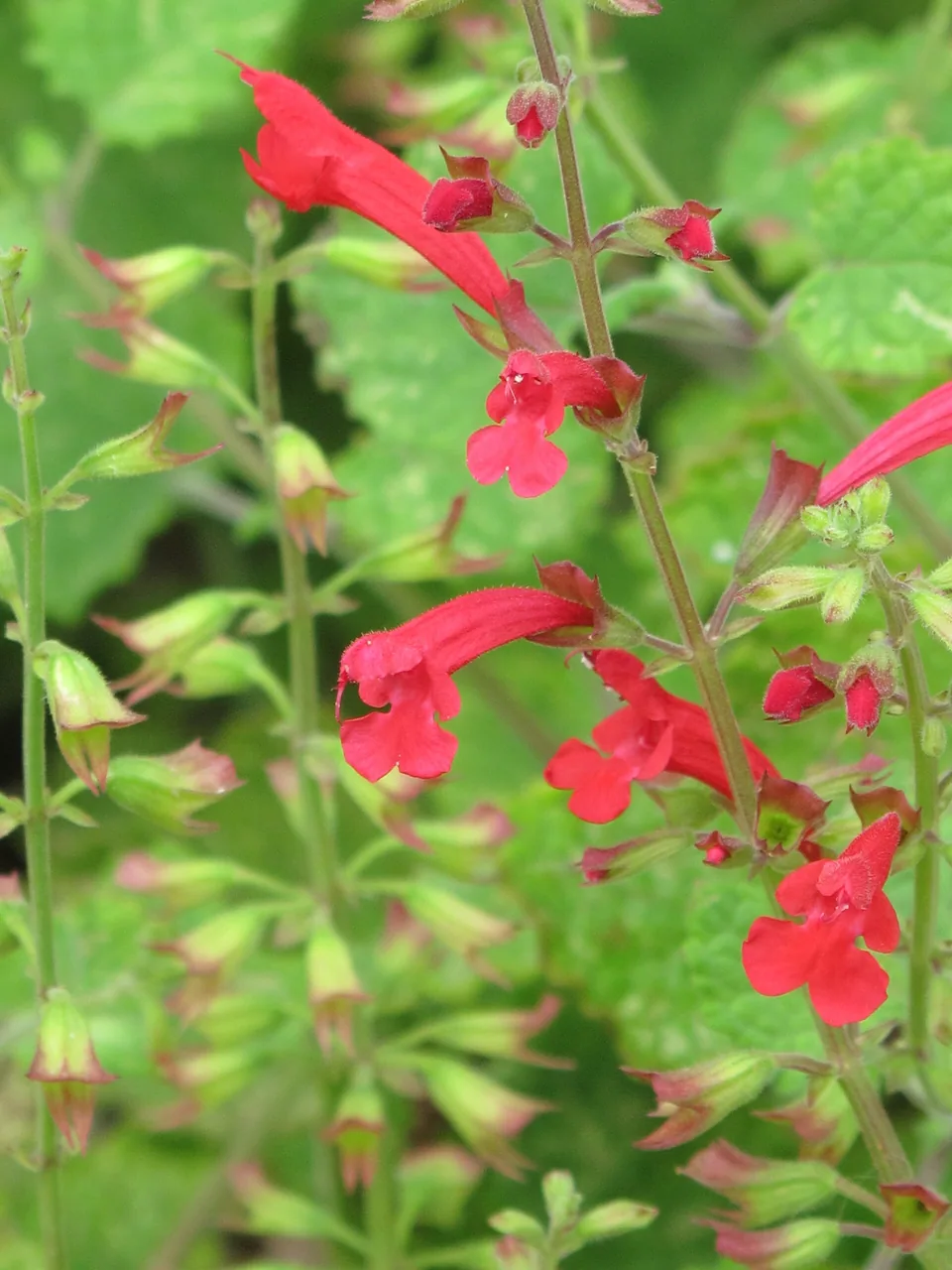
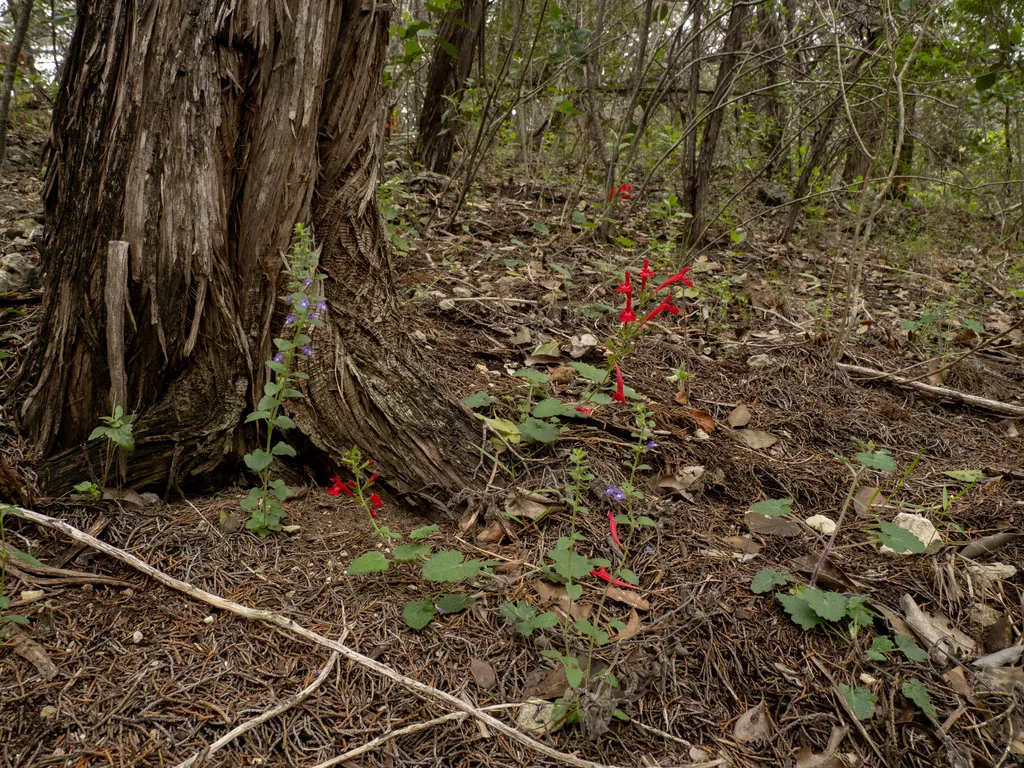

How to Grow and Care for Cedar Sage
Salvia roemeriana
Written by Emilio Marruso · last checked
At a glance
This little sage is easy to please: it grows in full sun or partial shade and, once settled in, shrugs off the occasional drought. A short-lived perennial often grown as an annual, it stays 10 inches to 2 feet tall, is happy in a pot, and sows itself so freely that new seedlings fill the gaps for you.
- Sun
Full sun or partial shade
What the sources say (1)
Light: Full sun or partial shade
It blooms best in full sun or partial shade.
— Salvia roemeriana (Cedar Sage) | North Carolina Extension Gardener Plant Toolbox [1] - Water
Once settled in, it handles the occasional drought
What the sources say (1)
Watering: Tolerant of occasional droughts once established
Once established, it is tolerant of occasional droughts.
— Salvia roemeriana (Cedar Sage) | North Carolina Extension Gardener Plant Toolbox [1] - Cold
Survives winters down to 0 °F (−17.8 °C)
Hardy in very cold winters · USDA 7a · RHS H6 · Z7
What the sources say (2)
Hardiness, coldest zone: 7a [winter low −17.8 to −15 °C (0 to 5 °F)]
USDA Plant Hardiness Zone: 7a, 7b, 8a, 8b, 9a, 9b, 10a, 10b
— Salvia roemeriana (Cedar Sage) | North Carolina Extension Gardener Plant Toolbox [1] Hardiness, warmest zone: 10b [winter low 1.7 to 4.4 °C (35 to 40 °F)]
USDA Plant Hardiness Zone: 7a, 7b, 8a, 8b, 9a, 9b, 10a, 10b
— Salvia roemeriana (Cedar Sage) | North Carolina Extension Gardener Plant Toolbox [1] - Watch out
Spreads fast by seed; pull the seedlings you don't want or let them fill the space
- Size
10 in to 2 ft tall and 6 in to 1 ft wide
What the sources say (2)
Mature height: 25.4-61 cm (10 in-2 ft)
Dimensions: Height: 0 ft. 10 in. - 2 ft. 0 in.
— Salvia roemeriana (Cedar Sage) | North Carolina Extension Gardener Plant Toolbox [1] Mature width: 15.24-30.48 cm (6 in-1 ft)
Width: 0 ft. 6 in. - 1 ft. 0 in.
— Salvia roemeriana (Cedar Sage) | North Carolina Extension Gardener Plant Toolbox [1] - Propagation
Grows from seed
What the sources say (1)
Propagation: Seed
Life Cycle: Annual Perennial Recommended Propagation Strategy: Seed
— Salvia roemeriana (Cedar Sage) | North Carolina Extension Gardener Plant Toolbox [1] - Containers
Grows in containers too
What the sources say (1)
In containers: Yes
Landscape Location: Container Meadow Patio Rock Wall Slope/Bank
— Salvia roemeriana (Cedar Sage) | North Carolina Extension Gardener Plant Toolbox [1]
Overview
Cedar sage is a short-lived herbaceous perennial of the mint family, native to Texas and adjacent northeastern Mexico, often grown as an annual. [1] It blooms best in full sun or partial shade and tolerates occasional droughts once established. [1]
This record is incomplete: the sources we read do not cover every field yet.
Not yet covered by our sources: Pruning
Cedar Sage care
How to water Cedar Sage
Tolerant of occasional droughts once established
What the sources say (1)
Once established, it is tolerant of occasional droughts.How much light Cedar Sage needs
Full sun or partial shade
What the sources say (1)
It blooms best in full sun or partial shade.How much cold Cedar Sage can take
Hardiness, coldest zone
7a [winter low −17.8 to −15 °C (0 to 5 °F)]
What the sources say (1)
USDA Plant Hardiness Zone:
7a, 7b, 8a, 8b, 9a, 9b, 10a, 10bHardiness, warmest zone
10b [winter low 1.7 to 4.4 °C (35 to 40 °F)]
What the sources say (1)
USDA Plant Hardiness Zone:
7a, 7b, 8a, 8b, 9a, 9b, 10a, 10bWhere to grow Cedar Sage
Yes
What the sources say (1)
Landscape Location:
Container
Meadow
Patio
Rock Wall
Slope/BankHow to propagate Cedar Sage
Seed
What the sources say (1)
Life Cycle:
Annual
Perennial
Recommended Propagation Strategy:
SeedHow to grow Cedar Sage
The plant
Life cycle
perennial (short-lived herbaceous perennial, often grown as an annual)
What the sources say (1)
Cedar sage is a short-lived herbaceous perennial that blooms the first year from seed. It is often grown as an annual.Family
Lamiaceae
What the sources say (1)
Cedar sage is a colorful member of the mint family (Lamiaceae) native to Texas and adjacent northeastern Mexico.Mature height
25.4-61 cm (10 in-2 ft)
What the sources say (1)
Dimensions:
Height: 0 ft. 10 in. - 2 ft. 0 in.Mature width
15.24-30.48 cm (6 in-1 ft)
What the sources say (1)
Width: 0 ft. 6 in. - 1 ft. 0 in.Fertilizing
When
The sources give different values depending on region, zone or growing conditions.
What each source says
Salvia in general: Each spring
What the sources say (1)
Salvia in general: Additionally, salvia will do best with an application of a balanced, slow-release fertilizer each spring.How often
The sources give different values depending on region, zone or growing conditions.
What each source says
Salvia in general: Once a year, in spring
What the sources say (1)
Salvia in general: Additionally, salvia will do best with an application of a balanced, slow-release fertilizer each spring.Mineral fertilizers
The sources give different values depending on region, zone or growing conditions.
What each source says
Salvia in general: Balanced, slow-release fertilizer
What the sources say (1)
Salvia in general: Additionally, salvia will do best with an application of a balanced, slow-release fertilizer each spring.Cedar Sage pests and problems
Rapid spread by seed
Symptom: Seedlings appear widely
What to do: Seedlings are easily spotted and removed or allowed to grow and fill the space
What the sources say (1)
Cedar sage can spread rapidly by seeds, but the seedlings are easily spotted and removed or allowed to grow and fill the space.
— Salvia roemeriana (Cedar Sage) | North Carolina Extension Gardener Plant Toolbox [1]
Remedies
Each remedy shows what official sources say about it; traditional remedies without an official source are marked as such. Harmful ones are listed so you know to avoid them.
Treating the plant
woollybear caterpillars
handpicking caterpillars Official source, not independently tested
How: Handpicking and destroying caterpillars.
A very hairy yellow or tan two inch caterpillar can defoliate salvia during summer and fall. The white adult moth is nocturnal. Control is seldom needed. Handpicking and destroying caterpillars is easily done.
— portal.ct.gov [6]
Getting rid of it
self-seeding spread
removing seedlings Official source, not independently tested
How: Seedlings are easily spotted and removed.
Cedar sage can spread rapidly by seeds, but the seedlings are easily spotted and removed or allowed to grow and fill the space.
— Salvia roemeriana (Cedar Sage) | North Carolina Extension Gardener Plant Toolbox [1]
Calendar
Pruning
Not stated in the sources we read.
Months as given by the sources, which are mostly from the United States (northern hemisphere). In the southern hemisphere they shift by about six months.
Similar plants
- Anise Sage Salvia guaranitica
- Arrowleaf Sage Salvia sagittata
- Autumn Sage Salvia greggii
- Blue Sage Salvia azurea
- Bog Sage Salvia uliginosa
- Clary Sage Salvia sclarea
- Little Leaf Sage Salvia microphylla
- Lyreleaf Sage Salvia lyrata
Sources
Every value above is quoted from these documents. Links lead to the original publisher.
- Salvia roemeriana (Cedar Sage) | North Carolina Extension Gardener Plant Toolbox · plants.ces.ncsu.edu, consulted
- Cedar Sage - Salvia roemeriana | North Carolina Extension Gardener Plant Toolbox · plants.ces.ncsu.edu, consulted
- Salvia - Salvia | North Carolina Extension Gardener Plant Toolbox · plants.ces.ncsu.edu, consulted
- Salvia (Sage, Salvia) | North Carolina Extension Gardener Plant Toolbox · plants.ces.ncsu.edu, consulted
- gardeningsolutions.ifas.ufl.edu · gardeningsolutions.ifas.ufl.edu
- portal.ct.gov · portal.ct.gov
Written by Emilio Marruso · last checked