

How to Grow and Care for Blue Sage
Salvia azurea
Written by Emilio Marruso · last checked
At a glance
Salvia azurea is an easygoing perennial that grows 3–5 ft tall and thrives anywhere from full sun to partial shade. It likes moist, well-drained soil, yet it shrugs off the occasional drought. One simple trick keeps it looking its best: cut the stems back by half in late spring, and they will stand up better under the weight of their flower spikes.
- Sun
Full sun to partial shade
What the sources say (1)
Light: Full sun to partial shade
Plant blue sage in full sun to partial shade in sandy or shallow-rocky soil.
— Salvia azurea (Blue Sage, Pitcher Sage) | North Carolina Extension Gardener Plant Toolbox [1] - Water
Likes moist soil that drains well; handles an occasional dry spell
What the sources say (1)
Watering: Prefers moist soil with good drainage; tolerates occasional drought
It prefers moist soil as long as there is good drainage but tolerates occasional drought.
— Salvia azurea (Blue Sage, Pitcher Sage) | North Carolina Extension Gardener Plant Toolbox [1] - Cold
Survives winters down to −20 °F (−28.9 °C)
Very hardy · USDA 5a · RHS H7 · Z5
What the sources say (2)
Hardiness, coldest zone: 5a [winter low −28.9 to −26.1 °C (−20 to −15 °F)]
USDA Plant Hardiness Zone: 5a, 5b, 6a, 6b, 7a, 7b, 8a, 8b, 9a, 9b
— Salvia azurea (Blue Sage, Pitcher Sage) | North Carolina Extension Gardener Plant Toolbox [1] Hardiness, warmest zone: 9b [winter low −3.9 to −1.1 °C (25 to 30 °F)]
USDA Plant Hardiness Zone: 5a, 5b, 6a, 6b, 7a, 7b, 8a, 8b, 9a, 9b
— Salvia azurea (Blue Sage, Pitcher Sage) | North Carolina Extension Gardener Plant Toolbox [1] - Pruning
In late spring, cut the stems back by half
What the sources say (1)
Pruning: Late spring (cut stems back by half)
Cut the stems back by half in the late spring to promote fuller, more compact growth
— Salvia azurea (Blue Sage, Pitcher Sage) | North Carolina Extension Gardener Plant Toolbox [1] - Watch out
Stems can flop under heavy flower spikes, mostly in rich soil; cutting them back in late spring helps
- Size
3 to 5 ft tall
What the sources say (1)
Mature height: 91.44-152.4 cm (3-5 ft)
Blue sage grows 3 to 5 feet tall and has showy blue flowers that attract bees and butterflies.
— Salvia azurea (Blue Sage, Pitcher Sage) | North Carolina Extension Gardener Plant Toolbox [1] - Propagation
Divide the plant or grow it from seed
What the sources say (2)
Overview
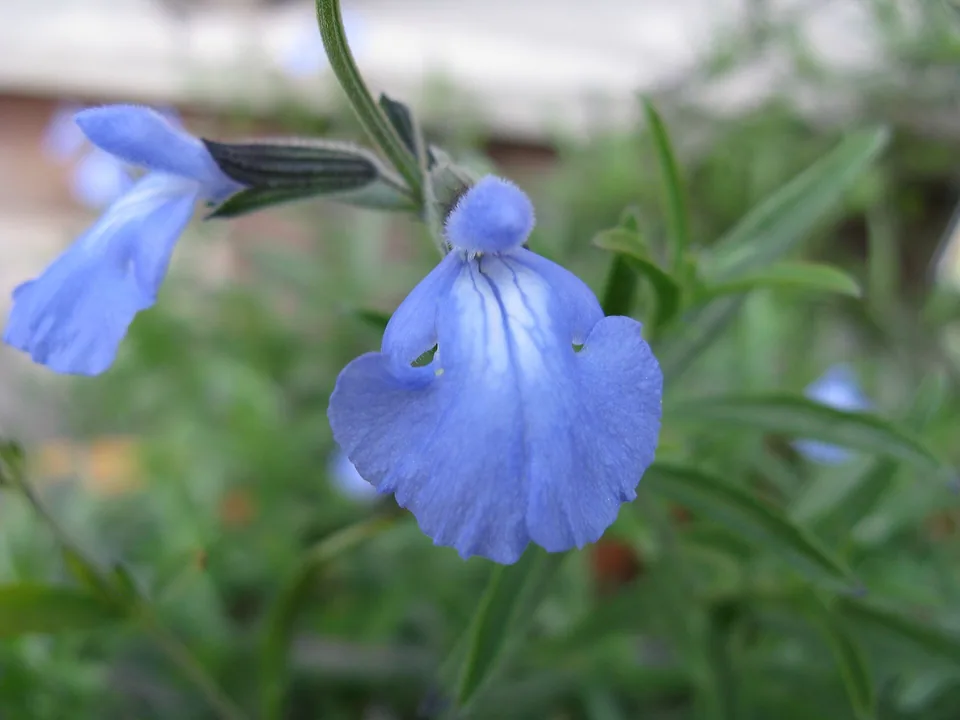
Blue sage is a herbaceous perennial wildflower with showy blue flowers that attract bees and butterflies. [1] It grows in full sun to partial shade and prefers moist, well-drained soil. [1] Stems are cut back by half in late spring to keep growth compact. [1]
Blue Sage care
How to water Blue Sage
Prefers moist soil with good drainage; tolerates occasional drought
What the sources say (1)
It prefers moist soil as long as there is good drainage but tolerates occasional drought.How much light Blue Sage needs
Full sun to partial shade
What the sources say (1)
Plant blue sage in full sun to partial shade in sandy or shallow-rocky soil.How much cold Blue Sage can take
Hardiness, coldest zone
5a [winter low −28.9 to −26.1 °C (−20 to −15 °F)]
What the sources say (1)
USDA Plant Hardiness Zone:
5a, 5b, 6a, 6b, 7a, 7b, 8a, 8b, 9a, 9bHardiness, warmest zone
9b [winter low −3.9 to −1.1 °C (25 to 30 °F)]
What the sources say (1)
USDA Plant Hardiness Zone:
5a, 5b, 6a, 6b, 7a, 7b, 8a, 8b, 9a, 9bHow to propagate Blue Sage
Division, seed
How to grow Blue Sage
The plant
Life cycle
perennial
What the sources say (1)
Blue sage is a delicate, herbaceous perennial wildflower in the mint family (Lamiaceae) native to the South and Central United States.Family
Lamiaceae
What the sources say (1)
Blue sage is a delicate, herbaceous perennial wildflower in the mint family (Lamiaceae) native to the South and Central United States.Mature height
91.44-152.4 cm (3-5 ft)
What the sources say (1)
Blue sage grows 3 to 5 feet tall and has showy blue flowers that attract bees and butterflies.Fertilizing
When
The sources give different values depending on region, zone or growing conditions.
What each source says
Salvia in general: Each spring
What the sources say (1)
Salvia in general: Additionally, salvia will do best with an application of a balanced, slow-release fertilizer each spring.How often
The sources give different values depending on region, zone or growing conditions.
What each source says
Salvia in general: Once a year, in spring
What the sources say (1)
Salvia in general: Additionally, salvia will do best with an application of a balanced, slow-release fertilizer each spring.Mineral fertilizers
The sources give different values depending on region, zone or growing conditions.
What each source says
Salvia in general: Balanced, slow-release fertilizer
What the sources say (1)
Salvia in general: Additionally, salvia will do best with an application of a balanced, slow-release fertilizer each spring.Blue Sage pests and problems
Floppy stems
Symptom: Stems can flop over with the weight of the flower spikes, especially in organically rich soils
What to do: Cut the stems back by half in the late spring
What the sources say (2)
as stems can flop over with the weight of the flower spikes.
— Salvia azurea (Blue Sage, Pitcher Sage) | North Carolina Extension Gardener Plant Toolbox [1] Cut the stems back by half in the late spring to promote fuller, more compact growth
— Salvia azurea (Blue Sage, Pitcher Sage) | North Carolina Extension Gardener Plant Toolbox [1]
Remedies
The sources we checked give no remedies for this plant.
Calendar
Pruning
Late spring (cut stems back by half)
What the sources say (1)
Cut the stems back by half in the late spring to promote fuller, more compact growthMonths as given by the sources, which are mostly from the United States (northern hemisphere). In the southern hemisphere they shift by about six months.
Indicative values
Values from a secondary source, not checked word for word like the rest of this page. Use them as a starting point.
- Hours of sun
- 6-8 hoursIndicative value, adapt it to your climate · Secondary source
- Drought tolerant
- yesIndicative value, adapt it to your climate · Secondary source
- Soil pH
- 6-7.5Indicative value, adapt it to your climate · Secondary source
- Care level
- MediumIndicative value, adapt it to your climate · Secondary source
- Growth rate
- LowIndicative value, adapt it to your climate · Secondary source
Similar plants
- Anise Sage Salvia guaranitica
- Arrowleaf Sage Salvia sagittata
- Autumn Sage Salvia greggii
- Bog Sage Salvia uliginosa
- Cedar Sage Salvia roemeriana
- Clary Sage Salvia sclarea
- Little Leaf Sage Salvia microphylla
- Lyreleaf Sage Salvia lyrata
Sources
Every value above is quoted from these documents. Links lead to the original publisher.
- Salvia azurea (Blue Sage, Pitcher Sage) | North Carolina Extension Gardener Plant Toolbox · plants.ces.ncsu.edu, consulted
- Blue Sage - Salvia azurea | North Carolina Extension Gardener Plant Toolbox · plants.ces.ncsu.edu, consulted
- Salvia (Sage, Salvia) | North Carolina Extension Gardener Plant Toolbox · plants.ces.ncsu.edu, consulted
- Salvia - Salvia | North Carolina Extension Gardener Plant Toolbox · plants.ces.ncsu.edu, consulted
- gardeningsolutions.ifas.ufl.edu · gardeningsolutions.ifas.ufl.edu
Written by Emilio Marruso · last checked