
How to Grow and Care for Autumn Sage
Salvia greggii
Written by Emilio Marruso · last checked
At a glance
This salvia is a tough, easy perennial: it loves full sun, handles drought well and asks only for well-drained soil. It grows 2–3 ft tall and wide and roots easily from cuttings. Its leaves season dishes and teas, fresh or dried, and the flowers are edible too. Often, a little compost at planting is all the feeding it needs.
- Sun
Full sun; in very hot summers it accepts afternoon shade
What the sources say (3)
Light: Full sun; tolerates afternoon shade in regions with high summer heat
This sage prefers full sun but tolerates afternoon shade in regions with high summer heat.
— Salvia greggii (Autumn Sage, Red Chihuahuan Sage, Texas Sage) | North Carolina Extension Gardener Plant Toolbox [1] Autumn sage is best in full sun in a well drained, somewhat sandy site.
— Autumn Sage [3] They need excellent drainage and full sun. Many cultivars and hybrids are available in a wide range of colors
— Salvia | Home & Garden Information Center [4] - Water
Handles drought well
What the sources say (2)
Watering: Drought-tolerant; needs well-drained soil
It needs well-drained soil and tolerates rocky soil. The cultivar 'Wild Thing' reportedly has better winter hardiness than species plants. Propagate it by semi-ripe stem cuttings, which root easily. It is drought- and salt-tolerant.
— Salvia greggii (Autumn Sage, Red Chihuahuan Sage, Texas Sage) | North Carolina Extension Gardener Plant Toolbox [1] It has great heat and drought tolerance but only flowers well during more congenial weather.
— Autumn Sage [3] - Cold
Survives winters down to −10 °F (−23.3 °C)
Very hardy · USDA 6a · RHS H7 · Z6
What the sources say (2)
Hardiness, coldest zone: 6a [winter low −23.3 to −20.6 °C (−10 to −5 °F)]
USDA Plant Hardiness Zone: 6a, 6b, 7a, 7b, 8a, 8b, 9a, 9b
— Salvia greggii (Autumn Sage, Red Chihuahuan Sage, Texas Sage) | North Carolina Extension Gardener Plant Toolbox [1] Hardiness, warmest zone: 9b [winter low −3.9 to −1.1 °C (25 to 30 °F)]
USDA Plant Hardiness Zone: 6a, 6b, 7a, 7b, 8a, 8b, 9a, 9b
— Salvia greggii (Autumn Sage, Red Chihuahuan Sage, Texas Sage) | North Carolina Extension Gardener Plant Toolbox [1] - Soil
Well-drained soil; heavy, wet ground in winter harms it
What the sources say (3)
Watering: Drought-tolerant; needs well-drained soil
It needs well-drained soil and tolerates rocky soil. The cultivar 'Wild Thing' reportedly has better winter hardiness than species plants. Propagate it by semi-ripe stem cuttings, which root easily. It is drought- and salt-tolerant.
— Salvia greggii (Autumn Sage, Red Chihuahuan Sage, Texas Sage) | North Carolina Extension Gardener Plant Toolbox [1] It has great heat and drought tolerance but only flowers well during more congenial weather.
— Autumn Sage [3] Watering notes: Resents heavy, wet soils in the winter
dryland plants of the American southwest it resents heavy, wet soils in the winter.
— Autumn Sage [3] - Planting
Plant in early spring, especially where winters are cold
What the sources say (1)
Planting: Early spring (to improve establishment in the northern part of its hardiness range)
To increase the chance of it getting established in the northern part of its hardiness range, it should be planted in the garden only in early spring.
— Autumn Sage [3] - Feeding
Compost at planting is often enough; too much fertilizer brings fungal disease
What the sources say (2)
Natural fertilizers: Compost in a well-prepared soil; many perennial salvias then need no supplemental fertilizer
Many perennial salvias will grow well without supplemental fertility if sited in a well-prepared soil containing compost.
— Salvia | Home & Garden Information Center [4] Avoid: Excessive fertilizer, which can increase fungal disease problems
Excessive water and fertilizer can increase fungal disease problems for salvias.
— Salvia | Home & Garden Information Center [4] - Harvest
Use the leaves fresh or dried for seasoning and tea; the flowers are edible
- Watch out
It may freeze back in winter, but it usually regrows from the base
- Size
2–3 ft tall and wide
What the sources say (3)
Mature height: 61-91 cm (2-3 ft)
Growing 2 to 3 feet tall and wide, it is native to Texas and Mexico and found mainly on rocky slopes.
— Salvia greggii (Autumn Sage, Red Chihuahuan Sage, Texas Sage) | North Carolina Extension Gardener Plant Toolbox [1] Autumn Sage ( Salvia greggii ): These shrubby sages are popular for their brilliant colors and drought tolerance. They bloom throughout the summer and heavily in autumn. They need excellent drainage and full sun. Many cultivars and hybrids are available in a wide range of colors and habits; however, most cultivars will reach 2 to 3 feet tall.
— Salvia | Home & Garden Information Center [4] Mature width: 61-91 cm (2-3 ft)
Growing 2 to 3 feet tall and wide, it is native to Texas and Mexico and found mainly on rocky slopes.
— Salvia greggii (Autumn Sage, Red Chihuahuan Sage, Texas Sage) | North Carolina Extension Gardener Plant Toolbox [1] - Propagation
Semi-ripe cuttings root easily; it also grows from seed
What the sources say (2)
Propagation: Semi-ripe stem cuttings (root easily); seed
Propagate it by semi-ripe stem cuttings, which root easily.
— Salvia greggii (Autumn Sage, Red Chihuahuan Sage, Texas Sage) | North Carolina Extension Gardener Plant Toolbox [1] Recommended Propagation Strategy: Seed Stem Cutting Country Or Region Of Origin:
— Salvia greggii (Autumn Sage, Red Chihuahuan Sage, Texas Sage) | North Carolina Extension Gardener Plant Toolbox [1]
Overview
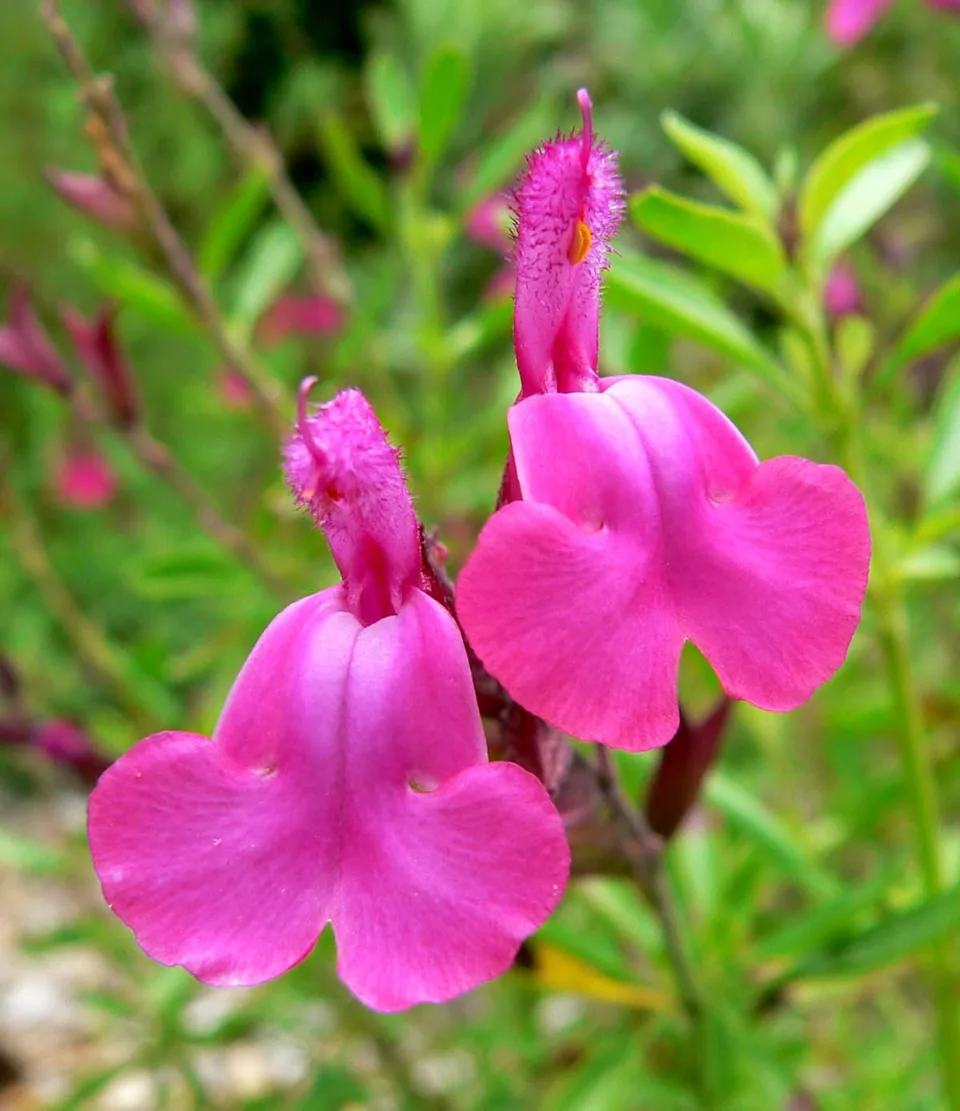
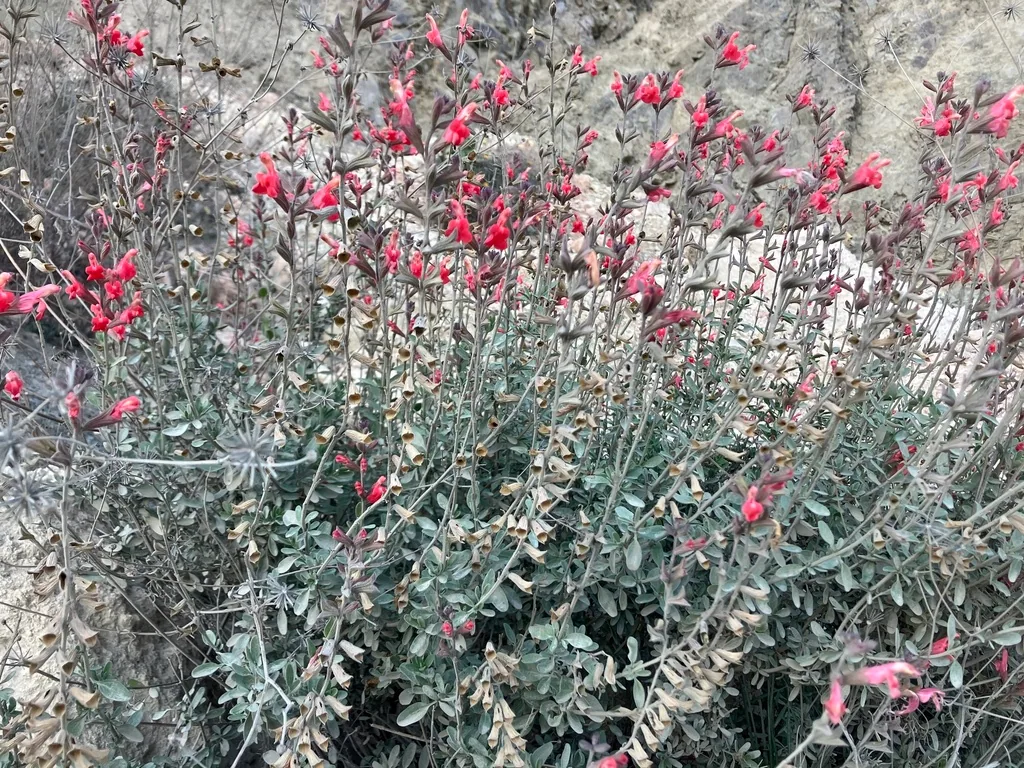
Autumn sage is a small herbaceous perennial or semi-woody sub-shrub in the mint family, growing 2 to 3 feet [61–91 cm] tall and wide. [1] It prefers full sun, needs well-drained soil and is drought- and salt-tolerant. [1] It attracts butterflies, hummingbirds and other pollinators and is seldom damaged by deer. [1]
This record is incomplete: the sources we read do not cover every field yet.
Not yet covered by our sources: Pruning
Autumn Sage care
Measurements in square brackets are our conversion into the other unit system; the quoted text is unchanged.
How to water Autumn Sage
Watering
Drought-tolerant; needs well-drained soil
What the sources say (2)
It needs well-drained soil and tolerates rocky soil. The cultivar 'Wild Thing' reportedly has better winter hardiness than species plants. Propagate it by semi-ripe stem cuttings, which root easily. It is drought- and salt-tolerant.It has great heat and drought tolerance but only flowers
well during more congenial weather.Watering notes
Resents heavy, wet soils in the winter
What the sources say (1)
dryland plants of the American southwest it resents heavy, wet soils in the winter.How much light Autumn Sage needs
Full sun; tolerates afternoon shade in regions with high summer heat
What the sources say (3)
This sage prefers full sun but tolerates afternoon shade in regions with high summer heat.Autumn sage is best in full sun in a well drained, somewhat sandy site.They need excellent drainage and full sun. Many cultivars and hybrids are available in a wide range of colorsHow much cold Autumn Sage can take
Hardiness, coldest zone
6a [winter low −23.3 to −20.6 °C (−10 to −5 °F)]
What the sources say (1)
USDA Plant Hardiness Zone:
6a, 6b, 7a, 7b, 8a, 8b, 9a, 9bHardiness, warmest zone
9b [winter low −3.9 to −1.1 °C (25 to 30 °F)]
What the sources say (1)
USDA Plant Hardiness Zone:
6a, 6b, 7a, 7b, 8a, 8b, 9a, 9bHow to propagate Autumn Sage
Semi-ripe stem cuttings (root easily); seed
What the sources say (2)
Propagate it by semi-ripe stem cuttings, which root easily.Recommended Propagation Strategy:
Seed
Stem Cutting
Country Or Region Of Origin:How to grow Autumn Sage
The plant
Life cycle
perennial
What the sources say (1)
Autumn sage is a small, herbaceous perennial or semi-woody sub-shrub in the mint family (Lamiaceae).Family
Lamiaceae
What the sources say (1)
Autumn sage is a small, herbaceous perennial or semi-woody sub-shrub in the mint family (Lamiaceae).Mature height
61-91 cm (2-3 ft)
What the sources say (2)
Growing 2 to 3 feet tall and wide, it is native to Texas and Mexico and found mainly on rocky slopes.Autumn Sage ( Salvia greggii ): These shrubby sages are popular for their brilliant colors and drought tolerance. They bloom throughout the summer and heavily in autumn. They need excellent drainage and full sun. Many cultivars and hybrids are available in a wide range of colors and habits; however, most cultivars will reach 2 to 3 feet tall.Mature width
61-91 cm (2-3 ft)
What the sources say (1)
Growing 2 to 3 feet tall and wide, it is native to Texas and Mexico and found mainly on rocky slopes.Fertilizing
Natural fertilizers
Compost in a well-prepared soil; many perennial salvias then need no supplemental fertilizer
What the sources say (1)
Many perennial salvias will grow well without supplemental fertility if sited in a well-prepared soil containing compost.Avoid
Excessive fertilizer, which can increase fungal disease problems
What the sources say (1)
Excessive water and fertilizer can increase fungal disease problems for salvias.Autumn Sage pests and problems
Winter freeze-back
Symptom: It may freeze back during the winter
What to do: It usually regrows from the larger branches at the base of the plant.
What the sources say (1)
It may freeze back during the winter but usually regrows from the larger branches at the base of the plant.
— Autumn Sage [3]
Remedies
Each remedy shows what official sources say about it; traditional remedies without an official source are marked as such. Harmful ones are listed so you know to avoid them.
Treating the plant
aphids
dish soap spray Not proven
How: Wash the insects off with a soapy solution of diluted dish soap and spray regularly to keep on top of the problem.
Wash the insects off with a soapy solution of diluted dish soap and spray regularly to keep on top of the problem.
— hunker.com [6] What the evidence says Despite being made of common household materials like dish soap and vinegar and having seemingly fewer risks, these concoctions may have unforeseen consequences
— extension.unh.edu [7]
slugs
wood ash or gritty sand ring Not verified
Traditional remedy, not verified by an official source.
How: Putting wood ash or gritty sand in a ring around the plant will deter slugs without having to resort to slug pellets.
beer saucer trap Not verified
Traditional remedy, not verified by an official source.
How: Otherwise watch for their trails and lure them away with a saucer of beer to one side.
caterpillars
hand picking Not verified
Traditional remedy, not verified by an official source.
How: Examine the leaves top and underside and pick off the caterpillars, shaking the leaves clean.
powdery mildew
chamomile companion planting Not verified
Traditional remedy, not verified by an official source.
How: Or, you could grow chamomile as a companion plant to prevent further fungal growth.
removing infected leaves Not verified
Traditional remedy, not verified by an official source.
How: At worst, you may need to remove infected leaves outright.
Calendar
Planting
Early spring (to improve establishment in the northern part of its hardiness range)
What the sources say (1)
To increase the chance of it getting established
in the northern part of its hardiness range, it should be planted in the garden only
in early spring.Pruning
Not stated in the sources we read.
Months as given by the sources, which are mostly from the United States (northern hemisphere). In the southern hemisphere they shift by about six months.
Edibility
Reported by the source, quoted verbatim. Do not eat a plant on the basis of this page alone: identification mistakes can be dangerous.
Indicative values
Values from a secondary source, not checked word for word like the rest of this page. Use them as a starting point.
- Hours of sun
- 6-8 hoursIndicative value, adapt it to your climate · Secondary source · Data for the variety Salvia greggii 'Radio Red'
- Drought tolerant
- yesIndicative value, adapt it to your climate · Secondary source · Data for the variety Salvia greggii 'Radio Red'
- Soil pH
- 6-7.5Indicative value, adapt it to your climate · Secondary source · Data for the variety Salvia greggii 'Radio Red'
- Care level
- MediumIndicative value, adapt it to your climate · Secondary source · Data for the variety Salvia greggii 'Radio Red'
- Growth rate
- LowIndicative value, adapt it to your climate · Secondary source · Data for the variety Salvia greggii 'Radio Red'
- Pruning
- September, October, November, May, June, July, August, December, January, February, March, April, MayIndicative value, adapt it to your climate · Secondary source · Data for the variety Salvia greggii 'Radio Red'
Similar plants
- Anise Sage Salvia guaranitica
- Arrowleaf Sage Salvia sagittata
- Blue Sage Salvia azurea
- Bog Sage Salvia uliginosa
- Cedar Sage Salvia roemeriana
- Clary Sage Salvia sclarea
- Little Leaf Sage Salvia microphylla
- Lyreleaf Sage Salvia lyrata
Sources
Every value above is quoted from these documents. Links lead to the original publisher.
- Salvia greggii (Autumn Sage, Red Chihuahuan Sage, Texas Sage) | North Carolina Extension Gardener Plant Toolbox · plants.ces.ncsu.edu, consulted
- Autumn Sage - Salvia greggii | North Carolina Extension Gardener Plant Toolbox · plants.ces.ncsu.edu, consulted
- Autumn Sage · uaex.uada.edu, consulted
- Salvia | Home & Garden Information Center · hgic.clemson.edu, consulted
- Salvia (Sage, Salvia) | North Carolina Extension Gardener Plant Toolbox · plants.ces.ncsu.edu, consulted
- hunker.com · hunker.com
- extension.unh.edu · extension.unh.edu
Written by Emilio Marruso · last checked