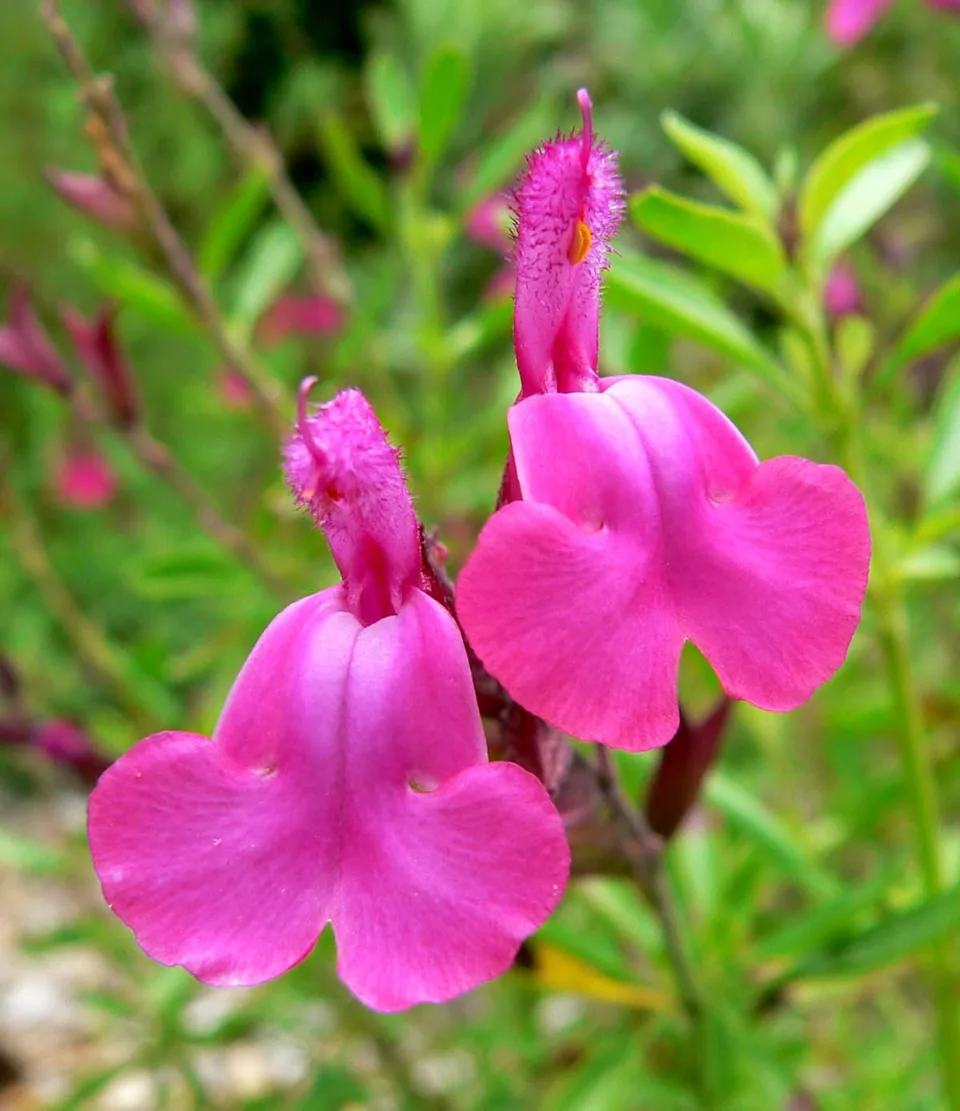
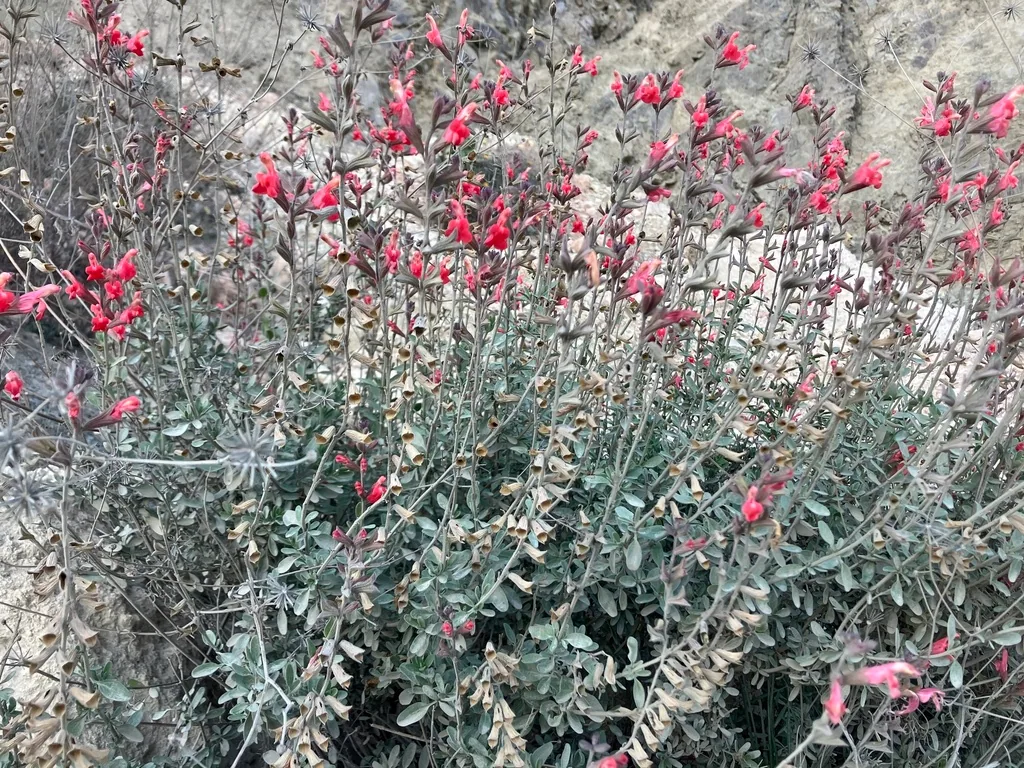

Cómo cultivar y cuidar Autumn Sage
Salvia greggii
Escrito por Emilio Marruso · última revisión
De un vistazo
Esta salvia es una vivaz resistente y fácil: le encanta el sol pleno, aguanta bien la sequía y solo pide un suelo bien drenado. Alcanza 60–90 cm de alto y de ancho y enraíza fácilmente por esquejes. Sus hojas, frescas o secas, sirven para condimentar y para infusiones, y las flores también se comen. Muchas veces le basta con algo de compost al plantar.
- Sol
Sol pleno; en veranos muy calurosos acepta sombra por la tarde
Qué dicen las fuentes (3)
Luz: Pleno sol; tolera sombra por la tarde en regiones con calor intenso en verano
This sage prefers full sun but tolerates afternoon shade in regions with high summer heat.
— Salvia greggii (Autumn Sage, Red Chihuahuan Sage, Texas Sage) | North Carolina Extension Gardener Plant Toolbox [1] Autumn sage is best in full sun in a well drained, somewhat sandy site.
— Autumn Sage [3] They need excellent drainage and full sun. Many cultivars and hybrids are available in a wide range of colors
— Salvia | Home & Garden Information Center [4] - Riego
Aguanta bien la sequía
Qué dicen las fuentes (2)
Riego: Tolerante a la sequía; necesita suelo bien drenado
It needs well-drained soil and tolerates rocky soil. The cultivar 'Wild Thing' reportedly has better winter hardiness than species plants. Propagate it by semi-ripe stem cuttings, which root easily. It is drought- and salt-tolerant.
— Salvia greggii (Autumn Sage, Red Chihuahuan Sage, Texas Sage) | North Carolina Extension Gardener Plant Toolbox [1] It has great heat and drought tolerance but only flowers well during more congenial weather.
— Autumn Sage [3] - Frío
Aguanta inviernos de hasta −23,3 °C (−10 °F)
Muy rústica · USDA 6a · RHS H7 · Z6
Qué dicen las fuentes (2)
Rusticidad, zona más fría: 6a [mínima invernal de −23,3 a −20,6 °C (de −10 a −5 °F)]
USDA Plant Hardiness Zone: 6a, 6b, 7a, 7b, 8a, 8b, 9a, 9b
— Salvia greggii (Autumn Sage, Red Chihuahuan Sage, Texas Sage) | North Carolina Extension Gardener Plant Toolbox [1] Rusticidad, zona más cálida: 9b [mínima invernal de −3,9 a −1,1 °C (de 25 a 30 °F)]
USDA Plant Hardiness Zone: 6a, 6b, 7a, 7b, 8a, 8b, 9a, 9b
— Salvia greggii (Autumn Sage, Red Chihuahuan Sage, Texas Sage) | North Carolina Extension Gardener Plant Toolbox [1] - Suelo
Suelo bien drenado; la tierra pesada y húmeda en invierno la perjudica
Qué dicen las fuentes (3)
Riego: Tolerante a la sequía; necesita suelo bien drenado
It needs well-drained soil and tolerates rocky soil. The cultivar 'Wild Thing' reportedly has better winter hardiness than species plants. Propagate it by semi-ripe stem cuttings, which root easily. It is drought- and salt-tolerant.
— Salvia greggii (Autumn Sage, Red Chihuahuan Sage, Texas Sage) | North Carolina Extension Gardener Plant Toolbox [1] It has great heat and drought tolerance but only flowers well during more congenial weather.
— Autumn Sage [3] Notas sobre el riego: No tolera los suelos pesados y húmedos en invierno
dryland plants of the American southwest it resents heavy, wet soils in the winter.
— Autumn Sage [3] - Plantación
Planta a principios de primavera, sobre todo donde los inviernos son fríos
Qué dicen las fuentes (1)
Plantación: Principios de primavera (para mejorar el establecimiento en la parte norte de su rango de resistencia)
To increase the chance of it getting established in the northern part of its hardiness range, it should be planted in the garden only in early spring.
— Autumn Sage [3] - Abonado
Suele bastar con compost al plantar; el exceso de abono favorece los hongos
Qué dicen las fuentes (2)
Abonos naturales: Compost en un suelo bien preparado; muchas salvias perennes no necesitan fertilizante adicional
Many perennial salvias will grow well without supplemental fertility if sited in a well-prepared soil containing compost.
— Salvia | Home & Garden Information Center [4] Evitar: Exceso de fertilizante, que puede aumentar los problemas de enfermedades fúngicas
Excessive water and fertilizer can increase fungal disease problems for salvias.
— Salvia | Home & Garden Information Center [4] - Cosecha
Usa las hojas frescas o secas para condimentar e infusiones; las flores son comestibles
- Atención
En invierno puede helarse, pero suele rebrotar desde la base
- Tamaño
60–90 cm de alto y de ancho
Qué dicen las fuentes (3)
Altura adulta: 61-91 cm (2-3 pies)
Growing 2 to 3 feet tall and wide, it is native to Texas and Mexico and found mainly on rocky slopes.
— Salvia greggii (Autumn Sage, Red Chihuahuan Sage, Texas Sage) | North Carolina Extension Gardener Plant Toolbox [1] Autumn Sage ( Salvia greggii ): These shrubby sages are popular for their brilliant colors and drought tolerance. They bloom throughout the summer and heavily in autumn. They need excellent drainage and full sun. Many cultivars and hybrids are available in a wide range of colors and habits; however, most cultivars will reach 2 to 3 feet tall.
— Salvia | Home & Garden Information Center [4] Anchura adulta: 61-91 cm (2-3 pies)
Growing 2 to 3 feet tall and wide, it is native to Texas and Mexico and found mainly on rocky slopes.
— Salvia greggii (Autumn Sage, Red Chihuahuan Sage, Texas Sage) | North Carolina Extension Gardener Plant Toolbox [1] - Multiplicación
Los esquejes semileñosos enraízan con facilidad; también se reproduce por semilla
Qué dicen las fuentes (2)
Propagación: Esquejes de tallo semimaduros (enraízan fácilmente); semilla
Propagate it by semi-ripe stem cuttings, which root easily.
— Salvia greggii (Autumn Sage, Red Chihuahuan Sage, Texas Sage) | North Carolina Extension Gardener Plant Toolbox [1] Recommended Propagation Strategy: Seed Stem Cutting Country Or Region Of Origin:
— Salvia greggii (Autumn Sage, Red Chihuahuan Sage, Texas Sage) | North Carolina Extension Gardener Plant Toolbox [1]
Resumen
La salvia de otoño es una pequeña herbácea perenne o subarbusto semileñoso de la familia de la menta, que crece de 2 a 3 pies [61–91 cm] de alto y ancho. [1] Prefiere pleno sol, necesita suelo bien drenado y es tolerante a la sequía y la sal. [1] Atrae mariposas, colibríes y otros polinizadores y rara vez es dañada por los ciervos. [1]
Citado en inglés, como en la fuente.
Esta ficha está incompleta: las fuentes consultadas aún no cubren todos los campos.
Aún no cubierto por nuestras fuentes: Poda
Cuidados
Las medidas entre corchetes son nuestra conversión al otro sistema de unidades; el texto citado no cambia.
Riego
Riego
Tolerante a la sequía; necesita suelo bien drenado
Qué dicen las fuentes (2)
It needs well-drained soil and tolerates rocky soil. The cultivar 'Wild Thing' reportedly has better winter hardiness than species plants. Propagate it by semi-ripe stem cuttings, which root easily. It is drought- and salt-tolerant.It has great heat and drought tolerance but only flowers
well during more congenial weather.Notas sobre el riego
No tolera los suelos pesados y húmedos en invierno
Qué dicen las fuentes (1)
dryland plants of the American southwest it resents heavy, wet soils in the winter.Luz
Pleno sol; tolera sombra por la tarde en regiones con calor intenso en verano
Qué dicen las fuentes (3)
This sage prefers full sun but tolerates afternoon shade in regions with high summer heat.Autumn sage is best in full sun in a well drained, somewhat sandy site.They need excellent drainage and full sun. Many cultivars and hybrids are available in a wide range of colorsClima y frío
Rusticidad, zona más fría
6a [mínima invernal de −23,3 a −20,6 °C (de −10 a −5 °F)]
Qué dicen las fuentes (1)
USDA Plant Hardiness Zone:
6a, 6b, 7a, 7b, 8a, 8b, 9a, 9bRusticidad, zona más cálida
9b [mínima invernal de −3,9 a −1,1 °C (de 25 a 30 °F)]
Qué dicen las fuentes (1)
USDA Plant Hardiness Zone:
6a, 6b, 7a, 7b, 8a, 8b, 9a, 9bPropagación
Esquejes de tallo semimaduros (enraízan fácilmente); semilla
Qué dicen las fuentes (2)
Propagate it by semi-ripe stem cuttings, which root easily.Recommended Propagation Strategy:
Seed
Stem Cutting
Country Or Region Of Origin:Cultivo
La planta
Ciclo de vida
perenne
Qué dicen las fuentes (1)
Autumn sage is a small, herbaceous perennial or semi-woody sub-shrub in the mint family (Lamiaceae).Familia
Lamiaceae
Qué dicen las fuentes (1)
Autumn sage is a small, herbaceous perennial or semi-woody sub-shrub in the mint family (Lamiaceae).Altura adulta
61-91 cm (2-3 pies)
Qué dicen las fuentes (2)
Growing 2 to 3 feet tall and wide, it is native to Texas and Mexico and found mainly on rocky slopes.Autumn Sage ( Salvia greggii ): These shrubby sages are popular for their brilliant colors and drought tolerance. They bloom throughout the summer and heavily in autumn. They need excellent drainage and full sun. Many cultivars and hybrids are available in a wide range of colors and habits; however, most cultivars will reach 2 to 3 feet tall.Anchura adulta
61-91 cm (2-3 pies)
Qué dicen las fuentes (1)
Growing 2 to 3 feet tall and wide, it is native to Texas and Mexico and found mainly on rocky slopes.Abonado
Abonos naturales
Compost en un suelo bien preparado; muchas salvias perennes no necesitan fertilizante adicional
Qué dicen las fuentes (1)
Many perennial salvias will grow well without supplemental fertility if sited in a well-prepared soil containing compost.Evitar
Exceso de fertilizante, que puede aumentar los problemas de enfermedades fúngicas
Qué dicen las fuentes (1)
Excessive water and fertilizer can increase fungal disease problems for salvias.Problemas
Muerte regresiva por frío invernal
Síntoma: Puede sufrir muerte regresiva durante el invierno
Qué hacer: Por lo general, vuelve a crecer desde las ramas más grandes en la base de la planta.
Qué dicen las fuentes (1)
It may freeze back during the winter but usually regrows from the larger branches at the base of the plant.
— Autumn Sage [3]
Remedios
Cada remedio indica qué dicen las fuentes oficiales; los remedios tradicionales sin fuente oficial aparecen marcados. Los perjudiciales están para que sepas evitarlos.
Cuidar la planta
pulgones
spray de jabón para platos No demostrado
Cómo: Lava los insectos con una solución jabonosa de jabón de platos diluido y rocía regularmente para mantener el problema bajo control.
Wash the insects off with a soapy solution of diluted dish soap and spray regularly to keep on top of the problem.
— hunker.com [6] Qué dicen las pruebas Despite being made of common household materials like dish soap and vinegar and having seemingly fewer risks, these concoctions may have unforeseen consequences
— extension.unh.edu [7]
babosas
Anillo de ceniza de madera o arena gruesa No verificado
Remedio tradicional, no verificado por una fuente oficial.
Cómo: Pon ceniza de madera o arena gruesa en un anillo alrededor de la planta y disuade a las babosas sin tener que recurrir a los gránulos para babosas.
trampa de platillo con cerveza No verificado
Remedio tradicional, no verificado por una fuente oficial.
Cómo: De lo contrario, vigila sus rastros y atráelas con un platito de cerveza a un lado.
orugas
recogida manual No verificado
Remedio tradicional, no verificado por una fuente oficial.
Cómo: Examina la parte superior e inferior de las hojas y retira las orugas, sacudiendo las hojas para limpiarlas.
mildiu polvoriento
Plantación acompañante de manzanilla No verificado
Remedio tradicional, no verificado por una fuente oficial.
Cómo: O bien, puedes cultivar manzanilla como planta acompañante para prevenir el crecimiento de más hongos.
eliminando las hojas infectadas No verificado
Remedio tradicional, no verificado por una fuente oficial.
Cómo: En el peor de los casos, puede que necesites eliminar las hojas infectadas por completo.
Calendario
Plantación
Principios de primavera (para mejorar el establecimiento en la parte norte de su rango de resistencia)
Qué dicen las fuentes (1)
To increase the chance of it getting established
in the northern part of its hardiness range, it should be planted in the garden only
in early spring.Poda
No figura en las fuentes consultadas.
Meses tal como los dan las fuentes, en su mayoría de Estados Unidos (hemisferio norte). En el hemisferio sur se desplazan unos seis meses.
Comestibilidad
Según la fuente, citada textualmente. No comas una planta basándote solo en esta página: los errores de identificación pueden ser peligrosos.
Valores orientativos
Valores de una fuente secundaria, no comprobados palabra por palabra como el resto de esta página. Úselos como punto de partida.
- Horas de sol
- 6-8 horasValor orientativo, adáptalo a tu clima · Fuente secundaria · Dato de la variedad Salvia greggii 'Radio Red'
- Resiste la sequía
- SíValor orientativo, adáptalo a tu clima · Fuente secundaria · Dato de la variedad Salvia greggii 'Radio Red'
- pH del suelo
- 6-7.5Valor orientativo, adáptalo a tu clima · Fuente secundaria · Dato de la variedad Salvia greggii 'Radio Red'
- Nivel de cuidado
- MedioValor orientativo, adáptalo a tu clima · Fuente secundaria · Dato de la variedad Salvia greggii 'Radio Red'
- Crecimiento
- BajoValor orientativo, adáptalo a tu clima · Fuente secundaria · Dato de la variedad Salvia greggii 'Radio Red'
- Poda
- Septiembre, octubre, noviembre, mayo, junio, julio, agosto, diciembre, enero, febrero, marzo, abril, mayoValor orientativo, adáptalo a tu clima · Fuente secundaria · Dato de la variedad Salvia greggii 'Radio Red'
Plantas similares
- Anise Sage Salvia guaranitica
- Salvia real Salvia sagittata
- Blue Sage Salvia azurea
- Bog Sage Salvia uliginosa
- Cedar Sage Salvia roemeriana
- Esclarea Salvia sclarea
- Little Leaf Sage Salvia microphylla
- Lyreleaf Sage Salvia lyrata
Fuentes
Cada valor anterior se cita de estos documentos. Los enlaces llevan al editor original.
- Salvia greggii (Autumn Sage, Red Chihuahuan Sage, Texas Sage) | North Carolina Extension Gardener Plant Toolbox · plants.ces.ncsu.edu, consultado
- Autumn Sage - Salvia greggii | North Carolina Extension Gardener Plant Toolbox · plants.ces.ncsu.edu, consultado
- Autumn Sage · uaex.uada.edu, consultado
- Salvia | Home & Garden Information Center · hgic.clemson.edu, consultado
- Salvia (Sage, Salvia) | North Carolina Extension Gardener Plant Toolbox · plants.ces.ncsu.edu, consultado
- hunker.com · hunker.com
- extension.unh.edu · extension.unh.edu
Escrito por Emilio Marruso · última revisión