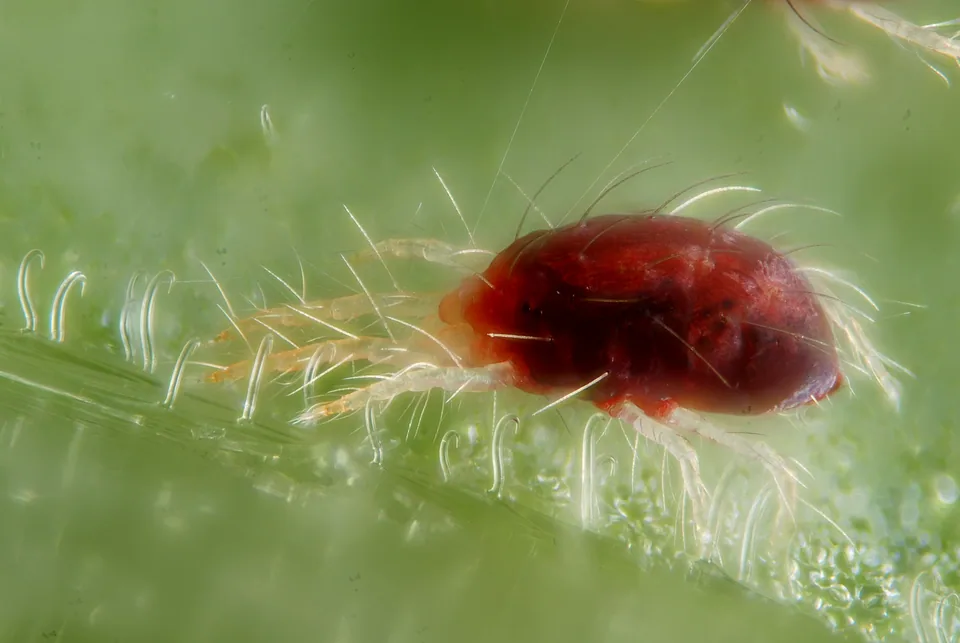

Mite
Spider mites
Tetranychidae
Written by Emilio Marruso
Classification: Arthropoda › Chelicerata › Arachnida › Acarida
Plants it attacks
Plants in our guide where this problem is reported. Open a plant to see the sources.
- Chenille Plant
Symptom: Can be a problem on a plant that otherwise has few pests.
- Copperleaf
Symptom: Listed as pests that can occur.
- Maidenhair
Symptom: Monitor for scale insects, spider mites, and mealybugs.
- Brittle Maidenhair Fern
Symptom: Pests to monitor for on the plant.
- Amazonian Zebra Plant
Symptom: Common pests to monitor for
- Lemon Verbena
Symptom: Occasional pest problems; no serious problems otherwise.
- Wood Anemone
Symptom: Potential pests
- Cape Mallow
Symptom: Watch for aphids, spider mites, and whiteflies
- Golden Columbine
Symptom: Spider mites and aphids may appear in hot and dry conditions.
- Utah Columbine
Symptom: Affect the plants in late summer as the leaves age
- Hedge Bamboo
Symptom: Insect pests listed for this plant
- Ponytail Palm
Symptom: Houseplants may experience damage from mealybug, scales, and spider mites.
Also reported on: Abies grandis, Adam's Needle, Afghan Redbud, African Marigold, Ageratum, Air Plant, Aji, Alpine Fir, Aluminum plant, Amazon Lily, American Arborvitae, American Butterfly Bush, American Climbing Fern, American Water-Pennywort, American Yew, Amethyst Flower, Angel's Trumpet, Angelica, Anthurium, Apricot, Areca Palm, Arrowhead, Arrowroot, Artillery Plant, Ashwagandha, Asian Pear, Asparagus Fern, Baboon Flower, Baby Rubber Plant, Balfour Aralia, Balloon Flower, Bamboo Palm, Barberton Daisy, Beach Morning-glory, Beaked Yucca, Bean, Bearberry Cotoneaster, Beebalm, Bellflower, Bells of Ireland, Bengal Fig, Bichetii Grass, Bird of Paradise, Bitter Melon, Black Cherry, Black Huckleberry, Black pepper, Black Raspberry, Black Spruce, Black-eyed Susan Vine, Blackberry, Blackberry, Blackhaw, Blue Daisy, Blue False Indigo, Blue Haw, Blue Passionflower, Blue spruce, Blue Star Fern, Blue-eyed Grass, Blushing Philodendron, Bog Sage, Boston Fern, Boxwood, Brazilian Coleus, Broad-Leaved Thyme, Brunfelsia, Bulltongue Arrowhead, Burning Bush, Butterfly Bush, Butterfly Ginger, Butterfly Pea, Button Fern, Buttonbush, Cabbage Tree, California Tickseed, Callery Pear, Canary Island Date Palm, Cannabis sativa, Cape Honeysuckle, Cape plumbago, Carnation, Carolina Phlox, Carolina Pink, Carolina Rose, Cassava, Cast Iron Plant, Castor Bean, Catnip, Caucasian Daphne, Century Plant, Chain-flowered Redbud, Cherokee Rose, Cherry Plum, Chestnut Vine, Chick pea, Chilean Glory Flower, China Rose, Chinese Alangium, Chinese Evergreen Viburnum, Chinese Juniper, Chinese Pittosporum, Chinese Quinine, Chinese Redbud, Chinese Snowball Viburnum, Chinese yam, Chisos Oak, Cinnamon Hoya, Climbing Prairie Rose, Coastal Plain Tickseed, Coastal Serviceberry, Coastal Sweet-pepperbush, Coco yam, Coffee, Coleus, Common hop, Common Hoya, Common Jasmine, Common Morning Glory, Common Mullein, Common turmeric, Coral Plant, Coriander, Corn, Corn Plant, Cotoneaster, Cowpea, Creeping Charlie, Creeping Cotton Easter, Creeping Fig, Creeping Juniper, Creeping Phlox, Creeping Thyme, Creeping Thyme, Creeping Zinnia, Crimson Bottle Brush, Croton, Crown of Thorns, Ctenanthe, Cuban Oregano, Cup and Saucer, Cushion Spurge, Cycad, Cypress, Dawn Redwood, Daylily, Daylily, Deodar Cedar, Desert Rose, Desert Zinnia, Dieffenbachia, Doublefile Viburnum, Downy Cherry, Downy Lobelia, Downy Phlox, Downy Thorn-Apple, Dragon Spruce, Drummond's Phlox, Dwarf Date Palm, Dwarf Morning Glory, Dwarf Umbrella Tree, Earth Star, Easter Lily Cactus, Eastern Redcedar, Echium wildpretii, Eggplant, Elder, English Ivy, English Yew, European Fan Palm, Evergreen Wisteria, Faba Bean, False Aralia, False Heather, Fatsia, Feverfew, Fiddle-leaf Fig, Fig, Fishtail Palm, Flowering Banana, Fountain Butterfly Bush, Fragrant Gladiolus, Fraser fir, French Marigold, Friendship Plant, Fung Wax Flower, Garden cucumber, Garden Phlox, Gardenia, Geranium Aralia, Giant Bamburanta, Giant Cane, Golden Globes Loosestrife, Graceful Spurge, Grassleaf Roseling, Greek Fir, Green Hawthorn, Green-Head Coneflower, Hairystem Spiderwort, Hall Crabapple, Hardy Fushia, Hawthorn, Hawthorn, Heart-leaf Hibiscus, Heather, Heliotrope, Hiba Arborvitae, Himalayan Spruce, Hirsute Raspberry, Hobblebush, Holly, Hoya, Impatiens, Inch Plant, Indian Corn Cob, Inkberry, Iron Cross Begonia, Italian Cypress, Ivy Leaf Peperomia, Jade Plant, Japanese Banana, Japanese Cedar, Japanese Clethra, Japanese Euonymus, Japanese Holly, Japanese Maple, Japanese Painted Fern, Japanese Skimmia, Japanese Sweet Flag, Jasminum sambac, Jewel Orchid, Jimsonweed, Joseph's Coat, Kangaroo Vine, Kaufmanniana Tulips, Kentia Palm, Kirilow Indigo, Kiwi, Kiwi, Korean Viburnum, Lady Banks, Lady Palm, Lantana, Lemon balm, Lemon Beebalm, Lemon grass, Lemon Marigold, Leopard's-Bane, Linden, Lion's Tail, Lipstick Plant, Lipstick Vine, Little Spurflower, Littleleaf Cotoneaster, Littleleaf Linden, Love-in-a-mist, Lucky Bamboo, Lyme Grass, Maiden Pink, Majesty Palm, Marjoram, Meadow Phlox, Melampodium, Mexican Fan Palm, Mexican Orange, Mexican Petunia, Ming Aralia, Mini Monstera, Mistletoe Cactus, Momi Fir, Monstera, Moonflower, Morning Glory, Morning Glory, Moss Phlox, Mountain Cabbage Tree, Mountain Hemlock, Mountain Hydrangea, Mountain Pepperbush, Mouseear Chickweed, Myrtle, Nest Fern, Nettleleaf Sage, New Guinea Impatiens, Nootka Cypress, Norfolk Island Pine, Oakleaf Hydrangea, Ohio Horsemint, Olive, Oregano, Oriental Arborvitae, Oriental Spruce, Ornamental Oregano, Oxlip, Pacific silver fir, Palm Lily, Panda Plant, Pandan, Papaya, Paradise apple, Parlor Palm, Parney Cotoneaster, Parrot's Beak, Passiflora edulis, Passionflower, Pear, Pentas, Peppermint, Persian Ivy, Persian Violet, Petrea, Pickle Plant, Pieris, Piggyback Plant, Pincushion Flower, Pineapple Sage, Pittosporum, Plains Zinnia, Poinsettia, Potato, Pothos, Prayer Plant, Pride of Barbados, Primrose, Prince's Feather, Princess Flower, Purple Bell Vine, Purple Shamrock, Purple Small-reed, Purple Velvet Plant, Pygmy Date Palm, Queen of Dracaenas, Queen of the Night, Rain Lily, Raspberry, Rattle Snake Plant, Red Jasmine, Red Ruellia, Red Spider Lily, Red Spruce, Redwood, Ripple Peperomia, Rockspray, Rocky Mountain Juniper, Rose-Painted Calathea, Rosemary, Rubber Plant, Rugosa Rose, Rusty Blackhaw, Sacred Datura, Sacred Lotus, Sage, Sageleaf Butterfly Bush, Satin Pothos, Scarlet Creeper, Scarlet Star, Scarlett Strawberry, Scotch Broom, Sentry Palm, Serbian Spruce, Shore Juniper, Shrubby Cinquefoil, Silkyleaf Broom, Silver Dollar, Silver Maple, Silver Squill, Silver Sword Philodendron, Smooth Phlox, Snake Plant, Soapweed Yucca, Spanish Flag, Spanish Lavender, Spearmint, Speedwell, Spider Plant, Spindle Tree, Spinulose Woodfern, Spotted Beebalm, Spurge, Staghorn Fern, Steeplebush, Stevia, Strawberry, String of Bananas, Stromanthe, Sweet almond, Sweet Almond Bush, Sweet bay, Sweet Coneflower, Sweet Flag, Sweet Pitcher Plant, Sweet Viburnum, Sweetheart Hoya, Switchgrass, Table mountain pine, Tarragon, Tea Camellia, Tea Crabapple, Tea Olive, Thanksgiving Cactus, Thimble Cactus, Thorny Olive, Thyme, Ti Plant, Tiger Lily, Trailing Lantana, Traveller's Palm, Tree Mallow, Tree Mallow, Tree Philodendron, Trident Maple, Trumpetbush, Turtle Vine, Umbrella Pine, Umbrella Plant, Venus flytrap, Virginia Rose, Walter's Viburnum, Watermelon, Watermelon Dischidia, Wax Plant, Waxflower, Weeping Fig, Weigela, Western Redbud, White Spruce, Wild Potato Vine, Willowleaf Cotoneaster, Winter savory, Wintergreen Cotoneaster, Woodland phlox, Wooly Thyme, Wright Viburnum, Xanadu Philodendron, Yaupon, Yellow Groove, Yucca brevifolia, Zebra Plant, Zigzag Crocosmia, Zinnia, ZZ Plant
Remedies
What our plant sheets report, with the outcome checked against official sources. Traditional remedies without an official source are flagged.
Treat
insecticidal soap spray Works
How: Spider mites are fairly easy to control with insecticidal soap spray.
Reported for 62 plants: Kiwi, Kiwi, Japanese Painted Fern, Baboon Flower, Chinese Redbud, Watermelon
insecticidal soap Works
How: Mix 5 tablespoons of liquid dishwashing detergent in 1 gallon of water; soap sprays only control mites and insects that are contacted directly, so spray thoroughly.
Reported for 37 plants: Sweet Almond Bush, Asparagus Fern, Cast Iron Plant, Hedge Bamboo, Nootka Cypress, Papaya
strong water spray Works
How: Hose trees with a strong stream of water to wash off spider mites, where practical.
Reported for 17 plants: Alpine Fir, Tea Camellia, European Fan Palm, Rockspray, Gardenia, Chinese Juniper
neem oil spray Works
How: Foliar spray with thorough coverage of the undersides of leaves.
Reported for 12 plants: Giant Bamburanta, Venus flytrap, Bengal Fig, Fiddle-leaf Fig, Olive, Canary Island Date Palm
forceful spray of water Works
How: Spray infested plants with a forceful spray of water to remove mites, eggs and webbing; repeat several times.
Reported for 7 plants: Cup and Saucer, Dieffenbachia, Pickle Plant, Lyme Grass, Arrowroot, Geranium Aralia
forceful water spray Works
How: Hosing tough plants with a forceful spray of water knocks off mites and destroys their webs.
Reported for 6 plants: Chenille Plant, Shrubby Cinquefoil, Tea Olive, Pandan, Drummond's Phlox, Bird of Paradise
insecticidal soap spray Partly works
How: Target the underside of leaves as well as the top; repeat applications may be needed.
Reported for 21 plants: Joseph's Coat, Ohio Horsemint, Cup and Saucer, Ctenanthe, Italian Cypress, Heliotrope
neem oil Partly works
How: Apply neem oil as needed after a strong spray of water.
Reported for 21 plants: Sweet Almond Bush, Cast Iron Plant, Hedge Bamboo, Blue False Indigo, Purple Small-reed, Evergreen Wisteria
neem oil spray Partly works
How: If you see small yellow dots along the leaves or fine webbing on the plants, use neem oil or an insecticidal spray.
Reported for 21 plants: Tarragon, Croton, False Heather, Italian Cypress, Lucky Bamboo, Thorny Olive
insecticidal soap Partly works
How: Target the underside of leaves as well as the top; repeat applications may be needed.
Reported for 19 plants: Chinese Alangium, Purple Small-reed, Evergreen Wisteria, Dwarf Morning Glory, Parney Cotoneaster, Watermelon Dischidia
forceful water spray Partly works
How: Spray plants with a forceful stream of water.
Reported for 8 plants: Nootka Cypress, Rose-Painted Calathea, Waxflower, Beach Morning-glory, Spanish Flag, Creeping Phlox
strong water spray Partly works
How: If mites become a problem, periodically wash down the plants with a strong spray of water and be sure to get good coverage of the lower leaf surfaces.
Reported for 5 plants: Blue Daisy, Japanese Banana, Bean, Purple Bell Vine, Blackhaw
strong water spray Official source, not independently tested
How: Hose trees with strong stream of water to wash off spider mites (where practical).
Reported for 12 plants: Pacific silver fir, Momi Fir, Evergreen Wisteria, Bearberry Cotoneaster, Watermelon Dischidia, Heliotrope
insecticidal soap Official source, not independently tested
How: Spray the affected area with insecticidal soap.
Reported for 11 plants: Greek Fir, Momi Fir, Iron Cross Begonia, Chain-flowered Redbud, Bichetii Grass, Cotoneaster
high-pressure water spray Official source, not independently tested
How: Use a high-pressure water spray to dislodge the mites; it can also wash away their protective webbing.
Reported for 8 plants: Chinese Alangium, Joseph's Coat, Dwarf Morning Glory, Easter Lily Cactus, Kirilow Indigo, Ornamental Oregano
insecticidal soap spray Official source, not independently tested
How: Apply insecticidal soap at least twice at 7-10 day intervals with thorough spray coverage.
Reported for 7 plants: Afghan Redbud, Western Redbud, Creeping Cotton Easter, Hawthorn, Green Hawthorn, Earth Star
neem oil spray Official source, not independently tested
How: Apply as for soap to cover the mites.
Reported for 4 plants: Cup and Saucer, Pincushion Flower, Winter savory, Steeplebush
horticultural oil Official source, not independently tested
How: Cover the upper and lower sides of leaves, as it works only on contact.
Reported for 3 plants: Lyme Grass, Chisos Oak, Satin Pothos
strong water spray Not verified
How: a strong water spray or miticide can help control an infestation
Reported for 14 plants: Fraser fir, Japanese Sweet Flag, Hedge Bamboo, Butterfly Pea, Parney Cotoneaster, Japanese Cedar
neem oil spray Not verified
How: Spider mites are fairly easy to control with neem oil.
Reported for 13 plants: Kiwi, Lipstick Plant, Rattle Snake Plant, Chick pea, Jade Plant, Ctenanthe
neem oil Not verified
How: Spray neem oil on the mites.
Reported for 10 plants: Kiwi, Coco yam, Umbrella Plant, Sentry Palm, Sweetheart Hoya, Cinnamon Hoya
raising humidity Not verified
How: Spider mites dislike humidity: raising it should get rid of them.
Reported for 4 plants: Zebra Plant, Rattle Snake Plant, Jewel Orchid, Hairystem Spiderwort
strong stream of water Not verified
How: A strong stream of water can help dislodge spider mites.
Reported for 4 plants: Silver Maple, Silver Dollar, Sacred Datura, Marjoram
water spray Not verified
How: Regularly spray the plants with water to increase humidity levels.
Reported for 4 plants: Scotch Broom, Echium wildpretii, Crown of Thorns, Potato
dish soap solution Not proven
How: Mix 3 tablespoons of liquid dish soap with 1 gallon of water and spray both sides of the leaves.
Reported for 1 plant: Japanese Holly
soap solution leaf cleaning Not proven
How: regularly clean the green leaves with a soapy water solution
Reported for 1 plant: Bamboo Palm
dish soap spray Harmful
How: Mix 1 tablespoon of dish washing liquid with 1 gallon of water.
dish soap and water spray Harmful
How: spray the plants with a mixture of water and a few drops of dish soap
Reported for 2 plants: Red Spider Lily, Blue Passionflower
castile soap spray Harmful
How: Mix 1 tablespoon of castile soap with 1 quart of warm water, spray the entire plant including the undersides of the leaves, repeat weekly for about a month.
Reported for 1 plant: Panda Plant
detergent wash with soft brush Harmful
How: Wash plants with soapy water and a soft brush, making sure to wash the undersides of leaves.
Reported for 1 plant: Little Spurflower
homemade soap solution Harmful
How: Insecticidal soaps are made from potassium salts of fatty acids.
Reported for 1 plant: Joseph's Coat
liquid soap spray Harmful
How: Mix 1 tablespoon of liquid soap with 1 gallon of water, pour it into a spray bottle and spray on leaves and stems; reapply after rain.
Reported for 1 plant: Boxwood
265 more remedies are reported in single plant sheets.
Where it is found
No distribution data.