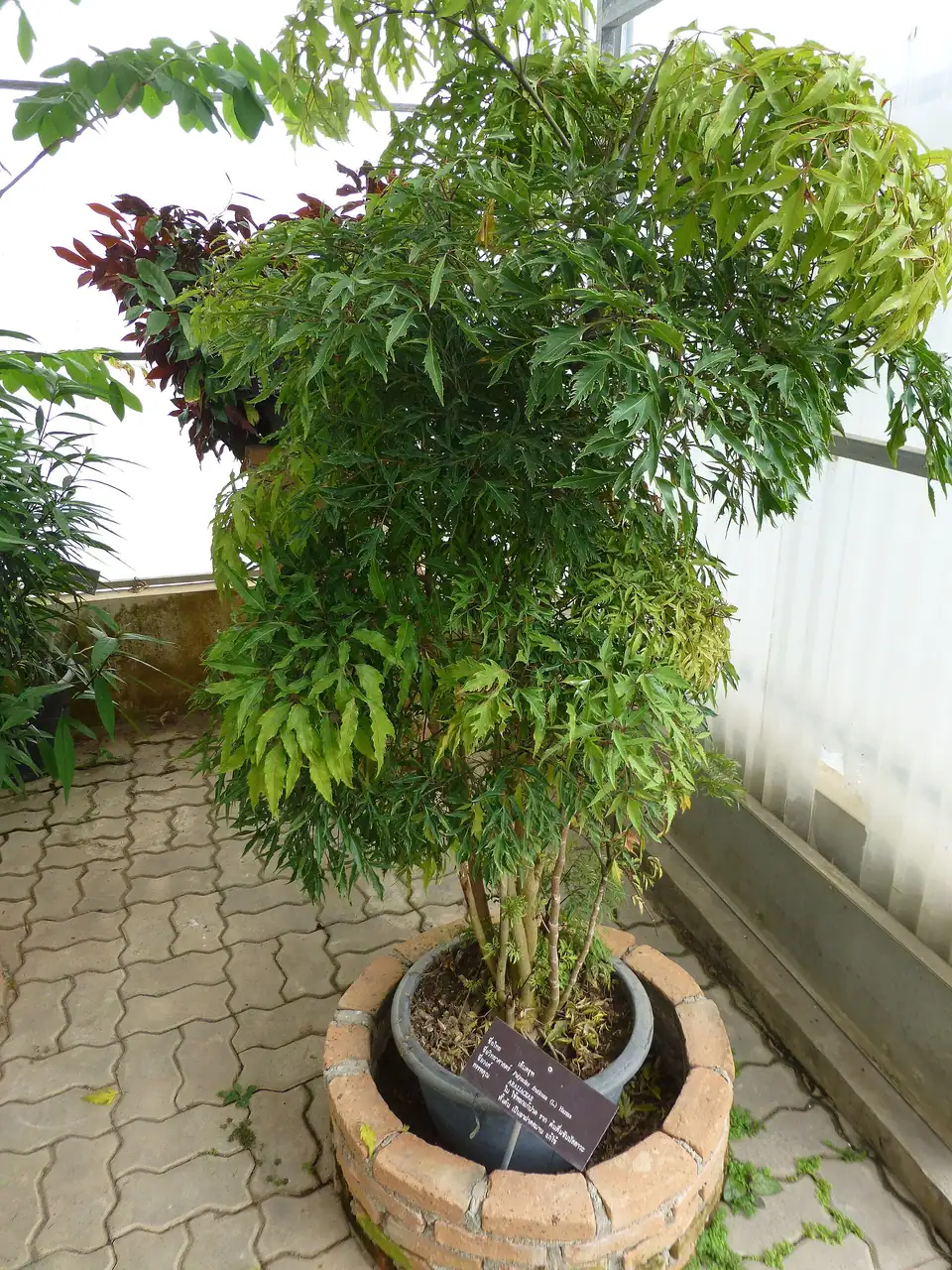


How to Grow and Care for Ming Aralia
Polyscias fruticosa
Written by Emilio Marruso · last checked
Toxic to: Cats, Dogs · Why
At a glance
This perennial is happy indoors and in pots, and it can grow 6–8 feet tall. Its care is simple: let the top 2 inches of soil dry before watering, and give it a little extra humidity with a tray of wet pebbles. As a bonus, its young leaves and shoots can be cooked as a vegetable or used for flavor.
- Water
Let the top 2 inches of soil dry before watering; soggy soil rots the roots
What the sources say (4)
Watering: Allow the top 2 inches (5 cm) of soil to dry before watering
Allow the top 2 inches of soil to dry before watering.
— Polyscias fruticosa (Ming Aralia, Ming Tree) | North Carolina Extension Gardener Plant Toolbox [1] Watering notes: Performs best in soil that is neither too wet nor too dry; wet or overly moist soil can cause root rot, while mites can appear in dry conditions; raise humidity with a humidifier or a tray of wet pebbles
It will perform best in soil that is neither too wet nor too dry.
— Polyscias fruticosa (Ming Aralia, Ming Tree) | North Carolina Extension Gardener Plant Toolbox [1] In wet or overly moist soils, root rot can occur. Mites can appear in dry conditions.
— Polyscias fruticosa (Ming Aralia, Ming Tree) | North Carolina Extension Gardener Plant Toolbox [1] To increase the interior humidity, consider using a humidifier or setting the plant container on a tray of wet pebbles.
— Polyscias fruticosa (Ming Aralia, Ming Tree) | North Carolina Extension Gardener Plant Toolbox [1] - Cold
Survives winters down to 40 °F (4.4 °C)
Tender: needs a frost-free greenhouse · USDA 11a · RHS H2 · Z11
What the sources say (2)
Hardiness, coldest zone: 11a [winter low 4.4 to 7.2 °C (40 to 45 °F)]
USDA Plant Hardiness Zone: 11a, 11b, 12a, 12b
— Polyscias fruticosa (Ming Aralia, Ming Tree) | North Carolina Extension Gardener Plant Toolbox [1] Hardiness, warmest zone: 12b [winter low 12.8 to 15.6 °C (55 to 60 °F)]
USDA Plant Hardiness Zone: 11a, 11b, 12a, 12b
— Polyscias fruticosa (Ming Aralia, Ming Tree) | North Carolina Extension Gardener Plant Toolbox [1] - Soil
Well-drained, acidic soil, pH 6.0 or lower
What the sources say (1)
Soil pH, maximum: 6.0
Soil pH: Acid (<6.0) Soil Drainage: Good Drainage
— Polyscias fruticosa (Ming Aralia, Ming Tree) | North Carolina Extension Gardener Plant Toolbox [1] - Harvest
Young leaves and shoots can be cooked as a vegetable or for flavor
- Pests
Watch for aphids, scale, mealybugs, whiteflies and mites; mites like dry air
What the sources say (5)
Pests: aphids, scales, mealybugs, whiteflies, nematodes, mites
Monitor of aphids, scales, mealybugs, whiteflies, and nematodes. In wet or overly moist soils, root rot can occur. Mites can appear in dry conditions.
— Polyscias fruticosa (Ming Aralia, Ming Tree) | North Carolina Extension Gardener Plant Toolbox [1] Diseases: root rot
In wet or overly moist soils, root rot can occur.
— Polyscias fruticosa (Ming Aralia, Ming Tree) | North Carolina Extension Gardener Plant Toolbox [1] Watering notes: Performs best in soil that is neither too wet nor too dry; wet or overly moist soil can cause root rot, while mites can appear in dry conditions; raise humidity with a humidifier or a tray of wet pebbles
It will perform best in soil that is neither too wet nor too dry.
— Polyscias fruticosa (Ming Aralia, Ming Tree) | North Carolina Extension Gardener Plant Toolbox [1] In wet or overly moist soils, root rot can occur. Mites can appear in dry conditions.
— Polyscias fruticosa (Ming Aralia, Ming Tree) | North Carolina Extension Gardener Plant Toolbox [1] To increase the interior humidity, consider using a humidifier or setting the plant container on a tray of wet pebbles.
— Polyscias fruticosa (Ming Aralia, Ming Tree) | North Carolina Extension Gardener Plant Toolbox [1] - Size
6–8 ft tall and 2–3 ft wide
What the sources say (2)
Mature height: 182.9-243.8 cm (6-8 ft)
Height: 6 ft. 0 in. - 8 ft. 0 in.
— Polyscias fruticosa (Ming Aralia, Ming Tree) | North Carolina Extension Gardener Plant Toolbox [1] Mature width: 61-91.4 cm (2-3 ft)
Width: 2 ft. 0 in. - 3 ft. 0 in.
— Polyscias fruticosa (Ming Aralia, Ming Tree) | North Carolina Extension Gardener Plant Toolbox [1] - Propagation
From leaf cuttings, stem cuttings or seed
What the sources say (1)
Propagation: Leaf cutting, seed, stem cutting
Recommended Propagation Strategy: Leaf Cutting Seed Stem Cutting Country Or Region Of Origin:
— Polyscias fruticosa (Ming Aralia, Ming Tree) | North Carolina Extension Gardener Plant Toolbox [1] - Containers
Grows well in pots and indoors; a tray of wet pebbles adds humidity
What the sources say (5)
In containers: Yes
Consider the Ming Aralia as an indoor container plant; however, it typically does not flower or produce fruit when grown indoors.
— Polyscias fruticosa (Ming Aralia, Ming Tree) | North Carolina Extension Gardener Plant Toolbox [1] Indoors: Yes
In NC, it is grown as a houseplant and grows only 6 to 8 feet tall.
— Polyscias fruticosa (Ming Aralia, Ming Tree) | North Carolina Extension Gardener Plant Toolbox [1] Watering notes: Performs best in soil that is neither too wet nor too dry; wet or overly moist soil can cause root rot, while mites can appear in dry conditions; raise humidity with a humidifier or a tray of wet pebbles
It will perform best in soil that is neither too wet nor too dry.
— Polyscias fruticosa (Ming Aralia, Ming Tree) | North Carolina Extension Gardener Plant Toolbox [1] In wet or overly moist soils, root rot can occur. Mites can appear in dry conditions.
— Polyscias fruticosa (Ming Aralia, Ming Tree) | North Carolina Extension Gardener Plant Toolbox [1] To increase the interior humidity, consider using a humidifier or setting the plant container on a tray of wet pebbles.
— Polyscias fruticosa (Ming Aralia, Ming Tree) | North Carolina Extension Gardener Plant Toolbox [1] - Safety
Can be harmful to cats and dogs: keep it out of their reach
Overview
Ming Aralia is a tropical evergreen shrub or short tree that is grown as a houseplant in North Carolina. [1] Young leaves and shoots are reported as cookable as a vegetable and flavoring. [1]
Ming Aralia care
How to water Ming Aralia
Watering
Allow the top 2 inches (5 cm) of soil to dry before watering
What the sources say (1)
Allow the top 2 inches of soil to dry before watering.Watering notes
Performs best in soil that is neither too wet nor too dry; wet or overly moist soil can cause root rot, while mites can appear in dry conditions; raise humidity with a humidifier or a tray of wet pebbles
What the sources say (3)
It will perform best in soil that is neither too wet nor too dry.In wet or overly moist soils, root rot can occur. Mites can appear in dry conditions.To increase the interior humidity, consider using a humidifier or setting the plant container on a tray of wet pebbles.How much light Ming Aralia needs
The sources give different values depending on region, zone or growing conditions.
What each source says
According to NC State Extension, Polyscias fruticosa: Bright indirect light
According to NC State Extension, genus Polyscias: Full sun to partial shade
What the sources say (4)
According to NC State Extension, Polyscias fruticosa: It needs bright indirect light, warm air temperatures, and medium to high humidity.According to NC State Extension, genus Polyscias: These plants prefer full sun to partial shade and moist, well-drained, acidic, organically rich soil.It needs bright indirect light, warm air temperatures, and medium to high humidity.Partial Shade (Direct sunlight only part of the day, 2-6 hours)How much cold Ming Aralia can take
Hardiness, coldest zone
11a [winter low 4.4 to 7.2 °C (40 to 45 °F)]
What the sources say (1)
USDA Plant Hardiness Zone:
11a, 11b, 12a, 12bHardiness, warmest zone
12b [winter low 12.8 to 15.6 °C (55 to 60 °F)]
What the sources say (1)
USDA Plant Hardiness Zone:
11a, 11b, 12a, 12bBest soil for Ming Aralia
6.0
What the sources say (1)
Soil pH:
Acid (<6.0)
Soil Drainage:
Good DrainageWhere to grow Ming Aralia
Indoors
Yes
What the sources say (1)
In NC, it is grown as a houseplant and grows only 6 to 8 feet tall.In containers
Yes
What the sources say (1)
Consider the Ming Aralia as an indoor container plant; however, it typically does not flower or produce fruit when grown indoors.How to propagate Ming Aralia
Leaf cutting, seed, stem cutting
What the sources say (1)
Recommended Propagation Strategy:
Leaf Cutting
Seed
Stem Cutting
Country Or Region Of Origin:How to grow Ming Aralia
The plant
Life cycle
perennial
What the sources say (1)
Life Cycle:
PerennialFamily
Araliaceae
What the sources say (1)
Family:
AraliaceaeMature height
182.9-243.8 cm (6-8 ft)
What the sources say (1)
Height: 6 ft. 0 in. - 8 ft. 0 in.Mature width
61-91.4 cm (2-3 ft)
What the sources say (1)
Width: 2 ft. 0 in. - 3 ft. 0 in.Pests and diseases
Pests
aphids, scales, mealybugs, whiteflies, nematodes, mites
What the sources say (1)
Monitor of aphids, scales, mealybugs, whiteflies, and nematodes. In wet or overly moist soils, root rot can occur. Mites can appear in dry conditions.Diseases
root rot
What the sources say (1)
In wet or overly moist soils, root rot can occur.Ming Aralia pests and problems
Root rot
Symptom: Root rot can occur in wet or overly moist soils.
What to do: Keep soil neither too wet nor too dry, with good drainage; allow the top 2 inches to dry before watering.
What the sources say (2)
In wet or overly moist soils, root rot can occur. Mites can appear in dry conditions.
— Polyscias fruticosa (Ming Aralia, Ming Tree) | North Carolina Extension Gardener Plant Toolbox [1] It can be grown in a variety of soil types, provided it receives good drainage.
— Polyscias fruticosa (Ming Aralia, Ming Tree) | North Carolina Extension Gardener Plant Toolbox [1] Aphids, scales, mealybugs, whiteflies, nematodes, mites
Symptom: Listed as insects and pests to monitor; mites can appear in dry conditions.
What to do: No control method is given; humidity can be raised with a humidifier or a tray of wet pebbles.
What the sources say (2)
Monitor of aphids, scales, mealybugs, whiteflies, and nematodes.
— Polyscias fruticosa (Ming Aralia, Ming Tree) | North Carolina Extension Gardener Plant Toolbox [1] To increase the interior humidity, consider using a humidifier or setting the plant container on a tray of wet pebbles.
— Polyscias fruticosa (Ming Aralia, Ming Tree) | North Carolina Extension Gardener Plant Toolbox [1]
Remedies
Each remedy shows what official sources say about it; traditional remedies without an official source are marked as such. Harmful ones are listed so you know to avoid them.
Treating the plant
sap-sucking pests
strong water spray Not verified
Traditional remedy, not verified by an official source.
How: Aphids, mealybugs, scale, whiteflies, and spider mites can often be rinsed off with a strong spray of water.
neem oil spray Partly works
Despite these being biological pesticides, it is important to read the directions on the label and wear safety equipment.
— extension.illinois.edu [7] Try to avoid using chemicals (especially indoors) as they can be damaging to Ming Aralias.
— plantcaretoday.com [8] How: Follow up with neem oil to control any lingering pests. Follow the manufacturer's directions for application.
Follow up with neem oil to control any lingering pests.
— gardenerspath.com [5] What the evidence says However, neem oil is not effective against every insect and disease, and often must be frequently reapplied to reach the desired outcome.
— extension.unh.edu [6]
mealybugs
cotton swab dipped in alcohol Not verified
Traditional remedy, not verified by an official source.
Try to avoid using chemicals (especially indoors) as they can be damaging to Ming Aralias.
— plantcaretoday.com [8] How: Check plants for pests regularly, and remove by hand with a cotton swab dipped in alcohol.
spider mites
raising humidity by misting Not verified
Traditional remedy, not verified by an official source.
How: Prevent spider mite attacks by increasing humidity and through regular misting. Keep plants away from other mite-susceptible house plants.
fungus gnats
yellow sticky traps Not verified
Traditional remedy, not verified by an official source.
How: Use yellow sticky traps to catch adults and apply neem oil to the soil to target larvae.
root rot
neem oil soil soak Partly works
Despite these being biological pesticides, it is important to read the directions on the label and wear safety equipment.
— extension.illinois.edu [7] How: Neem oil applied as a soil soak may be useful early on.
Neem oil applied as a soil soak may be useful early on.
— gardenerspath.com [5] What the evidence says However, neem oil is not effective against every insect and disease, and often must be frequently reapplied to reach the desired outcome.
— extension.unh.edu [6]
Is Ming Aralia toxic to pets?
Reported by the source, quoted verbatim. This is not medical or veterinary advice: if a person or an animal may have eaten this plant, contact a poison control centre or a veterinarian.
Resistance To Challenges: Humidity Problems: Problem for Cats Problem for Dogs
[1]
Edibility
Reported by the source, quoted verbatim. Do not eat a plant on the basis of this page alone: identification mistakes can be dangerous.
Young leaves and shoots can be cooked as a vegetable and flavoring.
[1]
Indicative values
Values from a secondary source, not checked word for word like the rest of this page. Use them as a starting point.
- Hours of sun
- 5-6 hoursIndicative value, adapt it to your climate · Secondary source
- Drought tolerant
- yesIndicative value, adapt it to your climate · Secondary source
- Soil
- Well-drainedIndicative value, adapt it to your climate · Secondary source
- Care level
- MediumIndicative value, adapt it to your climate · Secondary source
- Growth rate
- LowIndicative value, adapt it to your climate · Secondary source
- Pruning
- February, March, April, MayIndicative value, adapt it to your climate · Secondary source
Similar plants
- Balfour Aralia Polyscias balfouriana
- Geranium Aralia Polyscias guilfoylei
- American ginseng Panax quinquefolius
- American Water-Pennywort Hydrocotyle americana
- Angelica Tree Aralia elata
- Atlantic Ivy Hedera hibernica
- Castor aralia Kalopanax pictus
- Devil's club Oplopanax horridus
Sources
Every value above is quoted from these documents. Links lead to the original publisher.
- Polyscias fruticosa (Ming Aralia, Ming Tree) | North Carolina Extension Gardener Plant Toolbox · plants.ces.ncsu.edu, consulted
- Ming Aralia - Polyscias fruticosa | North Carolina Extension Gardener Plant Toolbox · plants.ces.ncsu.edu, consulted
- Ming Tree - Polyscias fruticosa | North Carolina Extension Gardener Plant Toolbox · plants.ces.ncsu.edu, consulted
- Ming aralia - Polyscias | North Carolina Extension Gardener Plant Toolbox · plants.ces.ncsu.edu, consulted
- gardenerspath.com · gardenerspath.com
- extension.unh.edu · extension.unh.edu
- extension.illinois.edu · extension.illinois.edu
- plantcaretoday.com · plantcaretoday.com
Written by Emilio Marruso · last checked