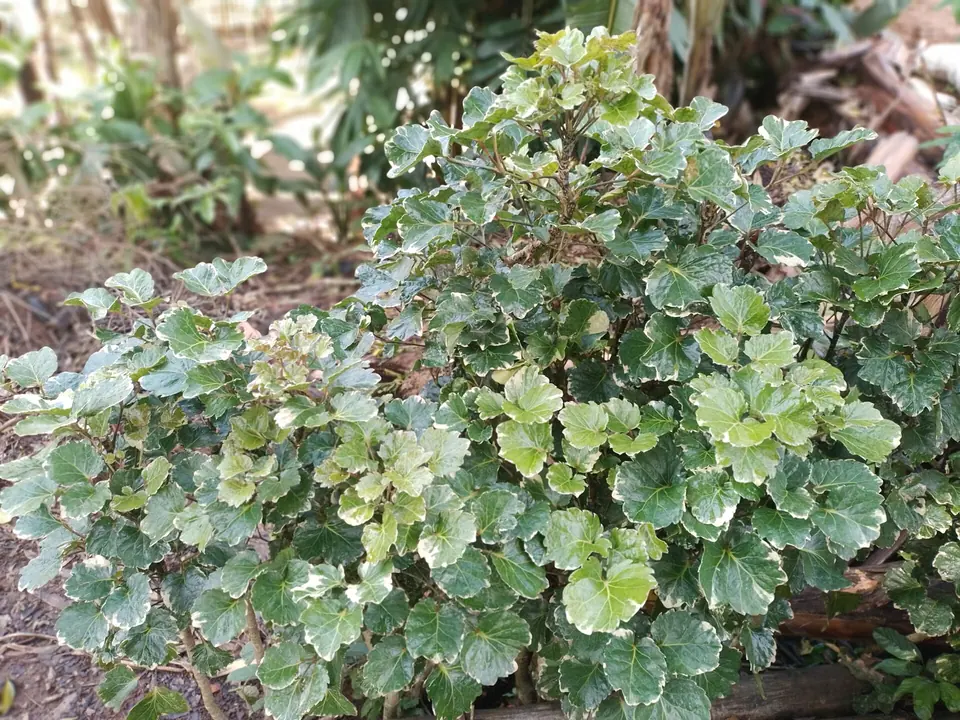


How to Grow and Care for Balfour Aralia
Polyscias balfouriana
Written by Emilio Marruso · last checked
Toxic to: People · Why
At a glance
This leafy perennial grows happily in a pot and even indoors, reaching 2 to 6 feet tall. Give it full sun or partial shade, keep the soil slightly damp and the air humid, and it will grow its best. You can also make new plants from stem cuttings or seed, so one plant can become many.
- Sun
Full sun; it also handles partial shade
What the sources say (1)
Light: Full sun; tolerates partial shade
Aralia Balfour prefers full sunlight but is tolerant of partial shade.
— Polyscias balfouriana (Aralia Balfour, Balfour Aralia, Balfour Polyscias, Dinner Plate Aralia, Plate Aralia) | North Carolina Extension Gardener Plant Toolbox [1] - Water
Keep the soil slightly damp and the air humid; the roots can rot
What the sources say (3)
Watering: Keep slightly damp
It grows best when kept slightly damp with good humidity as in a tropical climate
— Polyscias balfouriana (Aralia Balfour, Balfour Aralia, Balfour Polyscias, Dinner Plate Aralia, Plate Aralia) | North Carolina Extension Gardener Plant Toolbox [1] Watering notes: Grows best with good humidity; susceptible to root rot
It grows best when kept slightly damp with good humidity as in a tropical climate
— Polyscias balfouriana (Aralia Balfour, Balfour Aralia, Balfour Polyscias, Dinner Plate Aralia, Plate Aralia) | North Carolina Extension Gardener Plant Toolbox [1] Shoot blight and fusarium wilt may occur. Susceptible to root rot.
— Polyscias balfouriana (Aralia Balfour, Balfour Aralia, Balfour Polyscias, Dinner Plate Aralia, Plate Aralia) | North Carolina Extension Gardener Plant Toolbox [1] - Cold
Survives winters down to 30 °F (−1.1 °C)
Half hardy: mild winters or an unheated greenhouse · USDA 10a · RHS H3 · Z10
What the sources say (2)
Hardiness, coldest zone: 10a [winter low −1.1 to 1.7 °C (30 to 35 °F)]
Available Space To Plant: 3 feet-6 feet USDA Plant Hardiness Zone: 10a, 10b, 11a
— Polyscias balfouriana (Aralia Balfour, Balfour Aralia, Balfour Polyscias, Dinner Plate Aralia, Plate Aralia) | North Carolina Extension Gardener Plant Toolbox [1] Hardiness, warmest zone: 11a [winter low 4.4 to 7.2 °C (40 to 45 °F)]
Available Space To Plant: 3 feet-6 feet USDA Plant Hardiness Zone: 10a, 10b, 11a
— Polyscias balfouriana (Aralia Balfour, Balfour Aralia, Balfour Polyscias, Dinner Plate Aralia, Plate Aralia) | North Carolina Extension Gardener Plant Toolbox [1] - Pests
Watch for shoot blight, fusarium wilt and root rot
What the sources say (1)
Diseases: shoot blight, fusarium wilt, root rot
Shoot blight and fusarium wilt may occur. Susceptible to root rot.
— Polyscias balfouriana (Aralia Balfour, Balfour Aralia, Balfour Polyscias, Dinner Plate Aralia, Plate Aralia) | North Carolina Extension Gardener Plant Toolbox [1] - Size
2 to 6 ft tall
What the sources say (1)
Mature height: 60.96-182.88 cm (2-6 ft)
This plant grows from 2 to 6 feet tall.
— Polyscias balfouriana (Aralia Balfour, Balfour Aralia, Balfour Polyscias, Dinner Plate Aralia, Plate Aralia) | North Carolina Extension Gardener Plant Toolbox [1] - Propagation
Grow new plants from seed or stem cuttings
What the sources say (1)
Propagation: Seed, stem cuttings
Life Cycle: Perennial Woody Recommended Propagation Strategy: Seed Stem Cutting
— Polyscias balfouriana (Aralia Balfour, Balfour Aralia, Balfour Polyscias, Dinner Plate Aralia, Plate Aralia) | North Carolina Extension Gardener Plant Toolbox [1] - Containers
Grows well in containers and indoors
What the sources say (2)
In containers: Yes
#heat tolerant #houseplant #poisonous #tropical feel #container plant
— Polyscias balfouriana (Aralia Balfour, Balfour Aralia, Balfour Polyscias, Dinner Plate Aralia, Plate Aralia) | North Carolina Extension Gardener Plant Toolbox [1] Indoors: Yes
Aralia Balfour is a shrub or small tree that is cultivated as an ornamental in the landscape or as an indoor houseplant.
— Polyscias balfouriana (Aralia Balfour, Balfour Aralia, Balfour Polyscias, Dinner Plate Aralia, Plate Aralia) | North Carolina Extension Gardener Plant Toolbox [1] - Safety
Mildly poisonous to people: don't eat it
Overview
Balfour aralia is a shrub or small tree grown as an ornamental in the landscape or as an indoor houseplant. [1] It prefers full sunlight, tolerates partial shade and grows best kept slightly damp with good humidity. [1] The plant is listed as having low severity poison characteristics. [1]
Balfour Aralia care
How to water Balfour Aralia
Watering
Keep slightly damp
What the sources say (1)
It grows best when kept slightly damp with good humidity as in a tropical climateWatering notes
Grows best with good humidity; susceptible to root rot
What the sources say (2)
It grows best when kept slightly damp with good humidity as in a tropical climateShoot blight and fusarium wilt may occur. Susceptible to root rot.How much light Balfour Aralia needs
Full sun; tolerates partial shade
What the sources say (1)
Aralia Balfour prefers full sunlight but is tolerant of partial shade.How much cold Balfour Aralia can take
Hardiness, coldest zone
10a [winter low −1.1 to 1.7 °C (30 to 35 °F)]
What the sources say (1)
Available Space To Plant:
3 feet-6 feet
USDA Plant Hardiness Zone:
10a, 10b, 11aHardiness, warmest zone
11a [winter low 4.4 to 7.2 °C (40 to 45 °F)]
What the sources say (1)
Available Space To Plant:
3 feet-6 feet
USDA Plant Hardiness Zone:
10a, 10b, 11aWhere to grow Balfour Aralia
Indoors
Yes
What the sources say (1)
Aralia Balfour is a shrub or small tree that is cultivated as an ornamental in the landscape or as an indoor houseplant.In containers
Yes
What the sources say (1)
#heat tolerant #houseplant #poisonous #tropical feel #container plantHow to propagate Balfour Aralia
Seed, stem cuttings
What the sources say (1)
Life Cycle:
Perennial
Woody
Recommended Propagation Strategy:
Seed
Stem CuttingHow to grow Balfour Aralia
The plant
Life cycle
perennial
What the sources say (1)
Family: Araliaceae Life Cycle: Perennial Woody Recommended Propagation Strategy: Seed Stem CuttingFamily
Araliaceae
What the sources say (1)
Family: Araliaceae Life Cycle: Perennial Woody Recommended Propagation Strategy: Seed Stem CuttingMature height
60.96-182.88 cm (2-6 ft)
What the sources say (1)
This plant grows from 2 to 6 feet tall.Pests and diseases
Diseases
shoot blight, fusarium wilt, root rot
What the sources say (1)
Shoot blight and fusarium wilt may occur. Susceptible to root rot.Balfour Aralia pests and problems
Shoot blight, fusarium wilt and root rot
What the sources say (1)
Shoot blight and fusarium wilt may occur. Susceptible to root rot.
— Polyscias balfouriana (Aralia Balfour, Balfour Aralia, Balfour Polyscias, Dinner Plate Aralia, Plate Aralia) | North Carolina Extension Gardener Plant Toolbox [1]
Remedies
Each remedy shows what official sources say about it; traditional remedies without an official source are marked as such. Harmful ones are listed so you know to avoid them.
First aid
First aid: not a substitute for a doctor
skin irritation from contact
washing the skin with plenty of water Official source, not independently tested
How: Wash the area with a lot of water to get rid of any traces of the irritant that are still on the skin.
Often, treatment includes washing the area with a lot of water to get rid of any traces of the irritant that are still on the skin.
— medlineplus.gov [4]
Treating the plant
mealybugs
rubbing alcohol swab Works
I advise that you test this on a few leaves to see if the plant is sensitive to this mix. You could do as much damage as the insects.
— extension.sdstate.edu [5] How: Dip a cotton swab in rubbing alcohol and dab or wipe the mealybugs off the plant; test on a few leaves first.
the classic treatment is to use a cotton swab dipped in rubbing alcohol and dab or wipe the mealybugs off the plant.
— extension.sdstate.edu [5] What the evidence says The alcohol is able to dissolve the waxy, protective coating from the insects and then causes their bodies to dry out and die.
— extension.sdstate.edu [5] insecticidal soap Partly works
Make sure to test the soap and alcohol mixtures on a small portion of the plant prior to full application because some plants may be sensitive to soap or alcohol.
— planttalk.colostate.edu [6] How: Control mealybugs with insecticidal soap; test the soap on a small portion of the plant first.
These pests may also be controlled with insecticidal soap.
— planttalk.colostate.edu [6] What the evidence says These pests may also be controlled with insecticidal soap.
— planttalk.colostate.edu [6]
spider mites
forceful jet of water Partly works
How: Put the plant in the kitchen sink or shower and spray it down with tepid water, reaching all parts of the plant.
a forceful jet of water will blast away lots of mites. Put the plant in your kitchen sink or shower and spray it down.
— extension.sdstate.edu [5] What the evidence says a forceful jet of water will blast away lots of mites. Put the plant in your kitchen sink or shower and spray it down.
— extension.sdstate.edu [5] insecticidal soap Works
How: Use insecticidal soap on the mites and retreat every five to seven days.
Insecticidal soap and horticultural oils can work well. The nice thing about these products is that they are very safe so they can be used inside the home
— extension.sdstate.edu [5] What the evidence says Insecticidal soap and horticultural oils can work well. The nice thing about these products is that they are very safe so they can be used inside the home
— extension.sdstate.edu [5]
scale
soft toothbrush Official source, not independently tested
How: Gently dislodge the adult scale insects with an old, soft toothbrush.
Some people will use an old, soft toothbrush to gently dislodge the adult scale insects from the plant.
— extension.sdstate.edu [5]
Is Balfour Aralia poisonous?
Reported by the source, quoted verbatim. This is not medical or veterinary advice: if a person or an animal may have eaten this plant, contact a poison control centre or a veterinarian.
This plant has low severity poison characteristics. See below
[1]- Poisonous parts
Poison Part: Flowers Leaves Roots Sap/Juice Seeds Stems
[1]- Toxic principle
Poison Toxic Principle: Saponins Causes Contact Dermatitis: Yes
[1]- Symptoms
Poison Symptoms: Mouth irritation, nausea, vomiting, gastrointestinal issues with ingestion. Skin irritation with contact.
[1]- Severity
Poisonous to Humans: Poison Severity: Low Poison Symptoms: Mouth irritation,
[1]
Indicative values
Values from a secondary source, not checked word for word like the rest of this page. Use them as a starting point.
- Soil pH
- 6-6.5Indicative value, adapt it to your climate · Secondary source
- Care level
- MediumIndicative value, adapt it to your climate · Secondary source
- Growth rate
- LowIndicative value, adapt it to your climate · Secondary source
- Pruning
- March, April, May, June, July, AugustIndicative value, adapt it to your climate · Secondary source
- Pests
- Mites, NematodesIndicative value, adapt it to your climate · Secondary source
Similar plants
- Geranium Aralia Polyscias guilfoylei
- Ming Aralia Polyscias fruticosa
- American ginseng Panax quinquefolius
- American Water-Pennywort Hydrocotyle americana
- Angelica Tree Aralia elata
- Castor aralia Kalopanax pictus
- Devil's Walking Stick Aralia spinosa
- Dollarweed Hydrocotyle umbellata
Sources
Every value above is quoted from these documents. Links lead to the original publisher.
- Polyscias balfouriana (Aralia Balfour, Balfour Aralia, Balfour Polyscias, Dinner Plate Aralia, Plate Aralia) | North Carolina Extension Gardener Plant Toolbox · plants.ces.ncsu.edu, consulted
- Aralia Balfour - Polyscias balfouriana | North Carolina Extension Gardener Plant Toolbox · plants.ces.ncsu.edu, consulted
- Dinner Plate Aralia - Polyscias balfouriana | North Carolina Extension Gardener Plant Toolbox · plants.ces.ncsu.edu, consulted
- medlineplus.gov · medlineplus.gov
- extension.sdstate.edu · extension.sdstate.edu
- planttalk.colostate.edu · planttalk.colostate.edu
Written by Emilio Marruso · last checked