
How to Grow and Care for Devil's Walking Stick
Aralia spinosa
Written by Emilio Marruso · last checked
Toxic to: Cats, Dogs, Horses, People · Why
At a glance
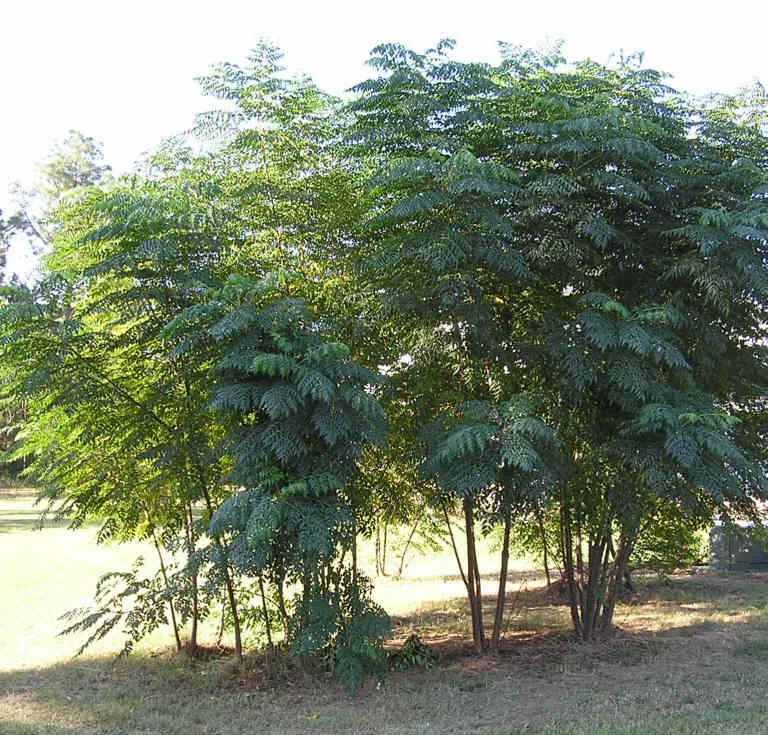
This tough, drought-tolerant plant thrives in full sun or part shade and grows into a striking 10–35 ft specimen. It's easy to multiply from seed, suckers or root cuttings, and its fruit feeds songbirds, foxes, raccoons and opossums. Just pull up root suckers promptly, since it can spread into thickets, and enjoy a wildlife magnet in your yard.
- Sun
Full sun to part shade
What the sources say (1)
Light: Full sun to part shade
It grows well in average, medium moisture, well-drained soils in full sun to part shade.
— Aralia spinosa (Angelica Tree, Devil's Walkingstick, Devil's Walking Stick, Hercules' Club, Hercules's Club, Hercules's-Club, Prickly Ash, Prickly Elder) | North Carolina Extension Gardener Plant Toolbox [1] - Water
Average water, keep soil medium moist; it tolerates drought
What the sources say (2)
Watering: Average, medium moisture, well-drained soils; drought tolerant
It grows well in average, medium moisture, well-drained soils in full sun to part shade.
— Aralia spinosa (Angelica Tree, Devil's Walkingstick, Devil's Walking Stick, Hercules' Club, Hercules's Club, Hercules's-Club, Prickly Ash, Prickly Elder) | North Carolina Extension Gardener Plant Toolbox [1] This plant is drought tolerant, generally tolerates many urban pollutants
— Aralia spinosa (Angelica Tree, Devil's Walkingstick, Devil's Walking Stick, Hercules' Club, Hercules's Club, Hercules's-Club, Prickly Ash, Prickly Elder) | North Carolina Extension Gardener Plant Toolbox [1] - Cold
Survives winters down to −30 °F (−34.4 °C)
Very hardy · USDA 4a · RHS H7 · Z4
What the sources say (2)
Hardiness, coldest zone: 4a [winter low −34.4 to −31.7 °C (−30 to −25 °F)]
USDA Plant Hardiness Zone: 4a, 4b, 5a, 5b, 6a, 6b, 7a, 7b, 8a, 8b, 9a, 9b
— Aralia spinosa (Angelica Tree, Devil's Walkingstick, Devil's Walking Stick, Hercules' Club, Hercules's Club, Hercules's-Club, Prickly Ash, Prickly Elder) | North Carolina Extension Gardener Plant Toolbox [1] Hardiness, warmest zone: 9b [winter low −3.9 to −1.1 °C (25 to 30 °F)]
USDA Plant Hardiness Zone: 4a, 4b, 5a, 5b, 6a, 6b, 7a, 7b, 8a, 8b, 9a, 9b
— Aralia spinosa (Angelica Tree, Devil's Walkingstick, Devil's Walking Stick, Hercules' Club, Hercules's Club, Hercules's-Club, Prickly Ash, Prickly Elder) | North Carolina Extension Gardener Plant Toolbox [1] - Soil
Average, well-drained soil
What the sources say (2)
Watering: Average, medium moisture, well-drained soils; drought tolerant
It grows well in average, medium moisture, well-drained soils in full sun to part shade.
— Aralia spinosa (Angelica Tree, Devil's Walkingstick, Devil's Walking Stick, Hercules' Club, Hercules's Club, Hercules's-Club, Prickly Ash, Prickly Elder) | North Carolina Extension Gardener Plant Toolbox [1] This plant is drought tolerant, generally tolerates many urban pollutants
— Aralia spinosa (Angelica Tree, Devil's Walkingstick, Devil's Walking Stick, Hercules' Club, Hercules's Club, Hercules's-Club, Prickly Ash, Prickly Elder) | North Carolina Extension Gardener Plant Toolbox [1] - Harvest
Not for eating: the fruit is food for songbirds, foxes, raccoons and opossums
- Pests
Aphids and mealybugs may appear; prone to leaf spots
What the sources say (2)
Pests: aphids, mealybugs
It has no serious insect or disease problems, although it is susceptible to leaf spots. Aphids and mealybugs may appear. Handling its
— Aralia spinosa (Angelica Tree, Devil's Walkingstick, Devil's Walking Stick, Hercules' Club, Hercules's Club, Hercules's-Club, Prickly Ash, Prickly Elder) | North Carolina Extension Gardener Plant Toolbox [1] Diseases: leaf spots
It has no serious insect or disease problems, although it is susceptible to leaf spots.
— Aralia spinosa (Angelica Tree, Devil's Walkingstick, Devil's Walking Stick, Hercules' Club, Hercules's Club, Hercules's-Club, Prickly Ash, Prickly Elder) | North Carolina Extension Gardener Plant Toolbox [1] - Watch out
Spreads by suckers and self-seeding into thickets: remove root suckers promptly
- Size
10–35 ft tall and 6–10 ft wide
What the sources say (2)
Mature height: 305-1067 cm (10-35 ft)
Dimensions: Height: 10 ft. 0 in. - 35 ft. 0 in. Width: 6 ft. 0 in. - 10 ft. 0 in. -
— Aralia spinosa (Angelica Tree, Devil's Walkingstick, Devil's Walking Stick, Hercules' Club, Hercules's Club, Hercules's-Club, Prickly Ash, Prickly Elder) | North Carolina Extension Gardener Plant Toolbox [1] Mature width: 183-305 cm (6-10 ft)
Dimensions: Height: 10 ft. 0 in. - 35 ft. 0 in. Width: 6 ft. 0 in. - 10 ft. 0 in. -
— Aralia spinosa (Angelica Tree, Devil's Walkingstick, Devil's Walking Stick, Hercules' Club, Hercules's Club, Hercules's-Club, Prickly Ash, Prickly Elder) | North Carolina Extension Gardener Plant Toolbox [1] - Propagation
From seed, by dividing suckers or from root cuttings
What the sources say (1)
Propagation: Seed, division of suckers, root cuttings
It is also easily grown from seed, division of suckers or root cuttings.
— Aralia spinosa (Angelica Tree, Devil's Walkingstick, Devil's Walking Stick, Hercules' Club, Hercules's Club, Hercules's-Club, Prickly Ash, Prickly Elder) | North Carolina Extension Gardener Plant Toolbox [1] - Safety
Unripe berries, bark and roots are poisonous; bark and roots irritate skin; harmful to cats, dogs, horses
Overview
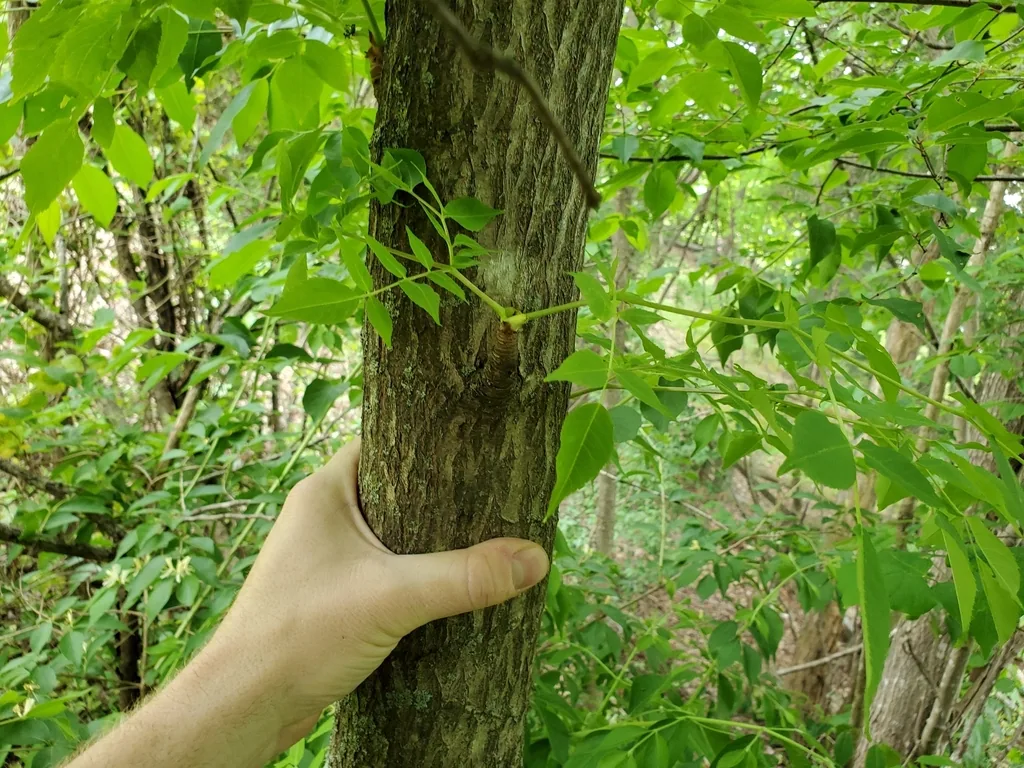
Devil's walking stick is a large, upright, suckering, deciduous shrub that typically grows to 10-15 feet [3–4.6 m] tall. [1] It grows well in average, medium moisture, well-drained soils in full sun to part shade and is drought tolerant. [1] Handling its bark and roots may cause allergic skin reactions. [1]
This record is incomplete: the sources we read do not cover every field yet.
Not yet covered by our sources: Pruning
Devil's Walking Stick care
Measurements in square brackets are our conversion into the other unit system; the quoted text is unchanged.
How to water Devil's Walking Stick
Average, medium moisture, well-drained soils; drought tolerant
What the sources say (2)
It grows well in average, medium moisture, well-drained soils in full sun to part shade.This plant is drought tolerant, generally tolerates many urban pollutantsHow much light Devil's Walking Stick needs
Full sun to part shade
What the sources say (1)
It grows well in average, medium moisture, well-drained soils in full sun to part shade.How much cold Devil's Walking Stick can take
Hardiness, coldest zone
4a [winter low −34.4 to −31.7 °C (−30 to −25 °F)]
What the sources say (1)
USDA Plant Hardiness Zone:
4a, 4b, 5a, 5b, 6a, 6b, 7a, 7b, 8a, 8b, 9a, 9bHardiness, warmest zone
9b [winter low −3.9 to −1.1 °C (25 to 30 °F)]
What the sources say (1)
USDA Plant Hardiness Zone:
4a, 4b, 5a, 5b, 6a, 6b, 7a, 7b, 8a, 8b, 9a, 9bHow to propagate Devil's Walking Stick
Seed, division of suckers, root cuttings
What the sources say (1)
It is also easily grown from seed, division of suckers or root cuttings.How to grow Devil's Walking Stick
The plant
Family
Araliaceae
What the sources say (1)
Genus:
Aralia
Species:
spinosa
Family:
Araliaceae
Life Cycle:
WoodyMature height
305-1067 cm (10-35 ft)
What the sources say (1)
Dimensions:
Height: 10 ft. 0 in. - 35 ft. 0 in.
Width: 6 ft. 0 in. - 10 ft. 0 in.
-Mature width
183-305 cm (6-10 ft)
What the sources say (1)
Dimensions:
Height: 10 ft. 0 in. - 35 ft. 0 in.
Width: 6 ft. 0 in. - 10 ft. 0 in.
-Pests and diseases
Pests
aphids, mealybugs
What the sources say (1)
It has no serious insect or disease problems, although it is susceptible to leaf spots. Aphids and mealybugs may appear. Handling itsDiseases
leaf spots
What the sources say (1)
It has no serious insect or disease problems, although it is susceptible to leaf spots.Devil's Walking Stick pests and problems
Leaf spots
Symptom: Susceptible to leaf spots.
What to do: No management given in source.
What the sources say (1)
It has no serious insect or disease problems, although it is susceptible to leaf spots.
— Aralia spinosa (Angelica Tree, Devil's Walkingstick, Devil's Walking Stick, Hercules' Club, Hercules's Club, Hercules's-Club, Prickly Ash, Prickly Elder) | North Carolina Extension Gardener Plant Toolbox [1] Aphids and mealybugs
Symptom: Aphids and mealybugs may appear.
What to do: No management given in source.
What the sources say (1)
susceptible to leaf spots. Aphids and mealybugs may appear.
— Aralia spinosa (Angelica Tree, Devil's Walkingstick, Devil's Walking Stick, Hercules' Club, Hercules's Club, Hercules's-Club, Prickly Ash, Prickly Elder) | North Carolina Extension Gardener Plant Toolbox [1] Root suckers and self-seeding
Symptom: Plants spread somewhat rapidly by self-seeding and suckering to form thickets.
What to do: Promptly remove root suckers to prevent unwanted naturalization.
What the sources say (1)
Plants will spread somewhat rapidly by self-seeding and suckering to form thickets. Promptly remove root suckers to prevent unwanted naturalization.
— Aralia spinosa (Angelica Tree, Devil's Walkingstick, Devil's Walking Stick, Hercules' Club, Hercules's Club, Hercules's-Club, Prickly Ash, Prickly Elder) | North Carolina Extension Gardener Plant Toolbox [1]
Remedies
Each remedy shows what official sources say about it; traditional remedies without an official source are marked as such. Harmful ones are listed so you know to avoid them.
First aid
First aid: not a substitute for a doctor
skin irritation from contact
washing with running water and soap Official source, not independently tested
Observe the area for such signs of infection as red streaks around the area, swelling, pus, or a lot of discharge. If this happens, see your health care provider.
— poison.org [2] How: Wash the area thoroughly with plenty of running water and soap.
Wash the area thoroughly with plenty of running water and soap.
— poison.org [2]
Getting rid of it
suckers and spread
removing, mowing or pruning off suckers Works
Mowing or cutting of stems results in vigorous sprouting of new ramets from underground rhizomes and is recommended for maintenance of vigorous stands
— fs.usda.gov [4] How: Promptly remove root suckers; mowing or pruning off any suckers that come up controls the spread.
Promptly remove root suckers to prevent unwanted naturalization.
— Aralia spinosa (Angelica Tree, Devil's Walkingstick, Devil's Walking Stick, Hercules' Club, Hercules's Club, Hercules's-Club, Prickly Ash, Prickly Elder) | North Carolina Extension Gardener Plant Toolbox [1] What the evidence says However, it does sucker into small groves, though you should be able to control it by simply mowing or pruning off any suckers that some up.
— ask.extension.org [3]
unwanted plant
cutting the plant down Official source, not independently tested
Removal of aboveground portions of stems by means other than fire is reported to result in vigorous resprouting of new ramets.
— fs.usda.gov [4] How: If you do not want it, cut it down like you would for any other unwanted tree.
If you do not want it, cut it down like you would for any other unwanted tree.
— ask.extension.org [3]
Is Devil's Walking Stick toxic to pets?
Reported by the source, quoted verbatim. This is not medical or veterinary advice: if a person or an animal may have eaten this plant, contact a poison control centre or a veterinarian.
Animals
Problems: Contact Dermatitis Poisonous to Humans Problem for Cats Problem for Dogs Problem for Horses
[1]The source flags the risk for this animal but does not explain why.
People
Poisonous by ingestion or dermatitis. [Poisonous parts: Raw, unripe berries (not poisonous when ripe though still not edible); bark and roots]. Symptoms may include: Skin irritation from bark and roots; symptoms of ingestion are hypersalivation, vomiting, and diarrhea.
[1]- Poisonous parts
[Poisonous parts: Raw, unripe berries (not poisonous when ripe though still not edible); bark and roots].
[1]- Toxic principle
Poison Toxic Principle: Araliin Causes Contact Dermatitis: Yes
[1]- Symptoms
Skin irritation from bark and roots; symptoms of ingestion are hypersalivation, vomiting, and diarrhea.
[1]- Severity
Poison Severity: Low Poison Symptoms: CAUSES ONLY LOW TOXICITY IF EATEN.
[1]
Handling its bark and roots may cause allergic skin reactions.
[1]
Calendar
Pruning
Not stated in the sources we read.
Months as given by the sources, which are mostly from the United States (northern hemisphere). In the southern hemisphere they shift by about six months.
Edibility
Reported by the source, quoted verbatim. Do not eat a plant on the basis of this page alone: identification mistakes can be dangerous.
Its fruit is eaten by songbirds, small mammals, foxes, racoons and opossums.
[1]
Indicative values
Values from a secondary source, not checked word for word like the rest of this page. Use them as a starting point.
- Life cycle
- PerennialIndicative value, adapt it to your climate · Secondary source
- Hours of sun
- 6-8 hoursIndicative value, adapt it to your climate · Secondary source
- Drought tolerant
- yesIndicative value, adapt it to your climate · Secondary source
- Soil pH
- 5.5-6.5Indicative value, adapt it to your climate · Secondary source
- Care level
- HighIndicative value, adapt it to your climate · Secondary source
- Growth rate
- LowIndicative value, adapt it to your climate · Secondary source
- Pruning
- December, January, February, December, January, FebruaryIndicative value, adapt it to your climate · Secondary source
Similar plants
- Angelica Tree Aralia elata
- Wild sarsaparilla Aralia nudicaulis
- Udo Aralia cordata
- American spikenard Aralia racemosa
- American ginseng Panax quinquefolius
- American Water-Pennywort Hydrocotyle americana
- Balfour Aralia Polyscias balfouriana
- Castor aralia Kalopanax pictus
Sources
Every value above is quoted from these documents. Links lead to the original publisher.
- Aralia spinosa (Angelica Tree, Devil's Walkingstick, Devil's Walking Stick, Hercules' Club, Hercules's Club, Hercules's-Club, Prickly Ash, Prickly Elder) | North Carolina Extension Gardener Plant Toolbox · plants.ces.ncsu.edu, consulted
- poison.org · poison.org
- ask.extension.org · ask.extension.org
- fs.usda.gov · fs.usda.gov
Written by Emilio Marruso · last checked