
How to Grow and Care for American spikenard
Aralia racemosa
Written by Emilio Marruso · last checked
Toxic to: People · Why
At a glance
This easygoing aralia grows 3 to 6 feet tall and asks only for fertile soil that stays moist but drains well. Its ripe berries are edible, so it brings a small harvest along with its height. It also grows happily in a container, and there are no known hazards to people, making it a friendly choice for any garden.
- Water
Keep the soil moist, but never waterlogged
What the sources say (1)
Watering notes: Fertile, moist but well-drained soil
Ideally, plant in fertile moist but well-drained soil.
— American Spikenard - Grow Native! [2] - Cold
Survives winters down to −40 °F (−40 °C)
Very hardy · USDA 3 · RHS H7 · Z3
What the sources say (2)
Hardiness, coldest zone: 3 [winter low −40 to −34.4 °C (−40 to −30 °F)]
Hardiness Zone: 3-8
— American spikenard Aralia racemosa from New England Wild Flower Society [3] Hardiness, warmest zone: 8 [winter low −12.2 to −6.7 °C (10 to 20 °F)]
Hardiness Zone: 3-8
— American spikenard Aralia racemosa from New England Wild Flower Society [3] - Soil
Fertile soil that drains well
What the sources say (1)
Watering notes: Fertile, moist but well-drained soil
Ideally, plant in fertile moist but well-drained soil.
— American Spikenard - Grow Native! [2] - Harvest
The ripe berries are edible
- Size
3 to 6 ft tall
What the sources say (1)
Mature height: 91-183 cm (3-6 ft)
American Spikenard, also known as small spikenard or spiceberry, is a large herbaceous plant which grows from 3-6 feet in height.
— American Spikenard – Roots of Medicine [6] - Containers
Grows in containers too
What the sources say (1)
In containers: Yes
In shady spots near built structures; appropriate for larger containers.
— American Spikenard - Grow Native! [2] - Safety
No known hazards to people
Overview
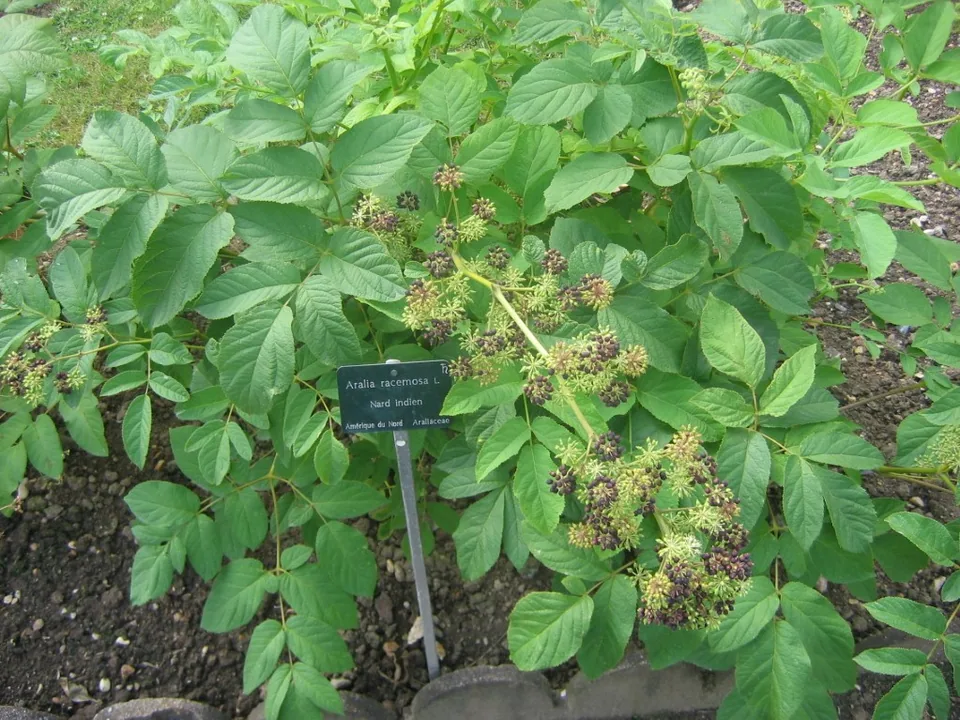
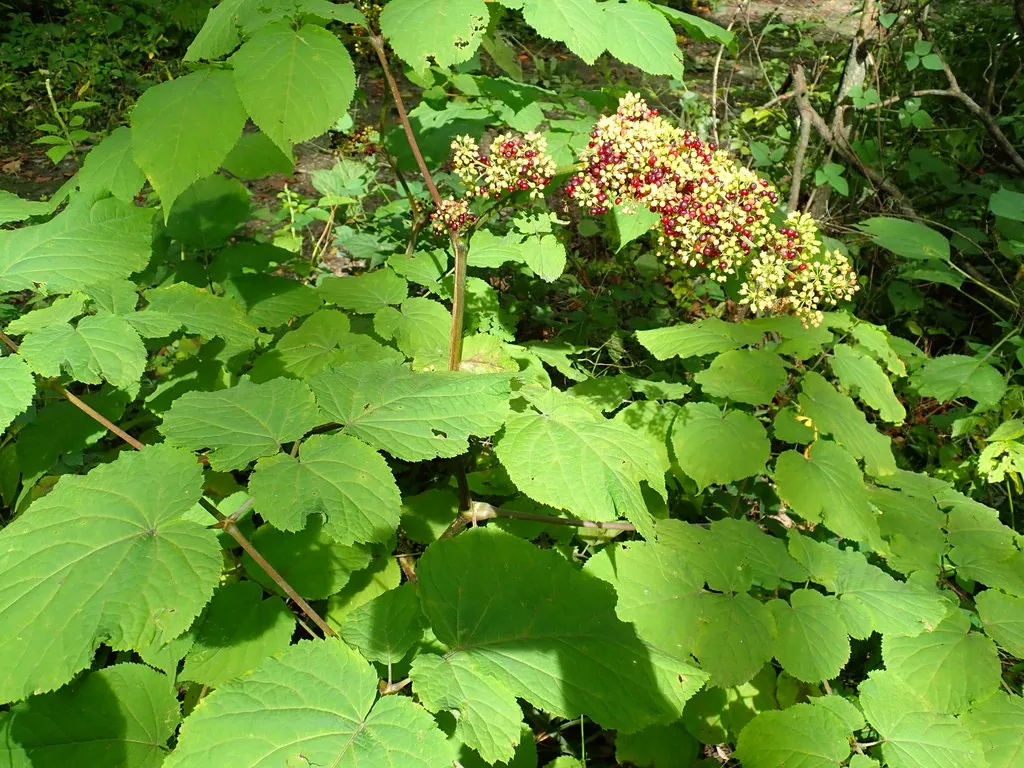
American spikenard is a large herbaceous perennial that dies back to the ground each winter and bears clusters of purple berries. [1] It suits shady garden positions in fertile, moist but well-drained soil. [2] Ripe berries are reported as edible. [7]
This record is incomplete: the sources we read do not cover every field yet.
Not yet covered by our sources: Watering, Light, Pruning, Propagation
American spikenard care
How to water American spikenard
Watering
Not stated in the sources we read.
Watering notes
Fertile, moist but well-drained soil
What the sources say (1)
Ideally, plant in fertile moist but well-drained soil.How much light American spikenard needs
Not stated in the sources we read.
How much cold American spikenard can take
Hardiness, coldest zone
3 [winter low −40 to −34.4 °C (−40 to −30 °F)]
What the sources say (1)
Hardiness Zone: 3-8Hardiness, warmest zone
8 [winter low −12.2 to −6.7 °C (10 to 20 °F)]
What the sources say (1)
Hardiness Zone: 3-8Where to grow American spikenard
Yes
What the sources say (1)
In shady spots near built structures; appropriate for larger containers.How to propagate American spikenard
Not stated in the sources we read.
How to grow American spikenard
The plant
Mature height
91-183 cm (3-6 ft)
What the sources say (1)
American Spikenard, also known as small spikenard or spiceberry, is a large herbaceous plant which grows from 3-6 feet in height.Remedies
The sources we checked give no remedies for this plant.
Is American spikenard poisonous?
Reported by the source, quoted verbatim. This is not medical or veterinary advice: if a person or an animal may have eaten this plant, contact a poison control centre or a veterinarian.
Known Hazards None known
[8]
Calendar
Pruning
Not stated in the sources we read.
Months as given by the sources, which are mostly from the United States (northern hemisphere). In the southern hemisphere they shift by about six months.
Edibility
Reported by the source, quoted verbatim. Do not eat a plant on the basis of this page alone: identification mistakes can be dangerous.
Edibility: Ripe berries are edible.
[7]
Indicative values
Values from a secondary source, not checked word for word like the rest of this page. Use them as a starting point.
- Life cycle
- Herbaceous PerennialIndicative value, adapt it to your climate · Secondary source
- Light
- Partial sun ShadeIndicative value, adapt it to your climate · Secondary source
- Hours of sun
- 4-6 hoursIndicative value, adapt it to your climate · Secondary source
- Watering
- AverageIndicative value, adapt it to your climate · Secondary source
- Drought tolerant
- yesIndicative value, adapt it to your climate · Secondary source
- Soil
- Loamy HumusIndicative value, adapt it to your climate · Secondary source
- Soil pH
- 5.5-6.5Indicative value, adapt it to your climate · Secondary source
- Care level
- MediumIndicative value, adapt it to your climate · Secondary source
- Growth rate
- LowIndicative value, adapt it to your climate · Secondary source
- Pruning
- March, April, August, August, September, December, January, FebruaryIndicative value, adapt it to your climate · Secondary source
- Propagation
- Cutting, Layering Propagation, Division, Seed PropagationIndicative value, adapt it to your climate · Secondary source
Similar plants
- Angelica Tree Aralia elata
- Devil's Walking Stick Aralia spinosa
- Udo Aralia cordata
- Wild sarsaparilla Aralia nudicaulis
- Aaron's Beard Hypericum calycinum
- Abies grandis Abies grandis
- Abraham Trachystemon orientalis
- Abyssinian banana Ensete ventricosum
Sources
Every value above is quoted from these documents. Links lead to the original publisher.
- Aralia racemosa (Spikenard): Minnesota Wildflowers · minnesotawildflowers.info, consulted
- American Spikenard - Grow Native! · grownative.org, consulted
- American spikenard Aralia racemosa from New England Wild Flower Society · plantfinder.nativeplanttrust.org, consulted
- Aralia racemosa page · missouriplants.com, consulted
- Aralia racemosa (American spikenard): Go Botany · gobotany.nativeplanttrust.org, consulted
- American Spikenard – Roots of Medicine · dsps.lib.uiowa.edu, consulted
- Aralia racemosa (American spikenard) · florafinder.com, consulted
- Aralia racemosa - Useful Temperate Plants · temperate.theferns.info, consulted
Written by Emilio Marruso · last checked