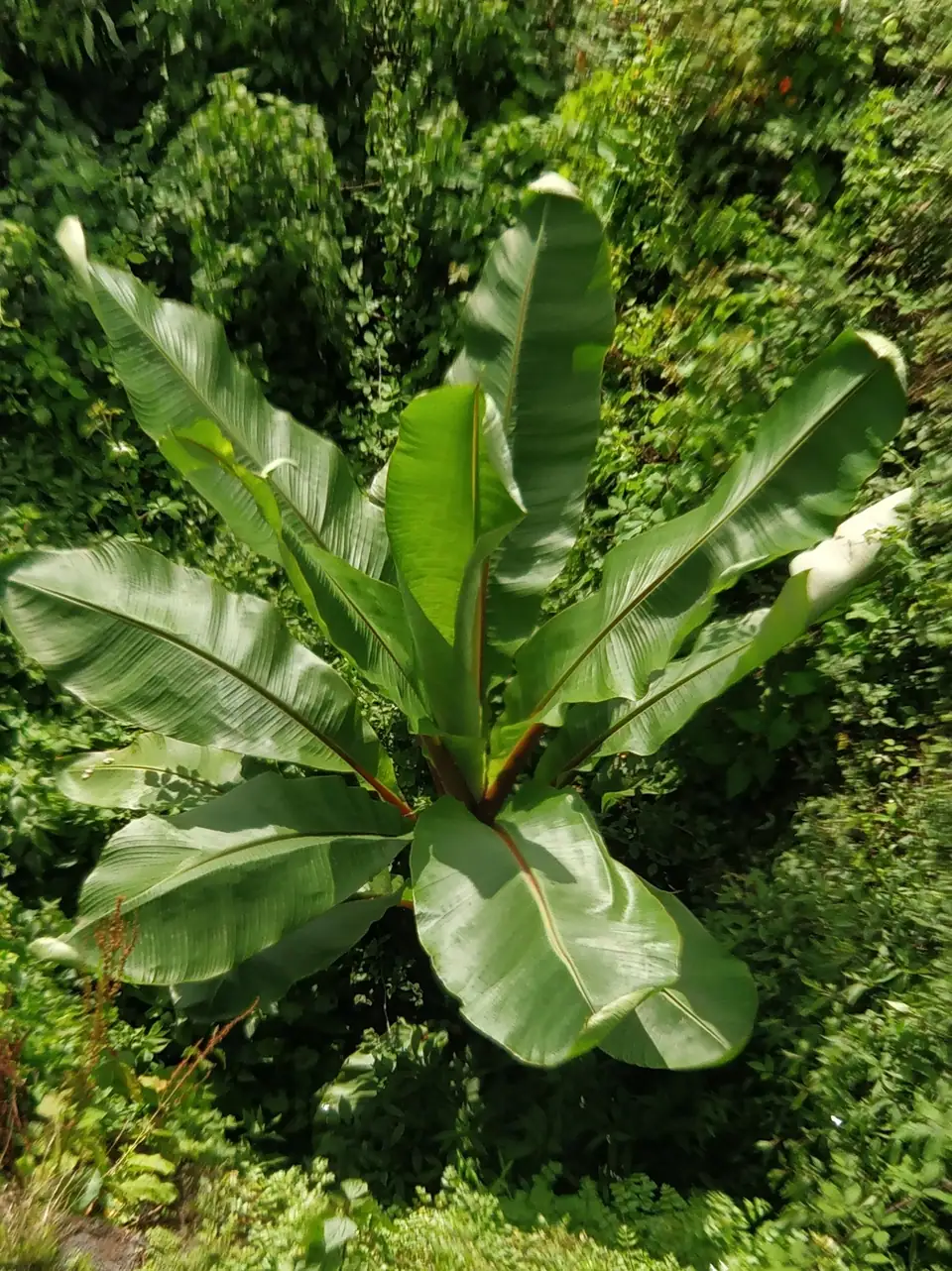
How to Grow and Care for Abyssinian banana
Ensete ventricosum
Written by Emilio Marruso · last checked
At a glance
Ensete brings a bold, banana-like look to the garden and loves full sun with plenty of water in well-drained soil. Feed it regularly through the growing season and watch it thrive. Its small yellow banana clusters are not edible, but the mashed leaf sheaths and underground stems can be fermented into a bread-like food.
- Sun
Full sun
What the sources say (1)
Light: Full sun
| Light Preference | Full Sun
— NParks | Ensete ventricosum [1] - Water
Plenty to moderate water, in soil that drains well
- Soil
Well-drained soil, pH 5.6–7.3
What the sources say (3)
Soil pH, minimum: 5.6
Best growth is obtained in moderately acidic to alkaline (pH 5.6ˆ7.3)
— View crop [4] Soil pH, maximum: 7.3
Best growth is obtained in moderately acidic to alkaline (pH 5.6ˆ7.3)
— View crop [4] Watering notes: Well-drained soils
| Rootzone Tolerance | Well-Drained Soils
— NParks | Ensete ventricosum [1] - Feeding
Feed regularly while it grows; feed less in winter if kept indoors in a pot
What the sources say (4)
When: During the growing season
in containers overwintered indoors as a houseplant: Bring container plant indoors in fall before first frost and place container in a large sunny room for overwintering as a houseplant, with reduced water and fertilization;
— [9] Plants need consistently moist soils that do not dry out. Fertilize plants regularly during growing season.
— [9] The Missouri Botanical Garden site linked below suggests applying fertilizer during the growing season, but does not mention a particular type of fertilizer.
— [9] How often: Regularly during the growing season
Plants need consistently moist soils that do not dry out. Fertilize plants regularly during growing season.
— [9] - Harvest
Fruit is not edible; mashed leaf sheaths and underground stems are fermented into a bread-like food
- Pests
Watch for anthracnose, wilt and mosaic virus
- Propagation
From suckers, young wild plants or seed
Overview
Ensete ventricosum is a giant monocarpic herb 6-12 m [19.7–39.4 ft] tall that flowers once and then dies. [1] It grows in full sun with well-drained, nutrient-rich soil and needs protection from strong wind. [1] Its pseudostem and underground stems are the food of Ethiopia, while the fruit is not edible. [1][4]
This record is incomplete: the sources we read do not cover every field yet.
Not yet covered by our sources: Hardiness, coldest zone, Hardiness, warmest zone, Pruning
Abyssinian banana care
Measurements in square brackets are our conversion into the other unit system; the quoted text is unchanged.
How to water Abyssinian banana
Watering
Lots of water to moderate water
What the sources say (1)
| Water Preference
| Lots of Water, Moderate WaterWatering notes
Well-drained soils
What the sources say (1)
| Rootzone Tolerance
| Well-Drained SoilsHow much light Abyssinian banana needs
Full sun
What the sources say (1)
| Light Preference
| Full SunHow much cold Abyssinian banana can take
Hardiness, coldest zone
Not stated in the sources we read.
Hardiness, warmest zone
Not stated in the sources we read.
Best soil for Abyssinian banana
Soil pH, minimum
5.6
What the sources say (1)
Best growth is obtained in moderately acidic to alkaline (pH 5.6ˆ7.3)Soil pH, maximum
7.3
What the sources say (1)
Best growth is obtained in moderately acidic to alkaline (pH 5.6ˆ7.3)How to propagate Abyssinian banana
How to grow Abyssinian banana
Fertilizing
When
During the growing season
What each source says
in containers overwintered indoors as a houseplant: Reduced fertilization during winter
What the sources say (3)
in containers overwintered indoors as a houseplant: Bring container plant indoors in fall before first frost and place container in a large sunny room for overwintering as a houseplant, with reduced water and fertilization;Plants need consistently moist soils that do not dry out. Fertilize plants regularly during growing season.The Missouri Botanical Garden site linked below suggests applying fertilizer during the growing season, but does not mention a particular type of fertilizer.How often
Regularly during the growing season
What the sources say (1)
Plants need consistently moist soils that do not dry out. Fertilize plants regularly during growing season.Abyssinian banana pests and problems
Anthracnose, wilt and mosaic virus
What the sources say (1)
Susceptible to anthracnose, wilt and mosaic virus.
— NParks | Ensete ventricosum [1]
Remedies
The sources we checked give no remedies for this plant.
Calendar
Harvest
The sources give different values depending on region, zone or growing conditions.
What each source says
According to Gardening Know How (Ethiopia): 4-5 years to reach maturation
According to FAO Ecocrop: harvested after 3-4 years, before the inflorescence forms
What the sources say (2)
According to Gardening Know How (Ethiopia): Ensete takes four to five years to reach maturationAccording to FAO Ecocrop: The plants are harvested after 3-4 years before the formation of the inflorescencePruning
Not stated in the sources we read.
Months as given by the sources, which are mostly from the United States (northern hemisphere). In the southern hemisphere they shift by about six months.
Edibility
Reported by the source, quoted verbatim. Do not eat a plant on the basis of this page alone: identification mistakes can be dangerous.
Indicative values
Values from a secondary source, not checked word for word like the rest of this page. Use them as a starting point.
- Life cycle
- Herbaceous PerennialIndicative value, adapt it to your climate · Secondary source
- Mature height
- 365.8-609.6 cm (12-20 ft)Indicative value, adapt it to your climate · Secondary source
- Hours of sun
- 6-8 hoursIndicative value, adapt it to your climate · Secondary source
- USDA hardiness zones
- 10-11 [winter low −1.1 to 10 °C (30 to 50 °F)]Indicative value, adapt it to your climate · Secondary source
- Care level
- MediumIndicative value, adapt it to your climate · Secondary source
- Growth rate
- LowIndicative value, adapt it to your climate · Secondary source
- Pruning
- March, AprilIndicative value, adapt it to your climate · Secondary source
Similar plants
- Abies grandis Abies grandis
- Abraham Trachystemon orientalis
- Acacia longifolia Acacia longifolia
- Acanthus hungaricus Acanthus hungaricus
- Aconite Aconitum napellus
- Adam's Needle Yucca flaccida
- Adriatic lizard orchid Himantoglossum adriaticum
- Afghan Cherry Prunus jacquemontii
Sources
Every value above is quoted from these documents. Links lead to the original publisher.
- NParks | Ensete ventricosum · nparks.gov.sg, consulted
- Flora of New Zealand | Taxon Profile | Ensete ventricosum · nzflora.info, consulted
- USEFUL TREES AND SHRUBS FOR KENYA · apps.worldagroforestry.org, consulted
- View crop · ecocrop.apps.fao.org, consulted
- Ensete ventricosum | Purdue University Famine Foods · purdue.edu, consulted
- Ensete ventricosum · apps.worldagroforestry.org, consulted
- Ensete Ventricosum Cultivation - Learn About False Banana Plants | Gardening Know How · gardeningknowhow.com, consulted
- Wendo Arboretum - Ensete ventricosum · sites.google.com, consulted
- depts.washington.edu · depts.washington.edu
Written by Emilio Marruso · last checked